Sell My House Fast in Downtown Los Angeles
- Foreclosure, inherited, tenants, damage — we buy it
- Zero fees, zero commissions, zero closing costs
- No obligation — turn the offer down and owe us nothing


Every Day on the Market Has a Cost
See how a traditional Downtown Los Angeles condo or loft listing compares to a 7-14 day cash close, and why speed matters most when you have a deadline of your own.
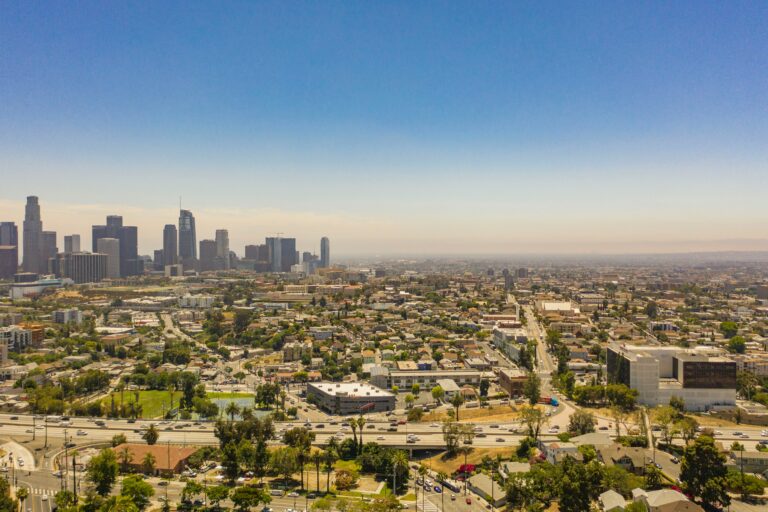
If you need to sell a house fast in Downtown Los Angeles, the obstacle is rarely your price. Downtown is a slow, thin, condo-heavy market: Redfin’s August 2026 figures put the median sale price at about $469,000, with homes typically taking 166 days to sell and only 37 units closing that month, prices down 14.5 percent from a year earlier. A traditional listing here does not just wait on a buyer — it waits on a lender willing to fund a unit in a building the lender may not fully understand. Cash Home Buyers CA buys condos, lofts and small residential buildings throughout Downtown directly, which removes that chain entirely.
Why a Downtown Listing Takes So Long
A 166-day median time on market, more than three times a typical Los Angeles County listing, is not an accident of a slow season. Most of what sells Downtown is a condo or a loft inside a converted building — the Old Bank District, the Eastern Columbia, the Pacific Electric Building, or a newer South Park tower such as Concerto or Evo — rather than a detached single-family house. A financed buyer for one of those units needs the lender to approve not just the buyer, but the building: its HOA reserves, its litigation history, its delinquency rate, and, for pre-1978 conversions, its earthquake retrofit status. Any one of those can stall or kill a loan weeks into escrow, after the seller has already taken the unit off the market once and put it back.
Once an offer is accepted on a financed deal, the standard California purchase agreement gives the buyer roughly 17 days for inspections, disclosures and loan contingencies, and full underwriting on a condo typically needs another two to four weeks beyond that, longer if the lender’s condo desk has to review HOA documents from an association that is slow to produce them. Add it up and a Downtown sale that looked done at acceptance can still run 45 to 75 days to a funded, recorded closing, and a soft market with only 37 sales in a month gives a buyer little reason to rush.
Where Downtown Deals Specifically Stall
- HOA and condo-project review. A lender’s condo desk checks reserve funding, owner-occupancy ratio, pending litigation and delinquency rates before it will fund a unit; a building with any of those issues can knock every financed buyer out of the running.
- The 9A Report of Residential Property Records. The Department of Building and Safety report, plus certifications for a seismic gas shutoff valve, low-flow fixtures, smoke and carbon monoxide detectors, and a strapped water heater, has to clear before close, and older converted buildings sometimes need corrective work first.
- Appraisal risk in a thin market. With only 37 closed sales across all of Downtown in a recent month, an appraiser may have to reach outside the immediate building or even the immediate neighborhood for comps, and a low appraisal on a unit with few close matches forces a renegotiation.
- Raw or unfinished loft shells. Some Historic Core and Arts District units were sold as unfinished shells and never got a full build-out; a lender’s appraiser has a hard time valuing a space with no kitchen or finished bathroom, which pushes those units toward cash buyers by default.
What a Cash Sale’s Timeline Looks Like Downtown
We typically respond with a written offer within 24 to 48 hours of hearing about your property. Because there is no lender, there is no condo-project review to fail, no HOA questionnaire that has to satisfy an underwriter, and no appraisal that has to match a thin comp set. We still order the 9A report and confirm the retrofit certifications ourselves, but they do not hold up financing the way they do on a conventional sale. Once you accept, we open escrow with a licensed Los Angeles County title and escrow company. A condo with clean HOA standing and clear title can close in two to three weeks; a unit with an association in litigation, an existing lease, or an estate involved typically runs four to six weeks. You choose the date either way.
The Costs a Fast Downtown Closing Still Has to Clear
Speed does not remove the paperwork the City of Los Angeles requires on every residential sale, it just moves it off your plate. The Department of Building and Safety’s Report of Residential Property Records, commonly called the 9A report, has to be requested and reviewed before close, along with certifications for a seismic gas shutoff valve, low-flow plumbing fixtures, working smoke and carbon monoxide detectors, and a properly strapped water heater. Los Angeles also charges a documentary transfer tax of $4.50 per $1,000 of the sale price, on top of the county’s $1.10 per $1,000, for a combined $5.60 per $1,000 that is customarily paid by the seller. On a $469,000 sale, roughly the current Downtown median, that works out to about $2,630. None of that changes whether you sell fast or slow; what changes with a cash sale is who chases the paperwork. We request the 9A report and the retrofit certifications the same week escrow opens instead of waiting on you to gather them, and the transfer tax gets handled through escrow like any other sale.
Why Speed Matters More in a Soft Market
In a market with steady demand, a slower sale mostly costs you patience. In a market where prices are down 14.5 percent year over year and only a few dozen units close each month across the entire district, a slower sale costs you money, because every month the price trend keeps moving before your unit closes. An owner who lists today at a price based on last spring’s comps may find the appraisal on an accepted offer, weeks later, coming in under that number simply because the trend kept falling in the meantime. A cash offer removes that lag entirely: the number you agree to at acceptance is the number that closes, regardless of what the broader Downtown market does in the following weeks.
The thinness of the market compounds the problem. With only 37 recorded sales in a recent month across every neighborhood from the Historic Core to South Park, an appraiser working a financed deal sometimes has to pull comps from a different building type, a different vintage of construction, or a unit several blocks away with a materially different HOA. Any mismatch there becomes your problem to negotiate, not the buyer’s.
Common Reasons Downtown Owners Need to Move Quickly
Speed matters for plenty of ordinary reasons that have nothing to do with a crisis: a job that is pulling you out of state, wanting to stop carrying HOA dues and a mortgage on a unit you no longer live in, a lease already signed on a new place, or simply not wanting a vacant unit sitting through another slow month on a 166-day market. If your timeline pressure comes from something more specific, we have dedicated guides that go deeper: foreclosure, divorce, and inherited property in Downtown each carry their own deadlines. The same underwriting, appraisal and escrow patterns described here apply to the rest of the city too — see our page on the rules across the rest of Los Angeles if you are weighing a Downtown sale against a property somewhere else in the county.
What We Buy Across Downtown’s Neighborhoods
Downtown is not one market. The Historic Core, along Broadway, Spring and Main, holds the bulk of the pre-1930s office and bank buildings converted under the city’s 1999 Adaptive Reuse Ordinance, including landmark conversions like the Old Bank District’s roughly 230 units and the 140-unit Eastern Columbia. South Park, toward the Staples-area high-rises, is newer high-rise condo stock. The Arts District, east toward the Los Angeles River, mixes converted warehouses with newer builds like One Santa Fe. Bunker Hill has its own cluster of high-rise condo towers. We buy in all of them, in current condition, whether that means a finished luxury condo or a shell that has sat untouched for years.
Little Tokyo and the Civic Center area add another layer of older mixed-use and residential stock, some of it dating to the early 20th century, which can carry its own city or state historic designation that a lender’s underwriter may flag even when the building itself is structurally sound. We do not treat a historic designation, a slow-moving HOA board, or an unfinished interior as a reason to decline a purchase; we build the offer around what the property actually is.
The variety across these neighborhoods is also why a single district-wide average tells you very little about your own building. A high-rise in South Park with professional management and fully funded reserves is a fundamentally different underwriting story than a small, self-managed association running an early-2000s Historic Core conversion. We look at your building specifically, not just the district median, when we put a number together. We also buy small residential and mixed-use buildings outright, not only individual condo units, which matters in a district where a meaningful share of the older stock was never placed into a condominium regime at all and instead sits as a single parcel with several rented units inside it.
Frequently Asked Questions
How fast can you really close on a Downtown property?
Two to three weeks for a unit with clean HOA standing and clear title; four to six weeks when an association review, a tenant lease, or a probate step is involved. You pick the date.
Do I need to clean, repair or finish the unit first?
No. We buy in current condition, including a raw or partially built-out loft shell.
What if my building has HOA litigation or a special assessment?
That is exactly the kind of situation a cash sale is built for. It stops most financed buyers; it does not stop us.
What if I actually need more time, not less?
That is fine. We can set a closing date further out, or arrange a short rent-back so you can stay after closing while you finish your move.
Is a cash sale always faster than listing?
Not necessarily at the offer stage — a well-priced, fully-financeable unit in a strong building can still draw a quick offer. The time savings come from skipping the condo-project review, the appraisal risk in a thin comp set, and the 45- to 75-day financed escrow that follows.
Are there fees for closing quickly?
No. There is no commission and no hidden fee for a fast timeline.
Timelines above reflect typical patterns for Downtown Los Angeles condo and loft closings and can vary by building, lender, and title company. Get a free, no-obligation cash offer from Cash Home Buyers CA today, or call or text (424) 493-4424.
Seller Guides
Helpful guides for homeowners in Downtown Los Angeles
Plain-English answers to the questions sellers ask us most.
 Selling as-is
As-Is Doesn’t Skip Disclosure in Valley Glen — And the City Adds One More Step
Valley Glen sellers must meet California's as-is disclosure laws plus one extra City of LA requirement that many nearby unincorporated areas never face.
Read the guide →- Rentals & tenants
Tenant-Occupied Property Rules in Mayflower Village, CA: Why the County, Not a City, Sets Them
Mayflower Village has an Arcadia address but is unincorporated LA County, so tenant sales follow the county ordinance, not either city's rules.
Read the guide → - Foreclosure & liens
What an Azusa Homeowner Actually Has Before a Trustee Sale
California gives an Azusa homeowner two fixed waiting periods before a trustee sale. Here is exactly how long that is and what the foothill location adds.
Read the guide → - Divorce
Selling the Family Home in a Diamond Bar Divorce: What an HOA Adds to the Process
A Diamond Bar divorce splits community property equally by law, but HOA-governed neighborhoods add an extra disclosure step before closing escrow.
Read the guide → - Selling for cash
What Slows Down a Home Sale in San Fernando, CA
San Fernando is its own independent city inside LA, with its own permits and city hall. Here's what that means for a fast, as-is cash sale today.
Read the guide → - Selling for cash
Sell House Fast Los Angeles: The Real Costs of Each Option
Commissions, iBuyer fees, and holding costs compared to a direct cash sale when selling fast in Los Angeles.
Read the guide → - Selling for cash
We Buy Houses in Los Angeles: How the Process Actually Works
Step by step: how a we buy houses sale works in Los Angeles, from first contact to closing in 7-14 days.
Read the guide → - Selling for cash
We Buy Houses Los Angeles: How to Spot a Legitimate Buyer
Red flags, questions to ask, and what a legitimate we buy houses company in Los Angeles actually looks like.
Read the guide → - Selling for cash
Sell My House Fast Los Angeles: Comparing Your 3 Real Options
List, iBuyer, or direct cash sale - real timelines and tradeoffs for selling a house fast in Los Angeles.
Read the guide →