
LA RSO Registration Must Be Current Before You Sell
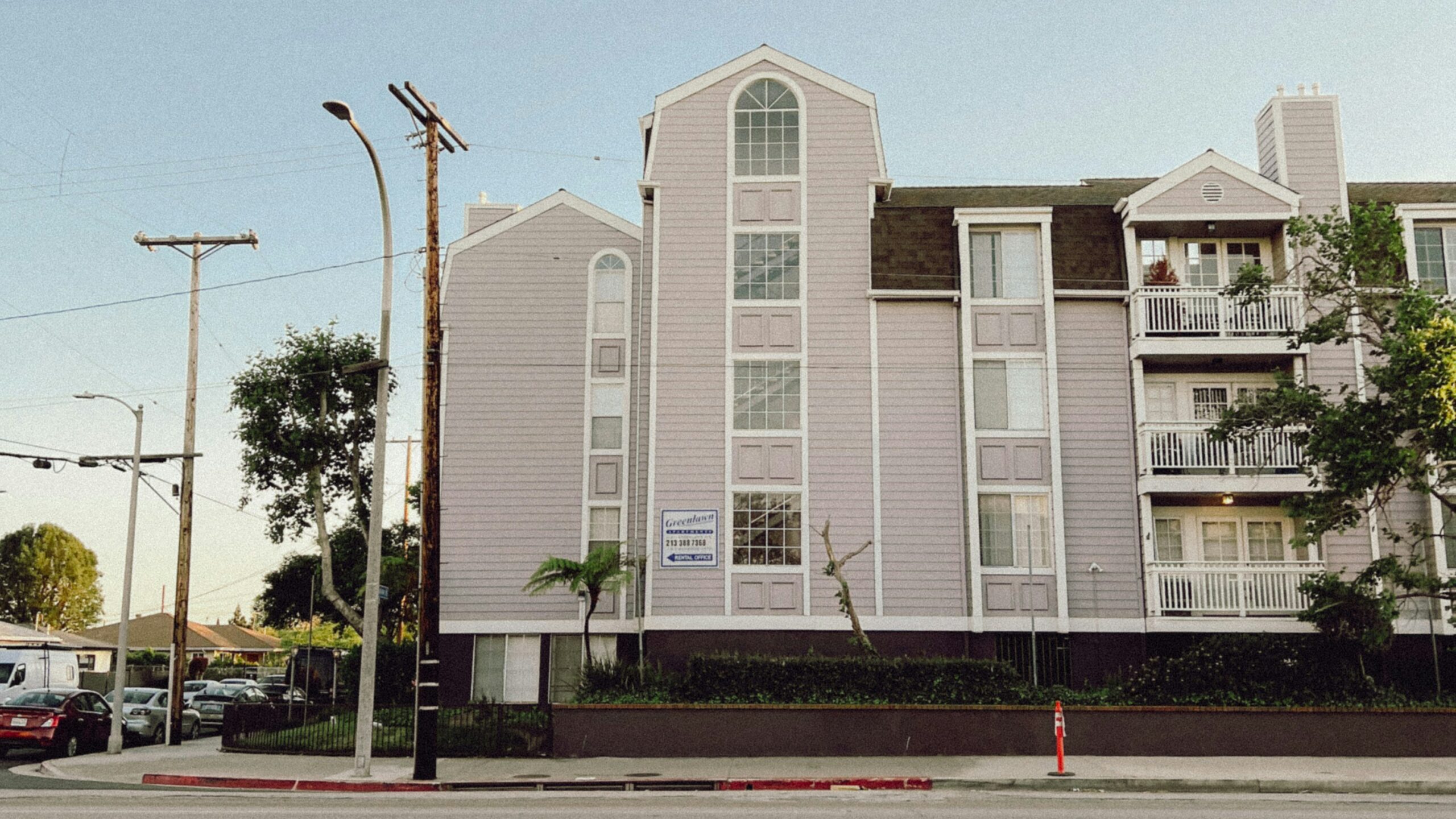
Before you can close the sale of a tenant-occupied rental in the City of Los Angeles, the property’s Rent Stabilization Ordinance (RSO) registration with the Los Angeles Housing Department (LAHD) has to be current, with the annual per-unit fee paid and the ownership record updated to your name.
If it isn’t, the city’s own rule is that no rent may legally be collected on the units until registration is current, and an escrow or title company that spots the lapse will usually stop the file until it’s cleared.
For a seller moving toward closing, this is a procedural step worth checking weeks before you list — not a surprise you want to discover during escrow.
RSO registration runs separately from the leasing and notice issues covered in our broader guide to selling an RSO building in Los Angeles, and separately again from the statewide rules on deposits and just-cause notice covered in what California law requires when you sell with a tenant in place.
This article is narrower: what LAHD’s registration system requires right now, in dollars and dates, and what a change of ownership does to it.
What the Registration Record Actually Tracks
RSO registration is not a license to operate a rental and it is not the same thing as a business tax certificate.
It is LAHD’s record of who owns a covered rental unit, what rent is being charged, and whether the annual per-unit fees tied to that unit have been paid. The ordinance covers most multi-unit rental buildings in the City of Los Angeles built on or before October 1, 1978.
A single detached home that is the only residential structure on its own lot is generally exempt from RSO itself, but a duplex, a house with a second unit on the lot, or any multi-unit property typically is not, and it is the registration — not the deed — that LAHD treats as the operative record of who currently holds that obligation.
Three distinct annual charges ride on the same registration record, and sellers frequently confuse them because they arrive together on one billing notice:
- RSO registration fee — the base annual charge tied to RSO coverage itself.
- JCO fee — tied to the citywide Just Cause Ordinance, which reaches a wider set of units than RSO, including many single-family rentals and condos once a tenant has been in place past the ordinance’s short initial window.
- SCEP fee — the Systematic Code Enforcement Program charge, which funds the city’s periodic habitability inspection cycle and applies to most residential rental units regardless of RSO or JCO status.
- RSO registration fee: $38.75 per unit on time; $58.13 per unit if delinquent.
- JCO fee: $31.05 per unit on time; $46.58 per unit if delinquent.
- SCEP fee: $67.94 per unit on time; $135.88 per unit if delinquent — the only one of the three where the late amount roughly doubles rather than scaling by the same 50% as the other two.
- If the fees for the current year are already paid in full, the buyer does not have to pay them again just because ownership changed mid-year. They do, however, still have to update the ownership information on file — the paid status carries over, the name on the record does not.
- If the prior owner never registered at all, or let the fees lapse, the new owner inherits a unit that LAHD treats as unregistered, with all the restrictions that come with that status — but not a penalty charge for someone else’s prior failure. LAHD’s own guidance on this point is specific: no penalties are incurred for a previous owner’s nonregistration. The new owner’s exposure is the inability to collect rent until the unit is brought current, not a punitive fee stacked on top.
- A recorded grant deed, trust deed, or quitclaim deed showing the transfer
- A corporation deed, where the buyer is an entity rather than an individual
- Court receivership papers, in the narrower set of cases where a receiver rather than a buyer is taking over the property
- Whether the current year’s RSO, JCO and SCEP fees for the property have actually posted as paid, not just mailed or submitted
- Whether any prior-year balance is still outstanding on the account — these don’t always show up on a cursory check
- Whether the unit count and address on file match what’s actually on the parcel, since a mismatch there can trigger its own review
- Current LAHD registration confirmation or portal printout showing paid status for the year
- Receipts or confirmation numbers for the most recent RSO, JCO and SCEP payments
- The current rent roll, lease dates, and deposit amounts held for each unit
- Any record of prior tenant buyouts, relocation payments, or LAHD correspondence tied to the property
A property can owe all three, two, or just one, depending on what it’s covered by. That is why two sellers on the same block can see very different numbers on their LAHD bill.
The Dollar Figures LAHD Is Currently Billing
LAHD’s current rental-property-owners billing page lists these per-unit annual amounts:
None of these are prorated by month of ownership. A unit either owes the annual fee for the billing year or it doesn’t; there is no partial-year discount for a mid-year sale. Older bulletins still circulating online — including one LAHD PDF from 2020 — quote lower figures, around $24 and $43 per unit.
Those numbers are stale. If you’re budgeting for a closing, use the current billing page’s figures, not whatever a cached PDF or a property manager’s memory says the fee used to be.
When the Bill Comes Due and What Happens If You Miss It
LAHD bills the annual RSO, JCO and SCEP fees each January, and payment is due by the last day of February.
Miss that window and the fee converts to the delinquent rate shown above — not a flat penalty on top, but a materially higher per-unit charge that applies for the rest of the billing cycle.
For a four-unit building paying all three fees late, the gap between on-time and delinquent pricing is roughly $120 across the building; for a larger property it scales accordingly.
The more consequential line from LAHD isn’t the dollar penalty, though. It’s that the registration itself isn’t considered complete — meaning current — until every outstanding fee tied to the unit has actually been paid. A seller who paid most of what was owed but left a prior year’s balance outstanding is not “mostly registered.” LAHD treats the unit as unregistered until the ledger is zero.
What a Sale Does to an Existing Registration
A sale doesn’t erase or reset the registration record — it transfers the obligation to update it. The unit’s registration history, including whatever fees have or haven’t been paid for the current year, stays attached to the property.
What changes is whose name has to be on file as the current owner, and that change doesn’t happen automatically just because escrow closed and a new grant deed got recorded at the county.
LAHD has no independent feed from the County Recorder that updates its rent registry the moment a deed records; the new owner has to tell LAHD directly.
Two outcomes follow from that, and sellers and buyers often get them backwards:
That second scenario is the one that catches buyers off guard, and sellers who know their own registration is clean should be ready to show it, because an unregistered unit changes how a buyer prices the deal and how fast they’re willing to close.
The Window to Re-Register After Closing
LAHD’s published guidance for new owners sets a 45-day window from the close of escrow, or from the recording of the ownership change with the Los Angeles County Recorder’s Office — whichever triggers it — to either register the units in the new owner’s name or file for an exemption if the property qualifies for one.
That clock runs regardless of whether the seller’s registration was current or lapsed. It is a new-owner obligation, not a continuation of whatever timeline the seller was on.
Forty-five days moves faster than most people expect once a sale closes. Buyers are typically dealing with insurance binders, utility transfers, loan servicing setup and tenant notices in that same stretch, and LAHD’s registration update is easy to let slide to the bottom of that list.
A seller who hands the buyer a clean paper trail at closing — the current registration confirmation, the most recent paid receipt, and a copy of the rent roll — meaningfully shortens how long that 45-day window actually takes to close out, and reduces the odds of a lapse that then limits the new owner’s ability to collect rent from day one of ownership.
The Proof of Ownership LAHD Wants on File
Registering as a new owner isn’t a matter of calling LAHD and giving a name. The department requires documentation showing legal ownership before it will update the record. Acceptable proof generally includes:
Along with the recorded document, LAHD asks for the exact date ownership transferred and whatever payment is owed if the current year’s fees aren’t already settled.
None of this is unusual as far as government recordkeeping goes, but it does mean the buyer needs a copy of the recorded deed in hand — not just the escrow closing statement — to actually complete the update.
Sellers can make this easier by confirming with escrow that a certified or recorded copy of the deed will reach the buyer promptly after recording, rather than assuming it will show up on its own.
Why an Unregistered Unit Freezes Rent, Not Just Paperwork
The rule that gets lost in the fee schedule is the one with the most financial teeth: a unit that isn’t currently registered can’t legally have rent collected on it at all, for anyone — old owner or new.
This isn’t framed as a late fee or a technical violation subject to later cleanup. It’s a bar on collecting the money a rental exists to generate, and it stays in place until the registration is brought current.
For a seller mid-transaction, that matters in two directions. First, if your own registration has lapsed before you list, you may already be in a position where rent collected during the lapse is legally exposed, independent of whether you ever sell.
Second, and more relevant to closing itself, a buyer’s lender, title company, or property manager who discovers a lapsed registration during due diligence will usually treat it as a condition to resolve — either by requiring the seller to bring it current before closing, or by escrowing funds to cover it, or in some cases by delaying the closing date outright while the paperwork catches up. None of those outcomes move a transaction faster.
How This Surfaces During Escrow
Title companies working Los Angeles rental sales have gotten more consistent about asking for a current LAHD registration printout as part of the closing package, particularly on multi-unit properties where RSO coverage is likely.
If the printout shows an outstanding balance, expect one of a few responses: a request that the seller pay it before closing, a holdback from seller proceeds to cover it, or in slower-moving deals, a flat request to resolve it before scheduling the close date at all.
Buyers represented by experienced counsel or an investor familiar with LA rental transactions tend to catch this earlier in due diligence; buyers using standard owner-occupant financing sometimes miss it until an appraiser or inspector flags the unit count against what’s on file with the city.
This is also where the LAHD filing obligations around tenant buyouts can intersect with a sale, if a buyout happened at some point in the property’s recent history — a separate filing requirement we cover in what LAHD requires after a tenant buyout agreement in Los Angeles.
A title search doesn’t surface LAHD filings the way it surfaces recorded liens, so these items tend to come up only when someone specifically asks LAHD or checks the online portal.
Checking Your Own Standing Before You List
Before signing a listing agreement or accepting an offer, it’s worth confirming three things directly with LAHD or through the online Rent Registry portal:
A clean printout showing current status, handed to a buyer or their title company early, removes one of the more common reasons a Los Angeles rental sale stalls in the last stretch of escrow.
It costs nothing but a phone call or portal login to check, and it’s far cheaper to fix a lapsed fee for a few hundred dollars in week one of a listing than to discover it during a closing timeline everyone’s already counting down.
When a Cash Sale Isn’t the Right Fix Here
It’s worth being direct about this: a lapsed RSO registration is almost never a reason by itself to sell for cash instead of listing normally.
The fees involved are small — tens of dollars per unit, not thousands — and bringing a registration current is usually a matter of a payment and a form, not a legal fight.
If your only issue is that you forgot to pay a $38.75 fee two years running, the fastest and cheapest fix is paying LAHD directly and listing the property through whatever channel makes sense for your timeline and goals, cash buyer or otherwise.
Where a cash sale starts to make more sense is when the registration issue is a symptom of something larger: years of unclear rent rolls, a property that’s also facing code enforcement issues tied to the same inspection cycle that funds SCEP, a tenant relationship complicated by past buyout attempts, or an owner who simply doesn’t want to manage the back-and-forth of registration, inspection and compliance work while also trying to coordinate a traditional sale.
If the registration gap is the only problem, don’t let it push you toward a decision that should really be driven by price, timeline and how much hands-on work you want left in the deal.
What to Have Ready for a Buyer
Whether you list traditionally or sell directly, a buyer evaluating a tenant-occupied RSO or JCO unit in Los Angeles will eventually ask for the same packet of information:
Pulling this together before you have a buyer, rather than scrambling once escrow opens, is the single biggest lever a seller has over how smoothly the registration issue gets handled. It turns a potential closing delay into a one-page attachment to the purchase agreement.
If you’d rather skip the fee reconciliation and 45-day re-registration window entirely and just get a number, Cash Home Buyers CA can give you a no-obligation cash offer on a tenant-occupied Los Angeles rental and work through the LAHD paperwork directly with you — see our page on selling a house with tenants in Los Angeles for how that process works, or find Cash Home Buyers CA on our Google Business Profile.