
South Pasadena’s Historic-Home Review Before a Sale
If you’ve inherited a house in South Pasadena, California probate decides who has the legal authority to sign for the sale — but in this particular city, that’s not the only approval that can be in play.
If the house is a designated historic landmark, a contributor to one of South Pasadena’s historic districts, or simply old enough to be “potentially eligible” for that status, the city’s own Cultural Heritage Ordinance can require a separate layer of review before certain exterior work or demolition happens, on a timeline that runs independently of the probate court.
For anyone working through a south pasadena historic home probate situation, that second layer is the detail most generic probate guides never mention, because it’s specific to this one city and its housing stock.
South Pasadena Is Its Own City, Not a Pasadena Neighborhood
South Pasadena is a separate, independently incorporated city inside Los Angeles County — not a district or neighborhood of the much larger city of Pasadena next door, even though the two share a border and a name that gets confused constantly.
They have different city halls, different city councils, different planning departments, and, relevant here, different historic-preservation rules.
Whatever applies across the line in Pasadena does not automatically apply in South Pasadena, and an heir researching one city’s rules while actually dealing with a house in the other can end up planning around the wrong ordinance entirely.
South Pasadena incorporated on March 2, 1888. As of the 2020 census, the city’s population was 26,943, packed into one of the smallest and most densely built cities in the San Gabriel Valley.
The 2020 census also counted roughly 11,146 housing units citywide, with 95.2% of them occupied — a near-even split between owner-occupied homes (44.3%) and renter-occupied units (55.7%).
That’s a small, mostly built-out city with very little vacant land left to develop, which is part of why its existing older housing carries so much weight in local planning decisions.
A City Built From Craftsman, Victorian, and Mission Revival Homes
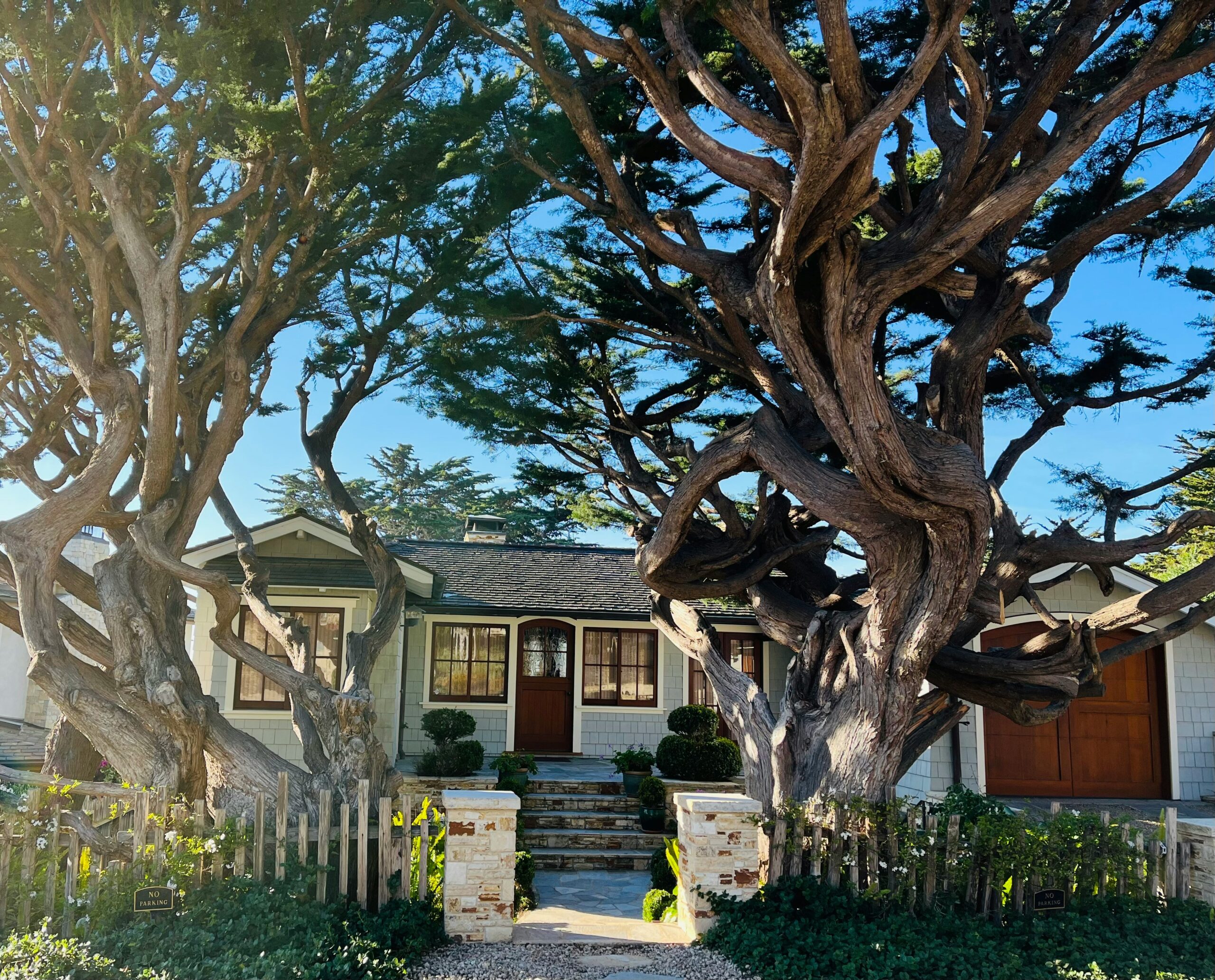
That compact housing stock is also an old one. South Pasadena is known for a dense concentration of Craftsman bungalows, Victorian-era houses, and Mission Revival homes built mostly before the Second World War, many of them standing on streets that have changed very little in a century.
The city has been named to the National Trust for Historic Preservation’s list of “Most Endangered Places” more than once — not because the housing is falling apart, but because so much of it is original, intact fabric that preservationists consider worth protecting, and because freeway and development pressure in the San Gabriel Valley has repeatedly threatened to remove pieces of it over the decades.
That history is the reason South Pasadena treats preservation review as seriously as it does, and it’s the reason the city built its own ordinance and commission to formalize how that review actually works, rather than leaving it to a general design-review process the way many smaller cities do.
For heirs, the practical takeaway is simple: in South Pasadena, “old house” and “regulated house” overlap far more often than they would in most nearby cities.
Probate Basics, in Brief
Before getting into the preservation piece, it helps to know where probate itself fits, without turning this into a full probate walkthrough — that’s a separate, deeper topic.
If the person who died owned the South Pasadena house in their own name, with no trust, no joint tenancy, and no recorded transfer-on-death deed, the house generally has to pass through California probate before it can be sold, whether or not there was a will.
Probate is what gives someone — an executor named in the will, or an administrator appointed by the court if there wasn’t one — the legal authority to sign for a sale.
Depending on whether that person holds full or limited authority under the Independent Administration of Estates Act, the sale may also need the probate court’s confirmation at a hearing, where other buyers can submit competing overbids.
None of that is unique to South Pasadena; it’s the same statewide process that applies to an inherited house anywhere in California.
What South Pasadena adds is a second, local layer that can sit on top of probate once an authorized seller is ready to list, alter, or demolish the property — and that layer is easy to miss if you’re relying on a generic probate checklist instead of this city’s own preservation rules.
South Pasadena’s Cultural Heritage Ordinance, in Plain Terms
South Pasadena has regulated historic resources since 1992, but the City Council substantially rewrote those rules in 2017. On July 19, 2017, the Council adopted Ordinance No. 2315, repealing the 1992 Historic Preservation Ordinance and replacing it outright; the new ordinance took effect August 18, 2017.
City planning staff describe the rewrite as an effort to clarify the role of the Cultural Heritage Commission (CHC) and strengthen the legal framework protecting the city’s historic character and scale, after the older ordinance had drawn criticism for being unclear about how the Commission actually made its decisions.
The ordinance gives the CHC authority over property in three overlapping categories: structures the city has formally designated as individual landmarks, buildings identified as contributors within one of South Pasadena’s historic districts, and properties the city has found “potentially eligible” for landmark status at the federal, state, or local level, even without a completed designation.
That third category matters most for heirs, because a house doesn’t need a plaque, a historic-district address, or a City Council vote to come under this review — age, architectural integrity, and historic association alone can be enough for staff or the Commission to flag it.
Three Ways an Inherited House Can Fall Under Commission Review
- It carries a formal City of South Pasadena landmark designation, placed on the property by a prior City Council or Commission action.
- It stands within one of South Pasadena’s designated historic districts and is identified as a contributing structure to that district’s historic character.
- It has never been formally designated, but the city’s cultural heritage inventory or a staff/Commission finding identifies it as “potentially eligible” for landmark status based on its age and architecture — which is enough, on its own, to trigger the same demolition restrictions as a formal landmark.
An heir can usually rule the first two in or out with a records check. The third is the one that catches people off guard, because it doesn’t show up as a recorded designation on the title — it shows up when the city’s planning staff look at the property.
South Pasadena has built that “potentially eligible” layer over time through more than one citywide survey effort, identifying candidate properties well beyond the handful of formally designated landmarks and the properties sitting inside an established historic district.
The practical effect is that a meaningfully larger share of South Pasadena’s older housing stock carries some kind of review flag than a quick glance at the city’s list of formal landmarks alone would suggest, which is exactly why checking directly with the Planning Division matters more here than it would in most cities.
What Actually Happens During a Certificate of Appropriateness Review?
According to the city’s own Certificate of Appropriateness application materials, the trigger is specific: no building or structure listed on South Pasadena’s cultural heritage inventory can be demolished without a Certificate of Appropriateness (COA) from the Cultural Heritage Commission, and a property the Commission finds “potentially eligible” gets added to that inventory — which pulls it under the same demolition restriction even before any formal landmark hearing takes place.
Alterations to the primary, street-facing facade of a historic residential building go through the same kind of review, judged against findings drawn from the city’s Design Guidelines and the Secretary of the Interior’s Standards for Rehabilitation, the same federal benchmark preservation agencies use nationwide.
Relocating a historic structure to another site is treated as a related application under those same findings.
In practice, that means an heir who wants to demolish an inherited South Pasadena house, strip its original windows and siding, or substantially remodel its front elevation generally cannot pull a standard building permit and start work if the house is on the inventory or has been found potentially eligible.
City planning staff first screen the project to see whether it could significantly affect a historic resource, and may require a historian’s evaluation and CEQA documentation — paid for by the applicant — before the project ever reaches the Commission.
A project that does reach the CHC goes through a 10-day public notification period handled by the Planning Division, and an incomplete application simply is not forwarded to the Commission until every submittal requirement is met, both of which add time that an ordinary, non-historic remodel or teardown would not need.
There is a narrower carve-out in the COA findings for a structure that poses an imminent safety threat, which is evaluated separately from a routine demolition request.
The Commission’s findings generally weigh whether proposed work is compatible with what preservation planners call a resource’s character-defining features — its roofline, window pattern, porch details, and the original materials on its primary facade — rather than simply whether the new work is well built or code-compliant on its own terms.
That standard is also why a historian’s evaluation sometimes becomes necessary: staff and the Commission need a documented basis for concluding whether a given alteration would erase the features that made the property eligible for protection in the first place, and that documentation takes time and, often, a paid consultant to produce.
How the Ordinance Can Affect a Probate Sale’s Timeline
None of this changes who has legal authority to sell the house — that is still answered by the probate court, the will, or the way title was held, and the ordinance does not give the Cultural Heritage Commission any say over who inherits or who signs the deed.
What it can change is what happens to the physical property, both before a sale closes and after.
An executor trying to clear a deteriorating detached garage or outbuilding before listing the house, for example, may find that step requires CHC sign-off if the structure sits on an inventoried or potentially-eligible parcel, adding a review step to a probate timeline that is often already running months behind schedule.
A buyer who plans to tear down an inherited house and build new, or to significantly alter its front facade, needs to know before they make an offer whether that plan requires a COA, a historian’s report, and a public hearing rather than a routine permit.
That is the practical reason this matters to a probate sale even though the two processes are legally separate: probate sets how long it takes to get someone with authority to sign; the Cultural Heritage Ordinance can set how long it takes — and how much it costs — to do anything physical to the house afterward.
When a historian’s evaluation or CEQA documentation turns out to be required, the applicant generally covers that cost directly, which becomes one more line item layered on top of the ordinary holding costs of a probate estate — property taxes, insurance, and utilities on a house that may already be sitting vacant while the court process runs its course.
Heirs working through a south pasadena historic home probate situation are usually better off finding out early whether the house is flagged, rather than discovering it mid-escrow when a buyer’s contractor applies for a demolition permit and the city puts the project on hold.
Checking Whether Your Inherited House Is Flagged
South Pasadena’s Planning Division, inside the Community Development Department, maintains the cultural heritage inventory and can tell you whether a specific address carries a landmark designation, sits inside one of the city’s historic districts, or has already been flagged as potentially eligible.
Because the “potentially eligible” category can apply based on age and architectural integrity alone — not just an existing, recorded designation — it’s worth asking the Planning Division directly rather than assuming an undesignated house is automatically exempt.
A probate attorney handling the estate typically is not the right person to answer this question; it is a planning and land-use matter, separate from probate counsel, administered by city staff and the Cultural Heritage Commission rather than the probate court.
It’s also worth asking before signing a listing agreement or accepting an offer, not after.
A buyer’s lender, title company, or contractor may surface the issue later in escrow anyway, but by then it can cost time on a transaction that already has a deadline attached, whether that deadline is a probate court hearing date or a buyer’s own financing contingency.
Disclosing the status up front also tends to produce a cleaner negotiation: a buyer who already knows a Certificate of Appropriateness will be required for their renovation plans can price and schedule around it, rather than discovering it after removing contingencies.
When a Fast Cash Sale Isn’t the Right Call
It’s worth saying plainly: a quick cash sale is not automatically the best outcome for every heir of a historic South Pasadena house.
If the property is a well-preserved Craftsman, Victorian, or Mission Revival home — original woodwork, an intact facade, the kind of house the Cultural Heritage Commission exists to protect — there is often a buyer segment that specifically wants a landmark-eligible property and is willing to pay a premium to restore and live in it, rather than an investor who prices in the cost and delay of preservation review.
If the heirs’ priority is maximizing sale price rather than speed or certainty, and the house is genuinely in excellent original condition, it is worth having it appraised with that buyer pool in mind and talking to an agent experienced with historic properties before assuming a fast, as-is cash sale is the stronger financial outcome.
A cash sale tends to make the most sense in the opposite situation: when heirs want certainty and speed over squeezing out the last possible dollar, when the house needs work that an investor buyer is better positioned to absorb, when the preservation review itself adds uncertainty a traditional buyer’s financing timeline can’t tolerate, or when multiple heirs need a clean, simultaneous payout rather than one person financing a buyout of the others.
Knowing which situation actually describes your estate is worth more than any generic rule of thumb about cash offers.
We buy inherited houses in South Pasadena directly or bring in a vetted cash buyer, and we can put together a no-obligation cash offer whether the estate is still working through probate or already settled, historic designation or not.
Start at Cash Home Buyers CA, see the fuller rundown on how to sell an inherited house in South Pasadena, and if you’d like to see how we’re reviewed locally, you can find us through our Google Business profile.