
San Jose’s Tenant Protection Ordinance: What a Landlord Selling a Rental Actually Owes
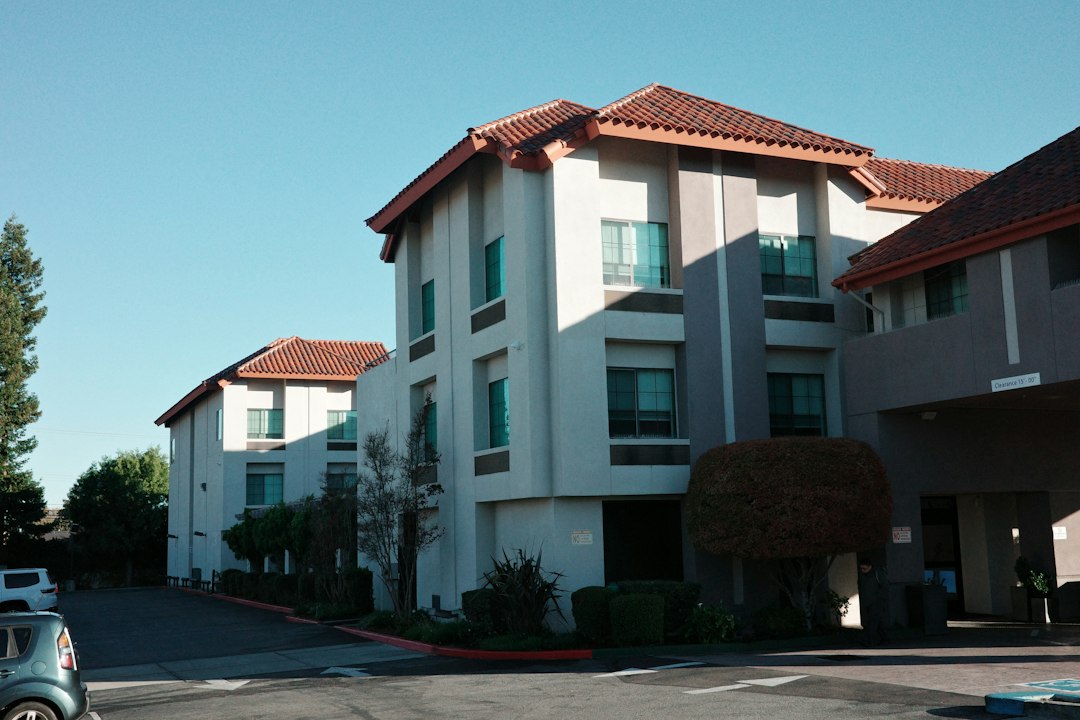
San Jose runs a just-cause eviction and relocation-assistance system that is separate from, and in several ways stricter than, California’s statewide Tenant Protection Act, and a surprising number of owners selling a rental property in San Jose first learn about it when an escrow officer or tenant’s attorney raises it mid-transaction.
If your rental sits in a building with three or more units, or if you plan to clear a tenant through the Ellis Act before closing, San Jose Municipal Code (SJMC) Chapter 17.23 sets exact relocation dollar amounts, notice periods, and filing steps — and getting any of them wrong can delay a sale by months or expose a seller to civil liability that follows the transaction.
Which Properties the Ordinance Covers
SJMC Section 17.23.1230 limits just-cause coverage to rent-stabilized units, any building with at least three rental units, unpermitted or illegally operating units, and guesthouses or guestrooms. Single-family homes, duplexes, condominiums, and legal second units are generally exempt — unless the unit itself is unpermitted, in which case the exemption does not apply.
This threshold matters for a seller because it determines which notice rules govern the transaction: a triplex owner clearing a unit before listing is squarely inside the ordinance, while the owner of a single-family rental across the street is not, even though both properties sit a few blocks apart in the same city.
Thirteen Grounds, and a Sale Is Not One of Them
SJMC Section 17.23.1250 lists the only causes that justify ending a covered tenancy: unpaid rent, material or repeated lease violations, substantial damage to the unit, refusal to sign a similar or renewed rental agreement, nuisance, refusal to provide reasonable access, an unapproved subtenant holding over, substantial rehabilitation, Ellis Act withdrawal, owner move-in, a court or government order to vacate, vacating an unpermitted unit, and criminal activity.
As in most California just-cause ordinances, wanting to sell the property is not on the list.
The three grounds that actually let an owner clear a unit ahead of a sale — Ellis Act withdrawal, owner move-in, and substantial rehabilitation — each carry their own conditions, notice periods, and relocation obligations, and picking the wrong one, or assuming a sale alone justifies a notice, is the single most common way sellers end up contesting an eviction instead of closing on schedule.
The Ellis Act Route: Exit the Rental Business Entirely
Most sellers who need vacant possession use the Ellis Act process codified at SJMC 17.23.1120 through 17.23.1180.
It requires withdrawing every unit on the parcel from the rental market — a landlord cannot selectively evict one tenant under the Ellis Act while keeping others in place — and it requires a minimum 120-day notice before the withdrawal date.
Before serving that notice, the owner must pay the city’s processing fee (an unpaid fee invalidates the notice outright), file a Notice of Intent to Withdraw, hand each tenant the city’s notice of tenant rights form, and record an Ellis Act memorandum against the property within ten days of filing — or at least one day before any sale or transfer of the property, whichever comes first.
That recorded memorandum encumbers the property for ten years and is exactly the kind of title item a buyer’s lender or title company will flag, so timing the Ellis Act filing correctly relative to the actual close of escrow is not optional paperwork; it is a condition of clear title.
What the City Actually Requires You to Pay
Relocation assistance under the Ellis Act and owner move-in grounds is calculated by bedroom count, deposited into escrow, and paid per household rather than per occupant. As administered under SJMC 17.23.1150 and 17.23.1151, the base amounts are $6,925 for a studio, $8,400 for a one-bedroom, $10,353 for a two-bedroom, and $12,414 for a three-bedroom unit.
Households that qualify for additional assistance — because a member is 62 or older, disabled under the Fair Employment and Housing Act definition, terminally or catastrophically ill, or because the household includes a K-12 student — receive a further 40% on top of the base amount, bringing the combined total to $9,695, $11,760, $14,494, and $17,380 respectively across the same four unit sizes.
These figures are published by the city and should be confirmed directly with San Jose’s Rent Stabilization Program before any notice is served, since municipal relocation schedules are revised periodically and a stale number is no defense to an underpayment claim.
The Comparable-Unit Alternative
SJMC 17.23.1151 gives landlords an alternative to cash relocation: offering the tenant a comparable rent-controlled unit at the same rent. If every affected tenant accepts in writing, the landlord pays only a smaller moving-cost amount instead of the full base-and-qualified relocation total — a meaningful savings on a multi-unit building.
The catch is that tenants retain the right to inspect the offered unit and revoke their acceptance afterward, which restores their full relocation entitlement.
A seller counting on the comparable-unit option to reduce relocation costs should treat the savings as provisional until every tenant has actually moved in and the window to revoke has closed, not as a number to rely on while negotiating a purchase price with a buyer.
Extended Tenancies That Can Delay a Sale
Not every household has to move out on the 120-day Ellis Act timeline.
Tenants who are 62 or older, disabled, or terminally or catastrophically ill, and who have lived in the unit at least one year, can extend their tenancy by up to an additional year by giving the landlord written notice within 60 days of the original termination notice.
Households with a child enrolled in kindergarten through twelfth grade who have lived in the unit at least a year can extend through the end of the school year plus 60 days.
These extensions are not optional on the landlord’s side — they are a statutory right the tenant can invoke unilaterally — so a seller who has already signed a purchase agreement assuming vacant possession on a fixed date can find that date pushed by months if even one qualifying household in the building exercises an extension.
The Five- and Ten-Year Right of Return
The Ellis Act process does not end when the tenant moves out.
Under SJMC 17.23.1170, if the unit returns to the rental market within five years of the withdrawal, the former tenant has the right to reoccupy it at the same rent-controlled rate they were paying when they left, provided they kept their contact information current with the landlord.
Even if the original tenant declines to return, the unit must still be offered to them at the former rent if it is re-rented within that five-year window.
Between five and ten years after the withdrawal, the former tenant is entitled to 120 days’ written notice before the owner returns the unit to the rental market at all.
This matters directly for a seller: a buyer who intends to re-rent a unit that was Ellis Act-withdrawn in the last decade may be buying into these obligations along with the property, which is a disclosure point worth raising before escrow rather than after, since it can affect how quickly the new owner can actually re-let the unit at full market rent.
Owner Move-In Evictions Have Their Own Fine Print
The owner-occupancy ground requires that the owner hold at least a 50% ownership interest in the property and have no other vacant, comparable unit available in the same building.
A qualifying relative — defined as a spouse, domestic partner, parent, child, or sibling — may occupy instead of the owner, but whoever moves in must do so within three months of the tenant’s departure and remain as a principal residence for 36 continuous months.
Civil Code Section 1946.1 layers its own statewide notice requirement on top of this: 60 days if the tenant has lived in the unit a year or more, 30 days if less.
A seller planning to use this ground to deliver vacant possession to a buyer who intends to occupy should confirm the buyer actually qualifies as a relative under the ordinance’s narrow definition — a buyer who is simply ‘planning to live there’ with no family relationship to the seller does not satisfy an owner-occupancy ground at all.
Substantial Rehabilitation: The Ground Sellers Most Often Misuse
Some owners planning to sell a dated rental try to use the substantial-rehabilitation ground to clear tenants first, assuming a planned renovation qualifies.
It does not unless the permits are already in hand, the work will make the unit uninhabitable for at least 30 days, and the repair cost exceeds ten times the monthly rent multiplied by the number of units being worked on simultaneously.
Tenants displaced this way also keep a statutory right to return to the unit at their prior rent once work is finished, which can complicate a sale to a buyer who was expecting a fully renovated, vacant, and unencumbered property.
An owner who has not yet pulled permits, and who intends to let a buyer finish any renovation after closing, generally cannot use this ground at all.
The 1979 Cutoff That Decides Which Process Applies to the Ellis Act
San Jose’s Ellis Act coverage under SJMC 17.23.1120(I) is tied to a specific date: buildings with a certificate of occupancy issued on or before September 7, 1979.
That cutoff excludes single-family homes, duplexes, condominiums, townhomes, in-law units and ADUs, transient hotels and boarding houses with stays under 30 days, nonprofit senior housing, school dormitories, government-owned units, and any rental property in unincorporated Santa Clara County rather than the city itself.
A seller of a fourplex built in 1981, for instance, falls outside the Ellis Act framework entirely even though the building would otherwise look identical to a covered 1975 property across the street — which is exactly the kind of date-driven distinction a title company or tenant’s attorney will check first when a withdrawal notice is challenged.
How San Jose’s Rules Interact With AB 1482
California’s statewide Tenant Protection Act (AB 1482) sets a baseline just-cause and one-month relocation-payment standard for most multifamily housing, but Civil Code Section 1946.2(g) allows a more protective local ordinance to govern instead.
San Jose’s chapter, with its bedroom-based relocation schedule, qualified-tenant add-on, and five- and ten-year right of return, is more protective than the state minimum in most of the scenarios a seller is likely to face, so the local rules — not the simpler statewide one-month figure — are the ones that actually apply to a covered San Jose rental.
A seller who budgets for AB 1482’s flat one-month relocation payment, without checking whether SJMC 17.23 governs the property instead, is likely to underbudget the actual cost of clearing a tenant before closing.
A Worked Example
Consider a landlord selling a six-unit building constructed in 1965, with one vacant two-bedroom unit and five occupied units, one of which houses a tenant who is 67 years old. Because the building predates the September 1979 cutoff and has more than three units, the full Ellis Act framework applies.
The owner must withdraw all five occupied units, not just the ones that are easiest to clear, and must pay base relocation of $10,353 for each two-bedroom household plus the 40% qualified-tenant add-on for the senior tenant’s household, bringing that household’s total to $14,494.
The 120-day notice clock does not start until the city fee is paid and the Notice of Intent to Withdraw is filed, and the senior tenant may extend occupancy by up to a year beyond that if written notice of the extension request is given within 60 days.
A seller who assumed a straightforward 120-day timeline across the board, without accounting for the one household’s extension rights, would be off by as much as a year on this single unit alone.
Penalties and Enforcement a Seller Should Know About
SJMC 17.23.1280 gives tenants a civil remedy — including actual damages, treble damages for willful violations, and attorney’s fees — against a landlord who terminates a tenancy without a valid ground or underpays relocation assistance, and 17.23.550 authorizes city fines of up to $10,000 per violation.
Beyond the financial exposure, an improperly noticed termination is frequently unenforceable in an unlawful detainer action, meaning a defective Ellis Act filing or a shortchanged relocation payment can leave a tenant in place well past the date a purchase agreement assumed.
For a seller under contract with a fixed closing date, that kind of delay is often more costly than simply paying the correct relocation amount and following the notice sequence exactly as the ordinance sets it out.
When a Cash Sale Makes More Sense Than Clearing the Tenant Yourself
Running the Ellis Act process correctly — recording the memorandum, calculating the right relocation tier, tracking extension rights, and timing everything around an escrow date — is realistic for an owner with months of lead time and no urgency.
It is a much harder process to manage correctly under time pressure, and a botched filing can leave a title encumbrance or a contested eviction sitting in the way of a sale that was supposed to close quickly.
If the property is not in good enough condition to attract a strong listing price even after a tenant moves out, or if the holding costs of a delayed closing outweigh the gap between a tenant-occupied cash price and a vacant, fully marketed one, selling with the tenancy in place to a buyer experienced in San Jose’s rent-stabilized housing stock is frequently the faster and less risky path.
It is not automatically the better choice for every owner — a property that would sell for substantially more vacant, with no urgent deadline, is often worth the extra months the Ellis Act process takes.
A Short Checklist Before You List a Covered San Jose Rental
- Confirm whether the property is covered under SJMC 17.23.1230 — three or more units, an unpermitted unit, or an already rent-stabilized building.
- Identify which of the thirteen just-cause grounds actually applies; a pending sale by itself is not one of them.
- If using the Ellis Act, withdraw every unit on the parcel, pay the city fee before serving notice, and record the memorandum before close of escrow.
- Confirm the current relocation figures directly with San Jose’s Rent Stabilization Program before calculating what is owed.
- Check every household for extension eligibility (age, disability, terminal illness, or a K-12 student) before assuming a fixed move-out date.
- Disclose any five- or ten-year right-of-return obligations to a buyer who intends to re-rent the unit.
Getting a Cash Offer on a San Jose Rental
Cash Home Buyers CA buys tenant-occupied, mid-eviction, and vacant rental property across the South Bay directly or through a vetted cash buyer, and can work around an Ellis Act filing already in progress, a pending relocation payment, or a notice period still running.
When you sell to us, we pay the standard closing costs, including the county and city transfer taxes, escrow and title.
Read more in our guide to selling a tenant-occupied house in San Jose, request a no-obligation offer at Cash Home Buyers CA, or see our listing on Google Business Profile. You can also call us directly at (424) 435-2326.