
Fontana’s Warehouse Boom: What It Means If You’re Relocating
Fontana incorporated on June 25, 1952, in San Bernardino County, and the city that grew up around a wartime steel mill has become one of the fastest-growing cities in the Inland Empire, with a population the Census Bureau estimated at roughly 221,000 in 2025, up from 208,393 at the 2020 Census.
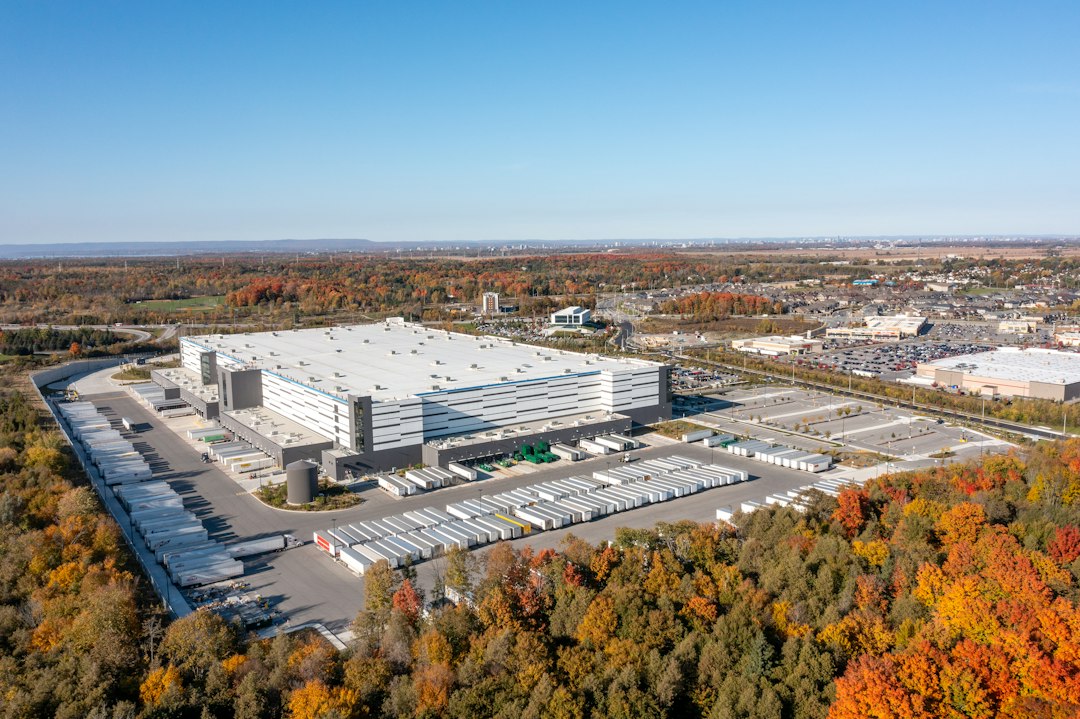
What’s changed in the decades between is the city’s entire economic identity: Fontana went from a steel town to what it’s now widely described as, a regional hub of the trucking and logistics industry.
If you own a home in Fontana and you’re thinking about relocating, that shift is worth understanding, because it’s part of why some longtime residents are selling and moving rather than staying put.
From Steel Town to Logistics Hub
Henry J. Kaiser built Kaiser Steel just outside Fontana’s city limits in 1942, securing a steady steel supply for his World War II shipbuilding operation at a time when it was one of only two steel mills west of the Mississippi River.
At its peak the mill employed more than 2,500 workers and ran its own newspaper and on-site medical facility; Kaiser and Dr. Sidney Garfield opened a 50-bed hospital there in 1943 as part of a prepaid healthcare model that would eventually grow into Kaiser Permanente.
The mills closed in the 1980s, and much of the land was sold off — part of the site became the Auto Club Speedway, and part continues as a working steel operation under California Steel Industries.
What filled the economic space the steel mill left behind wasn’t another single employer, but an entire industry: warehousing and trucking.
Fontana’s location along major freeway corridors feeding the ports of Los Angeles and Long Beach made it attractive to distribution companies looking for large, inexpensive parcels close to those ports, and the city has approved warehouse development aggressively for years.
Amazon alone is now among the city’s top employers, with more than 3,100 workers in Fontana, and the city is routinely described in regional planning and news coverage as a center of the Inland Empire’s logistics economy — the same economic forces reshaping neighboring cities like Rialto, Bloomington, and Jurupa Valley.
How Fast Fontana Has Actually Grown
The population numbers tell the growth story clearly: Fontana had 128,929 residents in 2000, 196,069 by 2010, and 208,393 at the 2020 Census — a 6.3% increase in that last decade alone, on top of the roughly 52% jump in the decade before it.
Much of that growth came from new residential development in the previously sparsely populated northern part of the city, along with annexations of unincorporated San Bernardino County land in 2006 and 2007 that added new territory to the city altogether.
The 2020 Census counted 55,632 housing units citywide, with 98% occupied and a 66.8% owner-occupied, 33.2% renter-occupied split — figures that reflect a city that’s still very much a place people buy into rather than just pass through, even with the industrial growth happening alongside it.
North Fontana’s New Construction vs. the Older Industrial Core
Where in the city your home sits changes this calculus considerably.
The newer master-planned communities in the northern part of the city, including Hunter’s Ridge and Coyote Canyon near the San Gabriel foothills, sit well away from the heaviest concentration of distribution centers and tend to market more like any other newer Inland Empire subdivision, with amenities and HOA-managed streetscapes that read as suburban rather than industrial.
Southern and central Fontana, closer to the historic core where Kaiser Steel once operated and nearer the freeway corridors that carry most of the truck traffic, sits much closer to the logistics buildout and the issues that come with it.
A relocating seller in a northern Fontana HOA community is working with a meaningfully different buyer pool and set of concerns than one selling an older home a few blocks from an active distribution yard, even though both are technically the same city on a map.
What the Current Market Looks Like for a Relocating Seller
Redfin’s August 2026 data for Fontana puts the median sale price at roughly $650,500, essentially flat year-over-year, with homes taking a median of 44 days to go under contract, about two days faster than a year earlier.
That 44-day median is just the time to get an accepted offer — add a typical 30-to-45-day escrow for a financed buyer on top, and a conventional sale can easily run two to three months from listing to closed funds.
For a seller with a firm job-relocation date, that math matters: list too close to your move date and you risk carrying a mortgage, utilities, and insurance on a vacant house in another state while a sale plays out on its own schedule rather than yours.
The Housing-Next-to-Warehouses Problem
That growth hasn’t come without friction for residents who live near the industrial corridor. In 2019, the California Air Resources Board advised against building new housing within 1,000 feet of industrial warehouse facilities, citing truck-related air pollution as a health concern for nearby residents.
Fontana has approved a substantial amount of warehouse square footage in and around its residential neighborhoods over the years, and in 2021 the California Attorney General’s office sued over a specific warehouse project in the city, citing concerns about air quality and the adequacy of the environmental review.
These aren’t abstract policy disputes — they’re the backdrop for why some Fontana homeowners who bought years ago, before a nearby parcel became a distribution center, now live next to round-the-clock truck traffic they didn’t sign up for.
If your home sits near one of the newer logistics parks, or near truck routes feeding them, you may be dealing with noise, diesel exhaust, and traffic that wasn’t part of the picture when you bought.
None of that is a defect in your house — it’s a change in the neighborhood around it, and it’s a completely legitimate reason to decide the location no longer fits what you want, even if the home itself is in good shape.
What Happened to the Old Kaiser Steel Site
The former Kaiser Steel property itself didn’t become more warehouses — it became something else entirely.
Part of the site is now the Auto Club Speedway, a racetrack in the unincorporated area just outside Fontana’s city limits that has hosted NASCAR Cup Series and Xfinity Series races, along with former IndyCar Series events.
Its owners opened an NHRA-sanctioned drag strip adjacent to it in 2006, and the track itself has been in the process of converting from its original two-mile oval into a half-mile short track more comparable to Bristol Motor Speedway, a project that was pushed back roughly a year by the COVID-19 pandemic.
Part of the original mill site also continued in steel production and is now operated by California Steel Industries.
It’s a useful reminder that Fontana’s industrial land hasn’t simply been paved over with distribution centers wall to wall — but the economic pull toward logistics and warehousing has still been the dominant trend shaping new development across the rest of the city.
Why This Matters for a Buyer’s Appraisal, Not Just Your Comfort
Proximity to industrial and warehouse uses can affect how appraisers and buyers evaluate a property, particularly for homes directly adjacent to a distribution facility or along a designated truck route.
This doesn’t mean every Fontana home near logistics development will struggle to sell — plenty sell at strong prices to buyers who value the city’s relative affordability compared with coastal Los Angeles and Orange County markets, and who aren’t bothered by the industrial backdrop.
But if you’re relocating and your home sits close to one of these developments, it’s worth being realistic that a conventional buyer evaluating the location, and their lender’s appraiser, may factor that proximity into their assessment in ways a comparable home farther from the industrial corridor wouldn’t face.
What a Fontana Relocation Sale Actually Involves
Whatever is driving your move — a job transfer, a family situation, or simply wanting distance from the industrial growth around you — the mechanics of a relocation sale in California follow the same basic path.
Escrow in California generally withholds 3⅓ percent of the sales price for state tax purposes unless an exemption applies, which is common for a seller’s principal residence; our guide to FTB Form 593 withholding on a California home sale walks through how that works and what documentation avoids an unnecessary withholding.
If you’re coordinating the sale around a move date, our broader piece on selling a house when you need to relocate covers the scheduling and logistics questions that come up whether you’re leaving Fontana or any other California city.
Signing from out of state or out of the area isn’t a barrier, either. A mobile notary can meet you wherever you’ve relocated to sign the closing documents in person, with the signed originals shipped back to escrow for recording — you don’t need to fly back to San Bernardino County to close.
If your house will sit vacant for any stretch between your move-out date and closing, check with your homeowner’s insurance carrier about vacancy coverage before you leave.
Many standard policies limit or exclude coverage for a home left empty beyond a set number of consecutive days, and that gap matters more in a city with active industrial development nearby, where an unoccupied property can be an easier target for trespassing or vandalism than one with someone regularly checking on it.
Keeping utilities on through closing, arranging for a neighbor or property manager to check the property periodically, and confirming your coverage in writing are all worth doing before the moving truck pulls away.
A Worked Example
Say a Fontana homeowner bought their house in North Fontana in 2008, well before a large distribution center went up on a formerly vacant parcel half a mile away. Fifteen years later, a job transfer out of state gives them a firm moving date eight weeks out.
They have two choices: list conventionally, which in a market with a roughly six-and-a-half-week median time to accept an offer could still leave them juggling a financed buyer’s inspection and loan contingencies from a new state, or take a direct cash offer that removes financing risk and lets them set a closing date that matches the moving truck’s arrival at their next home.
For a seller whose priority is certainty over squeezing out the last few thousand dollars a longer marketing period might produce, the cash sale removes the two biggest relocation risks: a financed deal falling through at the last minute, and having to manage repairs or showings from a different time zone.
Contrast that with a second homeowner relocating from a newer property in Hunter’s Ridge, in the northern part of the city, away from the industrial corridor.
That seller faces a more conventional sale calculus: a financed buyer is likely to appraise the home without the proximity concerns the first seller’s location raises, and the 44-day median time to accept an offer, plus a standard escrow, may genuinely fit their relocation timeline if they have a few months of runway.
The point isn’t that every Fontana home faces the same pressure — it’s that location within the city, not just the city name on the listing, drives how much that pressure actually applies to your specific sale.
Frequently Confused Questions
Does living near a warehouse mean my home can’t sell? No. It can affect how a conventional buyer’s lender appraises the property and how long marketing takes, but plenty of homes near Fontana’s logistics corridor sell every year. It’s a factor to plan around, not a dealbreaker.
Is the 1,000-foot buffer in CARB’s guidance a hard legal requirement? It’s state guidance aimed at local land-use planning and environmental review, not a rule that invalidates existing homes built closer than that distance. It mainly affects whether new housing gets approved near industrial sites going forward, and it’s part of why some warehouse projects near existing neighborhoods have drawn legal challenges.
Will the withholding on my sale proceeds apply if I’m moving out of state? The withholding question depends on whether the property was your principal residence and the sale otherwise qualifies for an exemption, not on where you’re moving to. Confirm the specifics with escrow and a CPA.
Does every part of Fontana face the same warehouse-proximity issue? No. Newer communities in the northern part of the city, like Hunter’s Ridge and Coyote Canyon, sit farther from the heaviest concentration of distribution development than older neighborhoods closer to the historic industrial core and the freeway corridors that carry truck traffic.
When a Cash Sale Makes More Sense Than a Standard Listing
A conventional listing can work well in Fontana if your home is in solid shape, isn’t directly adjacent to industrial development, and you have the weeks a financed sale typically takes.
A direct cash sale tends to make more sense when you’re on a firm relocation deadline tied to a new job start date, when your home sits close enough to a distribution facility or truck route that you’re worried about appraisal or buyer hesitation, when the house needs updates you don’t want to fund before a move, or when you’ve already relocated and don’t want to manage a listing, inspection, and showings from a different city or state.
If none of that applies and you have the runway, a standard listing with an agent familiar with your specific neighborhood is still worth comparing against a cash offer before you decide.
What to Confirm Before You List or Sell
- Check how close your property is to any approved or proposed warehouse or distribution development, and whether that’s likely to affect buyer interest
- Confirm with escrow whether your sale qualifies for an exemption from California’s standard withholding on the sale proceeds
- If you’re signing out of state, ask escrow how far in advance to schedule a mobile notary around your move date
- Compare a cash offer’s certainty on timing against a conventional listing’s typical marketing period in your specific part of Fontana
Fontana’s transformation from a steel town into one of the Inland Empire’s biggest logistics hubs has brought jobs and growth, but it’s also changed what it’s like to live next to the industrial corridor for homeowners who bought before that growth arrived.
If you’re relocating and want a straightforward cash offer rather than managing a listing from out of town, Cash Home Buyers CA can walk through your numbers with you — we buy directly or bring in a vetted cash buyer, and when you sell to us, we pay the standard closing costs, including the county and city transfer taxes, escrow and title.
You can see how we buy houses throughout the city on our Fontana relocation page, or check out our Google reviews to see what past sellers have said.