
San Mateo Transfer Tax: The $10 Million Rate Cliff
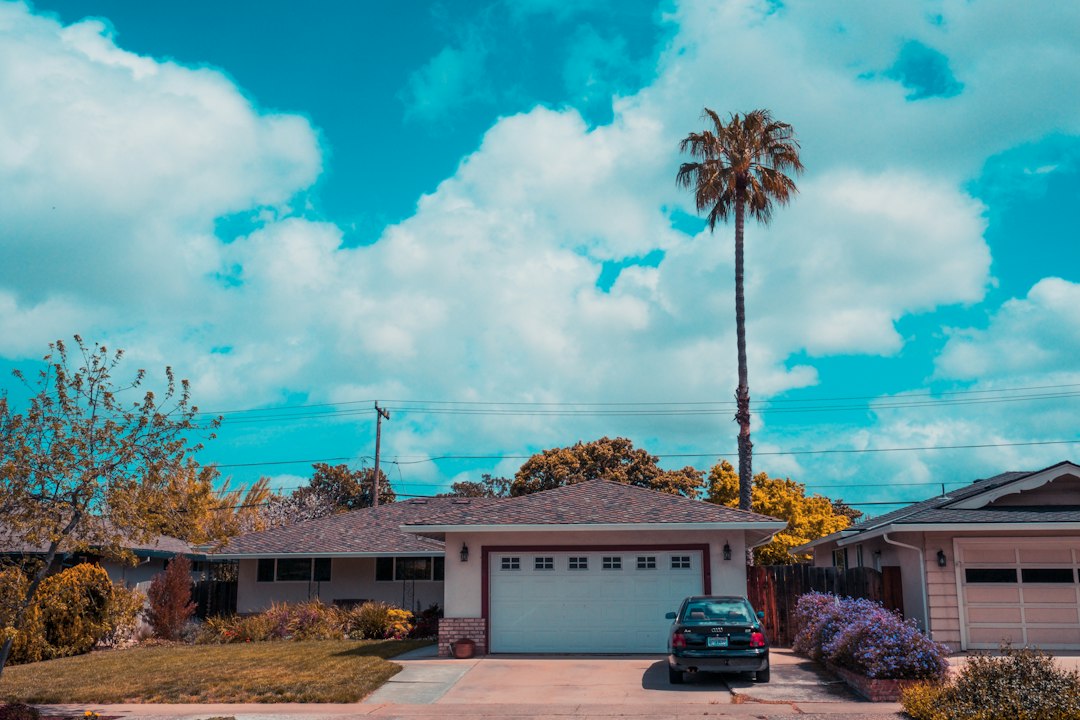
Selling a house in San Mateo under $10 million costs 0.5% of the sale price in city transfer tax; cross that $10 million line and the entire sale price — not just the amount above $10 million — gets taxed at 1.5% instead.
That cliff, rather than a smooth sliding scale, is what Measure CC actually wrote into the San Mateo Municipal Code, and it is worth understanding even for an ordinary residential sale well under the threshold, because it shapes how the tax gets calculated and disclosed at every price point below it.
What Measure CC Actually Changed
San Mateo voters adopted Measure CC on November 8, 2022, amending Section 3.48.010 of the San Mateo Municipal Code. Before Measure CC, the city’s Real Property Transfer Tax applied a flat rate to every transfer regardless of size.
Ordinance 2022-15, codifying the measure, instead imposed a tax “on each deed, instrument or writing by which any lands, tenements, or other real property within the City are sold, granted, assigned, conveyed or otherwise transferred” at one of two rates: one-half of one percent of the consideration or value for transfers under $10 million, and one and one-half percent for transfers at or above $10 million.
The ordinance took effect ten days after the City Council certified the November 2022 election results, putting the new structure in place in late 2022 and unchanged since, according to California City Finance’s tracking current through December 2025.
For context, the county portion stays constant everywhere in San Mateo County: $1.10 per $1,000 under the standard countywide documentary transfer tax authorized by Revenue and Taxation Code §§ 11911–11929. A San Mateo seller therefore owes the city’s 0.5% (or 1.5%, above $10 million) plus the county’s flat $1.10 per $1,000 — roughly 0.11% — on top.
Why the $10 Million Line Is a Cliff, Not a Bracket
The language of Ordinance 2022-15 does not create a graduated bracket the way federal income tax brackets work, where only the dollars above a threshold get taxed at the higher rate.
Instead, the ordinance sets a single rate that applies to “the consideration or value of the interest or property” as a whole, based on which side of $10 million that total value falls on. A $9,999,999 sale owes 0.5% on the full amount — $49,999.995. A $10,000,000 sale owes 1.5% on the full amount — $150,000.
One dollar of difference in sale price produces a $100,000 difference in city transfer tax, which is exactly the kind of cliff effect that makes sellers and their attorneys negotiate sale prices deliberately on one side of a round-number threshold in high-value transactions.
For the overwhelming majority of San Mateo residential sales — which fall far below $10 million — this cliff is not something a seller personally experiences, but it explains why the tax calculation on a $10 million-plus commercial or luxury transaction in San Mateo looks so different from a comparable transaction in a neighboring city with a smoothly tiered rate structure.
What an Ordinary San Mateo Home Sale Actually Owes
Below the $10 million threshold — which covers essentially every single-family home sale in the city — the combined city-plus-county rate works out to 0.61% of the sale price: 0.5% city plus roughly 0.11% county.
On a $1,200,000 San Mateo house, a price point common in the city’s single-family neighborhoods, that comes to $6,000 in city tax plus $1,320 in county tax, for a combined $7,320 due at closing. On a $900,000 sale, the combined figure is $5,490. On a $1,500,000 sale, it is $9,150.
How San Mateo’s Structure Compares to Its Peninsula Neighbors
San Mateo’s 0.5%-under/1.5%-over structure puts it in a similar category to a handful of other charter cities that use a threshold-based rate rather than a flat one, but the specific threshold and rates vary by city and were each set through a separate local ballot measure.
Within San Mateo County itself, San Mateo is one of the few cities with any independent city transfer tax at all — East Palo Alto, Redwood City, Menlo Park, Foster City, Burlingame, and most of the county’s other cities are general-law cities that impose no city-level transfer tax beyond the standard countywide rate, so a seller moving a sale from San Mateo to a neighboring Peninsula city can see the transfer tax portion of closing costs change substantially based on city boundaries alone, even when the two houses are a few miles apart and similarly priced.
Compare that to cities elsewhere in the Bay Area that chose a more gradual tiered structure instead of a single cliff: Oakland steps its rate up through several bands as the sale price rises, and San Jose does the same with its own set of thresholds.
San Mateo’s voters, through Measure CC, chose the simpler two-rate version — easy to state, but capable of producing a very different outcome for a transaction priced a single dollar on either side of the line.
Exemptions San Mateo’s Ordinance Actually Lists
Section 3.48.030 of the San Mateo Municipal Code, also amended by Measure CC, lists the transactions the tax does not reach. Documents securing a debt, or a transfer to a beneficiary or mortgagee taken in lieu of foreclosure, are exempt.
Transfers to the United States, a state, or a political subdivision are exempt, though the tax can still be collected by assessment from any other liable party to the transaction.
Transfers executed to make a bankruptcy reorganization plan effective are exempt, as are transfers among partners where a partnership is considered a continuing partnership under federal tax law, and transfers of community property or interests among joint tenants or tenants in common where the owners have each held their interest for at least five years, or all acquired their interests in the same transaction, provided no grantor receives consideration beyond a release from debt.
Two exemptions matter most for a typical residential seller.
Interspousal transfers are broadly exempt — transfers to a trustee for a spouse’s benefit, transfers on the death of a spouse, transfers under a divorce property settlement or dissolution decree, and any transfer or termination of a co-owner’s interest solely between spouses.
And transfers between parents and children of a single-family residence, or of property zoned single-family residential, are exempt outright, covering natural and adopted children as well as stepchildren and sons- or daughters-in-law who hold that legal relationship at the time of transfer.
Neither of these exemptions applies automatically — the transferring party has to claim it properly with the County Clerk-Recorder at the time of recording.
What the Measure CC Vote Actually Decided
Measure CC was placed on the ballot as a straightforward revenue measure, raising the city’s transfer tax on larger transactions while leaving the rate on typical residential sales essentially where it already was.
The ordinance’s own severability clause states that if any section is found invalid, the rest remains in force — standard language, but worth knowing if a seller ever encounters a dispute over how a specific clause of the ordinance applies to an unusual transaction, since a successful challenge to one provision would not unwind the entire tax structure.
What Actually Counts as “Consideration” Under the Ordinance
Section 3.48.010 defines “consideration or value” in a way that surprises some sellers who assume the taxable number is simply the sale price shown on the purchase contract.
The ordinance’s own text states that consideration includes “the amount of any indebtedness, existing immediately prior to the transfer which is secured by a lien, deed of trust or other encumbrance on the property conveyed and which continues to be secured by such lien, deed of trust or encumbrance after said transfer” — in plain terms, if a buyer takes the property subject to an existing loan rather than that loan being paid off at closing, the unpaid balance of that loan is still added into the taxable consideration, not excluded from it.
The same section folds in special assessments that remain a lien on the property and that the buyer agrees to assume.
Where San Mateo’s ordinance does carve out an exclusion is for any other type of lien or encumbrance — one outside those two categories — that exists before the transfer and continues afterward; the value of that kind of encumbrance is left out of the calculation.
In nearly every ordinary residential sale, the existing mortgage is paid off in full through escrow rather than assumed, so the taxable consideration is simply the sale price; the assumption language mainly matters in seller-financed deals, subject-to transactions, or transfers where an existing loan is deliberately left in place.
If the sale price itself is not clearly fixed — for instance, in a transfer where the final consideration depends on a future contingency — the ordinance falls back to the fair market value of the property at the time of transfer, again after backing out any encumbrance of the excluded type.
For a seller negotiating a standard listed sale or a direct cash sale with a clear, agreed price, this fallback provision rarely comes into play, but it is the kind of detail an escrow officer or real estate attorney should flag before recording if a transaction involves assumed debt, a contingent price, or anything other than a clean payoff-and-sale structure.
The Preliminary Change of Ownership Report Still Has to Be Filed
Separate from the transfer tax itself, California law requires a Preliminary Change of Ownership Report, form BOE-502-A, to be completed by the buyer and submitted to the County Clerk-Recorder at the same time a deed is recorded, under Revenue and Taxation Code §480.3.
This is a statewide requirement that applies in San Mateo County exactly as it does everywhere else in California — it is not something Measure CC changed or added — but it is worth mentioning here because it is filed at the same counter, at the same moment, as the transfer tax payment, and an incomplete or missing PCOR can hold up recording of the deed itself.
The form asks the buyer to describe the type of transfer, the purchase price, financing terms, and whether any of the statutory reassessment exclusions apply (a parent-child transfer, for example, triggers a different set of paperwork from the Assessor’s office in addition to anything claimed on the transfer tax side).
A seller does not fill out the PCOR, but a seller working with an escrow officer who has handled San Mateo closings before should expect this form to appear in the closing package alongside the transfer tax declaration, and should expect recording to stall if the buyer’s side does not return it promptly.
Who Pays It and How It Gets Collected
As with transfer tax generally in California, the municipal code does not assign the tax to buyer or seller by default — that is a matter of the purchase contract and local custom.
San Mateo County custom typically has the seller pay both the county and city transfer tax, reflected in the standard California purchase agreement unless the parties negotiate otherwise.
The tax itself is collected by the San Mateo County Clerk-Recorder at the time the deed is recorded, with the city’s 0.5% (or 1.5%) share then remitted to the City of San Mateo separately from the county’s flat rate.
What Else Shows Up in the Same Closing Package
The transfer tax rarely arrives alone at closing.
Most San Mateo sellers also see an entry for state withholding under FTB Form 593, which escrow is required to calculate and, absent a qualifying exemption, hold back at a flat 3⅓% of the gross sale price (or a seller-elected alternative withholding amount based on actual gain) and remit to the Franchise Tax Board — a separate mechanic from the transfer tax, collected by a different agency, but one that shows up on the same settlement statement and gets confused with it often enough to be worth distinguishing clearly.
A seller who has an existing judgment lien or an FTB or IRS tax lien recorded against the property will also see that debt paid off through escrow before any transfer tax or withholding gets calculated, since a lien against title has to clear before a deed can record free and clear, regardless of what the transfer tax itself comes to.
A San Mateo seller over 55 weighing whether to sell at all should also know that Proposition 19 lets an eligible homeowner carry their existing property tax base to a replacement home anywhere in California, up to three times — a factor that is entirely separate from the transfer tax owed at closing but that frequently changes the net math of whether selling now, versus waiting, makes sense for an older homeowner on a fixed income.
When a Direct Sale Is Not the Better Math
None of this changes based on how the house sells — the city and county transfer tax applies at the identical combined 0.61% rate whether a San Mateo house sells through a traditional listing or a direct sale to an investor, since Measure CC and the county’s documentary transfer tax both tax the transfer itself, not the identity of the buyer.
That means the transfer tax is not, by itself, a reason to choose one path over the other.
A San Mateo house in solid condition, in a neighborhood with strong buyer demand, can often net more through a traditional listing even after a standard commission, simply because competing offers in a tight Peninsula market can outweigh what the commission costs.
A direct sale tends to be the better fit specifically when a property needs work a conventional buyer’s lender would flag, when the seller cannot carry holding costs through a 30-to-60-day marketing period, or when certainty and speed of closing matter more than testing the open market for the highest possible price.
An escrow officer working a San Mateo closing typically itemizes each of these costs separately on the final settlement statement — the city transfer tax, the county transfer tax, FTB withholding if applicable, and any payoff of an existing lien — rather than bundling them into a single closing-costs line.
Asking to see that breakdown before signing final closing documents is a reasonable step for any seller, and it is the only reliable way to confirm that the combined rate actually applied was 0.61% rather than something higher calculated in error.
- Confirm the current combined rate with your escrow officer before closing — a municipal rate set by ballot measure can change again after a future election
- If your sale price is anywhere near $10 million, get specific advice on the cliff effect before setting a final price — a difference of a single dollar changes the tax by roughly six figures
- Check whether a parent-child or interspousal exemption under § 3.48.030 applies before assuming the full rate is owed
- Ask your escrow officer to itemize the city and county transfer tax separately so you can verify each against the current published rates
Transfer tax rates are set by local ordinance and ballot measure rather than a fixed statewide schedule, so always verify the current figure with the City of San Mateo or your escrow officer before relying on it for a specific transaction.
If you are weighing whether a traditional listing or a direct sale nets more after closing costs on a San Mateo property, cash home buyers in San Mateo is something Cash Home Buyers CA can walk through with you directly.
We buy directly or bring a vetted cash buyer, and when you sell to us, we pay the standard closing costs, including the county and city transfer taxes, escrow and title.
Find Cash Home Buyers CA’s profile on Google, or call (424) 435-2326 with questions about selling a San Mateo house.