
Relocating to Van Nuys, CA: What a Century of Growth Means for You
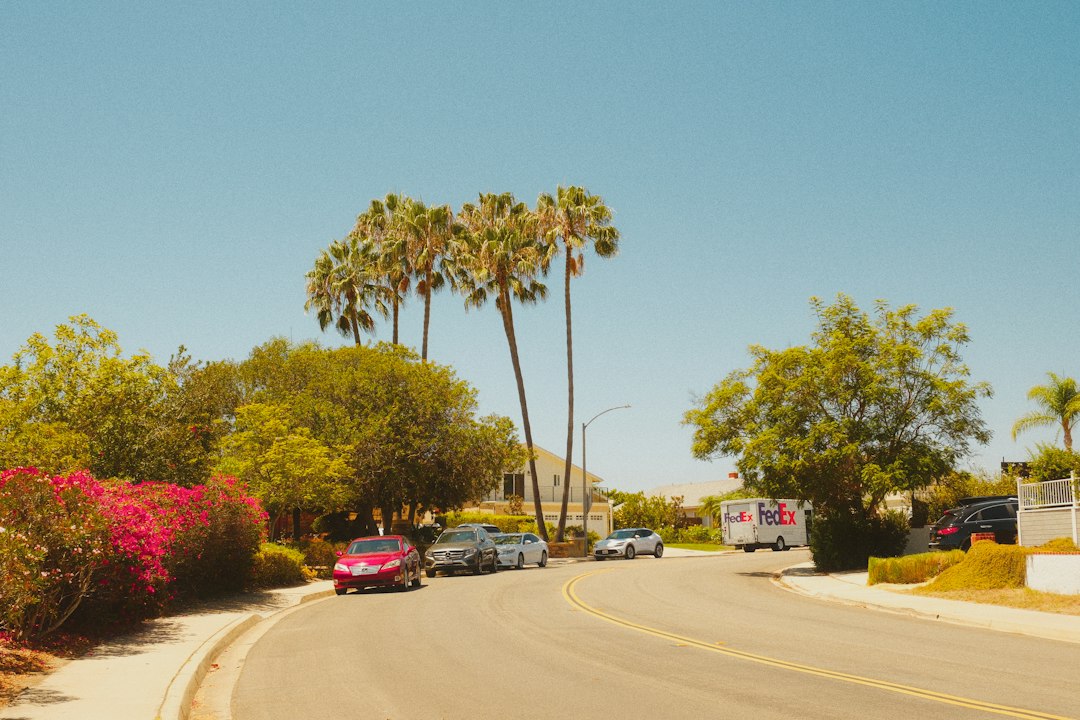
Van Nuys has been part of the City of Los Angeles since 1915, not always part of it — and that single fact still shapes everything from your property tax jurisdiction to which city department picks up the phone when something goes wrong.
If you’re relocating into or out of Van Nuys, the neighborhood’s century-long path from ranch land to one of the San Fernando Valley’s densest, most diverse communities tells you more about what to expect than any listing description will.
From Ranch Land to a Named Town in 1909
Van Nuys was developed as a town in 1909, carved out of the vast Rancho Ex-Mission San Fernando land that developers had been subdividing across the San Fernando Valley in the preceding years.
The town took its name from Isaac Newton Van Nuys, a prominent San Fernando Valley rancher and businessman who, along with his partners, had spent decades building the agricultural operations that made the Valley one of the most productive wheat-growing regions in California before suburban development took over.
The town’s founders laid it out specifically to serve as a commercial and residential center for the surrounding farmland, a role its namesake boulevard still plays today.
Why the 1915 Annexation Still Matters
Van Nuys and the rest of the San Fernando Valley were annexed into the City of Los Angeles in 1915, largely driven by the need for a reliable water supply that only the city’s new aqueduct system could guarantee.
That annexation is the reason a Van Nuys property today falls under Los Angeles city government rather than a separate municipality: Los Angeles city services, Los Angeles city permitting and code enforcement through LADBS, and Los Angeles city zoning all apply here the same way they apply in Hollywood or Boyle Heights, even though Van Nuys sits roughly 15 miles northwest of downtown L.A. across the Santa Monica Mountains.
A buyer relocating from a different California city should understand that “Los Angeles” on a Van Nuys deed isn’t a marketing label — it’s the actual, functioning city government whose rules and permit backlogs apply to any renovation, addition, or dispute on the property.
The Water Politics Behind the Annexation
The 1915 San Fernando Valley annexation didn’t happen in isolation — it followed the completion of the Los Angeles Aqueduct a couple of years earlier, the massive engineering project that brought Owens Valley water more than 200 miles south to a rapidly growing Los Angeles.
The city had both the water supply and a strong incentive to expand its tax base and service area, and Valley landowners had a strong incentive to gain access to that water rather than remain dependent on increasingly strained local groundwater.
That mutual interest is what actually got the annexation vote passed, not simply a desire for city services, and it’s part of why the Valley’s annexation happened as a single large event rather than piecemeal over decades the way some other parts of greater Los Angeles were absorbed.
Older Housing Stock Means More Permit Conversations
Because Van Nuys has been continuously built out since the 1910s, a buyer relocating here is more likely to encounter homes with decades of incremental additions, garage conversions, and renovations than in a neighborhood developed in a single building boom.
Every addition or conversion done without a permit becomes the current owner’s — and eventually the buyer’s — problem to resolve with the Los Angeles Department of Building and Safety if it surfaces during a future renovation or a sale.
A buyer should specifically ask whether any additions, converted garages, or accessory structures on a prospective property have permit records on file with LADBS, since an unpermitted addition can complicate both a future sale and a future insurance claim, and it’s a far easier conversation to have before closing than after.
The same logic applies to seismic retrofit work: a soft-story retrofit permit, if one exists, is worth confirming directly rather than taking a seller’s word for it, especially on an older multi-family building built before the city’s current retrofit requirements were adopted.
Van Nuys Boulevard: The Commercial Spine
Van Nuys Boulevard has functioned as the neighborhood’s main commercial corridor since the town’s founding, and it still anchors the area’s retail, dining, and municipal services today, including the Valley Municipal Building that houses a Los Angeles City Council field office and other civic functions.
For someone relocating to the area, proximity to this corridor is less about the commercial strip itself and more about what it signals: a part of the Valley with an established, continuously operating downtown rather than a newer, car-dependent suburban layout, which tends to mean older housing stock mixed with higher-density apartment construction closer to the boulevard itself.
The General Motors Plant and What Came After
For decades, Van Nuys was home to a General Motors assembly plant, a major regional employer that shaped the surrounding neighborhood’s working-class character for much of the twentieth century.
The plant closed in 1992, part of a broader wave of Southern California auto manufacturing shutdowns in that era, and the site’s redevelopment in the years since has followed a pattern familiar across formerly industrial parts of Los Angeles: conversion toward retail, logistics, and mixed residential use rather than a direct industrial replacement.
A buyer evaluating a Van Nuys property with an older industrial or commercial history nearby should ask specifically about the parcel’s zoning and any environmental disclosures tied to the area’s manufacturing past, since a site’s prior use doesn’t always show up in a standard listing.
Van Nuys Airport: One of the Busiest General Aviation Airports Anywhere
Van Nuys Airport opened on December 17, 1928, as Metropolitan Airport, became the Van Nuys Army Air Field during World War II, was renamed the San Fernando Valley Airport after the war, and took its current name in 1957.
Today it’s operated by Los Angeles World Airports — the same agency that runs LAX — and it’s widely recognized as one of the busiest general aviation airports in the world, with its two parallel runways averaging over 230,000 takeoffs and landings annually.
That volume comes from news, medical transport, and tour helicopter operators, corporate and private jet traffic, and the air operations units of both the Los Angeles Fire Department and Los Angeles Police Department, all based at the field.
What Airport Proximity Actually Means for a Homeowner
An airport generating 230,000-plus annual operations isn’t a minor neighbor, and anyone relocating into a home near the flight paths should factor in aircraft noise as a real, ongoing consideration rather than an occasional nuisance.
The airport has multiple noise abatement policies and strategies in place, including incentive programs like the Friendly Flyer Award that recognize jet operators for reduced-noise procedures, which suggests the noise impact is significant enough that the airport authority actively manages it rather than treating it as negligible.
A buyer should ask directly about a specific property’s position relative to the runway approach and departure paths, since noise exposure varies considerably by distance and direction even within Van Nuys itself, and request any available noise disclosure documentation before finalizing a purchase.
The FlyAway Terminal: A Genuine Relocation Perk
On the upside, Van Nuys Airport hosts LAWA’s FlyAway terminal, where passengers headed to LAX can park and board a bus that runs nonstop between Van Nuys and LAX, bypassing the need to drive all the way to the airport directly or navigate LAX’s notoriously congested surrounding streets.
For someone relocating to Van Nuys specifically because of frequent air travel for work, this is a practical, quantifiable convenience that doesn’t show up in a typical neighborhood comparison but can meaningfully change a daily or weekly commute pattern.
Getting Around Without a Car: The Metro G Line
Van Nuys has its own station on the Metro G Line, the 17.7-mile dedicated busway that’s run between Chatsworth and North Hollywood since it opened on October 29, 2005.
At its North Hollywood end, the G Line connects directly to the Metro B Line subway, which runs through Hollywood into downtown Los Angeles, giving a Van Nuys resident without a car a real transit path into the rest of the city rather than relying purely on surface-street bus service.
Metro has publicly discussed eventually converting the G Line corridor to light rail, which would be a meaningful long-term change to the neighborhood’s transit profile, but as of now it remains a dedicated bus rapid transit line.
A buyer who specifically wants transit access as part of a relocation decision should confirm a prospective property’s walking distance to the Van Nuys station rather than assuming all of the neighborhood is equally served, and should also check for any current construction or station closures tied to ongoing corridor improvements before counting on a specific commute time.
The 1994 Northridge Earthquake’s Legacy
The San Fernando Valley, including Van Nuys, sustained significant damage in the January 17, 1994 Northridge earthquake, one of the most destructive in modern Los Angeles history.
A seven-story reinforced concrete building in Van Nuys became one of the most studied structures in American seismic engineering afterward, specifically because it had been instrumented with strong-motion sensors before the quake and recorded detailed data on how a mid-rise concrete building actually behaves during a major earthquake.
For a buyer relocating into an older multi-family building in Van Nuys, that history is a practical reason to ask directly whether a building has been evaluated or retrofitted under the city’s soft-story seismic retrofit program — covered in detail here — rather than assuming a building’s age alone tells you anything about its current seismic safety.
A Large, Diverse Population Base
Van Nuys is the most populous neighborhood in the San Fernando Valley, with a population over 136,000 that’s predominantly Hispanic, reflecting broader demographic patterns across the Valley over the past several decades.
That scale means a wider range of housing stock and price points within a single neighborhood boundary than a smaller community typically offers — from older single-family homes on the quieter residential streets away from the boulevard and the airport, to higher-density apartment and condo buildings concentrated near the commercial corridor.
A relocating buyer should treat “Van Nuys” less as a single uniform market and more as several distinct sub-markets that happen to share a name and a city council district.
How Density Shapes What You’ll Actually Find on the Market
That population density translates directly into inventory mix: a relocating buyer expecting a neighborhood of mostly single-family homes, the way parts of the Valley further west present themselves, will instead find a meaningful share of apartment buildings, duplexes, and small multi-family properties woven directly into residential blocks, particularly the closer a property sits to Van Nuys Boulevard or one of the area’s other commercial corridors.
That mix isn’t a flaw — it’s part of what keeps a broader range of price points available in the same general area — but it does mean a buyer specifically set on a detached single-family home with a yard should expect to search more selectively within Van Nuys’s boundaries rather than assuming every listing fits that description.
Comparing Van Nuys to Its San Fernando Valley Neighbors
Van Nuys sits among a cluster of San Fernando Valley communities — Sherman Oaks, Encino, North Hollywood, and Panorama City among them — that share the same 1915 annexation history and the same basic Los Angeles city governance, but differ sharply in density, housing age, and price per square foot.
Van Nuys tends to run more affordable than the Valley’s more upscale communities south of Ventura Boulevard, largely a function of its industrial history, its airport, and its higher housing density, which is exactly the trade-off a relocating buyer weighing several Valley neighborhoods should price into their comparison rather than assuming “San Fernando Valley” means one uniform cost of living.
What a Relocating Seller Should Think About on Timing
A seller relocating out of Van Nuys for a new job or a family move faces the same core trade-off that comes up in planned communities and company-town histories elsewhere in California — Torrance’s own planned-city history raises a similar set of questions — namely: a fully marketed listing typically nets more money but takes longer and demands more of the seller’s time and attention during a period when they may already be juggling a move, a new job start date, or a child’s school transfer.
Coordinating a sale’s closing date with a new job’s start date or a lease’s end date is often the harder logistical problem than the sale price itself, and a seller with a hard relocation deadline should start that conversation with their agent or buyer well before the moving truck is already booked.
First Steps for Anyone Relocating To or From Van Nuys
- If you’re buying, ask specifically about a property’s position relative to Van Nuys Airport’s flight paths before you fall in love with the price.
- Check the parcel’s zoning and any environmental disclosures if the property sits near the former GM plant site or other older industrial land.
- Remember that Los Angeles city permitting, zoning, and code enforcement apply here, not a separate suburban city government.
- If you’re selling on a relocation deadline, start coordinating your closing timeline with your new job or lease dates early.
When Selling to a Cash Buyer Is the Wrong Move
For most Van Nuys sellers with equity, time, and a home in reasonably sellable condition, a conventional listing will net more money than a direct cash sale, even with a relocation deadline looming — a few extra weeks on the market rarely costs as much as the discount a cash buyer builds into their offer.
A direct cash sale makes more sense when the relocation timeline is genuinely immovable, when the property needs repairs that would slow down a conventional sale, or when the seller is managing the move from out of state or out of the country and can’t realistically handle a drawn-out listing process in person.
Getting a Cash Offer on a Van Nuys Home
If a job transfer, a family move, or any other relocation has you needing a fast, certain closing, Cash Home Buyers CA buys directly or brings in a vetted cash buyer.
When you sell to us, we pay the standard closing costs, including the county and city transfer taxes, escrow and title.
See our sell house relocating Van Nuys page, request a no-obligation offer at Cash Home Buyers CA, or find Cash Home Buyers CA on Google through our profile on Google. You can also reach us directly at (424) 435-2326.