
Menifee’s Mello-Roos Tax Districts: What a Seller Needs to Know Before Listing
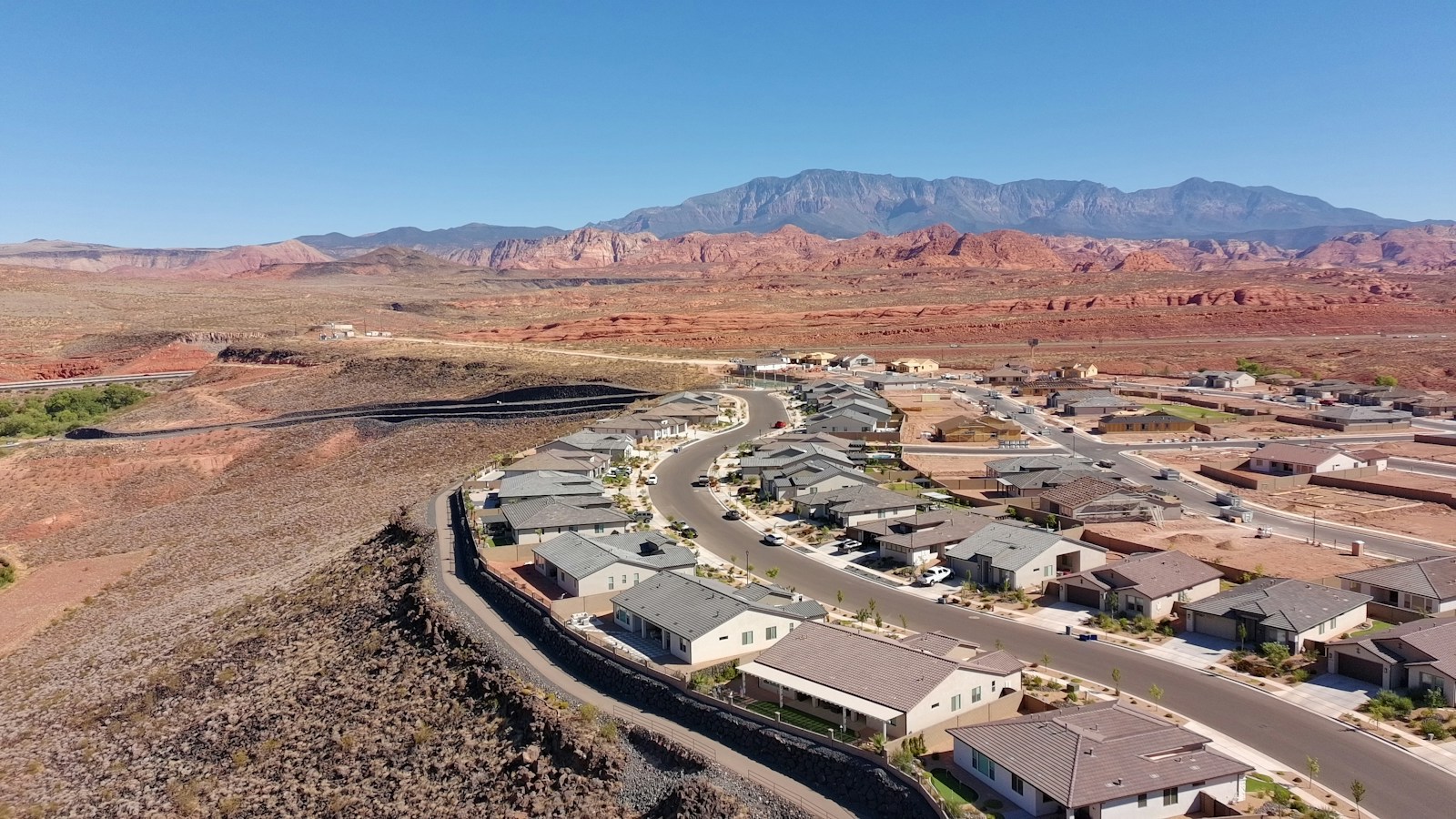
Menifee is one of the youngest cities in Riverside County, and almost everything built there since its 2008 incorporation came with a Mello-Roos Community Facilities District attached to pay for the roads, schools, and parks a brand-new city doesn’t start out with.
For a homeowner selling a newer Menifee property, that special tax isn’t a footnote — it’s a recurring charge on the tax bill, a lien against the parcel, and a specific disclosure obligation that has to be satisfied before the sale closes, separate from anything an HOA might also require.
A City Built Almost Entirely on New Construction
Residents of the Menifee Valley voted to incorporate on June 3, 2008, and the City of Menifee was officially established on October 1, 2008, making it Riverside County’s 26th city. The area’s development history explains a lot about why Mello-Roos is so woven into the local housing stock.
Sun City, in the northwestern part of what’s now Menifee, was conceived in the early 1960s by developer Del Webb as an active retirement community — the same concept he used for Sun City, Arizona — and the broader Menifee Valley grew through the late 1980s and early 1990s as a master-planned community.
Growth accelerated sharply in the years after incorporation, drawing new residents from across Southern California, and the overwhelming majority of that growth has come from large, newly built subdivisions rather than infill development on existing lots.
That matters because new subdivisions are exactly where cities and developers turn to Mello-Roos financing to pay for infrastructure the builder isn’t covering out of pocket.
What a Mello-Roos Community Facilities District Actually Is
The Mello-Roos Community Facilities Act of 1982, codified at Government Code Section 53311 and the sections that follow, lets a city, county, or special district form a Community Facilities District and levy an annual special tax on every parcel inside it, once two-thirds of the district’s voters or landowners approve it.
The special tax is legally distinct from the regular ad valorem property tax: it isn’t based on the home’s assessed value the way the standard 1% rate is, but instead follows a formula — square footage, lot size, proximity to a specific improvement, or some combination — spelled out in a legal document created when the district formed, called the Rate and Method of Apportionment.
That document sets not just the current year’s tax, but the maximum the tax is allowed to reach and how much it’s permitted to increase each year, typically for as long as it takes to pay off the bonds the special tax secures.
A Menifee property can sit inside more than one such district at once, since a single master-planned community is often carved into several CFDs covering different phases of construction or different categories of improvements.
How the Tax Actually Shows Up on the Bill
Riverside County collects CFD special taxes the same way it collects ordinary property taxes — as part of the annual property tax bill the County Treasurer-Tax Collector mails out — rather than through a separate invoice a homeowner might overlook.
On the bill itself, the charge typically appears itemized under a line labeled something like “Fixed Charge Assessments,” separate from the general tax levy, and a single property can show several such line items if it falls within more than one district.
Because the special tax is a lien against the specific parcel rather than a personal debt of whoever happens to own it, it transfers with the property at sale regardless of what the buyer was told or wasn’t — which is exactly why the disclosure requirement below exists in the first place.
Why This Lands Harder on Menifee Than on an Older City
Mello-Roos financing has existed since 1982, but it’s overwhelmingly used for new development rather than retrofitted onto existing neighborhoods. A city with a housing stock built mostly before the 1980s simply has far fewer parcels that were ever eligible to be swept into a CFD in the first place.
Menifee is close to the opposite case: a large share of its housing dates from well after 1982, concentrated in the growth that followed its 2008 incorporation, which means a correspondingly larger share of Menifee homes sit inside an active Mello-Roos district than would be typical in a long-established city nearby.
A seller moving from a decades-old neighborhood in another part of the county, or from out of state, often has no personal reference point for this kind of recurring charge — and no reason to assume it applies until they’re looking at their own property tax bill or a title report that lists it.
It’s also worth being clear about what Menifee’s incorporation date does and doesn’t mean for this analysis.
The city becoming its own municipal corporation in 2008 is a separate fact from any individual CFD’s formation date — a district can be created before or after a particular parcel’s house is built, and a district formed by the county or by a school or water district predates the city government itself in some of Menifee’s older developments.
What actually determines whether a given home carries a Mello-Roos charge isn’t when Menifee became a city, but whether that specific subdivision’s developer and the relevant public agencies formed a district to finance its infrastructure — which, given how much of Menifee’s housing stock was built as large subdivisions rather than one house at a time, turns out to describe most of the city’s newer tracts.
The Disclosure Law a Seller Has to Satisfy
California Civil Code Section 1102.6b requires the seller of property subject to a Mello-Roos special tax lien to make a good faith effort to obtain a disclosure notice about that tax from the local agency that levies it, and to deliver that notice to the prospective buyer before the sale closes.
The notice has to identify the entity levying the tax, the annual amount currently due, the maximum tax the district is allowed to levy against the property in any year, how much that maximum can increase annually, and the date the tax is scheduled to stop being levied.
Once a seller delivers that notice, the statute treats the disclosure obligation as satisfied — there’s no further duty to independently explain the tax beyond what the notice itself states.
We’ve covered how this same disclosure statute plays out for a different county in more detail separately, including the specific mechanics of requesting the notice and what happens when a seller can’t get one from the levying agency in time.
Where the Notice Actually Comes From for a Menifee Property
Because the disclosure has to come from the specific agency levying the tax, the first step is identifying which CFD or CFDs apply to the parcel at all, which usually means checking the current year’s Riverside County property tax bill for a Fixed Charge Assessment line, or requesting a parcel-specific report from a CFD administration or bond-disclosure service that the levying district has engaged to handle these requests.
Many of Menifee’s larger master-planned communities were built by developers who formed multiple CFDs across different construction phases, so a seller shouldn’t assume that a neighbor’s experience with one district’s notice process will match their own parcel exactly — a property two streets over, built in a different phase of the same community, can sit inside an entirely different set of districts with different maximum tax figures and different payoff dates.
A worked example makes the stakes concrete. Say a parcel’s current-year property tax bill shows two Fixed Charge Assessment lines, one for a facilities CFD at $1,100 annually and another for a separate landscaping-and-lighting CFD at $240 annually, for a combined $1,340 on top of the ordinary 1% ad valorem tax.
The disclosure notice for the facilities CFD might show a maximum authorized tax of $1,450, a permitted annual increase of 2%, and a scheduled termination date years out once the underlying bonds are retired; the landscaping district, by contrast, might have no bond behind it at all and simply continue indefinitely as an operating charge.
A buyer comparing that property to a similar home in a neighboring CFD with a single $900 annual charge and an earlier payoff date is, in effect, comparing two different long-term cost profiles that happen to look similar on a listing sheet — which is exactly the kind of detail the disclosure notice is designed to surface before escrow, not after.
Mello-Roos Is Separate From — and Stacks On Top of — the HOA
One confusion that comes up constantly with Menifee’s newer master-planned communities is treating the Mello-Roos special tax and the homeowners association dues as the same thing, or assuming one covers what the other doesn’t. They’re legally and functionally separate obligations billed through entirely different channels.
The HOA dues are a private contractual charge, set by the association’s own budget and governing documents, paid directly to the HOA or its management company, and used for things like common-area landscaping, private street maintenance, community amenities, and reserve funds.
The Mello-Roos special tax is a public levy created by a government act, collected by the county as part of the property tax bill, and used to repay bonds that financed public infrastructure — streets, storm drains, school facilities, fire stations, and similar capital improvements the city or district needed before it could approve the development in the first place.
A buyer evaluating total monthly housing cost on a Menifee property has to add both numbers separately, because neither one substitutes for or absorbs the other, and a disclosure covering one says nothing about the other.
HOA documents typically have to be disclosed under a separate set of statutory requirements entirely, which is worth keeping in mind so the Mello-Roos notice isn’t mistaken for a complete picture of the property’s recurring charges.
What a Buyer’s Lender Actually Checks
A Mello-Roos special tax doesn’t usually stop a loan from closing, but it does change the math a lender runs.
Because the special tax rides on the property tax bill, an underwriter calculating a buyer’s debt-to-income ratio generally includes it in the escrowed tax and insurance figure alongside the ordinary ad valorem tax, HOA dues where applicable, and any other parcel-secured charge — which means a higher Mello-Roos tax can, at the margin, affect how much loan a buyer qualifies for on a given property, even though it has no bearing on the home’s sale price itself.
An appraiser pulling comparable sales in a Menifee subdivision generally treats properties inside the same CFD, or a similarly taxed neighboring community, as reasonably comparable to each other, since the special tax is a known, disclosed feature of that submarket rather than something unique to one listing.
Where it does occasionally slow things down is when the disclosure notice itself is late arriving, or when a title report flags a CFD lien that doesn’t match what the seller disclosed — exactly the scenario the Civil Code 1102.6b process exists to prevent, and exactly why requesting the notice early matters more than it might seem to from the seller’s side of the transaction.
Selling a Menifee Home While You’re Already Relocating
Menifee’s growth has been driven in large part by people moving into the Inland Empire for more affordable housing while commuting to jobs elsewhere in Southern California, which means a fair number of sellers here are themselves relocating — for a new job, to be closer to family, or simply to move somewhere with a shorter commute.
Trying to request a CFD disclosure notice, confirm which districts actually apply to the specific parcel, and coordinate the timing of a new home purchase elsewhere all at once is a genuinely heavier lift than handling any one of those tasks on its own, especially when a levying agency’s turnaround time on the notice request isn’t fully in the seller’s control.
Riverside County sellers juggling a move also run into other lien and tax questions that complicate a transaction’s timeline — we’ve covered how a PACE or HERO lien gets paid off at closing on a Riverside County home, which is a separate kind of parcel-secured charge that shows up on some of the same newer properties, and how Riverside County’s tax-defaulted property timeline works when property taxes, including CFD special taxes, go unpaid long enough.
When a Cash Sale Is the Wrong Choice
If the CFD disclosure notice is straightforward to obtain, the special tax amounts are modest relative to the home’s value, and nothing else about the title or tax history is in question, a conventional listing will generally net more than a direct cash sale — buyers shopping newer Menifee construction are used to seeing Mello-Roos line items and typically factor a reasonable one into their offer without it derailing the deal.
A direct sale tends to make more sense when a seller is already committed to relocating on a fixed timeline and can’t afford delays waiting on a levying agency’s disclosure notice; when the property sits inside several overlapping CFDs and sorting out the combined current and maximum tax figures would take real time to untangle; or when the special tax, combined with other liens like a PACE assessment, is large enough relative to the home’s equity that a buyer’s lender is likely to ask hard questions during underwriting.
An inherited Menifee property is often the clearest example — an heir who never lived in the home and has no file of CFD paperwork is starting from zero on exactly the documentation this disclosure law requires.
First Steps
- Pull the current property tax bill and identify every Fixed Charge Assessment or special tax line tied to the parcel
- Contact each levying CFD or its administrator to request the Civil Code 1102.6b disclosure notice with enough lead time before closing
- Confirm the maximum tax, annual increase cap, and scheduled end date for each district, not just this year’s amount
- Check for any other parcel-secured charges, such as a PACE or HERO lien, that a buyer’s lender will also want explained
Tracking down the right CFD, requesting its notice, and lining all of that up with a move of your own takes real time that not every seller has to spare.
If you’d rather sell a Menifee home as-is and let an experienced buyer handle the Mello-Roos paperwork directly, Cash Home Buyers CA can make a no-obligation cash offer, and our Menifee relocation page has more on how we handle a sale timed around a move.
You can also find Cash Home Buyers CA on our Google Business Profile.