
Probate Court in Los Angeles County: What Selling the House Involves
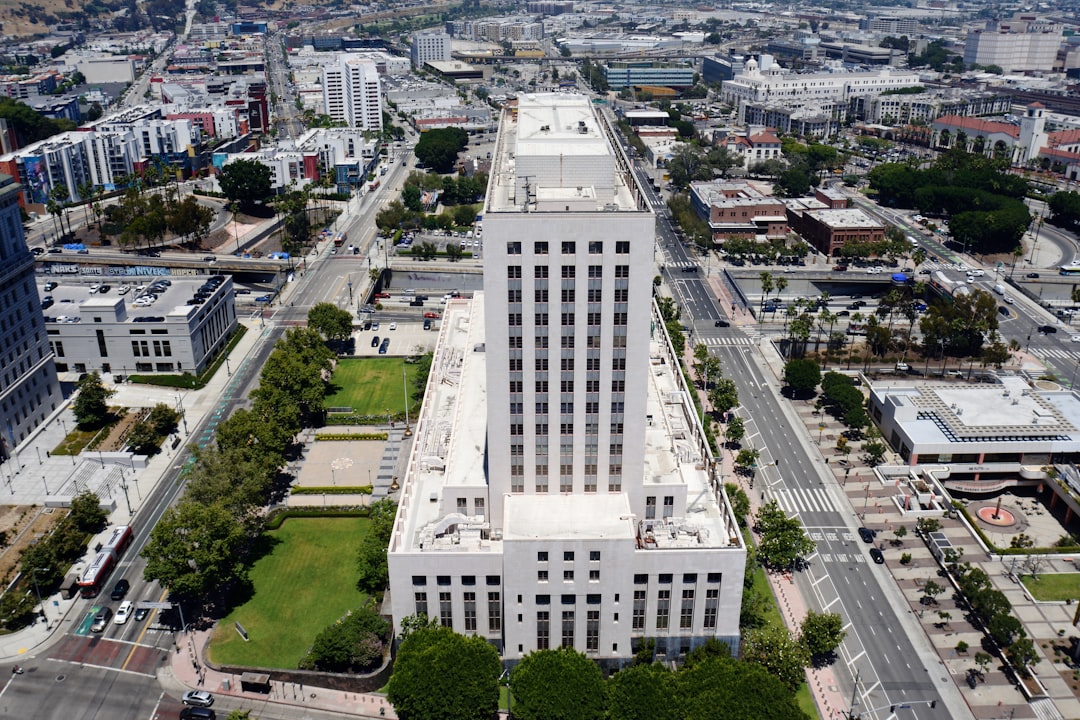
Probate for a Los Angeles County decedent’s estate is filed and heard at the Stanley Mosk Courthouse, 111 N. Hill Street, and the first-paper filing fee is $435. Whether you can sell the house quickly depends less on the court’s calendar than on whether the personal representative holds full or limited authority under the Independent Administration of Estates Act — and on whether an heir is still living in the house while all of this plays out.
Where LA County Probate Is Filed and Heard
Los Angeles Superior Court Local Rule 4.3(a) is blunt about it: except for the North District, all probate matters are filed and heard in the Central District at the Stanley Mosk Courthouse. That is one building downtown handling probate for a county of roughly ten million people.
This changed recently, and older guides have it wrong. Effective February 2, 2026, the Michael D. Antonovich Antelope Valley Courthouse in Lancaster no longer hears probate matters. Those cases are now assigned and calendared in Department 18 at Stanley Mosk, a probate courtroom opened for the purpose. The Antelope Valley courthouse still accepts filings, and the court’s notice offers three appearance options: remotely through LACourtConnect, in person at Antelope Valley Department A22, or in person at Mosk Department 18.
What It Costs to Open the Estate
From the court’s own civil fee schedule effective January 1, 2026:
- First-filed petition for letters of administration or letters testamentary: $435 (Gov. Code section 70650(a))
- Later-filed petitions, and objections to the appointment of a personal representative: $435 each
- Special letters of administration without general powers: $200
- Certifying a copy of a document, such as Letters for the title company: $40, plus $0.50 per page
- eFiling service fee: $2.25
One correction worth making, because it circulates widely: there is no Los Angeles probate filing surcharge. The statewide fee schedule footnotes a local courthouse-construction surcharge in Riverside, San Bernardino and San Francisco only. Nor is there a probate examiner or investigator fee on a decedent’s estate — those fees exist, but they attach to guardianships and conservatorships.
Newspaper publication is required under Probate Code section 8121: three publications in a newspaper of general circulation in the city where the decedent lived, the first at least 15 days before the hearing, with at least five days between the first and last. The newspaper sets that price, not the court, so treat any figure you see quoted as an estimate.
When Your First Hearing Will Be
Local Rule 4.9 puts the hearing date in the clerk’s hands at filing, and makes it the petitioner’s job to confirm a date was actually assigned. Probate Code section 8003 sets the window: not less than 15 nor more than 30 days after filing, or, if the petitioner asks at the time of filing, not less than 30 nor more than 45 days. The court may not shorten that notice period.
Beyond that statutory window, the Los Angeles court publishes no figure for how long a first hearing actually takes to come up, and there is no public reservation system for initial probate hearing dates. Anyone quoting you a confident “LA takes X weeks” number is estimating. Plan around the statute, ask your attorney what they are currently seeing, and build slack into any sale timeline.
Probate Notes: The Local Rule That Derails Sales
This is the most LA-specific thing in probate practice here, and it changed on January 1, 2026. Before your hearing, the court’s probate attorneys review your file and post “Probate Notes” on the court’s website — typically about two weeks before the hearing date. Anything the court wants fixed appears under a “Matters To Clear” heading.
Local Rule 4.4(b), as amended effective January 1, 2026, requires you to clear those items by filing supplemental or other documents by the third court day preceding the hearing date. The older formulation — 3:30 p.m. on the second court day before the hearing — is superseded, though it still appears in stale copies of the rules floating around online.
Rule 4.4(c) spells out what happens if you miss it: the court will continue the hearing, place the matter off calendar, deny it without prejudice, or take other action it considers necessary. Rule 4.14 then compounds the damage — a first continuance is usually at least four weeks, and on a second the matter will be placed off calendar or denied without prejudice absent a granted oral motion. Rule 4.13 provides that probate hearings cannot be advanced. So an uncleared note is not a minor slip; it is a month or more, and there is no way to buy the time back.
Local Forms You Will Not Find on the State Website
Local Rule 4.5 requires the first paper filed to be accompanied by a Probate Case Cover Sheet and Certificate of Grounds for Assignment to District, LASC form PRO 010. Subsequent documents require a PRO 037 cover sheet. The probate referee is appointed on LASC form PRO 001. And under Rule 4.39(c), when there is a successful overbid in open court on a sale of real property, counsel must complete and the successful bidder must sign and file a “Bid In Open Court on Sale of Real Property,” form PRO 009.
The Probate Referee Sets the House’s Value
Real property in a probate estate is appraised by a probate referee, not by the personal representative and not by a realtor’s opinion. Under Probate Code section 8920, the referee the court designates comes from the panel the State Controller has appointed for that county.
The referee’s commission is set by statute, and the two halves of it live in different sections — worth knowing, because they are frequently cited wrong. Section 8961 provides for a commission of one-tenth of one percent of the total value of the property appraised, plus actual and necessary expenses. Section 8963 supplies the limits: not less than $75 nor more than $10,000 for any estate appraised, though on the referee’s application the court may allow more where the reasonable value of the services exceeds that cap.
On a $900,000 house, one-tenth of one percent is $900. That appraised figure then anchors everything downstream, including the overbid math below.
Full Authority, Limited Authority, and Which One You Have
This single distinction determines whether selling the house takes weeks or months. Probate Code section 10511 gives a personal representative with full authority under the Independent Administration of Estates Act the power to sell estate real property. Section 10501(b) requires a representative with limited authority to obtain court supervision for a sale or exchange of real property.
With full authority, the route is a Notice of Proposed Action. Section 10580 requires notice before acting without court supervision; section 10586 requires it be delivered not less than 15 days before the date specified in the notice on or after which the action will be taken; and section 10585(a)(3) requires that where the proposed action is a sale of real property, the notice state the material terms of the transaction. If nobody objects, you close. If someone objects, you are back in front of the judge.
With limited authority, the sale goes to a confirmation hearing, and anyone in the courtroom can overbid. The opening overbid is fixed by Probate Code section 10311(a)(1): 10 percent more on the first $10,000 of the original bid and 5 percent more on the amount above $10,000. On an accepted offer of $800,000, the first overbid must be at least $840,500. A buyer who has spent money on inspections can be outbid on the courthouse floor, which is exactly why some experienced buyers will not touch a limited-authority sale.
Two more LA-specific items from Rule 4.39. If the Report of Sale and Petition for Order Confirming Sale is filed before the date of sale stated in the published notice, or shows the private sale happened before that date, the sale will not be confirmed and the petition is denied without prejudice. And absent exceptional circumstances, the broker’s commission is capped at 5 percent for improved real property and 10 percent for raw land.
Bond
Probate Code section 8481(a)(1) means a will that waives bond is honored. Section 8481(b) lets the court require one anyway, for good cause, on petition or on its own motion. Where the will does not waive bond, or the proposed representative lives out of state, Local Rule 4.41(c) requires a declaration covering the number of unsecured creditors and estimated liability to them, whether the estate is solvent, estimated tax liabilities, known contingent liabilities, and the due diligence done to find all of it. Rule 4.41(d) adds that the court may require an appearance at the hearing on a bond waiver request.
When a Cash Sale Is the Wrong Answer Here
If the personal representative has full authority, the house is in decent shape, and there is no urgent carrying-cost problem, a conventional listing will almost always net more. The Notice of Proposed Action process does not require the property to be sold fast, and a probate estate that can afford to wait usually should. A cash sale earns its keep in narrower circumstances: a vacant house bleeding insurance and utility costs, a property nobody will lend against, heirs scattered across states who cannot coordinate a renovation, or a limited-authority estate where the overbid process has already scared off retail buyers twice.
It is also worth reading how the probate route interacts with the rest of the picture — whether probate is required at all given how the property was titled, and what an executor can do without every beneficiary signing off. If you are weighing a listing against an offer, our breakdown of how cash buyers and agents actually compare on speed lays out the tradeoff honestly. For the money side of an inherited house rather than the court side — statutory fees, the Proposition 19 reassessment, carrying costs and the stepped-up basis — see selling a house in probate in Los Angeles.
This is general information rather than legal advice, and Los Angeles probate practice changes — two of the rules described here were amended in 2026 alone. Confirm anything time-sensitive with a California probate attorney. If you want a no-obligation cash offer on a probate property, Cash Home Buyers CA can provide one and work around your hearing dates.