
San Francisco County Probate Court: Local Rules, Fees and Filing Deadlines
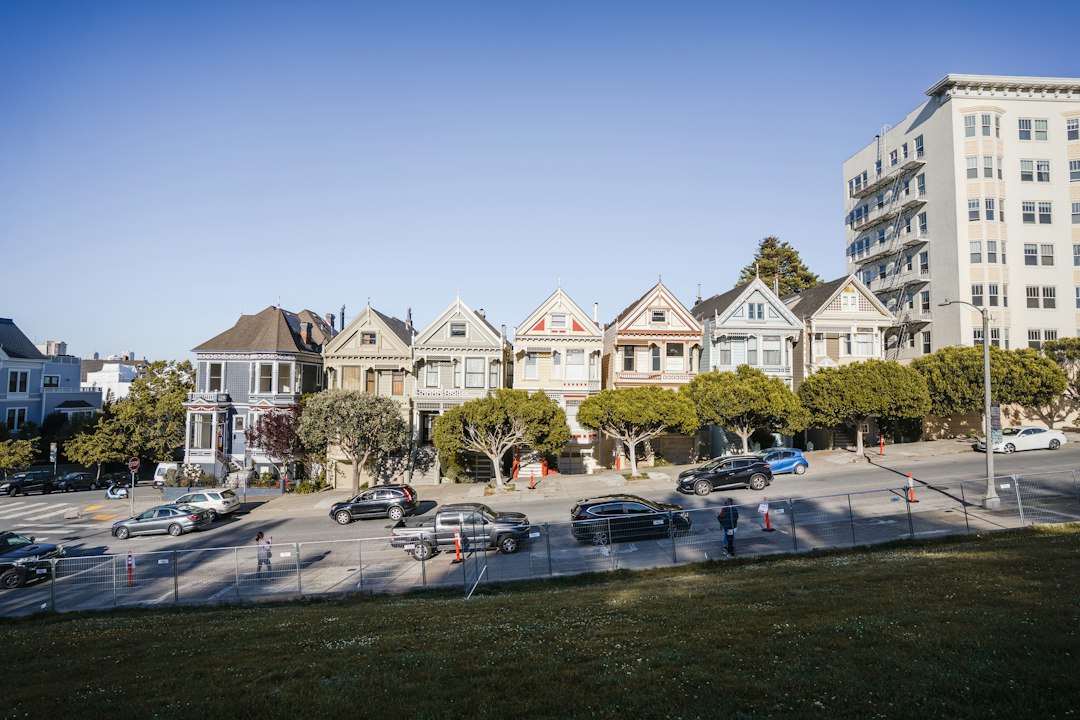
San Francisco probate cases are heard by the probate department of the Superior Court of California, County of San Francisco, which sits at the Civic Center Courthouse, 400 McAllister Street — not by any separate city agency.
Because San Francisco is a consolidated city-county, the same block of government also holds the Assessor-Recorder and the Tax Collector, so a probate file here touches more city desks than it would almost anywhere else in California.
That overlap is the one thing that makes San Francisco’s probate process genuinely different from a rural county’s, not harder. The statute is the same statewide Probate Code every California court applies.
What changes locally is which department hears the matter, what the clerk’s office will and won’t accept by e-filing, how much the court charges to open the case, and which city office you deal with once an heir is ready to put the deed in their own name.
Which Department Actually Hears the Case
San Francisco does not run separate “probate courtrooms” scattered around the city. Regular probate calendars — petitions for probate, accountings, final distribution — are heard in Department 204. Ex parte matters, the short, unopposed requests that don’t need a noticed hearing, go to Department 202. Both sit inside the Civic Center Courthouse at 400 McAllister Street, San Francisco, CA 94102.
Two clerk’s windows handle the paperwork side: the Probate Clerk’s Office in Room 103 (415-551-3892), which takes in-person filings such as the inventory and appraisal, and the Probate Office in Room 202 (415-551-3650), which handles proposed orders and referee paperwork.
The courtroom clerk for Department 204 can be reached at 415-551-3702. Clerk’s office hours run Monday through Friday; always confirm current hours on the court’s own site before a trip downtown, since San Francisco has adjusted its public counter hours more than once in recent years.
The Filing Fee, and Why San Francisco’s Number Is Different
Every California county charges the same base filing fee for a first petition for letters of administration or letters testamentary, set by Government Code Section 70650(a) at $355, with two statewide supplemental fees of $40 each added under Government Code Sections 70602.5 and 70602.6. That brings the statewide total to $435 in most counties as of the Judicial Council’s fee schedule effective January 1, 2026.
San Francisco is one of only three counties — along with Riverside and San Bernardino — where the total is different, because of a local courthouse construction surcharge.
In San Francisco and Riverside, that surcharge adds $50 while the standard transfer to the State Court Facilities Construction Fund is offset to zero, which nets out to a total probate petition filing fee of $450 in San Francisco rather than $435.
Confirm the current figure on the court’s own fee schedule before filing, since both the statewide base and the local surcharge can be adjusted by the Legislature or the Judicial Council.
Filing the Petition: San Francisco’s E-Filing Rule and Its Paper Exceptions
San Francisco’s local rules classify probate matters as “designated cases,” which means most probate documents must be filed electronically through the court’s approved e-filing vendor, not dropped off at the counter. Self-represented petitioners are not exempt from this rule.
A handful of documents are still paper-only and must be presented at the Room 103 counter, because the court needs the originals:
- The Inventory and Appraisal (Judicial Council form DE-160/DE-161)
- An ex parte petition for final discharge
- Letters (Letters Testamentary or Letters of Administration)
- Certified copies of the death certificate and, where relevant, a birth certificate
- Certain certified orders the clerk must issue under seal
San Francisco’s local rules also require the document’s title to match the case caption exactly, and any declaration signed under penalty of perjury needs a handwritten signature even when the rest of the filing is electronic.
Attorneys appearing on a motion are expected to get a hearing date from the courtroom clerk before filing, rather than picking a date unilaterally — a small procedural habit that trips up filers used to other counties’ self-calendaring systems.
Notifying Heirs Before the First Hearing
Before Department 204 will hear the initial petition, Probate Code Section 8110 requires the petitioner to get notice out at least 15 days before the hearing date to every heir the petitioner knows of or can reasonably find, plus every devisee, executor, and alternate executor named in any will offered for probate.
Separately, Probate Code Section 8121 requires published notice — three times, in a newspaper that runs at least weekly, with at least five days between the first and last publication — in a newspaper of general circulation in the city where the decedent lived.
That publication rule reads a little differently in a consolidated city-county: the “city where the decedent lived” and the county where the case is filed are the same place, so there’s no question of which jurisdiction’s newspaper counts the way there sometimes is in a county with many small cities.
In practice, petitioners still need to confirm which adjudicated newspapers currently serve San Francisco for legal notices, since that list changes over time and the clerk’s office does not publish the notice for you.
Who Values the House: the Probate Referee
Once letters are issued, the personal representative has four months to file the Inventory and Appraisal under Probate Code Section 8800, unless the court grants more time for good cause.
Real estate and other assets that don’t have an obvious cash value go to a probate referee — a private appraiser appointed by the state controller and, in San Francisco, assigned automatically on the Order for Probate itself, a practice the court has followed since January 1, 2013.
That means a San Francisco filer doesn’t separately petition for a referee unless one is needed later — if the original referee retires, resigns, or the court finds a conflict.
In that situation, a Request for Appointment of Probate Referee is filed and a proposed order presented to the clerk in Room 202.
Once the referee returns the appraisal, San Francisco’s practice is not to amend it afterward; if a value needs correcting, the referee issues an amended appraisal on request rather than the representative editing the filed document.
That appraisal also sets the ceiling for any required bond.
Unless the will waives it, or every heir waives it in writing, Probate Code Section 8482 caps the bond at the estimated value of the estate’s personal property, plus its probable annual gross income, plus — if the representative has independent administration authority over real property — the appraised value of the decedent’s interest in that real property.
The referee’s number on a San Francisco house feeds directly into that last component.
Given typical San Francisco home values, a bond that would be a minor expense in a lower-cost county can turn into a real line item here, which is one more reason experienced counsel usually pushes for a bond waiver in the will or a written waiver from every heir before the petition is filed, rather than after.
How Long the Process Actually Takes
A full, supervised San Francisco probate rarely moves faster than nine months and more commonly runs twelve to eighteen.
The statutory checkpoints are the same ones that apply anywhere in California: creditors get the later of four months after letters are issued or sixty days after they’re mailed notice, under Probate Code Section 9100. The inventory is due within four months.
If the estate is still open a year after letters were issued, the representative must either secure an order for final distribution or file a status report under Probate Code Section 12200 — extended to eighteen months when a federal estate tax return is required.
San Francisco’s own calendar adds a layer on top of the statute.
Status hearings tied to a required filing — an accounting, an inventory — require the document to be on file at least three court days beforehand, and status hearings set for closing an estate require a mandatory appearance; the court does not grant a continuance before that appearance happens.
Combined with the court’s e-filing backlog during busy weeks, that local calendar discipline is often the actual bottleneck, more than the underlying law.
When an Estate Can Skip Full Probate
Not every San Francisco estate needs a full, formal probate. Assembly Bill 2016 rewrote the small estate rules, and the Judicial Council’s adjusted figures — current for deaths on or after April 1, 2025, and next due to change April 1, 2028 — set two separate thresholds that matter to a house:
- Under Probate Code Section 13100, personal property (not real estate) up to $208,850 in gross value can pass by affidavit, with no petition at all.
- Under the new Probate Code Section 13151, a decedent’s California primary residence valued at $750,000 or less can transfer through a simplified court petition rather than a full administration — but it still requires filing with the court and giving notice to every heir and devisee, which is a meaningfully bigger step than the old affidavit process for personal property.
Given how much San Francisco real estate is worth, the $750,000 primary-residence figure decides a lot of cases.
A modest Sunset District or Excelsior cottage with no mortgage may clear that threshold where a comparable house in a lower-cost county wouldn’t come close to needing full probate at all — while a renovated Noe Valley or Pacific Heights property almost always exceeds it and goes through the standard process described above.
Either way, the gross value is normally established by the probate referee’s appraisal, not the county’s assessed value, so don’t assume the property tax bill tells you where you stand.
Recording the Deed: the Assessor-Recorder’s Side of the File
Probate doesn’t end with a judge’s signature. Someone still has to get the property’s ownership records updated with the city, and in San Francisco that’s the Office of the Assessor-Recorder — the same consolidated office that handles both functions here, unlike counties where the recorder and the assessor are separate.
A change in ownership statement, form BOE-502-D, is required within 150 days of the date of death, or within 90 days of a written request from the Assessor’s office if one arrives first; for a property moving through probate, the practical trigger is the date the inventory and appraisal is filed.
Missing that filing brings a penalty of $100 or 10% of the taxes attributable to the unreported transfer, whichever is greater.
Recording itself depends on how title actually sat: a joint tenant’s death calls for an Affidavit of Death with a certified death certificate and a Preliminary Change of Ownership Report, while adding, removing, or changing a name on title calls for an actual deed, a PCOR, and a Transfer Tax Affidavit.
Heirs who plan to move into the house themselves should also look at the Proposition 19 parent-child or grandparent-grandchild exclusion.
It keeps the old assessed value in place for a principal residence, but only if the inheriting relative occupies it as their own principal residence within a year and files the BOE-19-P reassessment exclusion claim within three years of the transfer — or before the house is ever transferred to someone outside the family, whichever comes first.
Skip that filing, and the Assessor-Recorder reassesses the property to current market value, which can change the math on keeping the house considerably.
Selling the House Before the Estate Closes
Most San Francisco estates are administered under the Independent Administration of Estates Act, which lets the personal representative sell real property without a separate court confirmation hearing for every transaction, so long as the authority was granted in the Letters and the required Notice of Proposed Action goes out to heirs and beneficiaries at least fifteen days before the sale closes.
If authority wasn’t granted, or an heir objects to the notice, the sale instead needs a court-confirmed sale with published notice and the possibility of overbidding in open court — a slower, more public process.
None of this changes based on which California county is hearing the case — the same Independent Administration of Estates Act authority, the same notice period, and the same overbid procedure apply whether the file sits in San Francisco’s Department 204 or in a neighboring county’s probate calendar, such as San Mateo County or Marin County.
What differs, as described above, is the local filing mechanics, the department assignment, and the surcharge built into San Francisco’s fee.
Either path still runs through the same Department 204 calendar and the same referee appraisal described above, and either way the proceeds stay under the court’s supervision until the estate is ready to close.
A buyer who can work with either process — waiting out the notice period under independent administration, or showing up for a confirmation hearing — tends to cause fewer delays than one who needs title cleared before escrow will even open.
When a Cash Sale Is the Wrong Move
An honest answer here cuts against a quick sale more often than it supports one.
If the house qualifies for the Proposition 19 exclusion and an heir genuinely wants to live in it, selling before that window closes trades a below-market property tax base for cash — often the worse trade over time in a city where assessed values can lag market value for decades.
If the estate is small enough to use the Section 13100 affidavit or the Section 13151 primary-residence petition, a full-value listing with an agent, run in parallel with that simplified filing, will usually net more than a fast cash sale, since there’s no pressing need to move quickly through a drawn-out administration.
And if several heirs disagree about whether to sell at all, that’s a dispute for the probate court and possibly mediation, not something a sale — cash or otherwise — can resolve on its own.
A cash sale tends to make the most sense in the opposite situations: a full administration dragging past a year with upkeep, insurance, and vacancy draining the estate; a property that needs real repair work before it could ever list competitively; or multiple out-of-state heirs who simply want the file closed without managing a listing from a distance.
Getting the Property Across the Finish Line
If you’re an executor, administrator, or heir who has decided a sale is the right call — whether the estate needs a court-confirmed sale, qualifies for independent administration, or cleared probate through a small estate filing — we buy directly or bring a vetted cash buyer who can work on the court’s timeline instead of a retail listing’s.
When you sell to us, we pay the standard closing costs, including the county and city transfer taxes, escrow and title, which matters when an estate’s cash is tied up until the court signs off on distribution.
If you’d like a no-obligation cash offer on a San Francisco County house moving through probate, reach out through our homepage or get in touch about how to sell your San Francisco County house for cash. You can also see how we work with local families by visiting our Google Business Profile.