
Hanford Code Enforcement Guide for Homeowners and Sellers
- Code violation or city notice on your house: we buy it as-is
- Zero fees, zero commissions, zero closing costs
- No obligation: turn the offer down and owe us nothing
Code Violation on Your Hanford House? Sell As-Is for Cash
A city notice does not have to mean a fire sale or a long repair list. Tell us about the house and get a written cash offer.
Last updated November 13, 2026. Reviewed by the Cash Home Buyers CA team. Information comes from the City of Hanford Code Compliance FAQ and residential regulations handout; sources are listed at the end.
Hanford’s Code Compliance Section says violations run with the property, not the person who created them, so a buyer who purchases a house with a violation is responsible for fixing it. For a seller, that fact shapes everything: a notice on your Hanford house will matter to your buyer as much as it matters to you.
This guide explains how the city receives complaints, how long it says you have to respond, what clears a violation, and how a violation affects a sale.
Hanford code enforcement at a glance
| Code Compliance phone | (559) 585-2633 |
| Report online | The My Hanford reporting tool |
| Report in person or by mail | Community Development Department, 317 N. Douty Street, Hanford, CA 93230, Attention: Code Compliance |
| First response | Average two to five working days for an initial investigation; complaints are prioritized by health and safety risk |
| Time to respond | In most cases 15 to 30 days to abate the violation or apply for permits, at the officer’s discretion |
| Complaints | Complainant information is confidential |
| Weed abatement | Fire Department inspects properties around April; a notice gives 15 days to clean up |
How a Hanford complaint works
The city says it receives complaints from internal referrals, outside agencies and the public, and that complainant information is confidential. You do not have to give your name when reporting, though the city says it helps if staff need to clarify an address. Staffing means enforcement is primarily complaint-driven.
After a complaint arrives, an officer typically makes an initial investigation within two to five working days, and generally also looks at the surrounding area when responding. If a violation is found, the owner is contacted and must correct it or obtain the required permits.
What you have to do to clear a violation
The city explains the steps. If no building permit is needed, you stop the illegal activity and call the officer who cited you to schedule an inspection. If a permit is needed, you contact the officer for the documentation required to apply.
The violation is not cleared until the building permit is approved, all permit and code compliance fees are paid, the permit is issued, and all inspections, including a final inspection, are scheduled and approved.
If you receive a citation or stop work order, the city says each case is different, so you should call the issuing officer to discuss a course of action. See our Hanford building permits guide for the permit steps.
Common Hanford property rules
The city’s residential handout summarizes rules owners often miss:
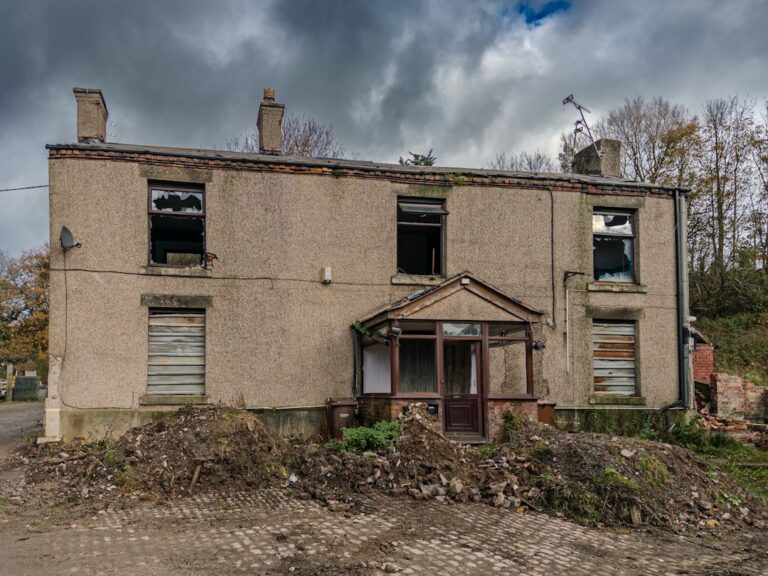
- Home and property maintenance. Exteriors should not look run down, so repair peeling paint and broken windows and remove graffiti.
- Remodeling. Do not divide a home into more than one residential unit. Converting a garage, shed or other building to living space without a permit is unsafe and illegal.
- Yards. Maintain landscaping and remove junk. Front yard paving cannot exceed 40 percent of the front width or 24 feet, whichever is greater.
- Trash containers. Keep them out of public view, put them out after 7 p.m. the day before collection and remove them before midnight on collection day.
- Parking. Do not park in the front or side yard. Store inoperable vehicles out of view, and never in the driveway.
- Recreational vehicles. Park in a garage, carport or fenced rear or side yard, or in the driveway only if it creates no nuisance or safety problem and does not extend into the public right-of-way.
- Animals. Up to three dogs or cats per household, and no farm animals.
- Pools. A fence at least five feet tall with a self-closing gate is required.
- Weed abatement. The Fire Department inspects properties around April and sends a notice to clean up within 15 days.
The violation runs with the property
Hanford’s FAQ is direct on this point: if you buy a property that has violations, you are responsible for abating them, which is why it recommends a home inspection before buying.
A seller should therefore expect any open case to surface in escrow, and a buyer’s agent may ask for a written clearance. The substandard-building standard is also set by state law.
California Health and Safety Code section 17920.3 defines a building as substandard when conditions endanger the life, health, property or safety of occupants or the public, and cities rely on it alongside local codes.
How a violation affects selling a Hanford house
A violation is a timing and title problem more than a legal bar. A traditional buyer’s lender may require it cleared, an appraiser may mark down visible deficiencies, and an inspection can turn a yard violation into a repair negotiation.
Unpaid fees and liens come out of proceeds at closing. Sellers also have disclosure duties. See our guides on selling as-is with unpermitted work and seller disclosures. If the issue is an illegal unit, see our Hanford zoning and ADU guide.
What to do if you receive a notice
- Read it closely. Note the violation, the address, the code section and your deadline.
- Call the officer. Reach Code Compliance at (559) 585-2633 to ask what compliance requires and whether more time is possible.
- Fix what is quick. Debris, weeds, parked vehicles and containers are often fast to cure. Take dated photos.
- Check permits. For structural, electrical or plumbing issues, contact the Building Division before hiring a contractor.
- Get a cash offer in parallel. If the cost or timeline is too much, compare it with selling as-is.
We buy Hanford houses with violations, liens and deferred maintenance. Read how selling a house as-is in Hanford works, or see our Hanford cash-offer process.
Received a notice and not sure where you stand? Call (424) 435-2326 or request a cash offer. There is no cost and no obligation.
Hanford code enforcement FAQ
How do I report a code violation in Hanford?
Use the My Hanford tool, call Code Compliance at (559) 585-2633, visit the Community Development counter at 317 N. Douty Street, or mail a complaint to that address.
How long do I have to fix a Hanford violation?
In most cases 15 to 30 days to abate it or apply for permits, though the officer sets the time based on severity.
Am I responsible for a violation that existed before I bought?
Yes. The city says violations run with the property, not the person who created them.
Can I sell a Hanford house with a code violation?
Yes. Fees and liens are paid from proceeds at closing, and a cash buyer can purchase the house as-is.
Sources
- City of Hanford: Code Compliance FAQ
- City of Hanford: Residential regulations handout
- City of Hanford: Code Compliance
This guide is general information, not legal advice. Codes and penalties change; confirm requirements with the City of Hanford Code Compliance Section.
From the Blog
Latest guides for California home sellers
-

California’s Judicial Foreclosure Redemption Right: The One-Year Window Most Owners Never Hear About
California's rarer judicial foreclosure process comes with a statutory right to redeem the property for up to a year after the sale…
Read the guide → -

Santa Clara County’s Tax-Defaulted Property Auction: How to Claim the Excess Proceeds
When a Santa Clara County home isn't redeemed within the state's deadline, the county can sell it at public auction — and…
Read the guide → -

Pomona’s Rent Stabilization Ordinance Just Became Permanent: What Landlords Must Do Before Selling
Pomona's Ordinance No. 4359 became permanent on January 1, 2026, replacing the city's prior urgency ordinances and capping most rent increases at…
Read the guide → -
Compton’s Substandard Building Ordinance, Explained
Compton can order a dangerous or substandard house secured, repaired, or demolished under Municipal Code Chapter 14, and if the owner misses…
Read the guide → -

Chico’s RECO Inspection: What Sellers of Older Homes Must Fix Before Closing
Chico requires sellers of homes built before July 1, 1991 to pass a RECO energy and water retrofit inspection — or transfer…
Read the guide → -

Emeryville’s Just Cause Eviction Ordinance: Relocation Pay Under Municipal Code 5-40
Emeryville had its own just-cause eviction and relocation-assistance ordinance years before California’s statewide AB 1482 existed, and the local rule is still…
Read the guide → -

Malibu’s Six-Year Rebuild Deadline After the Palisades Fire: Municipal Code 17.60.020(C)
Malibu homeowners rebuilding after the January 2025 Palisades Fire have a hard deadline most residents outside the city have never heard of:…
Read the guide → -

California’s Security Deposit Cap: How AB 12 Limits What Landlords Can Collect
AB 12 caps most California security deposits at one month's rent, with a narrow exception for small landlords — plus new 2025…
Read the guide → -

California Civil Code §4525: The 11 HOA Documents You Must Hand a Buyer Before Closing
California Civil Code §4525 requires sellers inside an HOA to hand buyers 11 specific documents before closing — a list that just…
Read the guide →