
Divorcing in North Long Beach? Who Gets the House, and What Taxes Follow
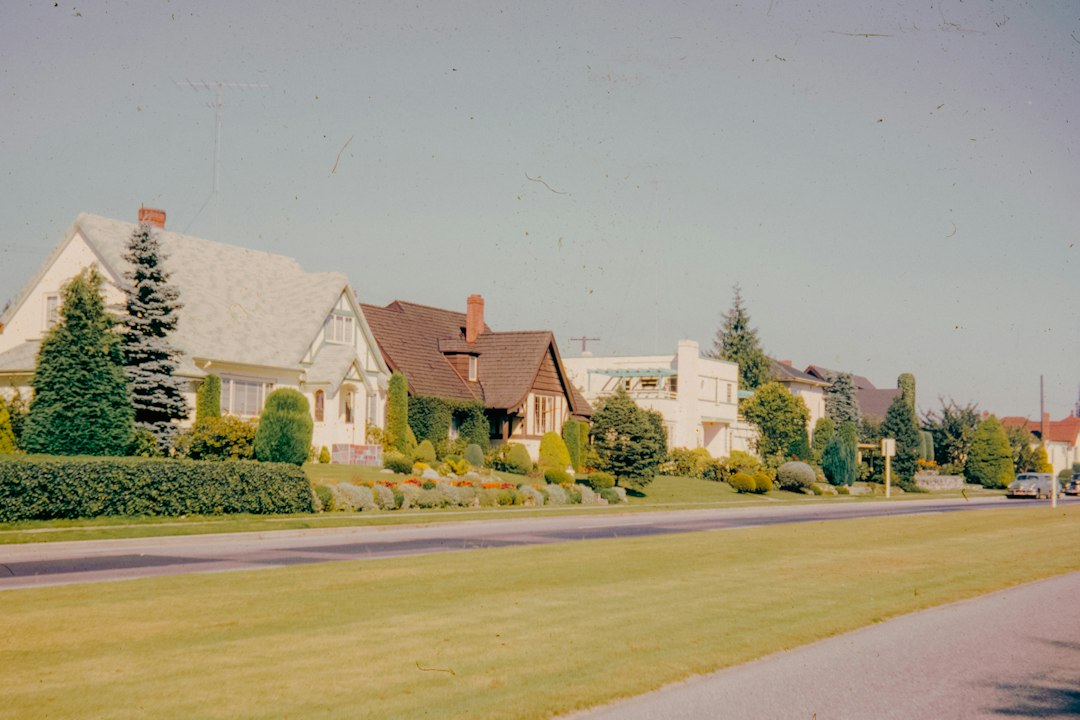
California’s community property rules don’t care whose name is on the North Long Beach house, and they don’t automatically mean an even split happens quickly or cleanly. Who actually ends up with the house in a California divorce comes down to a short list of options a judge or the spouses themselves can choose between, and whether a buyout gets taxed depends on details most people never think to ask about until escrow is already open. Here’s how those rules actually play out for a house in North Long Beach specifically, where the area’s housing stock and price point change some of the math.
Three Ways California Law Can Resolve the House in a Divorce
There are really only three outcomes for a marital home once a divorce is filed, and every negotiation eventually collapses into one of them. The first is selling the house outright and dividing the net proceeds. The second is a buyout, where one spouse keeps the home and pays the other for their share of the equity, usually by refinancing the mortgage into their own name alone. The third is a deferred sale — commonly called a “Duke order” after the 1980 case that established it — where the court lets one spouse, almost always the one with primary custody of the children, continue living in the house for a set period before it’s eventually sold. Each option has a different timeline, a different tax picture, and a different amount of financial entanglement the spouses keep after the divorce is final, which is exactly why it’s worth understanding all three before assuming the house has to be sold right away.
What the Community Property Rules Actually Require
Family Code Section 2550 sets the default: absent a written agreement between the spouses or an oral stipulation in open court, the judge has to divide the community estate equally. That’s the baseline everyone starts from, but it isn’t the whole picture for a lot of North Long Beach households, because many buyers in this area put down payments from savings, a gift, or an inheritance that predated the marriage — separate property, in other words, that got mixed into a community-property purchase.
That’s where Family Code Section 2640 comes in. If a spouse can trace a separate-property contribution into the home — a down payment, a payment toward the principal, or money spent on improvements — they’re entitled to be reimbursed that amount off the top before the remaining equity splits 50/50, unless they waived that right in writing. The reimbursement is dollar-for-dollar, with no interest and no credit for appreciation: a $60,000 separate-property down payment on a home that’s since gained $200,000 in value only gets the contributing spouse $60,000 back, not a proportional share of the gain. It’s also capped at whatever equity actually exists at the time of division, so a contribution can’t create a debt the community doesn’t have the value to cover. Interest payments, property taxes, and insurance don’t count toward this reimbursement at all — only the principal-reducing and acquisition-related payments do, which surprises a lot of spouses who assumed years of mortgage payments would be credited back to them.
The Refinance Problem Nobody Mentions Until Escrow
A detail that trips up more North Long Beach divorces than almost anything else in this process: a divorce judgment doesn’t change who the mortgage lender can come after. If both spouses are on the loan, both stay personally liable to the lender no matter what the decree says about who keeps the house — the lender was never a party to the divorce and isn’t bound by it. A quitclaim deed makes the same mistake in the other direction: it transfers title, but it does nothing to remove the departing spouse’s name from the mortgage. The only way to actually separate one spouse’s liability from the loan is to refinance it solely in the keeping spouse’s name, which means that spouse has to qualify alone on income, credit, and debt-to-income ratio — not always realistic on one income in a market where 90805 home prices sit in the $700,000s. Assuming an existing loan without a new underwriting process is possible only on certain FHA or VA loans, and even then it’s the exception rather than the rule. A buyout agreement that doesn’t account for this — one spouse “gets” the house on paper while the other stays stuck on the mortgage for years — is one of the most common and most avoidable mistakes in a California divorce involving real estate.
The Duke Order: When a Judge Lets One Spouse Stay
In re Marriage of Duke, decided by a California appellate court in 1980, held that a trial court abuses its discretion by ordering an immediate sale of the family home without weighing the hardship on a custodial parent and children against the financial detriment to the other spouse of delaying the sale. That ruling is now codified in Family Code Sections 3800 through 3810, which let a judge defer the sale — on conditions tied to things like the child’s age, school enrollment, and emotional attachment to the home — until a triggering event, often the youngest child reaching a certain age or the custodial parent remarrying. Courts specifically look at whether the arrangement is financially feasible: can the staying spouse realistically cover the mortgage, taxes, and upkeep without the home losing value or going into default.
What a Duke order doesn’t do is sever the spouses’ financial ties. Unless the deferred-sale order specifically addresses refinancing, both names typically remain on the mortgage throughout the deferral period, which means the spouse who moved out is still exposed to the other’s payment history on a loan they no longer control day to day. For a North Long Beach family weighing this option, that ongoing entanglement — sometimes lasting years if the children are young — is worth factoring in alongside whatever benefit the children get from staying in a familiar house and school.
Watts Charges and Epstein Credits: The Other Reimbursements People Forget
Section 2640 isn’t the only reimbursement rule that can change who owes whom at the end of a North Long Beach divorce — it’s just the one about the down payment. Two other California cases fill in what happens during separation, once the spouses have stopped living together but the mortgage is still getting paid every month. A Watts charge, from In re Marriage of Watts, lets the out spouse — the one who moved out — seek reimbursement for the fair rental value of the house for the period the other spouse lived there exclusively after separation, on the theory that the community (or, eventually, the two separate estates) effectively gave that spouse free housing. An Epstein credit, from In re Marriage of Epstein, runs the other direction: it lets a spouse who paid the mortgage, taxes, or insurance out of their own separate post-separation income get reimbursed for payments that kept the community asset from going into default, rather than treating those payments as a gift to the community.
These two concepts tend to offset each other in practice — the spouse who stayed in the house often owes a Watts charge for the rental value they received, while the same spouse may be owed an Epstein credit for the mortgage payments they made during that time — and untangling the math is one of the more common reasons a California divorce involving a house like this takes longer to settle than either spouse expects. Courts have discretion in how strictly to apply either charge, and a family law attorney will typically run both calculations side by side before settling in on a final number, rather than treating one in isolation.
Why North Long Beach’s Housing Stock and Prices Make Timing Matter
North Long Beach — roughly the area bounded by Compton, Paramount, and Lakewood to the north and east, and by Bixby Knolls to the south, largely corresponding to ZIP code 90805 — was mostly farmland before the 1920s oil boom brought rapid annexation into the City of Long Beach between 1923 and 1931. Much of its housing was built from the late 1920s through the postwar decades, and the neighborhood has the city’s largest concentration of 1920s “Minimum House” designs, a modest FHA-influenced style built for affordability. The Grant neighborhood, a cluster of these homes on the 6000 block of Walnut Avenue, became the first historic district recognized north of Bixby Road after a 2019 City Council vote.
That older housing stock matters practically for a divorcing couple deciding between a buyout and a sale: an appraiser and a lender underwriting a refinance will scrutinize a decades-old roof, electrical panel, or foundation more closely than they would in a newer subdivision, which can slow down or complicate the refinance a buyout requires. On the price side, ZIP code 90805 had a median sale price around $729,835 as of mid-2026, consistently running well below most other Long Beach ZIP codes — which means the dollar amounts at stake in a 2640 reimbursement calculation or a 50/50 equity split are often smaller here than in pricier parts of the city, but the refinance qualification math on a single income can still be just as tight.
North Long Beach is also a notably dense, family-heavy part of the city — its roughly 93,000 to 97,000 residents make up close to a fifth of Long Beach’s entire population, with a large Latino majority alongside a significant Black community and smaller but well-established Cambodian, Samoan, and Tongan populations centered around areas like Houghton Park, Scherer Park, and the Carmelitos housing community near the Compton border. For a divorcing couple with children in the local schools, that density and the area’s multigenerational household patterns are part of why a Duke order — keeping the kids in the same house, school, and neighborhood network for a few more years — carries real weight here, separate from whatever the pure dollars-and-cents comparison between selling now and deferring the sale might suggest.
The Capital Gains Question Most Divorcing Couples Get Wrong
A transfer of the house between spouses as part of a divorce generally doesn’t trigger a taxable gain for the spouse giving up their share — that’s settled federal tax law. The more commonly misunderstood piece is what happens when the house is eventually sold. Under Internal Revenue Code Section 121, each spouse can potentially exclude up to $250,000 of gain on a later sale (up to $500,000 combined if still filing jointly), but only if they meet both an ownership test and a use test — generally, living in the home as a primary residence for at least two of the five years before the sale. A spouse who moved out during the marriage doesn’t automatically lose this: a special rule lets a spouse who moved out under a divorce or separation instrument still count that time as personal use, as long as the other spouse continued living there as their main home.
Where this goes wrong is when the house sits vacant or gets converted into a rental for an extended period after separation. In one Tax Court case, a couple who moved out of their home, rented it for roughly five years, then sold it before their divorce was even finalized, lost the exclusion entirely — because nobody had used the home as a residence during the required window, the special moved-out-spouse rule never kicked in. The lesson for a North Long Beach couple is straightforward: the $250,000-per-spouse exclusion is real, but it isn’t automatic just because two people were formerly married co-owners, and converting the house to a rental during a long separation can quietly cost both spouses their exclusion.
There’s also a paperwork step that catches people off guard at tax time: if the closing agent issues a Form 1099-S for the sale, that form gets reported to the IRS regardless of whether the gain ends up fully excludable, and the sellers still need to show their work on Form 8949 and Schedule D to claim the Section 121 exclusion rather than simply leaving the sale off their return. Skipping that step is one of the more common reasons the IRS later sends a notice asking a divorced couple to explain a sale that, on the numbers, probably owed nothing at all.
When a Cash Sale Is the Wrong Choice
Selling to a cash buyer isn’t automatically the right move just because a divorce makes everything feel urgent. If both spouses can agree on a price and timeline, and neither needs to qualify for a solo refinance, listing the house on the open market in a stable North Long Beach market will usually net more than a cash sale — sometimes tens of thousands of dollars more on a home in the high $600,000s to $700,000s. A cash sale tends to make more sense in narrower situations: when the spouses can’t agree on repairs, staging, or a listing price and need a fast, neutral exit from the asset entirely; when the home needs real work that would scare off financed buyers or stall an appraisal for a refinance-based buyout; when one spouse has already moved out of state and doesn’t want to manage a listing remotely; or when the Duke-order math simply doesn’t pencil out and continuing to carry the mortgage isn’t realistic for either spouse. None of that describes every divorcing household in North Long Beach, which is exactly why it’s worth pricing out a traditional sale alongside a cash offer before deciding.
First Steps
- Pull the mortgage statement and title report to confirm exactly whose names are on the loan versus the deed
- Trace and document any separate-property contribution to the down payment or principal before assuming a straight 50/50 split
- Get pre-qualified for a solo refinance before agreeing to a buyout on paper
- If children are involved, discuss whether a Duke order or an immediate sale better serves everyone’s finances and stability
- Consult a California family law attorney and a tax professional before finalizing how the house gets divided
This is general information rather than legal or tax advice, and every divorce has its own facts, so confirm specifics with a family law attorney before setting a timeline. If both spouses would rather skip the refinance qualification and the open-market listing process entirely, Cash Home Buyers CA can make a no-obligation cash offer and work around a divorce timeline. See our North Long Beach divorce home sale page for how that works locally.