
Sell Your House As-Is in Naples Long Beach
- Foreclosure, inherited, tenants, damage — we buy it
- Zero fees, zero commissions, zero closing costs
- No obligation — turn the offer down and owe us nothing


“As-Is” Doesn’t Mean What Most Sellers Think
California still requires you to disclose known problems, even on an as-is sale. Here’s what actually changes on a canal-front property.
“As-is” is one of the most misunderstood phrases in real estate, and it matters more on Naples canal property than almost anywhere else in Long Beach, because so much of the neighborhood’s housing stock dates back to when the islands were first built out in the 1920s.
Selling as-is does not mean you can skip disclosing what you know about the house. Cash Home Buyers CA buys Naples houses and condos in their current condition, and this page explains exactly what that term does and doesn’t cover.
“As-Is” Does Not Waive Your Disclosure Duties
California requires sellers of residential property to complete a Transfer Disclosure Statement under Civil Code 1102 and a Natural Hazard Disclosure statement, regardless of whether the sale is marketed as-is.
The TDS asks about known material defects — roof leaks, foundation issues, unpermitted work, plumbing and electrical problems, and for a Naples property, the condition of any bulkhead, dock or seawall attached to the lot. Selling as-is changes what you are offering to fix.
It does not excuse you from disclosing what you already know is wrong with the property, whether that is a leak you have been patching yourself, a section of dock decking that has softened, or an addition that was never permitted with the city.
What “As-Is” Actually Changes on a Naples Sale
What an as-is sale genuinely removes is the repair-negotiation stage that follows a buyer’s inspection.
On a canal-front house that stage can be an especially long one: a general inspector, a marine or bulkhead specialist, and sometimes a separate dock inspection all have to weigh in before a financed buyer’s lender will sign off, and each one can turn up something that reopens the price.
In an as-is sale, the buyer agrees upfront to take the property as it stands, with no expectation that the seller will fix anything found afterward. The seller’s legal disclosure obligations stay exactly the same either way.
Why Naples Houses Struggle With Traditional As-Is Listings
- Bulkhead condition. The islands were built with roughly 13,000 linear feet of concrete bulkhead when they were dredged starting in August 1905, and the seawall itself was rebuilt once in 1938 after the 1933 earthquake, with a further replacement effort beginning in 2015. A lender’s appraiser who flags bulkhead deterioration can hold up financing regardless of what the purchase agreement says about as-is condition.
- Older plumbing and electrical. With most of the housing stock dating to the 1920s buildout, original systems are common enough on unrenovated houses that FHA and VA minimum-property-standard requirements can force repairs before a lender will fund, even when the buyer and seller agreed the sale would be as-is.
- Dock permitting. Naples sits inside the California Coastal Zone, and a dock, gangway or boat lift that was added or rebuilt without a coastal development permit can complicate a title or insurance review that a financed closing depends on.
- Deferred maintenance on original-era cottages. Some of the smaller houses on Naples’ interior streets have not been substantially updated since an earlier remodel decades ago, and an appraiser working from fully-renovated canal-front comps can undervalue them relative to what they would need to reach retail condition.
How a Direct Cash Sale Sidesteps the Appraisal Problem
Because we buy directly with our own funds, there is no lender, no minimum-property-standard appraisal, and no financing contingency that can unravel the deal over a bulkhead, dock or wiring issue.
We still expect an honest answer to what you know about the property’s condition, but nothing about deferred maintenance, an aging seawall, or unpermitted dock work is a deal-breaker on our end the way it is for a bank.
The Difference Between a Canal Lot and an Interior Lot, As-Is
Not every Naples property has the bulkhead and dock questions above. A house on one of the interior streets away from the canals carries the same 1920s-era plumbing and electrical concerns as a canal-front house, but without the added layer of water-frontage inspection and coastal permitting.
That distinction matters when you are comparing what an as-is sale actually saves you: on a canal lot, it removes the marine and bulkhead review on top of the general inspection; on an interior lot, it mainly removes the general repair-negotiation stage.
Either way, the disclosure obligations under Civil Code 1102 apply the same regardless of which kind of lot you own.
Coastal Zone Rules Follow the Property, Not the Sale
Naples sits inside the California Coastal Zone, which means no permit is required simply to sell an as-is house here.
What does require a permit is any future rebuilding of a dock, seawall or bulkhead, since those structures were originally built as part of the 1905-era dredging and filling project that created the islands in the first place, using roughly 300,000 cubic yards of dredged material to bring the lots to a uniform elevation.
A buyer who plans to replace an aging bulkhead after closing will need a coastal development permit through the City of Long Beach, and that is true whether the house was sold as-is or through a standard listing.
It is worth disclosing to a buyer that this permit step exists, even though it does not fall on you as the seller to obtain it.
Insurance is the other piece that has changed the as-is calculus on the islands in recent years.
Waterfront and near-waterfront property in California has seen insurers pull back or price coverage more conservatively, and a buyer relying on financing may find their lender requires proof of insurability before funding, on top of the appraisal itself.
A cash sale does not require that proof, which removes one more point where a financed Naples closing can stall or collapse in the final weeks.
For a seller who has been putting off shopping for a new policy, or whose current carrier has already signaled it will not renew, that alone can be reason enough to prefer a direct sale over a long listing period spent waiting on financing to clear.
What We Look at on an As-Is Naples Property
We look at the same things a lender’s appraiser would flag, just without the financing contingency attached to any of it: the age and apparent condition of the bulkhead where the lot has water frontage, whether the dock or gangway looks original or has been rebuilt, the age of the roof and major systems, and whether any additions were permitted.
We build the offer around what we see, not around a hypothetical fully-renovated version of the house, and we do not ask you to make any repairs, clean out the property, or stage it before we walk through.
If there are belongings left behind, family furniture, or years of items stored in a garage or boat house, we handle the cleanout ourselves as part of the sale.
Frequently Asked Questions
Do I still need to fill out a disclosure form if I sell as-is?
Yes. California's TDS and Natural Hazard Disclosure requirements apply to a Naples sale regardless of as-is terms.
Will an old bulkhead stop you from making an offer?
No. We buy properties with aging bulkheads, docks or seawalls. We simply factor the condition into the number, rather than requiring it be fixed first.
Can unpermitted dock work stop a sale?
It can stop a financed sale if an appraiser or the buyer's lender flags it. It does not stop a direct cash sale.
What if I don't know about a problem with the house?
Disclosure covers what you actually know. You are not required to investigate or guess at issues you have no knowledge of.
Do I need to clean the house or the dock before you see it?
No. We evaluate the property and any water frontage as they stand.
Does it matter if my house is on the canal or an interior street?
It changes what we look at, but not whether we can make an offer. Interior-lot houses skip the bulkhead and dock review; canal-front houses get priced with that condition factored in.
Get a free, no-obligation cash offer on your Naples house or condo, bulkhead condition and all. Call or text 424-435-2326.
Seller Guides
Helpful guides for homeowners in Naples Long Beach
Plain-English answers to the questions sellers ask us most.
 Relocating
Fontana’s Warehouse Boom: What It Means If You’re Relocating
Fontana grew from a wartime steel town into an Inland Empire logistics hub. See what that shift means for home values and selling if you are relocating.
Read the guide →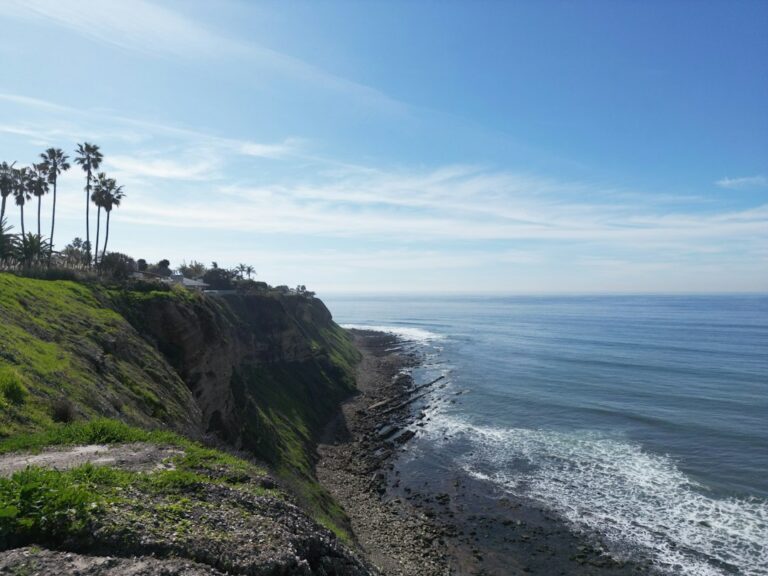 Selling as-is
What Rancho Palos Verdes’ Landslide Zones Mean for a Natural Hazard Disclosure
Rancho Palos Verdes sellers must check a landslide-zone box on the state Natural Hazard Disclosure Statement, separate from the earthquake fault question.
Read the guide → Selling as-is
Highland Park HPOZ Disclosure Rules Explained
Highland Park's historic overlay (HPOZ) governs renovations, but California's TDS and NHD disclosure rules still apply in full, even on an as-is sale.
Read the guide → Selling as-is
As-Is Disclosure Rules for an Older Pasadena, CA Home
Selling as-is in Pasadena doesn't skip California's disclosure law. See what Civil Code requires for the city's century-old Craftsman homes.
Read the guide → Selling as-is
The Anaverde HOA Disclosure Packet an As-Is Sale Still Requires
The Anaverde HOA disclosure packet under Civil Code 4525, plus the TDS and NHD duties an as-is sale in Anaverde, CA never removes, and why it adds time.
Read the guide → Selling as-is
Beverly Hills, CA As-Is Sales: What You Still Disclose
Selling as-is in Beverly Hills, CA doesn't waive disclosure law. See what sellers must still tell buyers under California's TDS and NHD rules.
Read the guide → Selling as-is
Why “As-Is” Doesn’t Simplify Disclosure for a Winnetka, CA Seller
Civil Code 1102 still requires full disclosure on an as-is Winnetka sale -- here's what the TDS, NHD, and lead-paint rules actually require.
Read the guide → Selling as-is
What California’s As-Is Disclosure Law Still Requires in Gardena
Selling as-is in Gardena does not skip California disclosure law. See what sellers must still disclose, plus local zoning and jurisdiction quirks.
Read the guide → Selling as-is
Why Culver City’s As-Is Disclosure Rules Aren’t Los Angeles’s
As-is doesn't skip California disclosure law. Learn why Culver City permit and code records come from its own city hall, not LA, before you sell as-is.
Read the guide →