
Yolo County Probate Court: Local Rules, Filing Fees and Timeline
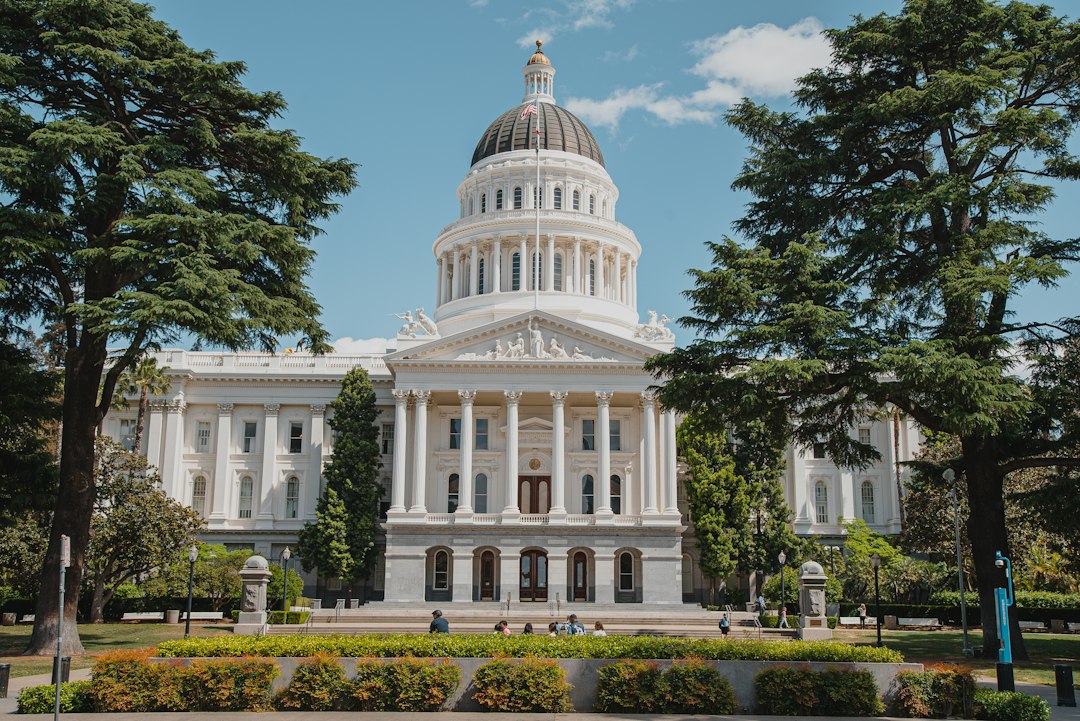
Probate in Yolo County runs through the Yolo County Superior Court in Woodland, and it follows the same statewide rules as every other California county, with a few local wrinkles in how the court schedules and reviews petitions.
Filing the opening petition currently costs $435, and most straightforward estates reach an appointed executor or administrator in four to six weeks, though the case cannot close until at least four months after creditors are formally notified.
If you are selling a house that belonged to someone who died, or you inherited one and are trying to figure out what has to happen before you can do anything with it, this is the practical rundown: which court handles it, what it costs, which forms matter, how long it realistically takes, and when probate can be skipped entirely.
Which Court Has Jurisdiction Over Yolo County Probate
All decedent’s estate matters for people who died while living in Yolo County, or who owned real property here even if they lived elsewhere, go through the Yolo County Superior Court at 1000 Main Street, Woodland, CA 95695. The court groups probate with its civil, family, and small claims calendars rather than operating a separate standalone probate courthouse, and probate-specific questions are routed through the clerk’s office at (530) 406-6704.
The court maintains a Self-Help Center on the second floor of the Main Street courthouse, (530) 406-6794, which is the practical first stop for anyone filing a decedent’s estate petition without an attorney.
Unlike its guardianship and conservatorship divisions, which publish Yolo-specific local forms and screening questionnaires, the court’s decedent’s estates page does not add extra local pleadings on top of the statewide Judicial Council forms.
In practice that means a petitioner in Yolo County files the same standard forms used anywhere else in California: DE-111 (Petition for Probate), DE-121 (Notice of Petition to Administer Estate), DE-140 (Order for Probate), DE-150 (Letters), and, where it applies, DE-310 for a streamlined petition to succeed to a primary residence.
Before relying on any older downloaded copy, check the version posted on the Yolo County Superior Court’s own site, since Judicial Council forms are revised on a rolling schedule.
One local feature worth knowing about going in: the Yolo court posts “probate notes” ahead of hearings, which are the probate examiner’s written recommendation on your petition.
A probate note is not the same as a tentative ruling and does not automatically become the court’s order the way a tentative ruling can in some civil departments.
If a note flags a missing bond, an unfiled proof of mailing, or an incomplete inventory, you are expected to correct it, often by filing a supplement or appearing at the hearing prepared to address it, rather than assuming silence means approval.
Checking the probate note calendar a few days before your hearing date is the single easiest way to avoid a continuance.
What It Actually Costs to Open a Probate Case
The filing fee for the first petition for letters of administration or letters testamentary is set by state law, not by any individual county, under Government Code section 70650(a).
That statute’s base figure is $355, but the amount actually collected at the window includes additional statutory surcharges layered on by other Government Code sections, which brings the uniform total to $435 under the statewide civil fee schedule currently in effect.
Yolo County is not one of the handful of counties (Riverside, San Bernardino, and San Francisco) where local courthouse construction surcharges push that total higher, so $435 is what you should budget for the initial filing here.
That $435 covers only the opening petition.
Expect additional costs as the case moves along: a probate referee’s fee to appraise non-cash assets (set by statute as a percentage of appraised value, with a minimum charge), publication costs for the Notice of Petition to Administer Estate in a newspaper of general circulation, a $50 fee if you are lodging a will with the court, a $40 fee if any interested party files a request for special notice, and $60 for most subsequent motions that require their own hearing.
An attorney, if you hire one, is compensated separately under a statutory fee schedule tied to the size of the estate rather than an hourly rate, unless the case becomes contested.
Whether This Estate Needs Formal Probate at All
Not every estate has to go through a full probate administration, and figuring this out first can save months. California raises its small-estate dollar thresholds every three years under Probate Code section 890, and the current figures took effect for deaths on or after April 1, 2025:
A person can collect personal property, such as bank accounts, vehicles, and personal belongings, using a simple Affidavit for Collection of Personal Property under Probate Code section 13100 if the decedent’s total estate value does not exceed $208,850. This is faster than a court filing because it does not go through a judge at all; it’s an affidavit presented directly to whoever is holding the asset, such as a bank.
For real property, Assembly Bill 2016 (effective for deaths on or after April 1, 2025) created a separate and much higher threshold specifically for a decedent’s primary residence.
Under Probate Code section 13151, an heir or devisee can petition the court to succeed to the decedent’s primary home, using Judicial Council form DE-310, if the residence’s appraised value is $750,000 or less.
This petition still goes before a judge and still requires a probate referee’s appraisal, but it skips the full administration process: no executor appointment, no ongoing creditor-claim period management, no final accounting.
Before this law took effect, the real-property threshold was only $184,500, so a house that would have required full probate two years ago may now qualify for the streamlined route.
It’s worth noting this expanded threshold only applies to the primary residence itself; a rental property or vacation home in the same estate still falls under the ordinary rules.
If the estate includes a surviving spouse or registered domestic partner and the property passed to them as community property, a Spousal or Domestic Partner Property Petition is usually faster and cheaper than either the small estate affidavit or full probate, and it bypasses both dollar thresholds entirely.
If none of those shortcuts apply, because the estate is larger, the ownership is more complicated, or there’s no surviving spouse, a full probate case is the only path, and the rest of this applies to you.
Filing the Petition and What the First Hearing Looks Like
A full probate case starts when someone, usually the executor named in the will or the closest heir if there is no will, files the Petition for Probate (DE-111) with the Yolo County Superior Court clerk.
The petition asks the court to admit the will (if there is one), appoint an executor or administrator, and issue Letters authorizing that person to act on the estate’s behalf.
The clerk sets a hearing date, typically several weeks out, and the petitioner must then serve notice on all heirs, devisees, and anyone else entitled to it, and publish the Notice of Petition to Administer Estate in a qualifying newspaper at least 15 days before the hearing.
Separately, whoever has physical possession of the decedent’s original will has an independent legal duty under Probate Code section 8200(a) to deliver it to the superior court clerk within 30 days of learning of the death, whether or not a probate petition has been filed yet. This applies even to someone who has no intention of serving as executor; holding onto a will indefinitely is not optional.
At the hearing itself, assuming the probate notes don’t flag a problem, the judge admits the will and signs the Order for Probate, and the clerk issues Letters Testamentary or Letters of Administration.
Many petitioners also request authority under the Independent Administration of Estates Act at this stage, which, once granted, lets the executor handle most estate business, including selling real property, without separate court approval for each transaction.
We’ve covered how that authority changes the sale process in more detail in our guide to California’s Independent Administration of Estates Act, which is worth reading before you list or accept an offer on an estate’s house.
Documents to Gather Before You Start
Having these ready before you file saves a continuance later:
- The original will, if one exists, plus any codicils
- A certified copy of the death certificate
- A list of the decedent’s known heirs and devisees, with current addresses
- A preliminary inventory of assets, including any real estate, with its approximate address and parcel number
- Information on any outstanding mortgage, property tax status, or liens against the house
- Proof of the petitioner’s identity and relationship to the decedent
- A bond, unless the will waives it or all beneficiaries waive it in writing
For the real property specifically, pull the most recent property tax bill from the Yolo County Assessor’s records and check for any supplemental assessment that may be pending, since ownership transfers through inheritance can trigger a reassessment review even when an exclusion applies. If you’re unsure whether an exclusion covers your situation, that’s a question for the Assessor’s office directly rather than something to guess at.
What Happens to the Property Tax Bill When You Inherit
Inheriting a house doesn’t automatically reset its property tax bill to current market value, but it can, depending on who you are and what you do with the house.
If you inherit a parent’s primary residence and move into it yourself, or keep it as a rental while filing the right paperwork, you may qualify for the parent-child transfer exclusion under Revenue and Taxation Code section 63.1, which limits how much the taxable value jumps.
That claim has to be filed with the Yolo County Assessor’s office within three years of the date of transfer, or within six months of a supplemental or escape assessment notice if one is mailed first, whichever gives you more time.
Miss that window and the exclusion generally can’t be applied retroactively. If the heirs intend to sell the house rather than keep it in the family, this exclusion usually isn’t worth pursuing, since the new buyer’s purchase price becomes the new assessed value anyway once escrow closes.
Either way, it’s worth a call to the Assessor’s office before you assume the tax bill will stay the same, since a reassessment that surprises a buyer or a beneficiary mid-sale can complicate escrow.
How Long a Yolo County Probate Case Realistically Takes
Based on the timeline the Yolo County Superior Court itself publishes for decedent’s estates, appointing an executor or administrator typically takes four to six weeks from the date the petition is filed, assuming no objections and no missing paperwork.
From there, the case cannot close or distribute assets until at least four months have passed since the Notice to Creditors was first published, because that four-month window is the statutory period creditors have to file claims against the estate.
A straightforward, uncontested estate with no complications often wraps up in six to nine months total. Estates with a will contest, missing heirs, a disputed asset, or a house that needs court confirmation of sale commonly run twelve months or longer.
Selling the House While the Estate Is Open
If the executor has full IAEA authority, selling the house works much like an ordinary sale: list it, accept an offer, go through escrow, and close, with one procedural step added. The executor must send a Notice of Proposed Action to all beneficiaries before the sale closes, giving them at least 15 days to object. If nobody objects, the sale proceeds without a judge ever reviewing the price.
Without full IAEA authority, or in the smaller number of cases where the will restricts the executor’s power, selling real estate requires a court-confirmed sale: the executor accepts an offer, but the sale isn’t final until a judge confirms it at a hearing, where other buyers are permitted to overbid in open court in statutory increments.
This process protects the estate’s beneficiaries from a below-market sale, but it adds real time, typically several additional weeks, and some uncertainty, since a higher bidder can show up at the confirmation hearing itself.
Either way, before a sale can close, the title company will want to see the Letters, the Order for Probate, and, if required, the court’s confirmation order, so keeping certified copies of each on hand speeds things up considerably.
When a Cash Sale Is the Wrong Choice
A fast cash sale is not the right answer for every estate, and it’s worth saying plainly where it isn’t.
If the house has substantial equity, is in good condition, and sits in a neighborhood with active buyer demand, a traditionally listed sale through a realtor, even with the added time of court confirmation, will usually net the estate more money than a quick cash sale once repairs and a few months of carrying costs are weighed against the higher sale price a retail buyer is often willing to pay.
If the estate qualifies for the $750,000 AB 2016 streamlined petition and the heirs actually want to keep the home rather than sell it, speed isn’t the constraint at all, and a rushed sale would be solving a problem that doesn’t exist.
And if multiple heirs disagree about selling, a fast transaction pushed through by only one of them can create new legal disputes rather than resolving the estate cleanly; that situation usually calls for a probate attorney’s input before any offer is signed, cash or otherwise.
Where a cash sale tends to make more sense is the opposite scenario: a house that needs more repair work than the estate has cash to front, heirs spread across different states who want a clean, fast close instead of months of coordination, a property heading toward a tax default or code enforcement deadline, or a sale that needs to happen on a specific date to satisfy a probate referee’s appraisal timeline or a pending court confirmation hearing.
Getting the House Sold Once Letters Are in Hand
Once you have Letters in hand, whether you’re weighing a traditional listing, a court-confirmed sale, or a direct sale to an investor, it helps to talk through the estate’s specific situation with someone who has actually closed Yolo County probate sales before guessing at timelines.
We buy directly or bring a vetted cash buyer to the table, so if you’d rather skip the showings, repairs, and uncertainty of an open-market listing, you can get a no-obligation cash offer on the house at any point once you have court authority to sell, whether that’s full IAEA power or a confirmed sale in hand.
When you sell to us, we pay the standard closing costs, including the county and city transfer taxes, escrow and title, which is different from a typical listed sale, where the seller customarily covers transfer tax by local custom.
If you’d like help thinking through whether to sell your Yolo County house for cash or go the traditional route, you can reach out directly through Cash Home Buyers CA, or see our Google Business Profile for more on how we handle probate and inherited property sales.