
Sell Your House As Is in Downtown Santa Ana, CA
- Foreclosure, inherited, tenants, damage — we buy it
- Zero fees, zero commissions, zero closing costs
- No obligation — turn the offer down and owe us nothing


Fast, Fair, and Reliable Offers
No repairs, no cleanout and no lender inspection list: get a written cash offer on your Downtown Santa Ana house exactly as it stands today.
Sell Your House As Is in Downtown Santa Ana Without Fixing a Thing
Century-old houses have stories, and not all of them are in the listing photos. If you want to sell your house as is in Downtown Santa Ana, you are probably looking at something a typical buyer’s lender would flag: cloth wiring in the attic, a foundation that has settled over a hundred years, a back unit nobody remembers permitting, or a kitchen that has not been touched since the 1960s. You do not have to fix any of it to sell.
The residential streets around the Civic Center, near Spurgeon, Sycamore and Bush, hold California bungalows and Craftsman cottages built from the 1900s through the 1920s. Many were split into two or three rental units long ago, and decades as rentals tend to leave deferred maintenance behind. That is the housing stock we focus on: single-family houses and duplexes, not the newer lofts and condos east of the core toward the Artists Village.
We can buy your house directly or bring in a vetted cash buyer from our network; either way you get one written offer, proof of funds, a neutral escrow company, a clear closing date, and no fees or commissions.
A Quick Look at the Downtown Market
Redfin’s Downtown Santa Ana report for the three months ending August 2026 lists a median sale price of $499,759, up 19.0% year over year, on just 13 sales. The median home took 66 days to go under contract, and the average sale closed at about 97.9% of list price.
Those figures reflect the homes that actually sold, which skew toward units that were ready to show. A fixer upper with visible problems usually sits longer, draws lower offers from financed buyers or loses a buyer when the appraisal or inspection comes back. That gap between a move-in-ready median and a house that needs repairs is exactly where an as-is cash offer can make sense.
As-Is Cash Sale vs. Repair and List
| Factor | As-is cash sale | Repair, then list |
|---|---|---|
| Timeline | Written offer usually within 24 hours; a clear-title closing can often happen in about two to three weeks, or on your date | Weeks or months of repair work, then marketing, then financed buyers usually need 30-45 days |
| Repairs | None; the offer reflects current condition | You pay contractors up front, and inspections can reveal more |
| Showings | One walkthrough | Open houses and repeated private showings |
| Commissions | No fees or commissions | Agent commissions often total around 5-6% combined |
| Closing costs | Written into the purchase agreement | Customary seller costs plus any repair credits |
| Certainty | No appraisal or loan approval | A low appraisal or lender repair demand can end the deal |
How an As-Is Sale Works, Step by Step
- Reach out. Call or text 424-493-4424 or use the form at the top of the page. Be candid about the condition; it helps us price accurately.
- A single walkthrough and a written offer. We look at the roof, foundation, wiring, plumbing and any added units, then send a written cash offer, usually within 24 hours.
- Close through escrow. A neutral escrow company handles title, payoffs and recording with the Orange County Recorder on the date you choose.
What Needs Repairs Downtown, and Why It Matters to Buyers
Older houses near Fourth Street tend to share a few issues. Knowing them helps you understand why a financed buyer might hesitate and why a cash buyer does not.
Wiring
Knob-and-tube and early cloth-insulated wiring show up often in houses of this age. Many insurers and lenders want it replaced or evaluated before closing, which can mean opening walls in a plaster house.
Foundations
Settling is common in century-old construction. Sloping floors, cracked plaster and sticking doors may be cosmetic or may point to real work. Either way, a lender’s inspection is likely to note it.
Unpermitted units and additions
A back house, a garage conversion or an interior split made without permits generally has to be disclosed. A financed buyer’s appraiser will often give it little or no value. State ADU law offers some owners a path to legalize an older unit, but you do not need to do that before a cash sale.
Plumbing and sewer lines
Galvanized supply pipes and original clay or cast-iron sewer laterals are common in houses of this era. Low water pressure, slow drains and root intrusion are the usual signs. A sewer camera inspection often turns up work that a financed buyer will ask you to fix or credit, and an as-is cash buyer simply factors it into the offer.
Deferred maintenance from years as a rental
Worn floors, older water heaters, aging roofs and tired bathrooms add up. None of it needs to be addressed first, and you do not need to clean or empty the house either. Point out what you know at the walkthrough and we will account for it in the written offer.
Disclosures Still Apply When You Sell As Is
Selling as is means you are not making repairs. It does not generally remove your duty to disclose what you know. California sellers typically still provide the Transfer Disclosure Statement and the Natural Hazard Disclosure, though some probate and trust sales are exempt from the TDS. List the problems you know about, including unpermitted work; honest disclosure protects you after closing.
If the house sits inside the downtown National Register district, roughly bounded by Civic Center Drive, First Street, Ross and Spurgeon, exterior changes to contributing structures can face added review. That is one more reason many owners prefer to sell as is rather than start a renovation. If there is a Mills Act contract on the property, it generally transfers with the house, so have it ready for escrow.
Costs at closing
Santa Ana does not charge its own city transfer tax; Orange County’s documentary transfer tax of $1.10 per $1,000 of the sale price generally applies. California may require withholding of 3 1/3 percent of the sales price unless an exemption applies, such as many principal-residence sales, and escrow handles the Form 593. Who pays which costs is spelled out in the written agreement.
Should You Sell Your House As Is in Downtown Santa Ana or Renovate First?
There is no single right answer. Renovating can raise the sale price, but it also means paying for the work before you see any return, carrying the mortgage, taxes, insurance and utilities while it happens, and absorbing whatever the contractor finds once the walls are open. In a plaster-and-lath bungalow, a rewiring job alone can spread into patching, painting and permits.
A few questions help sort it out:
- Do you have the cash and the time? Repairs are paid up front, and a renovation that runs long pushes the sale back with it.
- Will the work need permits or historic review? Structural, electrical and exterior work on older downtown houses can add review steps before you can finish.
- What will buyers actually pay for it? Some upgrades return more than they cost, and some do not. A local agent’s opinion of the after-repair value is a useful reference point.
- Who will manage it? If you live outside Orange County, overseeing contractors from a distance adds stress and risk.
If the answers point toward a long, expensive project, an as-is sale lets you step away with a known number and a known date. If the house only needs paint and a deep clean, listing may be the better path, and you can still ask us for a written offer to compare.
Fixer Upper Houses We Buy in Downtown Santa Ana
- Craftsman cottages and bungalows with original wiring, plumbing or foundations.
- Duplexes and split lots that need work between tenants, or with tenants still in place.
- Houses with fire, water or termite damage.
- Homes with a back unit, garage conversion or room addition that was never permitted.
- Inherited houses full of belongings that the family does not want to sort through.
- Small 1950s and 1960s houses on the outer residential blocks that were never updated.
If you are dealing with an estate, our guide to selling an inherited house in Downtown Santa Ana covers trust and probate timing. And if the house is already in good shape, listing it may bring a higher price; we will say so when that is the case.
Frequently Asked Questions
Can I sell my house as is in Downtown Santa Ana if it has unpermitted work?
Generally yes. Unpermitted additions, garage conversions and split units are common in older downtown houses. They should be disclosed, but you do not need to legalize or remove them before a cash sale.
Do I have to clean out the house?
No. Leave furniture, tools, boxes and anything else you do not want. Tell us at the walkthrough so the written offer reflects it.
Does selling as is mean I skip disclosures?
No. California sellers generally still provide the Transfer Disclosure Statement and Natural Hazard Disclosure, with some probate and trust sales exempt from the TDS. You are not making repairs, but you still share what you know.
What if my house has foundation or wiring problems?
We buy houses with settling foundations, knob-and-tube or cloth wiring, old plumbing and other issues that often stall a lender. The written offer accounts for the condition, so you do not pay for repairs up front.
Is an as-is cash offer lower than listing?
Usually a cash offer is below what a fully repaired house might sell for. The trade is no repair costs, no commissions, no months of holding costs and no risk of a buyer’s loan falling through. Compare both paths with your own numbers.
Can a house in the historic district be sold as is?
Yes. The National Register listing can affect future exterior changes on contributing structures, but it does not stop a sale in current condition. Share any Mills Act paperwork with escrow early.
How long does an as-is sale take to close?
When title is clear, closing can often happen in about two to three weeks, or later if you prefer a different date. Liens, probate or tenant leases can add time.
Will you still make an offer if there are tenants living in the house?
Yes, for single-family houses and duplexes. The leases and security deposits generally transfer to the buyer at closing, and tenants keep their protections under Santa Ana’s local rules and the statewide Tenant Protection Act. The walkthrough is scheduled with proper notice to the tenants.
Ready to skip the repair list? Call or text 424-493-4424 or send the form above for a written as-is cash offer on your Downtown Santa Ana house, with no fees or commissions.
Selling a house in Downtown Santa Ana: what to know
A few local details that shape timing and net proceeds when you sell in Downtown Santa Ana.
County & probate court
Downtown Santa Ana is in Orange County. Probate and trust matters for Downtown Santa Ana properties are heard by the Superior Court for Orange County, and deeds are recorded with the Orange County Recorder.
Transfer tax
Orange County charges a documentary transfer tax of $1.10 per $1,000 of the sale price. There is no separate city transfer tax in Downtown Santa Ana. When you sell to us, we pay the standard closing costs.
Tenant & rent rules
Rental homes in Downtown Santa Ana can fall under the Santa Ana Rent Stabilization and Just Cause Eviction Ordinance, which limits rent increases and requires just cause for most evictions, in addition to the statewide Tenant Protection Act (AB 1482). We buy tenant-occupied homes and take over the leases at closing.
Nearby cities we buy in
Seller Guides
Helpful guides for homeowners in Downtown Santa Ana
Plain-English answers to the questions sellers ask us most.
 Selling as-is
Selling a House With Code Violations in California
You can sell a California house with code violations without fixing them first, but disclosure is required and unpaid abatement costs can be a lien.
Read the guide → Selling as-is
California’s Natural Hazard Disclosure Statement: What Sellers Must Provide
California sellers must disclose six hazard zones on a Natural Hazard Disclosure Statement. As-is and cash sales are not exempt from this requirement.
Read the guide → Selling as-is
Selling a House on the California FAIR Plan: What Changes at Escrow
A bare California FAIR Plan policy often won't satisfy a buyer's mortgage lender. Here's what changes at escrow and how a DIC policy fills the gap.
Read the guide → Selling as-is
Do You Still Have to Disclose Selling As-Is in CA?
Selling as-is in California doesn't waive your disclosure duty. See exactly which sales are TDS-exempt and which still require full disclosure.
Read the guide → Selling as-is
Adverse Possession in California: Why These Claims Are So Rare
California adverse possession requires 5 years of possession plus paying the property taxes the whole time. Here's why that requirement kills most claims.
Read the guide → Selling as-is
What a Quitclaim Deed Does in California — and the Four Things It Does Not
A California quitclaim deed carries no warranties, does not remove you from the mortgage and does not clear liens. Transfer tax, PCOR and reassessment explained.
Read the guide → Selling as-is
What Is a Quiet Title Action in California, and Do You Need One to Sell?
What a California quiet title action requires under CCP 760.010-765.060, why there is no default judgment, and the cheaper ways to clear a cloud on title.
Read the guide → Selling as-is
Selling a California House With Unpermitted Work: What You Must Disclose
California's Transfer Disclosure Statement asks about unpermitted work by name. What you must disclose, the exemptions, and tax risk.
Read the guide →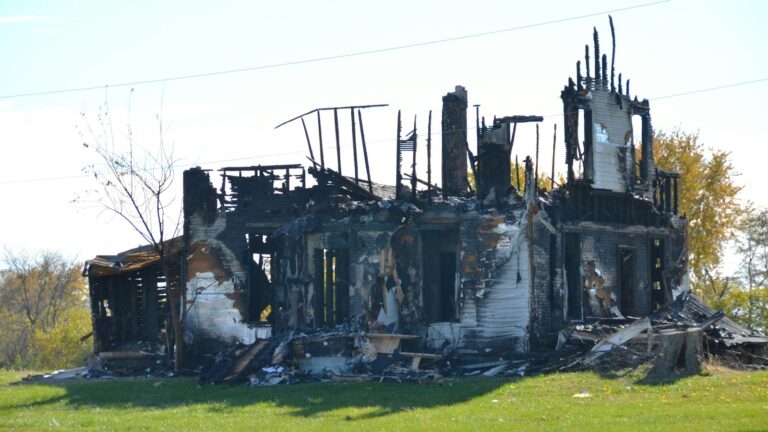 Selling as-is
How to Sell a Fire-Damaged House in California
You can sell as-is, but California gives you up to 36 months to collect replacement cost after a declared disaster. Selling early can forfeit it.
Read the guide →