
How to Sell a Fire-Damaged House in California
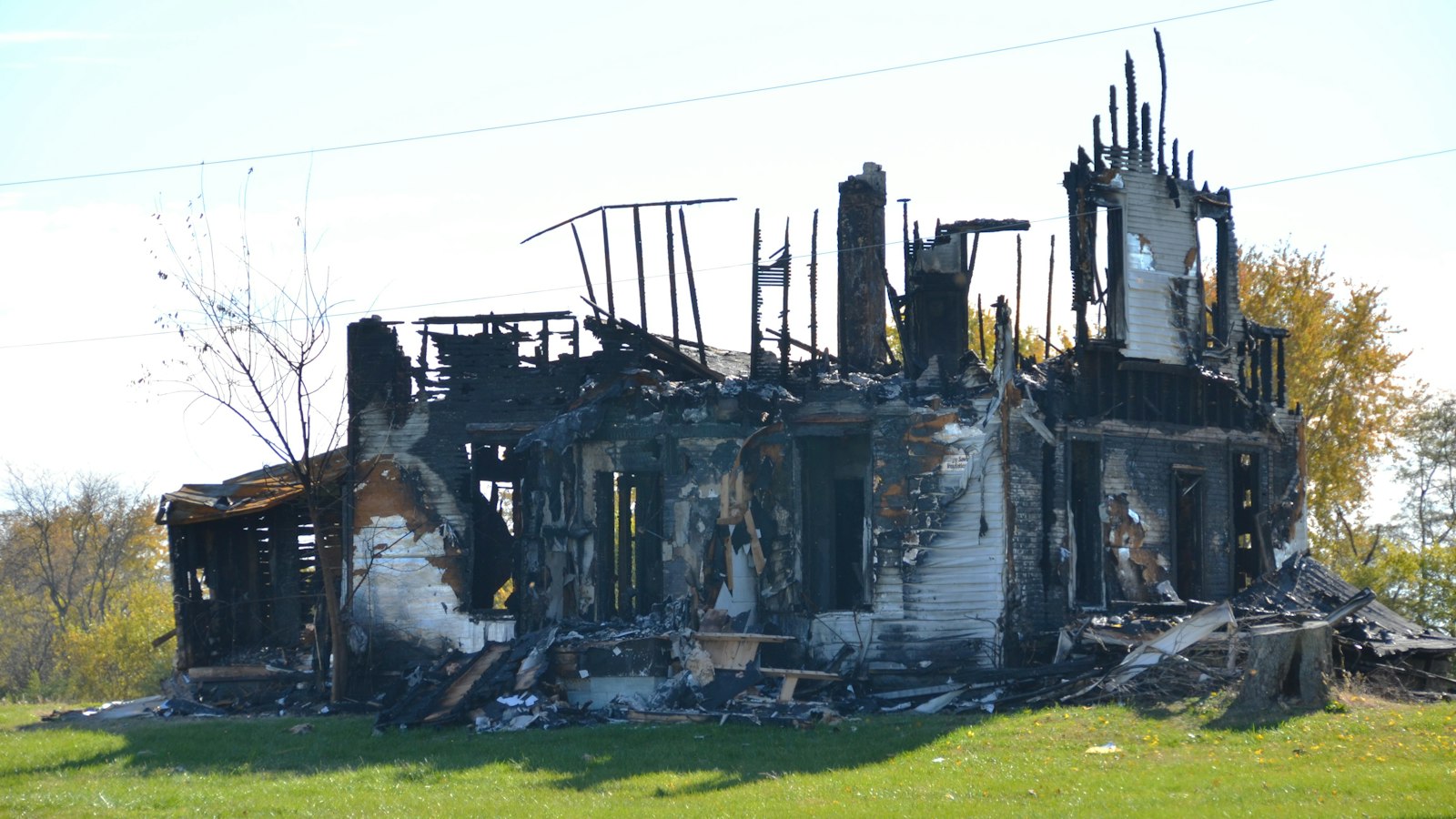
You can sell a fire-damaged house in California, and you can sell it in as-is condition without repairing anything. The real question is not whether — it is when, because selling before your insurance claim matures can forfeit money you have already earned.
Most articles on this topic skip straight to “call a cash buyer.” The three things that actually decide your outcome in California are the insurance clock, a disclosure rule you cannot contract around, and a hazard report that follows the address forever.
If any rebuilding was already underway without permits, that raises a separate set of obligations covered in our guide to selling a California house with unpermitted work.
Fire risk itself is also something state law makes you disclose upfront — every seller in a mapped fire hazard severity zone has to say so on the Natural Hazard Disclosure Statement, whether or not a fire has already happened.
The Insurance Clock Is Often Worth More Than Speed
Under Insurance Code section 2051.5, a policyholder normally has no less than 12 months from the first actual cash value payment to collect full replacement cost. Where the loss occurred in a declared state of emergency, that extends to no less than 36 months, with additional six-month extensions available for good cause.
Additional living expenses under section 2060 run at least 24 months for an emergency-declared loss, extendable up to 36 months total where reconstruction delays are outside your control.
Read that again if you are three months post-fire and being told to sell now. Replacement cost benefits are typically conditioned on actually rebuilding or replacing. Sell the lot before you do, and the difference between actual cash value and replacement cost can simply evaporate.
Get a coverage answer in writing from your carrier or a public adjuster before you accept any offer. And if your carrier already non-renewed you onto the FAIR Plan, a bare FAIR Plan policy often isn’t enough for a financed buyer’s lender — worth knowing before you list.
Your Policy May Be Protected From Non-Renewal
Insurance Code section 675.1 bars insurers from cancelling or refusing to renew residential policies within a wildfire perimeter and adjacent ZIP codes for one year after the Governor declares a state of emergency — including for policyholders who suffered no loss or a partial loss. Where a total loss occurred, insurers must offer to renew for at least the next two annual renewal periods, no less than 24 months.
If you were pushed toward selling because you assumed you were about to become uninsurable, check whether that moratorium applies to your ZIP code first.
As-Is Does Not Waive the Disclosure
Civil Code section 1102 applies the Real Estate Transfer Disclosure Statement to transfers of single-family residential property, and subdivision (c) is unambiguous: “Any waiver of the requirements of this article is void as against public policy.”
An as-is clause governs who pays for repairs. It does not relieve you of disclosing the fire, the smoke damage, the scope of work performed, who performed it and whether it was permitted. Sellers who treat as-is as a disclosure shield are the sellers who get sued after closing, and California courts have long held that a seller must disclose known material facts not readily observable to a buyer.
Certain transfers — some probate, trust and foreclosure transfers — are exempt from the statutory form. That exemption does not erase the underlying duty to disclose what you know. The safest posture on a fire property is over-disclosure with documentation attached.
The Hazard Report Follows the Address
Civil Code section 1103.2 requires a Natural Hazard Disclosure Statement covering six zones, two of which are fire-related: a Fire Hazard Severity Zone designated under Government Code section 51178 or Public Resources Code section 4201 and following, and a Wildland Fire Area under Public Resources Code section 4125, which carries ongoing vegetation maintenance duties under section 4291.
This is not about your fire. It is about the mapped zone your parcel sits in, and it affects every future buyer’s insurance quote and loan approval. Rebuilding does not change it. Price accordingly.
FAIR Plan Limits Shape Who Can Buy
If private carriers will not write the property, a buyer’s fallback is the California FAIR Plan, which caps dwelling coverage at a $3 million policy limit. FAIR Plan policies in force reached 668,609 by December 2025, up 146 percent since September 2022 — a useful signal of how hard private coverage has become in fire-exposed areas.
A financed buyer needs insurance to close. On a burned property in a high-severity zone, insurability is frequently the deal-killer rather than condition, which is why cash offers cluster around these properties.
Sell Now, or Wait?
- Selling now tends to win when the claim is already settled at actual cash value, when you cannot fund or supervise a rebuild, when the property is an inherited one you never intended to keep, or when carrying costs on a vacant structure are eating the equity
- Waiting tends to win when replacement cost benefits are still unclaimed, when you are inside the section 2051.5 window and able to rebuild, or when the lot alone in a desirable area will appraise higher once debris removal is complete
The honest version: if you have an open replacement-cost claim and the capacity to rebuild, selling to a cash buyer is usually the wrong financial decision, and you should say no to anyone pressing you before your carrier has answered in writing. Our guide to selling a house as-is in California covers the condition side, and cash buyers versus realtors covers the tradeoff.
Claim terms vary by policy and disclosure obligations turn on specific facts. If you want a no-obligation cash offer on a fire-damaged property — after you have your coverage answer — Cash Home Buyers CA buys throughout California in any condition.
Want to see what other California sellers say about working with us? Find Cash Home Buyers CA on Google for reviews, or call us at (424) 435-2326.