
Sell Your House During Divorce in Wilmington, CA
- Foreclosure, inherited, tenants, damage — we buy it
- Zero fees, zero commissions, zero closing costs
- No obligation — turn the offer down and owe us nothing


Fast, Fair, and Reliable Offers
Sell your house during divorce in Wilmington with one written offer both parties can review, handled through a neutral escrow company that splits proceeds as agreed.
Sell Your House During Divorce in Wilmington With Less Conflict
Deciding to sell your house during divorce in Wilmington often comes down to a practical problem: two people who are separating still jointly own one property, and every decision in a normal sale needs both of them to agree. Which agent to use, what list price to set, which repairs to make, which offer to accept, and when to move out. Each of those is a chance for disagreement, and each disagreement adds time and legal fees. A single written cash offer, handled through a neutral escrow company, removes many of those decision points at once.
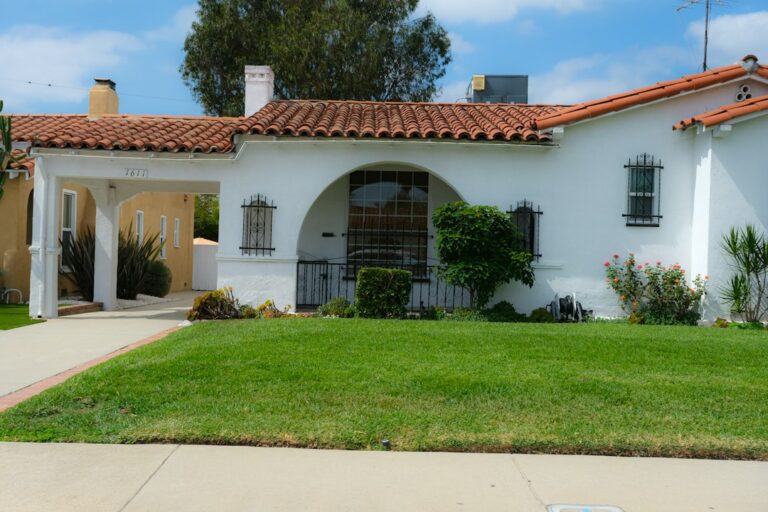
Many Wilmington couples own one of the Spanish-style houses that date to the neighborhood’s 1930s through 1950s construction boom, built up around the harbor Phineas Banning developed. An older house like that often comes with its own built-in list of disagreements: whether to fix original wiring before listing, whether a converted garage adds value, and who should pay for upkeep while the house sits on the market during a separation.
California Community Property Basics for Homeowners
California is a community property state. In general, property acquired during the marriage is presumed to belong to both spouses equally, while property owned before the marriage, or received by one spouse as a gift or inheritance, may remain separate property. A house can also be part community and part separate, for example when one spouse owned it before marrying and the couple made mortgage payments together afterward. A family-law attorney can review your specific title history and loan documents to clarify how your house is classified.
How Proceeds Are Typically Divided
Sale proceeds are generally split according to the couple’s settlement agreement or a court order, with the breakdown handled through escrow rather than informally between the parties. Both spouses who are on title generally need to sign the deed and closing documents regardless of how the proceeds are ultimately divided between them. If the divorce is still in progress, the settlement terms or a court order will typically need to specify the split before escrow can disburse funds accordingly.
Wilmington Market Snapshot
Redfin’s August 2026 data shows a median sale price of about $705,000 in Wilmington, with a median of 40 days on market across 33 sales. A house caught in a divorce, where decisions about repairs and pricing can stall while a settlement is worked out, often takes longer than that median through a traditional listing, which is part of why a straightforward cash sale appeals to many couples trying to finalize things and move forward separately.
Cash Sale vs. Listing During a Divorce
| Factor | Cash sale | Listing on the open market |
|---|---|---|
| Timeline | Written offer usually within 24 to 48 hours; often closes in two to three weeks | Prep, showings, then financed buyers usually need 30-45 days |
| Decisions needed | One offer to accept or decline together | Agent choice, list price, repairs and every offer need joint agreement |
| Repairs | None required | Often negotiated, which can reopen disputes between spouses |
| Commissions | No fees or commissions | Agent commissions often total around 5-6% combined |
| Closing costs | Spelled out in the written offer | Seller’s share of escrow, title and transfer taxes |
| Certainty | No appraisal or financing contingency | Can fall apart over financing, extending the uncertainty |
Selling Your House During Divorce in Wilmington, Step by Step
- Both parties call or text 424-435-2326 or use the form together, or separately with each other’s knowledge.
- One walkthrough and a written offer, usually within 24 to 48 hours, that both spouses can review independently.
- Close through a neutral escrow company, which disburses proceeds according to the settlement agreement or court order.
We can buy your house directly or bring in a vetted cash buyer from our network; either way you get one written offer, proof of funds, a neutral escrow company, a clear closing date, and no fees or commissions.
Why Couples Sell Their House During Divorce in Wilmington for Cash
A traditional listing during a divorce can drag out an already difficult period for months, with every showing, offer and counteroffer requiring both spouses to stay in contact and reach agreement. A written cash offer compresses that into a single decision point: accept it, decline it, or negotiate a specific term, and then move toward closing without ongoing back-and-forth about marketing strategy or showings.
Keeping the House Separate From Other Disputes
Where a divorce involves other contested issues, such as custody or support, keeping the house sale as simple and fast as possible can prevent one dispute from holding up the other. A clear written offer and a firm closing date give both spouses a concrete timeline to plan around, separate from whatever else remains unresolved in the broader case. This separation of issues often matters more than it might seem at first, since a stalled house sale can become a point of leverage in an otherwise unrelated negotiation if it drags on too long.
Why a Neutral Escrow Company Matters Here
Escrow companies do not represent either spouse; they simply follow the signed instructions both parties agree to. That neutrality is valuable during a divorce, since neither spouse needs to trust the other to hold or disburse funds correctly. The escrow instructions can spell out exactly how proceeds will be split, what happens with any remaining mortgage balance, and how closing costs are allocated, all before anyone signs, which removes a common source of post-closing disputes.
Because Wilmington is a City of Los Angeles neighborhood, a 9A report from the Department of Building and Safety is also required before closing, and the combined city and county transfer tax is $5.60 per $1,000 of the sale price, customarily split or paid from proceeds as the settlement specifies.
When a Family-Law Attorney Should Be Involved
If the divorce is not finalized, or if the two spouses disagree about whether to sell at all, a family-law attorney should review the proposed sale and the division of proceeds before escrow closes. This is especially important where one spouse wants to keep the house and buy out the other’s share rather than sell to a third party, since that changes the transaction structure entirely. We are happy to work alongside an attorney or mediator on timing and documentation, and to provide any written materials, such as the offer letter or proof of funds, that the attorney needs to review as part of the settlement.
Property Types We Buy During a Divorce
We buy single-family houses, duplexes and small apartment buildings anywhere in Wilmington, in any condition. If the property also needs repairs beyond what either spouse wants to fund during a separation, that is covered in more detail on our sell as is guide, and owners who need to relocate after the sale can find more on our relocation page.
Mortgage Payments During a Pending Sale
While a divorce and a sale are both in progress, the mortgage still needs to be paid on time to avoid late fees or, in a worst case, the start of a foreclosure process on top of everything else. Settlement agreements often specify how mortgage payments are split while the house is being sold, or which spouse covers them if one remains in the home. Clarifying this early, even informally, avoids an additional dispute layering onto the divorce itself.
If One Spouse Has Already Moved Out
It is common for one spouse to move out before the house is sold, whether for practical reasons or as part of a temporary arrangement. A vacant house is often simpler to sell quickly, since there is only one household’s schedule to coordinate for the single walkthrough, and no ongoing coordination needed around showings or access. The spouse who remains in the home through closing should still expect to need to vacate according to whatever date is agreed to in the sale.
Appraisal Disputes and Valuation Disagreements
Divorcing spouses sometimes disagree about what the house is actually worth, which can delay a decision on whether to sell or buy the other out. A written cash offer gives both spouses a concrete number from an outside party, rather than relying solely on each spouse’s own sense of value or a single appraisal either one commissioned independently. That number can also serve as a useful reference point if the house is instead headed toward a buyout rather than a sale to a third party.
Keeping Costs Predictable
Divorce proceedings already carry legal costs for both parties, so avoiding a 5 to 6 percent combined agent commission on top of that can meaningfully change what each spouse walks away with. The written offer approach also means there are no last-minute repair credits or renegotiated terms eating into the proceeds right before closing, which keeps the final number both spouses expect to receive close to the number they agreed to at the start.
Frequently Asked Questions
How do I sell my house during divorce in Wilmington if we cannot agree on an agent?
A written cash offer removes that disagreement entirely, since there is no agent, listing price, or marketing strategy to agree on. Both spouses simply review one offer together.
Do both spouses need to sign if the house is in both names?
Yes. Both spouses on title generally need to sign the deed and closing documents, regardless of how the divorce settlement divides the proceeds.
How are proceeds split between us?
Proceeds are generally divided according to the settlement agreement or court order, with escrow handling the actual disbursement rather than either spouse.
What if the divorce is not finalized yet?
A sale can still move forward, but the settlement terms or a court order typically need to specify the division of proceeds before escrow can disburse funds. A family-law attorney can help clarify this.
What if one of us wants to keep the house instead of selling?
That is a different transaction, usually involving a buyout of the other spouse’s share, and should be reviewed with a family-law attorney since it changes the structure significantly from a sale to a third party.
Does the house need repairs before we can sell it this way?
No. The offer accounts for the property’s current condition, which avoids reopening disagreements about who should pay for repairs before listing.
How fast can a divorce-related sale close?
With clear title and settlement terms in place, closing can often happen in about two to three weeks, or on whatever date works for both parties.
If you and your spouse need to sell your house during divorce in Wilmington, call or text 424-435-2326 or use the form above for a written offer you can both review together.
Selling a house in Wilmington: what to know
A few local details that shape timing and net proceeds when you sell in Wilmington.
County & probate court
Wilmington is a City of Los Angeles neighborhood in Los Angeles County. Probate and trust matters for Wilmington properties are heard by the Superior Court for Los Angeles County, and deeds are recorded with the Los Angeles County Recorder.
Transfer tax
Los Angeles County charges a documentary transfer tax of $1.10 per $1,000 of the sale price. The City of Los Angeles adds $4.50 per $1,000, and Measure ULA adds 4% on sales above roughly $5 million (5.5% above roughly $10 million). When you sell to us, we pay the standard closing costs.
Tenant & rent rules
Rental homes in Wilmington can fall under the Los Angeles Rent Stabilization Ordinance (RSO), which limits rent increases and requires just cause for most evictions, in addition to the statewide Tenant Protection Act (AB 1482). We buy tenant-occupied homes and take over the leases at closing.
Nearby cities we buy in
Seller Guides
Helpful guides for homeowners in Wilmington
Plain-English answers to the questions sellers ask us most.
 Divorce
Watts Charges and Epstein Credits: What They Mean for a Cerritos Home Sale
Watts charges and Epstein credits can shift what each spouse nets from a Cerritos, CA home sale. Here's how California family courts apply both doctrines.
Read the guide → Divorce
Dividing a Los Feliz Hillside Home in a CA Divorce
Splitting a Los Feliz hillside home in a California divorce? See how community property division works and what hillside zoning limits a buyout.
Read the guide → Divorce
What Community Property Law Means in an Agoura Hills Divorce
California splits community property equally in divorce, but Agoura Hills' 1970s-80s tract homes often carry separate-property claims that change it.
Read the guide → Divorce
Selling the Family Home in a Diamond Bar Divorce: What an HOA Adds to the Process
A Diamond Bar divorce splits community property equally by law, but HOA-governed neighborhoods add an extra disclosure step before closing escrow.
Read the guide → Divorce
Dividing the Family Home in a South Gate, CA Divorce: What California Law Requires
In a South Gate, CA divorce, the family home is presumed community property under Family Code 2550. Here's how it actually gets divided or sold.
Read the guide → Divorce
How Community Property Division Works for a Venice, CA Home
Community property splits equally in a Venice divorce, but canal-front premiums often make a buyout unaffordable, forcing a sale instead of a buyout.
Read the guide → Divorce
Is a House Buyout in a California Divorce Taxable?
A divorce house buyout isn't taxed upfront in California, but carryover basis can create a real tax bill later. Here's how the math actually works.
Read the guide → Divorce
Who Gets the House in a Divorce in California?
California community property rules, Family Code 2640 reimbursement and the automatic restraining orders that stop a sale. Buyout, sell, or deferred sale.
Read the guide → Divorce
Partition Action in California: The Deadlines That Decide Who Keeps the House
California co-owners get 45 days to elect a buyout under the Partition of Real Property Act. The deadlines, the price formula, the fees.
Read the guide →