
What California’s As-Is Disclosure Law Still Requires in Gardena
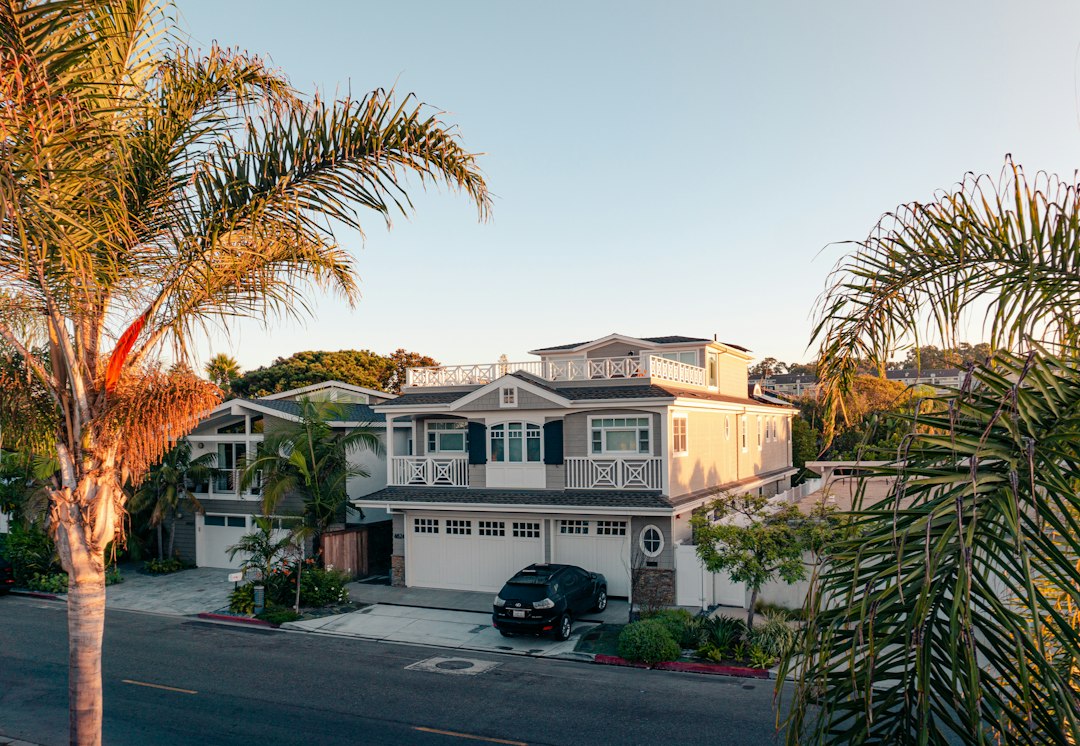
Selling a Gardena house “as-is” tells a buyer you won’t be fixing anything before closing — it does not excuse you from California’s disclosure statutes, and it does not make a card-room-era zoning quirk or a cross-border address problem disappear. Gardena’s own history makes both of those issues more likely to surface here than in a typical Los Angeles County suburb, so a seller who treats “as-is” as a shortcut past paperwork is taking on more risk than they realize.
Gardena’s Card Club Era Still Shows Up in Title and Zoning Records
Gardena incorporated on September 11, 1930, and for nearly half a century afterward it held something no other California city had: a local monopoly on legal draw-poker cardrooms. From 1936 to 1980, taxes on those card clubs accounted for roughly a third of the city’s annual budget, funding streets, parks, and services well beyond what a city of Gardena’s size would normally support. Two of those original-era clubs, now rebranded as the Hustler Casino and the Lucky Lady Casino, still operate in the city today, and the commercial parcels around them carry zoning and permit histories shaped by nearly ninety years of gaming-adjacent land use.
That matters less for the typical single-family seller than the city’s other quirk: Gardena covers only 5.86 square miles but is one of the more densely built cities in the South Bay, at roughly 10,470 residents per square mile across its 2020 Census population of 61,027. Tight lot lines and decades of infill mean older Gardena parcels are more likely than most to carry setback variances, converted garages, or additions that were never closed out with a final inspection — all facts a seller has to address honestly on the disclosure form, regardless of how the listing is worded.
The Los Angeles Unified School District serves the entire city, which is itself a small reminder of how closely Gardena’s civic life is intertwined with its much larger neighbor even though it has governed itself independently since 1930. On the environmental side, Gardena is also home to the Gardena Willows Wetland Preserve, a roughly 9.4-acre pocket of naturally occurring marshland where groundwater seeps above the surface year-round. It’s an unusual feature for a dense South Bay city, and while it sits apart from most residential parcels, any property near a low-lying or historically wet area of the city is worth checking against current flood-zone maps rather than assuming the whole city is uniformly dry.
The Transfer Disclosure Statement Survives Any “As-Is” Clause
California Civil Code §1102 and the sections following it require most sellers of residential real property to complete and deliver a Real Estate Transfer Disclosure Statement, or TDS, before the sale closes. The form asks what the seller actually knows about the property’s condition — roof leaks, foundation movement, past pest damage, prior insurance claims, additions, and alterations — not what a home inspector might later discover. “As-is” addresses who pays for repairs; it says nothing about whether the seller has to tell the truth about what’s wrong.
Timing carries its own consequences. Once a buyer receives the TDS, California law generally gives them three days to cancel the contract if the form is delivered in person, or five days if it arrives by mail. A Gardena seller who hands over the disclosure late in escrow risks reopening negotiations or losing the buyer outright, right when the deal looked closest to done. Delivering the TDS early — and accurately — is what actually keeps an as-is sale on schedule, not skipping it.
What Civil Code §1102.1 Actually Exempts — and What It Doesn’t
Civil Code §1102.1 lists the real TDS exemptions, and they are narrower than most sellers assume: transfers made under a court order, including probate sales and eminent domain actions; transfers by a trustee under a deed of trust, such as a trustee’s deed following a completed foreclosure; and transfers between co-owners. None of those exemptions turn on whether the listing says “as-is.” An ordinary Gardena homeowner selling their own house, outside of probate or a completed foreclosure, still owes the buyer a truthful TDS no matter how the marketing is worded. If a Gardena property carries flagged permit history from one of its older commercial-residential transition blocks, our guide on selling a house with code violations in California is worth reading before filling out the form.
The Natural Hazard Disclosure Doesn’t Ask Whether You’re Selling As-Is
Separate from the TDS, Civil Code §1103 requires a Natural Hazard Disclosure (NHD) Statement identifying whether the property sits in a designated flood zone, a very high fire hazard severity zone, an earthquake fault zone, a seismic hazard zone, or a wildland fire area. This requirement is triggered by location, not by sale terms, so an as-is listing in Gardena carries the exact same NHD obligation as a traditional one. Most sellers hire a natural hazard disclosure company to pull the zone data rather than researching it themselves, which is reasonable as long as the report is delivered before the buyer removes contingencies. For a fuller breakdown, see our California Natural Hazard Disclosure Statement guide. Gardena’s flat terrain keeps most parcels out of the highest fire-hazard tiers, but flood and seismic zone status still has to be confirmed address by address rather than assumed.
Lead Paint, Unpermitted Additions, and Gardena’s Older Housing Stock
Much of Gardena’s housing dates to the postwar boom years that followed its 1930 incorporation, which means a meaningful share of the city’s homes predate 1978. Federal law requires any seller of a pre-1978 home to disclose known lead-based paint hazards and to provide the buyer with the EPA’s lead-paint pamphlet and a specific disclosure form — an obligation layered on top of everything California already requires, and just as unaffected by as-is language.
Older homes in dense cities also tend to carry a longer history of informal work: a garage converted to living space, a patio enclosed without a permit, electrical panels upgraded by a previous owner’s handyman rather than a licensed contractor. California law doesn’t require a seller to have fixed unpermitted work before listing, but it does require disclosing what the seller actually knows about it, which is a separate duty from the general questions on the TDS form itself.
Parking, Setbacks, and Infill: Why a Gardena Permit Review Takes Longer
Density cuts both ways on a permit search. Because so much of Gardena was built out decades ago on small lots, the city’s current zoning code often doesn’t match what’s physically sitting on a given parcel — a detached garage converted into an accessory dwelling unit before ADU law caught up with the practice, a driveway narrowed to add a side-yard room, or a rear addition that encroaches on a setback that was tightened sometime after the home was originally built. None of that automatically kills a sale, but a buyer’s lender or title company will often flag it during underwriting, which can slow a traditional, financed transaction by weeks while the seller works through corrective permits, finaled inspections, or a certificate of compliance. A cash buyer who doesn’t require institutional financing sidesteps that particular delay, which is one of the more legitimate reasons a Gardena seller with a nonconforming addition might prefer certainty over the open market — separate from, and in addition to, whatever disclosure obligations still apply either way.
Jurisdictional Mix-Ups: When a Gardena Address Isn’t Actually Gardena
Gardena’s boundary runs directly against the City of Los Angeles on several sides, and some parcels that carry a Gardena mailing address and ZIP code are physically inside the City of Los Angeles rather than inside Gardena’s own municipal limits — a quirk of how the U.S. Postal Service assigns delivery areas versus how city boundaries are actually drawn. That distinction matters for anyone pulling permit history or checking for open code-enforcement cases, because Los Angeles Department of Building and Safety records and Gardena’s own building division are two entirely separate systems. A seller or agent who assumes a Gardena-addressed property falls under Gardena’s building department, when it actually sits a few hundred feet inside LA City limits, can end up pulling the wrong file — or concluding a property has no permit history at all when the real file is simply held somewhere else. Confirming jurisdiction before requesting records, rather than after a buyer’s title company flags a mismatch, avoids a disclosure that turns out to be incomplete through no intentional fault of the seller.
The same confusion can run the other way: a parcel that looks, from street level, like it belongs to a neighboring unincorporated pocket of LA County can actually sit inside Gardena’s city limits and be subject to Gardena’s own municipal code, business license rules, and rental property requirements rather than the county’s. The only reliable way to settle the question for a specific address is to check it against the Los Angeles County Assessor’s parcel map or pull a current title report, rather than relying on ZIP code, school assignment, or which city’s name appears on a utility bill — none of which reliably track the actual municipal boundary.
Disclosure vs. Concealment: Where As-Is Protection Actually Ends
Selling as-is genuinely does something useful: it tells a buyer, in writing, that the seller won’t be making repairs as a condition of closing, which shifts negotiating leverage before anyone has stepped inside for an inspection. What it does not do is protect a seller who knew about a defect and chose not to say so. California law treats “I won’t fix this” and “I won’t tell you about this” as two completely different things — the first is what as-is means, and the second is concealment, which exposes a seller to rescission or a fraud claim regardless of how the purchase agreement is worded. A buyer who later discovers an undisclosed, known defect can pursue remedies no matter how firmly the listing said “as-is,” because as-is terms govern repairs, not honesty.
When Selling As-Is for Cash Is the Wrong Move in Gardena
An as-is cash sale is not automatically the best outcome, and it does a disservice to sellers to present it that way by default. Gardena sits in one of the tighter-inventory pockets of the South Bay, within reach of Torrance, El Segundo, and the greater LAX employment corridor, and a well-maintained home here — even one that needs cosmetic updating rather than structural work — can draw real competition from traditional buyers financing a purchase. Trading that upside for the certainty of a fast, no-contingency cash close only makes sense in specific situations: a property that needs more repair work than the seller can finance, an inherited home nobody locally can manage, a tight relocation deadline, or a seller who simply cannot carry holding costs through a traditional listing period.
The way to decide is to compare, not guess. Get a specific cash offer in writing, then get a realistic estimate of net proceeds from a traditional listing — after repair credits, commissions, staging, and the weeks a listing is likely to sit — and look at the actual gap between the two numbers. Sometimes the comparison still favors the cash sale, particularly for a property with real structural issues or a complicated ownership situation. Other times a few more weeks on the market, even with every known defect disclosed up front, is clearly worth more. Our overview of disclosure requirements for selling as-is in California is worth reading either way, since the disclosure obligations don’t change based on which path a seller ultimately chooses.
What Actually Changes at Escrow in an As-Is Cash Sale
The disclosure paperwork is identical whether a Gardena house sells to a traditional buyer or a cash buyer, but the rest of escrow genuinely moves differently. A financed purchase typically carries an appraisal contingency, a loan underwriting period, and a lender-required inspection window that can stretch a closing to 30 or 45 days even when everything goes smoothly. A cash purchase removes the financing contingency entirely, which is usually what shortens the timeline — not any change to disclosure or title requirements, which stay exactly the same. Title still has to be cleared of any liens, the preliminary title report still has to be reviewed for easements or encroachments tied to Gardena’s irregular lot lines, and the closing still runs through a licensed escrow and title company regardless of how the buyer is paying. A seller comparing offers should ask specifically how a cash buyer plans to fund the purchase — verified bank funds versus a hard-money loan that still has its own underwriting — since “cash offer” on paper doesn’t always mean the deal is actually contingency-free in practice.
Before You List or Accept an Offer
- Confirm whether your Gardena-addressed property actually sits inside Gardena’s municipal boundary or inside the City of Los Angeles, since that determines which building department holds the permit history
- Complete the Civil Code §1102 Transfer Disclosure Statement honestly, based on what you actually know, regardless of as-is terms
- Order a Natural Hazard Disclosure Statement under Civil Code §1103 to confirm flood, fire, and seismic zone status for your specific parcel
- If the home was built before 1978, prepare the federal lead-based paint disclosure and pamphlet
- Note any unpermitted additions or alterations you’re aware of, even if you don’t plan to fix them before closing
- Compare a specific as-is cash offer against a realistic net-proceeds estimate from a traditional listing before committing to either path
This article is general information, not legal advice, and a real estate or disclosure attorney should be consulted for anything specific to your property or transaction. If speed and certainty matter more than maximizing price in your situation, Cash Home Buyers CA can provide a no-obligation cash offer on your timeline. For details specific to this market, see our dedicated page on selling a house as-is in Gardena.