
How AB 2016 Changed the Probate Math for an Alondra Park Inheritance
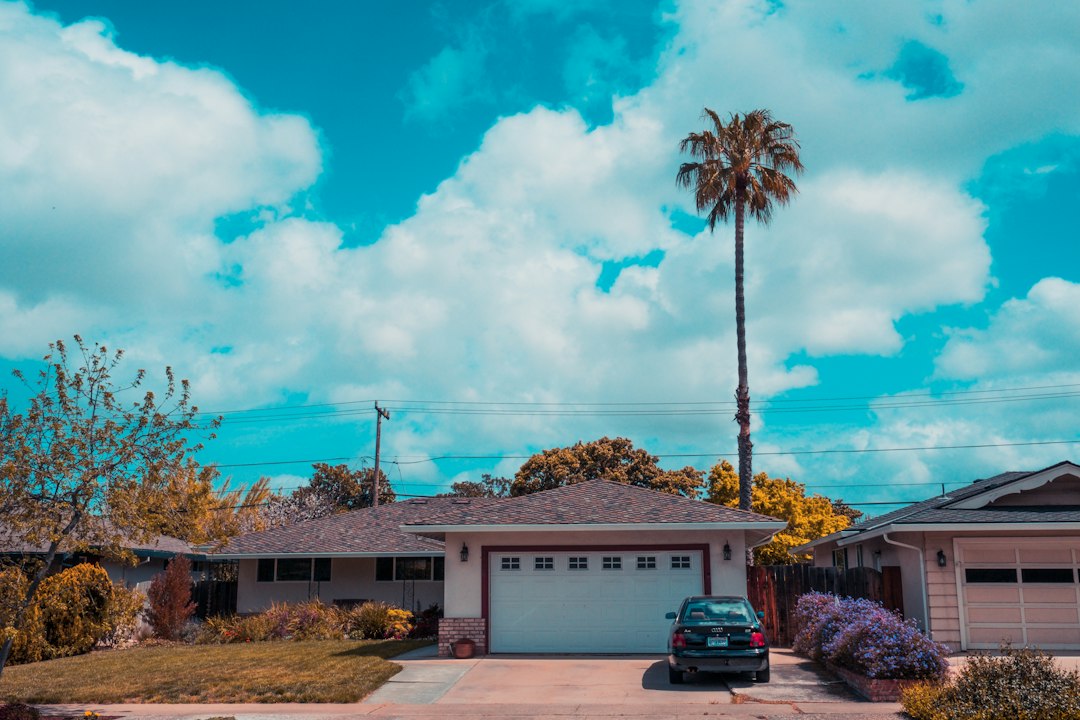
A $750,000 threshold now covers far more Alondra Park inheritances than the old small-estate rules ever did — but only if the house was the decedent’s primary residence, and only if the title was held the right way to begin with. Assembly Bill 2016 raised the ceiling for California’s simplified probate petition starting with deaths on or after April 1, 2025, and for an unincorporated community like Alondra Park, where the median home sits well under that new number, it changes the math for a lot of heirs who assumed they were stuck in court for a year or more.
This page walks through what actually changed, how to tell whether a specific Alondra Park house qualifies, and where the new rule stops helping. If you already know you need to sell and just want an offer, our page on selling an inherited house in Alondra Park, CA covers that directly. This one is about the probate math itself.
What Changed on April 1, 2025
Before AB 2016, California’s simplified procedure for transferring a decedent’s real property — the Petition to Determine Succession to Real Property under Probate Code sections 13150 through 13152 — was capped at a relatively low number that excluded most homes in coastal Los Angeles County. AB 2016 raised that cap to $750,000 for deaths occurring on or after April 1, 2025, but added an important condition that did not exist before: the $750,000 figure applies only to real property that was the decedent’s primary residence at the time of death.
That is a narrower trade than it first appears. A rental property, a vacation cabin, or a second home the decedent owned does not get the benefit of the higher number, even if its value falls well under $750,000. Only the home the person actually lived in qualifies for this particular threshold. For a lot of Alondra Park families, where the inherited house is in fact the parent’s or grandparent’s longtime primary residence, that distinction will not matter. But it is worth checking rather than assuming, especially if the decedent owned more than one property.
It is also worth being precise about dates. The threshold that applies is the one in effect on the date of death, not the date the heirs happen to file the petition or the date they are reading this article. A death in March 2025 falls under the prior rules; a death in April 2025 or later falls under AB 2016. If you are unsure which side of that line applies, a probate attorney can confirm it in minutes by checking the date on the death certificate against the statute’s effective date.
Does the $750,000 Limit Cover This House
The $750,000 figure is measured against the gross fair market value of the real property as of the date of death, not the equity the decedent actually held in it. A house worth $700,000 with a $400,000 mortgage still counts as a $700,000 property for this purpose — the loan balance is not subtracted. That matters because an heir who thinks in terms of “what’s left after the mortgage” can end up guessing wrong about whether the estate qualifies.
Assuming the house in question was the decedent’s primary residence and the death occurred on or after April 1, 2025, the next question is how title was actually held. The simplified petition is for property passing through the decedent’s estate — meaning it was held in the decedent’s individual name, or as a tenant in common, without a surviving joint tenant, a funded living trust, or a recorded transfer-on-death deed already moving it outside probate. If the house was already in a trust, or held in joint tenancy with a right of survivorship, the §13150 petition is not the relevant tool at all, because the property may not need probate of any kind — simplified or otherwise. Our companion article on whether you need probate to sell an inherited house in California walks through those title scenarios in more detail.
So the practical checklist for an Alondra Park heir looks something like this: pull the recorded deed to see how title was held, confirm the date of death, get a realistic value for the house as of that date, and confirm it was the decedent’s primary residence rather than a second property. Those four facts determine which procedure applies, and none of them require guesswork once you have the paperwork in hand.
Why the Personal-Property Threshold Is a Different Number
A separate and frequently confused threshold governs personal property — bank accounts, vehicles, brokerage accounts, and similar assets that are not real estate. That figure comes from Probate Code section 13100, the small estate affidavit statute, and it is not $750,000. For deaths on or after April 1, 2025, the section 13100 limit is $208,850. That number will hold until the next scheduled inflation adjustment on April 1, 2028.
It is worth flagging directly because a lot of material online still quotes $184,500 as the current figure. That was accurate for deaths between April 1, 2022 and March 31, 2025, but it is now out of date. If a death in the family occurred after April 1, 2025, the $184,500 number simply does not apply, and relying on it could lead an heir to assume personal property needs full probate when a simplified affidavit would actually work — or the reverse.
The two statutes exist for different kinds of assets and were not changed in sync. Section 13150’s $750,000 figure is specific to a primary-residence real property petition. Section 13100’s $208,850 figure covers everything else in the estate that isn’t real property — and unlike the real property rule, it was not limited to a primary residence. Treating them as a single “small estate number” is the single most common mistake heirs make when researching this on their own.
Why the Two Thresholds Don’t Stack
Because the real property and personal property thresholds come from different statutes, they are evaluated separately — they do not combine into one larger exemption, and qualifying under one does not automatically mean the other applies. Consider an estate holding a $600,000 Alondra Park house that was the decedent’s primary residence, plus $250,000 sitting in a brokerage account. The house falls comfortably under the $750,000 real property limit and may qualify for the simplified §13150 petition on its own. The brokerage account, however, exceeds the $208,850 personal property limit by a wide margin and will need its own separate handling — likely requiring regular probate for that asset, or at minimum a process beyond a simple affidavit, regardless of how easily the house qualifies.
In other words, a family can end up running two different tracks at once: a relatively fast simplified petition to clear title on the house, alongside a slower or more involved process for the rest of the estate. That is not a flaw in the planning — it is simply how the two statutes were written. An executor or heir who only looks at the real property number and assumes the whole estate is “under the limit” can be caught off guard when the bank or brokerage firm won’t release funds on an affidavit that doesn’t actually cover the account balance.
What the Simplified Petition Still Requires
It is easy to read “simplified” and assume the petition is quick and informal. It is faster than full probate, but it is still a court process with real steps and real waiting periods, and AB 2016 added at least one new requirement rather than removing them. At minimum, the §13150 petition requires waiting 40 days from the date of death before filing, obtaining an appraisal from a probate referee to establish the property’s value, giving at least 15 days’ written notice to all interested parties before the scheduled hearing — a notice requirement AB 2016 specifically added — attending the hearing itself, and then recording the court’s order to actually clear title.
Done efficiently, that process can often wrap up in a few months rather than the 9 to 18-plus months full probate commonly takes. But “a few months” is not instant, and it is not a way to avoid the probate court altogether — it is a shorter path through it. Anyone who needs to sell quickly, for whatever reason, should plan around that realistic timeline rather than an assumption that a simplified petition means no waiting at all.
What Alondra Park’s Unincorporated Status Does and Doesn’t Change
Alondra Park is an unincorporated community in Los Angeles County — a Census Designated Place in ZIP code 90249 with a population of 8,569 as of the 2020 Census, sitting east of Lawndale, south of Hawthorne, west of Gardena, and north of Torrance, and home to El Camino College. It has never incorporated as its own city, which means it has no city hall, no city police department, and no separate municipal court.
None of that changes the probate statute itself. AB 2016, section 13150, and section 13100 are all state law, and they apply the same way whether a house sits in an incorporated city or an unincorporated community. What the unincorporated status does change is who an executor or heir deals with outside the courtroom. Alondra Park residents are served by the Los Angeles County Sheriff’s Department rather than a city police force, and by Los Angeles County Fire rather than a municipal fire department. Building permits, code enforcement, and any property-related records run through Los Angeles County departments directly, not through a city planning office.
That is relevant in a very practical way for an executor clearing a house for sale. If there is an open permit, an unresolved code violation, or a county property lien to check on, the point of contact is the county — not a city hall that doesn’t exist for Alondra Park. And because Alondra Park is in Los Angeles County regardless of its unincorporated status, the probate case itself is filed and heard in the Los Angeles County Superior Court system, the same court that hears cases for every incorporated city in the county. The unincorporated status changes the administrative footwork around the house; it does not change which court hears the petition or which statute governs the threshold.
If Full Probate Is Required Anyway
Not every Alondra Park estate will qualify for the simplified petition — the house might not have been the decedent’s primary residence, the estate might exceed $750,000, or title might be tangled in a way that calls for full administration. When that is the case, full California probate commonly takes 9 to 18 months, sometimes longer. Los Angeles County hears Alondra Park’s case regardless of its unincorporated status, and Los Angeles County’s court calendar tends to run on the slower end of that range because of caseload, which is worth factoring into any timeline an heir is planning around. For a broader look at what drives that range, our article on how long probate takes in California covers the stages in more detail.
Cost is the other piece heirs tend to underestimate. California sets statutory fees for both the probate attorney and the executor under Probate Code section 10810, and each is calculated the same way: 4% of the first $100,000 of the estate’s value, 3% of the next $100,000, and 2% of the next $800,000. Critically, that percentage is applied to the estate’s gross value, not its equity — a house with a mortgage is counted at its full value, not the amount left after the loan is paid off. For a $700,000 Alondra Park house with no other major assets, that works out to statutory fees in the range of $17,000 for the attorney and another $17,000 for the executor, before court filing fees, referee fees, or other costs are added. Those numbers only compound if the estate ends up in full probate rather than the simplified petition. Our page on how much probate costs in California breaks the fee schedule down further.
When Selling for Cash Isn’t the Right Move
It would be easy for a page like this to pivot straight into “so sell fast and skip the hassle.” That is not always the right advice, and heirs deserve the honest version. If the estate clearly qualifies for the simplified §13150 petition — primary residence, death after April 1, 2025, value under $750,000, clean title in the decedent’s name — there is often little reason to rush into a sale under pressure. A few months is a manageable wait for most families, and clearing title through the court first can actually open up more selling options afterward, including a traditional listing.
Selling for cash also isn’t the right call when multiple heirs inherit the house together and some of them want to keep it rather than sell — as a residence, a rental, or simply to keep it in the family. That is a conversation among the heirs and, if needed, a probate attorney or mediator, not something a sale timeline should force. And if the house itself is in solid condition, needs no major repairs, and sits in a market where a traditional listing could net meaningfully more once title is clear, rushing into a cash sale before exploring that option can leave real money on the table. A cash sale solves for speed and certainty; it does not automatically solve for maximum price, and an heir who isn’t in a hurry should weigh both.
Where a cash sale tends to make more sense is the opposite set of circumstances: an estate that doesn’t qualify for the simplified petition and is facing a long full-probate timeline, heirs who live out of state and don’t want to manage a vacant Alondra Park property for a year, a house that needs more repair work than the estate wants to fund out of pocket, or a single heir who simply wants the matter closed rather than carried for months.
First Steps for an Alondra Park Heir
- Confirm the exact date of death — it determines which version of each threshold applies
- Pull the recorded deed from the county recorder to see exactly how title was held
- Determine whether the house was the decedent’s primary residence or a second property
- Get a realistic value for the house and tally any other estate assets separately
- Check for open county permits, code enforcement issues, or liens tied to the property
- Confirm the current thresholds with a California probate attorney before assuming either number applies
This article is general information, not legal advice — the facts of a specific estate can change which procedure applies, so confirm the details with a probate attorney before acting on any of it. If you decide a sale makes sense and want a no-obligation cash offer, Cash Home Buyers CA can provide one, and our page on selling an inherited house in Alondra Park, CA has more on how that process works locally.