
Dividing a House in a Tustin Divorce
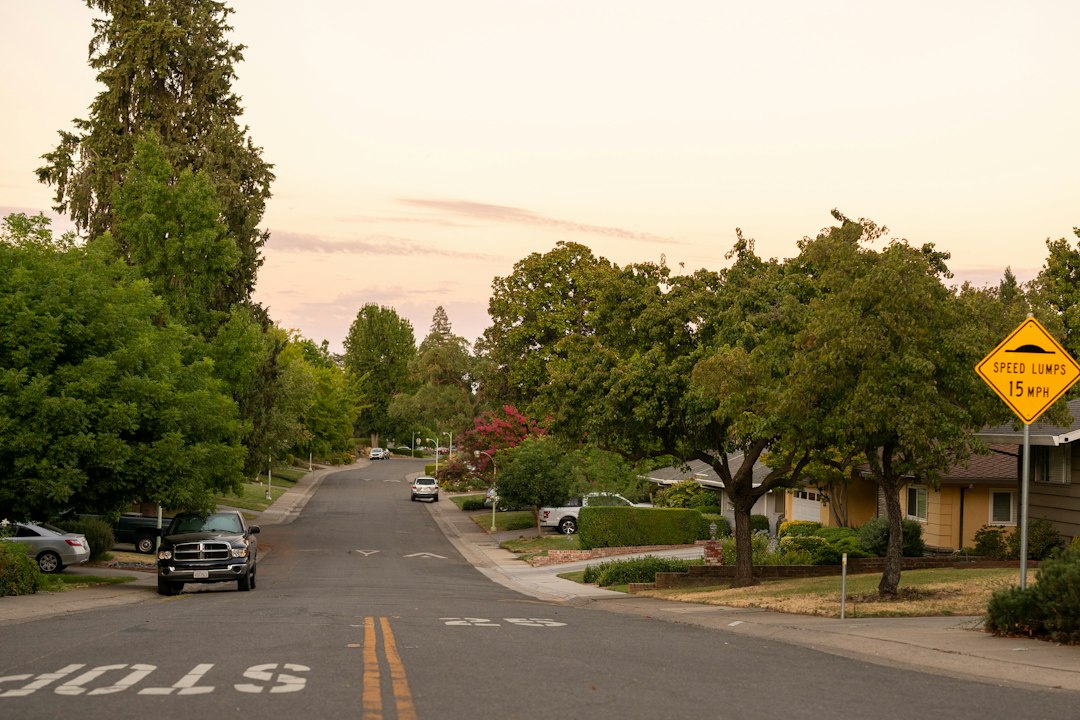
South of the Tustin city line, on land that once belonged to Marine Corps Air Station Tustin, two wooden blimp hangars have stood watch over the valley since World War II. One still stands as a National Register landmark; the other was lost to a fire in 2023. The base itself closed decades ago, and in its place rose Tustin Legacy, a master-planned community of new condos, townhomes, and single-family homes built where Navy airships once launched. That kind of redevelopment raises a question that comes up again and again in Orange County divorces: when a marriage ends and the family home sits in one of these newer Tustin neighborhoods, how does the equity actually get divided, and does it work differently than it would for a house in Old Town Tustin that’s been in the family for fifty years?
The short answer is that California’s community property rules apply the same way no matter which Tustin neighborhood the house sits in. What changes is the math. A newer home in Tustin Legacy or Tustin Ranch often carries HOA dues and a Mello-Roos special tax assessment that an older home in Tustin Meadows or Peppertree doesn’t, and those ongoing obligations change what “the equity” really means when one spouse is trying to buy out the other. Before any couple can agree on a number, they need to understand four things: how the law splits community property by default, when one spouse gets money back for separate-property contributions, what happens to the property tax bill when the house changes hands, and how those extra assessments factor into a buyout.
This isn’t the page where we walk through the practical steps of listing a Tustin house for cash during a divorce — we’ve covered that separately. This is the page that explains the division rules themselves, so that whichever path a couple chooses, they’re negotiating from an accurate picture of what the house is actually worth to each of them.
Community Property Starts With an Equal Split
California is a community property state, and Family Code section 2550 sets the default rule: when spouses divorce, the community estate generally must be divided equally between them, unless they’ve signed a written agreement providing for something else. For a house purchased during the marriage with community funds — which describes most homes in Tustin Ranch, Tustin Legacy, and the newer tracts built in the 1980s and 1990s around Tustin Meadows and Laurelwood — that typically means each spouse is entitled to half of the equity, whether the house is sold to a third party, bought out by one spouse, or divided some other way.
Equal doesn’t always mean identical, and it doesn’t mean automatic. The court, or the couple if they’re negotiating outside of court, first has to determine what counts as community property in the first place versus what one spouse brought into the marriage separately. A house bought by one spouse years before the wedding, or inherited mid-marriage and kept titled separately, isn’t automatically thrown into the fifty-fifty pool just because the couple lived there together. The question of who actually gets the house in a California divorce often turns less on who’s listed on the deed and more on when the house was acquired, how it was paid for, and whether any agreement exists that changes the default split. Sorting that out is usually the first real conversation a divorcing couple in Tustin needs to have before any buyout number means anything.
This isn’t an abstract issue for a small slice of Tustin households, either. The city incorporated back in 1927 and has grown to roughly 80,000 residents, but only about 47.6% of Tustin households own their home at all, so owner-occupied properties that could even be subject to a community property division are already a minority of the housing stock. Many of these owner households have real equity built up, which is exactly why getting the split right, rather than guessing at it, tends to matter so much when a marriage ends.
Separate Property Money Doesn’t Just Disappear
Plenty of Tustin couples bought their house using money that started out separate — an inheritance used for the down payment, savings from before the marriage, or proceeds from a house one spouse owned before the wedding. Family Code section 2640 protects that contribution. If one spouse used traceable separate-property funds toward the purchase or improvement of the community home, or made payments that reduced the loan’s principal balance, that spouse is generally entitled to be reimbursed for that amount off the top, before the remaining equity is split in half, unless that spouse signed a written waiver giving up the right.
There are real limits on this reimbursement that catch people off guard. It only covers the down payment, improvements, and principal paydown, not the interest portion of mortgage payments, not property taxes, not insurance, and not routine maintenance, even if one spouse paid all of those out of separate funds for years. The reimbursement also doesn’t earn interest and isn’t adjusted for inflation; a $40,000 down payment made in 2005 is reimbursed as $40,000, not as whatever that money would be worth today. And the reimbursement can never exceed the net value of the house at the time of division; if the house’s equity has shrunk, the reimbursement shrinks with it. Finally, the contribution has to be traceable to a separate source with real records, such as bank statements, escrow documents, or a paper trail showing the money’s origin. A spouse who can’t document where the down payment came from may lose the reimbursement entirely, regardless of how certain they are about the facts.
Why the Tax Assessor Doesn’t Reassess a Divorce Transfer
One piece of good news that often gets lost in the stress of dividing a house: moving title from joint names into one spouse’s sole name as part of a divorce doesn’t trigger a property tax reassessment. Revenue and Taxation Code section 63 excludes transfers between spouses, and transfers made pursuant to a judgment of dissolution or legal separation, from the reassessment that would otherwise apply when real property changes hands. The house keeps its existing assessed value, often well below current market value for anyone who’s owned in Tustin for more than a few years, instead of being reassessed at today’s purchase price.
That matters directly for buyout math. If one spouse is going to keep the house and refinance the other spouse’s name off the loan, the property tax bill doesn’t jump just because ownership moved from two names to one. That keeps the ongoing cost of owning the house more predictable for whichever spouse stays, and it’s one of the few parts of a divorce house transfer that doesn’t need a workaround beyond the standard paperwork confirming the transfer falls under the exclusion. It’s worth confirming that paperwork is properly filed with the Orange County Assessor at the time of transfer, since a missed filing can create confusion later even though the underlying legal exclusion still applies.
Tustin Legacy, HOAs, and Mello-Roos: The Buyout Math Gets Harder
This is where Tustin’s particular mix of old and new housing stock actually matters to a divorce. A home in Old Town Tustin, near landmarks like the Artz Building, the David Hewes House, or the Sherman Stevens House, typically carries nothing beyond a mortgage and ordinary property taxes. A home in Tustin Legacy, built on what used to be Marine Corps Air Station Tustin land, or in Tustin Ranch, very often carries two additional obligations that an older Tustin Meadows or Peppertree home usually doesn’t: a homeowners association assessment and a Mello-Roos special tax tied to a Community Facilities District bond.
Both of those obligations follow the property, not the person, and both complicate the simple version of a buyout calculation. Couples doing quick math on who buys out whom tend to look at the home’s market value, subtract the mortgage balance, and split what’s left. But the mortgage balance isn’t the only debt attached to the house. HOA dues in a community like Tustin Legacy fund ongoing maintenance of shared amenities and common areas, and they don’t go away when one spouse buys the other out; they just become that spouse’s sole monthly obligation going forward. A Mello-Roos assessment is a different animal entirely: it’s a special tax tied to bonds that financed the infrastructure for the development itself, such as streets, sewers, and schools, and it’s usually levied annually as a line item on the property tax bill, sometimes for twenty or thirty years from when the bonds were issued. It can add real dollars to the annual cost of keeping the house that a simple market-value-minus-mortgage calculation completely ignores.
For a couple trying to decide whether a buyout makes sense, the practical effect is that the spouse staying in the house needs to understand the full carrying cost, meaning mortgage, HOA, and Mello-Roos combined, not just whether they can qualify for a refinance on the loan balance alone. And the spouse being bought out should understand that a lower buyout number isn’t necessarily the other spouse winning the negotiation; it may simply reflect a home with meaningfully higher fixed costs than a comparable house in an older part of town. Pulling the current HOA statement and the county tax bill, which will show the Mello-Roos line item separately from the general property tax, before settling on a number is one of the more overlooked steps in a Tustin Legacy or Tustin Ranch divorce.
Mello-Roos assessments in particular tend to surprise people because of how long they last. The Community Facilities District bonds behind Tustin Legacy’s infrastructure were issued to pay for the roads, utilities, and public improvements needed to turn a decommissioned military airfield into a neighborhood, and those bonds get paid down over a long amortization schedule, not a few years. A couple who bought their Tustin Legacy home a decade ago may still have a decade or two left on the assessment, which means the spouse buying out the other isn’t just taking on a mortgage payment; they’re committing to a fixed tax obligation that will outlast the marriage by a wide margin. That’s a very different financial picture than a house near the old base’s surviving blimp hangar, in one of Tustin’s older neighborhoods, where the only recurring obligation tied to the property is the standard property tax bill.
Four Ways Tustin Couples Actually Resolve the House
Once a couple understands what counts as community property, what’s owed back for separate-property contributions, and what the house’s real carrying costs look like, the decision usually narrows down fast. In practice, Tustin couples tend to land on one of four approaches:
- One spouse buys out the other spouse’s equity share, usually by refinancing the mortgage into their own name alone and paying the other spouse their portion of the equity, adjusted for any separate-property reimbursement under Family Code section 2640.
- The couple agrees to a deferred, in-and-out arrangement, where one spouse stays in the house for a set period, often to avoid disrupting kids mid-school-year, and the house sells later. Reimbursement credits for a spouse who covers the mortgage while the other is out of the house are a real part of California divorce law, even though the details of how those credits are calculated are outside the scope of this page.
- The couple sells the house to a third party while still married or during the divorce process, and splits the net proceeds after paying off the mortgage, any HOA or special assessments due, and closing costs.
- If the spouses genuinely cannot agree on any of the above, either one can file a partition action, asking the court to order the house sold and the proceeds divided, which is generally a slower and more expensive route than reaching an agreement directly.
Whichever path a couple takes, it’s worth understanding whether a divorce buyout is taxable before finalizing numbers, since the tax treatment of a buyout versus a sale to a third party isn’t always obvious, and it can change what each option is actually worth to each spouse. If an agreement genuinely can’t be reached, a partition action when spouses can’t agree becomes the fallback, but it’s rarely anyone’s first choice, since it hands the sale timeline and process to the court instead of the spouses.
When a Buyout Beats Selling to a Third Party
None of this is an argument that selling to a cash buyer is always the right move in a Tustin divorce, and it would be dishonest to pretend otherwise. There are situations where a straightforward buyout, or a traditional listing, will put more money in both spouses’ pockets than any as-is cash sale.
If one spouse can comfortably afford to keep the house, qualifying for a refinance on their own income and able to pay the other spouse their share of the equity, a buyout is usually the better outcome for both people. The spouse keeping the house avoids selling costs entirely, keeps the lower assessed property tax basis under Revenue and Taxation Code section 63, and avoids disrupting kids or routines. The spouse being bought out gets their equity without waiting for a sale to close. A cash sale to a third party tends to make more sense when neither spouse wants to keep the house, or when neither can qualify to buy the other out.
Similarly, if the Tustin market is strong, the house is in good condition, and the couple has the time and the ability to agree on basic terms, such as who handles repairs, how showings get scheduled, and how the proceeds get divided at closing, a traditional listing through an agent will often net more than an as-is cash sale, because the buyer pool is larger and the house sells at or near full market value rather than at the discount that comes with an as-is, no-repairs, fast-close transaction. A cash sale trades some amount of sale price for speed, certainty, and the ability to skip repairs and showings entirely. That trade only makes sense when speed and certainty are actually worth something to both spouses, such as a looming court date, a house neither spouse can afford to carry during a long listing period, or a property neither spouse wants to spend money fixing up before it goes on the market.
This cuts both ways depending on where in Tustin the house sits. An older home near Old Town Tustin, close to a National Register property like the Artz Building, might need updated electrical, plumbing, or foundation work that would scare off buyers relying on standard financing, which can tip the scale toward a cash sale even in a cooperative divorce. A newer home in Tustin Ranch in move-in condition is the kind of property where a patient listing is far more likely to outperform an as-is offer. There’s no single right choice for every Tustin divorce; it depends on the specific house, the specific spouses’ finances, and how much time the situation allows.
If, after weighing all of that, a cash sale still fits your timeline and your situation, our guide on how to sell a house during divorce in Tustin walks through the practical steps, from paperwork to what to expect between an accepted offer and closing.
If you’re navigating a divorce and want to know what your Tustin house could sell for in its current condition, Cash Home Buyers CA can put together a no-obligation cash offer with no repairs, no showings, and a closing date built around your situation. We buy directly or bring a vetted cash buyer, and when you sell to us, we pay the standard closing costs, including the county and city transfer taxes, escrow and title. Call or text (424) 435-2326, or visit Cash Home Buyers CA to get started.