
Probate and Old Escondido’s Century-Old Homes
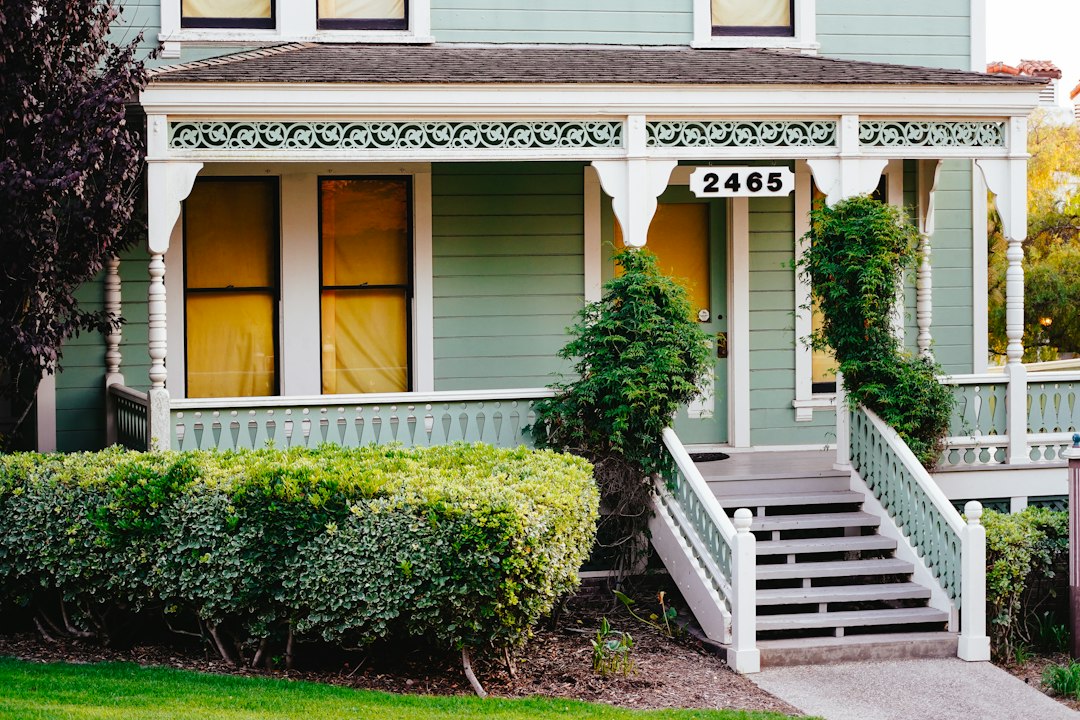
Walk a few blocks off Grand Avenue in downtown Escondido and the modern storefronts give way to the Old Escondido Historic District, where Victorian and Craftsman houses built in the late 1800s and early 1900s still stand on the same lots their original owners built them on. When one of these houses ends up in probate, handed down through two or three generations of the same family, the court process runs into a property that predates permits, modern wiring, and current plumbing codes entirely. That gap between a century-old house and a modern court timeline is the real issue for a lot of Escondido families, more than any single statute ever will be.
The question that actually matters isn’t a generic one about selling an inherited house. It’s what probate specifically requires for this house, in this condition, in this part of Escondido. The honest answer depends on how title was held, what the estate is worth, and whether the inherited property is a single-family lot inside the historic district or a working parcel out toward San Pasqual Valley, where avocado, citrus, and grape ground can still carry real production value and raise land-use questions a plain suburban yard never does.
This article walks through when an Escondido estate can skip formal probate altogether, where Assembly Bill 2016’s new $750,000 threshold applies and where it stops short, what changes when the inherited house is a hundred-year-old Victorian with no permit history, what a personal representative needs to think through with inherited agricultural land, when a house can be sold while a probate case is still open, and when a straightforward listing will genuinely outperform a cash sale.
Does This Estate Need Full Probate at All?
Not every estate that includes an Escondido house needs a probate judge at all. Probate is required only when the decedent held an asset alone, with no joint owner and no beneficiary designation, in an amount above California’s statutory limits. A lot of estates never reach that point, because the asset was already set up to avoid probate before the owner passed.
If the house was held in a living trust, the successor trustee can typically sell it directly, with no court involvement, though if the prior owner never got around to recording a deed transferring the house into the trust, a Heggstad petition under Probate Code section 850 can sometimes fix that gap in a single hearing rather than forcing a full probate case. Property held in joint tenancy, or as community property with a right of survivorship, usually passes by recording an affidavit of death of joint tenant. A recorded transfer-on-death deed does the same for property that was titled that way in advance. And a surviving spouse inheriting from a spouse can often use a Spousal Property Petition under Probate Code section 13650 instead of opening a full estate. Before assuming an Escondido probate case is inevitable, it’s worth checking whether you need probate at all first, since the answer changes everything else about timeline and cost.
For a lot of Old Escondido families, the title question has a longer history than a typical California purchase would. A Victorian that’s passed from a grandparent to a parent to the current generation may have gone through an earlier, informal transfer that was never fully documented, or it may have sat in a trust that was drafted decades ago and never updated to reflect a later refinance or a added co-owner. Sorting out exactly how title is currently held, before assuming either “it’s all in the trust” or “it definitely needs probate,” is the first concrete step, and it’s one worth confirming with a title company or probate attorney rather than guessing from an old deed in a filing cabinet.
AB 2016’s $750,000 Threshold, and What It Doesn’t Cover
For deaths on or after April 1, 2025, Assembly Bill 2016 expanded one of the simplified alternatives to full probate. A Petition to Determine Succession to Real Property under Probate Code sections 13150 through 13152 now covers a decedent’s primary residence valued up to $750,000, a sharp increase from the far lower combined-estate threshold that applied before. That change matters in Escondido, where home values can sit close to that line, because it lets an heir skip a full probate case for the house itself.
The catch is in the word primary. The $750,000 figure applies only to the decedent’s primary residence, not to a rental house, a second home, or vacant or agricultural land held separately from where the decedent actually lived. An Escondido parcel in San Pasqual Valley that was farmed but never lived in doesn’t qualify for this procedure just because it’s worth less than $750,000; it has to clear probate, or one of the other simplified paths, on its own terms.
Personal property follows a separate, smaller set of numbers that don’t combine with the real estate threshold. The small estate affidavit for personal property, under Probate Code section 13100, covers estates up to $208,850 for deaths on or after April 1, 2025 (it was $184,500 for deaths between April 1, 2022 and March 31, 2025, and the current figure holds until the next inflation adjustment on April 1, 2028). A separate small-value real property procedure under Probate Code section 13200 applies up to $69,625. None of these thresholds stack with each other. A $600,000 house and a $250,000 brokerage account are each measured against their own limit, not added together and compared to a single number.
Even where the section 13150 petition applies, it isn’t instant. California law requires waiting 40 days from the date of death, obtaining a probate referee’s appraisal, giving at least 15 days’ notice to interested parties before the hearing (an addition AB 2016 made to the process), attending the hearing itself, and recording the resulting order before title is clear enough to sell or refinance.
That sequence still has to happen even when every heir agrees on what to do with the house. The referee appraisal in particular can take longer than expected in a county with a high volume of probate filings, and the 15-day notice period means the earliest a hearing can realistically be set is well past the 40-day waiting mark. Heirs who assume the $750,000 threshold means an inherited Escondido house can be sold within a month of the death are usually off by several weeks, sometimes more, once scheduling and notice requirements are factored in.
What Changes When the House Is a Century-Old Victorian in Old Escondido
Old Escondido’s housing stock is part of what makes the neighborhood worth walking through: Victorian and Craftsman single-family homes built well over a hundred years ago, most still used as the owner-occupied homes they were built to be (roughly 51.7% of Escondido’s housing overall is owner-occupied). That same age is exactly what complicates a probate sale once one of these houses changes hands through inheritance instead of a normal purchase.
A probate referee has to assign a value to the property as part of almost every probate procedure, whether it’s the full process or the simplified section 13150 petition. On a house with knob-and-tube wiring still in parts of the walls, original galvanized or cast-iron plumbing, and additions or conversions that were never pulled through the permit process, that appraisal gets harder to pin down, and so does any buyer’s lender-backed offer, since many lenders won’t finance a purchase until the wiring and plumbing are brought up to a basic safety standard. A personal representative selling through full probate, or an heir selling after a simplified petition closes, often finds that the retail buyers most willing to pay top dollar for a historic Victorian are also the buyers least able to get a loan approved on one in as-is condition.
None of this means a historic Escondido home can’t be sold the normal way. Plenty sell successfully to buyers who want the character and are prepared to renovate. It does mean the personal representative should go in expecting inspection findings, possible disclosure questions about unpermitted work, and a longer timeline to find a buyer whose financing will actually close, on top of whatever the probate calendar itself requires.
A house inside the Old Escondido Historic District can also carry its own layer of review for exterior changes, separate from any ordinary city permit process, which is worth factoring in if a buyer’s repair requests touch the front of the house rather than just the wiring and plumbing behind the walls. None of that makes a sale impossible. It just means the timeline for getting a historic Victorian from probate to a closed sale tends to run longer than the same process on a 1990s tract home a few miles away in a newer part of town, and a personal representative who plans for that upfront avoids a lot of frustration later.
Inherited Land in San Pasqual Valley Isn’t Just a House Question
Not every Escondido probate case is about a house in a historic neighborhood. San Pasqual Valley still has working agricultural ground: avocado groves, citrus, and the vineyards that trace back to the muscat grapes Escondido’s early farmers planted before Lake Wohlford’s 1894-95 dam made more water available for citrus, olive, and walnut orchards, with avocados eventually becoming the valley’s dominant crop by the 1960s. Even though much of the surrounding farmland converted to housing from the 1970s onward, land in San Pasqual Valley that’s still planted carries value beyond its square footage.
If an inherited Escondido parcel is zoned and used for agriculture, the personal representative has questions to answer that a plain suburban lot never raises. Some agricultural land in California carries a Williamson Act contract restricting it to agricultural use in exchange for a lower property tax assessment. That isn’t true of every parcel, and it shouldn’t be assumed without checking the county’s records, but where a contract does exist it affects both the property’s current tax basis and what a buyer can legally do with the land going forward. Separately from any Williamson Act question, a working grove or vineyard has crop value, water rights, and sometimes equipment or a lease with a farm operator, value that has to be accounted for apart from the land and house, and that an ordinary residential appraisal won’t capture on its own.
This is also where the stepped-up basis on inherited property matters more than people expect. Agricultural land that’s appreciated over decades of family ownership gets its tax basis reset to fair market value as of the date of death, which can make a significant difference in capital gains exposure if the land is later sold rather than held and farmed.
Selling agricultural or mixed-use land out of probate works the same way procedurally as selling a house. A personal representative with full authority under the Independent Administration of Estates Act can sell after giving heirs a 15-day Notice of Proposed Action, without going back to court for confirmation. A representative without full IAEA authority has to get court confirmation instead, which opens the sale to overbids in open court. The first overbid has to exceed the accepted price by at least 10% of the first $10,000 plus 5% of the remaining balance.
Selling While Probate Is Still Open
Most Escondido probate cases that don’t qualify for a simplified petition run on a familiar timeline: roughly 9 to 18 months from the initial petition to final distribution, sometimes longer in counties with heavier probate caseloads. Part of that length isn’t optional. Once letters of administration or letters testamentary issue, a mandatory four-month creditor claim window opens, and nothing shortens it.
Statutory compensation adds to the cost side of that math. Probate Code section 10810 sets both attorney and executor compensation, each calculated separately rather than combined, at 4% of the estate’s first $100,000, 3% of the next $100,000, 2% of the next $800,000, 1% of the next $9,000,000, and 0.5% of the next $15,000,000. That percentage is calculated against the estate’s gross value, not its equity, so a $500,000 house that still carries a $300,000 mortgage is counted at $500,000 for this purpose, not $200,000.
A house can usually be sold while probate is still open, which is often the only way an estate can cover those statutory fees, ongoing property tax, insurance, and maintenance in the meantime. A personal representative with full IAEA authority can accept an offer and close after a 15-day Notice of Proposed Action to the heirs, with no court hearing required. Without that authority, the sale needs court confirmation and goes through the overbid process described above. Either way, the property has to actually sell, and for heirs who’d rather not manage a century-old house or a grove while a court case runs in the background, that’s often the point at which they start looking seriously at options to sell an inherited house in Escondido rather than carrying it through to the end of probate and the first listing season after.
Before deciding whether to keep, rent, or sell, it’s also worth understanding why Prop 19 can raise an inherited property’s tax bill. A reassessment at transfer can change what it costs just to hold onto an inherited Escondido house during probate, let alone after it closes.
When Listing Beats a Cash Sale
A cash sale isn’t the right call for every inherited Escondido property, and it’s worth saying so plainly. If the house is a primary residence that qualifies for the simplified section 13150 petition, is in solid condition, and sits in a liquid part of town where buyers are actively competing for inventory, listing it after that much shorter process will usually net more than a cash sale would. The simplified petition can clear in a matter of weeks past the 40-day waiting period, not the better part of a year, so there’s little reason to trade a conventional sale price for speed that a full probate timeline would otherwise justify.
The same honesty applies to San Pasqual Valley land with real production value. A working grove or vineyard, with established crop yield, water rights, or an existing farm lease, is often better served by a broker who specializes in agricultural and land sales than by either a generic residential listing or a cash home buyer. A buyer in that market is paying for the operation, not just the acreage, and a specialized broker is positioned to find and negotiate with that buyer. A cash sale still has its place for a property that’s harder to finance, in poor condition, tied up in a drawn-out probate case, or simply not something the heirs want to manage, but it isn’t automatically the better math in every situation, and an honest look at the property and the timeline should come before the decision, not after.
If you’ve inherited a house in Old Escondido, a parcel in San Pasqual Valley, or any other property moving through a probate case in San Diego County and want a straightforward, no-obligation cash offer while you sort out the rest, Cash Home Buyers CA buys directly or brings a vetted cash buyer, works around the probate timeline instead of against it, and pays the standard closing costs, including the county and city transfer taxes, escrow, and title, when you sell to us. Call (424) 435-2326, or visit Cash Home Buyers CA to get a no-obligation offer, probate paperwork and all.