
Highland Park HPOZ Disclosure Rules Explained
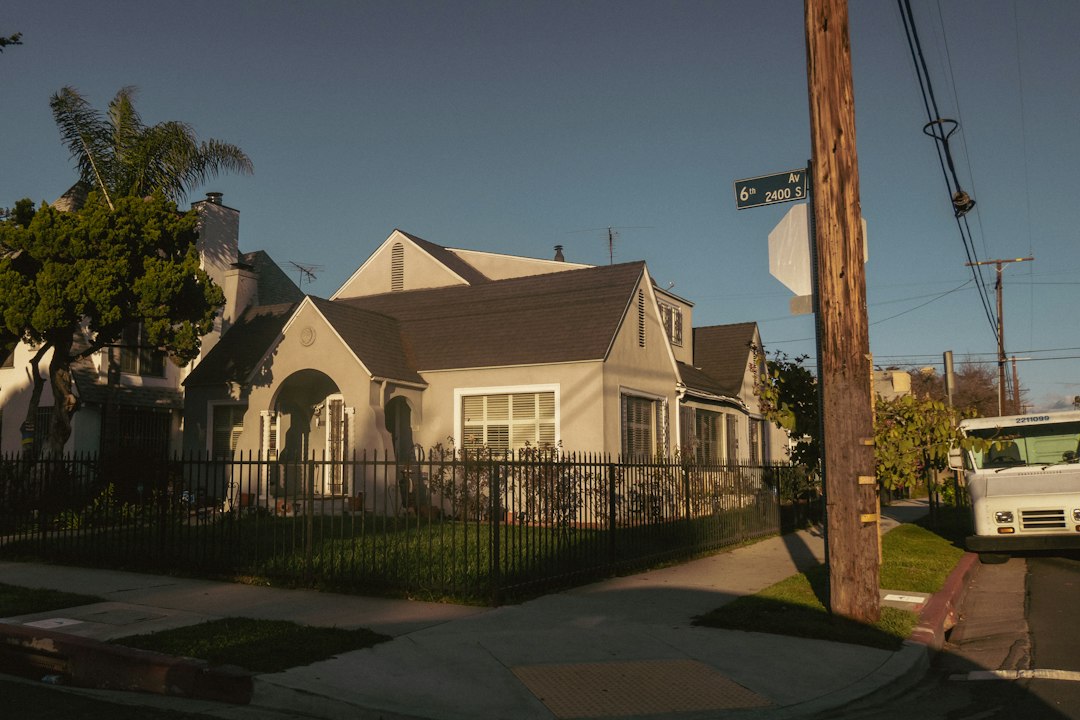
Selling “as-is” does not waive your disclosure duties under California law, and that distinction matters even more in Highland Park because of one local wrinkle most sellers never think about until escrow is already open. Highland Park is not its own city — it is a neighborhood of the City of Los Angeles, tucked into Northeast LA along the Arroyo Seco, and a large swath of it sits inside the Highland Park-Garvanza Historic Preservation Overlay Zone. If your property is inside that HPOZ boundary, you are dealing with two separate layers of obligation at once: the statewide disclosure rules that apply to every residential seller in California, and a practical, buyer-facing fact about the house itself that smart sellers surface early even though no disclosure form has a literal checkbox for it.
The question that brings most Highland Park homeowners to a page like this one is simple: if I sell my house as-is, do I still have to tell the buyer about the roof, the foundation, the knob-and-tube wiring in the back unit, or the fact that any exterior remodel will need historic review? The short answer is yes. “As-is” in a California purchase contract is a statement about repairs and price negotiation, not a waiver of your legal duty to disclose what you know. Buyers, agents, and even some sellers conflate the two ideas constantly, and that confusion is the single most common misunderstanding in as-is sales anywhere in the state — Highland Park included.
This article walks through what “as-is” actually changes, what the HPOZ covers and why it belongs on your disclosure checklist, which state-mandated forms still apply regardless of condition or overlay status, what buyers of historic-zoned homes tend to ask about, and when a traditional as-is listing will outperform a quick direct cash sale.
“As-Is” Waives Repairs, Not Disclosure
“As-is” is a negotiating position, not a legal shield. When a Highland Park seller lists or markets a property as-is, they are telling buyers one thing: I am not going to fix anything, and I am not going to negotiate the price down because of defects you find during inspection. That is a real and useful term — it tells a buyer’s agent not to bother sending a punch list of repair requests after the inspection period, and it tells the seller’s side that there will be no second round of price concessions once escrow is open. What “as-is” does not do is relieve the seller of California’s statutory duty to tell the buyer what the seller already knows about the property’s condition.
That duty comes from Civil Code section 1102 and the sections that follow it. With limited exceptions — certain trustee’s sales, some transfers between co-owners, and specific probate situations among them — most residential sellers in California, Highland Park sellers included, must provide a Transfer Disclosure Statement, commonly called the TDS, identifying known material defects and conditions. Civil Code section 1102.1 and a long line of California case law make clear that contract language saying the property is sold “as-is” does not override this statutory obligation. A buyer who later discovers the seller knew about a leaking roof, a cracked foundation, unpermitted plumbing work, or termite damage, and never disclosed it, can still pursue the seller for that nondisclosure even though the purchase agreement said “as-is.” It is worth reading what California still requires you to disclose before you sign anything.
In practice, this means a Highland Park seller who wants to move a property quickly and without repairs should still write down every material issue they know about: deferred maintenance, a sagging porch, old knob-and-tube wiring common in the neighborhood’s older Craftsman and Victorian housing stock, water intrusion history, pest issues, or anything a past contractor or inspector flagged. As-is tells the buyer you will not fix those things. It does not tell the buyer they do not exist, and the law does not let a seller stay silent about them.
What the Highland Park-Garvanza HPOZ Actually Covers
Highland Park sits along the Arroyo Seco in Northeast Los Angeles, and much of its older housing stock falls inside the Highland Park-Garvanza Historic Preservation Overlay Zone, an overlay the Los Angeles City Council adopted in 1994 and then expanded in 2010 to bring in the adjoining Garvanza area. The HPOZ is not a separate city ordinance with its own disclosure statute — it is a Los Angeles Department of City Planning overlay administered through the department’s Office of Historic Resources, and it applies on top of the normal citywide zoning and permitting rules.
The zone covers roughly 4,000 structures, including more than fifty individually designated Historic-Cultural Monuments, with architecture spanning styles built from the 1880s through the 1940s — Victorian, Craftsman, Mission Revival, and the other period styles that give Highland Park its visual character. Being inside the HPOZ boundary means exterior changes visible from the public right-of-way generally require an added layer of review beyond a standard building permit: additions, replacing original windows or doors, re-roofing with a different material, major landscaping changes affecting historic character, and demolition. That kind of work typically has to go through the area’s HPOZ board and receive either a Certificate of Appropriateness or, for minor changes, a Certificate of Compliance from the city’s Office of Historic Resources — a meaningfully different process than pulling a standard permit in a non-overlay neighborhood, and not optional just because a buyer did not know the house was in the zone.
Not every parcel in Highland Park sits inside the HPOZ boundary, and not every HPOZ property is an individually designated monument — most contributing structures are not. But if your property is inside the overlay, that status travels with the house to the next owner regardless of how the sale is structured, whether it closes through a traditional listing or a direct cash sale.
Why HPOZ Status Belongs on Your Disclosure Checklist Even Though It Isn’t a TDS Item
Here is the nuance worth sitting with: HPOZ status is not, on its own, a line item that California’s Civil Code disclosure statutes specifically require you to check off the way they require disclosure of, say, a known roof leak or a death on the property within three years. HPOZ overlay zoning is a planning and land-use designation, not a structural or safety defect, so it does not fit neatly into the TDS form’s checkboxes about physical condition.
That does not make it unimportant to raise. A reasonable buyer would absolutely want to know, before removing contingencies, that the house they are buying sits inside a historic overlay that will govern what they can and cannot do to the exterior for as long as they own it. Swapping out failing original windows for modern vinyl ones, adding a second story, re-roofing with composition shingle instead of the original material, or tearing down a detached garage to build an ADU can all trigger HPOZ board review in a way that would never come up in a non-overlay LA neighborhood. A buyer who plans a quick cosmetic flip and finds out about the HPOZ only after close of escrow is an unhappy buyer, and an unhappy buyer after close is exactly the kind of outcome a seller wants to avoid regardless of how the sale was structured.
Treat HPOZ status as practical, material information you volunteer early — in the listing, in early conversations with a direct buyer, or in supplemental seller disclosures — rather than as a statutory box you are specifically required to check. It is the kind of fact that affects a property’s desirability and future use, which is exactly the standard California courts use when asking whether something should have been disclosed, even outside the literal TDS form. Raising it early also protects you: a buyer who signs a purchase agreement after being told the house is in a historic overlay has a much harder time later claiming they were misled about what they could do with the property.
The TDS and NHD Still Apply on Top of HPOZ
HPOZ status is a real consideration, but it does not replace or substitute for either of the two disclosure documents California law actually requires on nearly every residential sale. The first is the Transfer Disclosure Statement described above, covering known material defects in the structure, systems, and components of the home — roof, foundation, electrical, plumbing, appliances, and anything else the seller has actual knowledge of. The HPOZ overlay has nothing to do with whether the water heater works or whether there is a known slab leak, and the TDS obligation exists independently of it.
The second is the Natural Hazard Disclosure Statement, commonly called the NHD, which is a separate requirement covering whether the property sits in a flood zone, a fire hazard severity zone, a seismic hazard zone, or an earthquake fault zone. It is unrelated to historic preservation overlay zoning entirely — a property can be inside the Highland Park-Garvanza HPOZ and also sit in a designated fire hazard severity zone, or neither, or both. Given Highland Park’s hillside topography near the Arroyo Seco and its position in Northeast LA, sellers should not assume the NHD is a formality; it is its own disclosure track that runs in parallel with everything discussed above.
Stacked together, a complete Highland Park disclosure picture generally looks like three independent layers: the TDS covering known physical defects, the NHD covering natural hazard zone status, and — as a matter of good practice rather than a specific disclosure statute — early, plain disclosure of HPOZ overlay status and what it means for future renovation. None of these layers is waived by selling as-is, and none of them substitutes for another. A seller who provides a thorough TDS and NHD but never mentions the HPOZ, or who mentions the HPOZ but skips the TDS, has not actually finished the job.
What Buyers of HPOZ Homes Actually Worry About
Buyers shopping in the Highland Park-Garvanza HPOZ tend to ask a fairly consistent set of questions once they understand the overlay exists, and sellers who can answer them up front move through escrow with far fewer surprises. The most common concerns include:
- Whether the house is a contributing structure to the historic district or an individually designated Historic-Cultural Monument, since the level of review can differ between the two.
- What has already been changed on the exterior without going through the HPOZ board, since unpermitted or unreviewed past alterations can become the new buyer’s problem to resolve.
- Whether a planned addition, a second story, an ADU in the backyard, or a garage conversion is realistic given the overlay, since many buyers come to Highland Park specifically to add space to an older single-story home.
- How re-roofing, window replacement, or exterior paint and siding choices are handled, since these are the most common maintenance items that bump into historic review requirements.
- Whether any outstanding code violations, prior unpermitted work, or open permits exist on the property, since these can complicate both financing and future HPOZ approvals.
That last point connects directly to something many older Highland Park properties carry: a prior owner’s unpermitted addition, an illegal bedroom conversion, or electrical work done without inspection. Buyers increasingly ask about this directly, and sellers benefit from thinking it through before listing rather than after a buyer’s inspector flags it. If your property has any history of unpermitted work or known code issues, it is worth reviewing what selling a house with code violations actually involves in California before you go to market, because the HPOZ question and the code-violation question often arrive together on older Northeast LA housing stock.
None of this means HPOZ homes are hard to sell. Highland Park has built a genuine identity around its preserved Craftsman bungalows, and plenty of buyers are drawn to the neighborhood precisely because of that historic character rather than in spite of it. But those same buyers tend to do more homework than an average buyer, and a seller who has already answered the overlay and code-history questions in writing tends to close with fewer renegotiations.
When a Traditional As-Is Listing Beats a Quick Cash Sale
It would be dishonest to present a direct cash sale as the right answer for every Highland Park seller, so here is the plain version: if your home is in reasonably sound condition, your disclosure paperwork and HPOZ history are already in order, and you are not under serious time pressure, a traditional as-is listing through a local agent will often net you more money than a quick cash sale.
Highland Park has been a genuinely strong, in-demand market for original, unrenovated Craftsman bungalows. A meaningful slice of buyers in this neighborhood specifically want a house with its original windows, built-ins, and period details intact — they are not looking for a fully renovated flip, and they are willing to pay a premium for authentic historic character even with cosmetic wear. If that describes your house, listing it as-is on the open market, with professional photography and normal marketing exposure, generally reaches a wider pool of buyers than a single direct offer can, and competitive offers from multiple buyers tend to push the final price above what a wholesale-style discount would produce. In that scenario, a seller willing to do nothing more than basic cleanup, or even a small amount of cosmetic work, can often net significantly more by going the traditional listing route than by accepting a fast, no-repairs cash offer.
A direct cash sale earns its place in different circumstances: when the property needs expensive and disruptive repairs you are not in a position to front, when there are unresolved code violations or permit issues that would scare off conventional buyers and their lenders, when the home is tied up in a time-sensitive probate or inherited-property situation, when a tenant situation makes a normal listing process difficult, or when you simply need certainty and speed more than you need to maximize every last dollar. Properties inside the HPOZ with significant deferred maintenance can also be harder for conventional buyers to finance if a lender’s appraisal flags the extent of the needed work, which is another situation where a direct sale genuinely helps.
The honest takeaway is that “as-is” and “fast cash sale” are not the same decision. You can list as-is through an agent and still refuse to make repairs — you simply give up the speed and certainty of a direct sale in exchange for a longer process and the chance at a higher price from the open market. Weigh your actual condition, timeline, and tolerance for showings and negotiation before assuming a direct sale is automatically the better financial outcome; sometimes it is, and sometimes it clearly is not.
If, after weighing all of this, a direct sale still fits your timeline and condition, the next step is to look at how to sell your house as-is in Highland Park with a direct buyer — that page picks up where this disclosure-focused overview leaves off.
We put together straightforward, no-obligation cash offers for Highland Park homeowners who have weighed these trade-offs and decided a direct sale is the right fit, HPOZ history, code questions, and all. When you sell to us, we pay the standard closing costs, including the county and city transfer taxes, escrow and title, and we buy directly or bring a vetted cash buyer so you are not left guessing who is actually closing the deal. If you would rather talk through your specific situation than read another article, call us at (424) 435-2326, or visit Cash Home Buyers CA to see how the process works.