
Oakland’s Rent Registry: What a Seller of a Rental Property Must Have Current
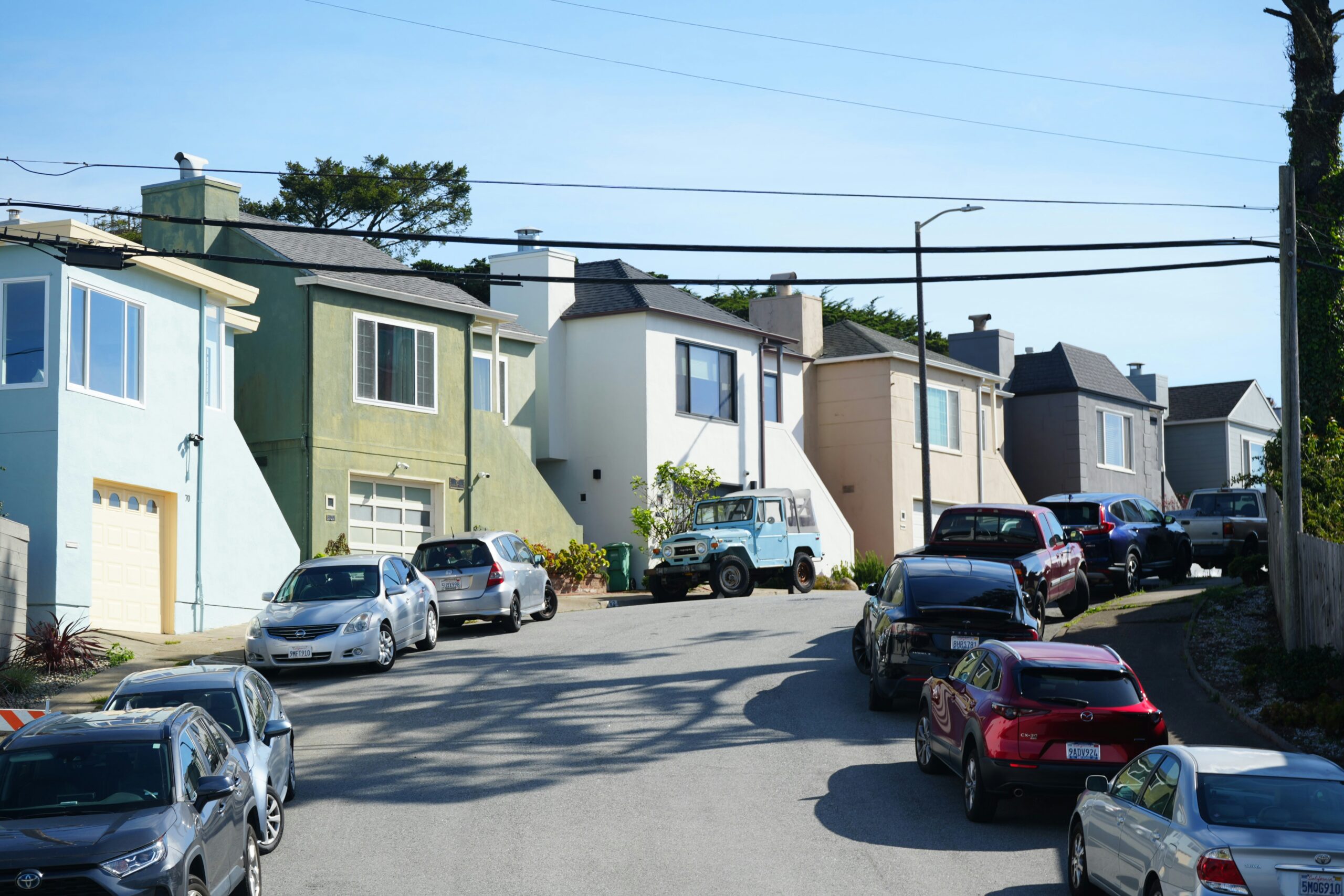
Every rental unit in Oakland must be registered with the city’s Rent Adjustment Program by March 1 each year, and if that registration has lapsed, the owner can’t legally raise rent or respond to a tenant petition until it’s fixed — a defect that transfers straight to whoever buys the property next. If you’re selling a rental in Oakland, the Rent Adjustment Program (RAP) status of that building is as relevant to your closing as the condition of the roof, because an unresolved registration or compliance gap doesn’t disappear at the close of escrow; it becomes the new owner’s problem on day one.
What the Rent Adjustment Program Actually Regulates
Oakland’s Rent Adjustment Ordinance lives in Oakland Municipal Code Title 8, Chapter 8.22, “Residential Rent Adjustments and Evictions.” It isn’t a single rule but a set of nine articles covering different pieces of the landlord-tenant relationship: rent increase limits and the RAP petition process (Article I), just-cause requirements for ending a tenancy (Article II), the process for withdrawing units from the rental market under the Ellis Act (Article III), the owner’s annual RAP fee obligation (Article IV), tenant harassment protections (Article V), voluntary move-out agreement rules (Article VI), uniform relocation assistance requirements (Article VII), owner or relative move-in relocation rules (Article VIII), and fair access guidelines for low-income housing (Article IX). A seller needs to know which of these actually applies to their specific building before assuming any of it is someone else’s problem.
The Annual Registration Deadline and the $137 Fee
Covered rental property owners must confirm or update their tenancy registration information with RAP by March 1 each year and pay the annual RAP fee, which is $137 per unit, billed through the city’s Business Tax Office. There is no separate charge for the registration confirmation itself — the cost is the RAP fee — but failing to complete the registration carries real consequences independent of the fee. The Business Tax Office handles billing only; it does not determine whether a unit is exempt, so a seller shouldn’t assume a fee bill (or the absence of one) settles the exemption question.
For a seller, this deadline matters in a very specific way during a transaction that spans the March 1 date: if your sale is in escrow across that cutoff, confirm in writing whether the seller or the buyer is responsible for that year’s confirmation and fee, and get it documented in the purchase agreement rather than leaving it ambiguous. A missed March 1 deadline because “we weren’t sure who was supposed to handle it” is an entirely avoidable way to start a new ownership with a registration lapse that didn’t need to happen.
What Happens When You Don’t Register
An owner who hasn’t kept registration current loses several things at once: the ability to file a petition for a rent increase, the ability to actually impose a rent increase even one that would otherwise be allowed under the ordinance, and the ability to file a response if a tenant files a petition against them. Beyond that, failure to register is recognized as an affirmative defense in most eviction actions — meaning a tenant facing eviction can raise the owner’s registration lapse as a reason the eviction shouldn’t proceed, regardless of the underlying merits of the eviction itself. For a seller, an unregistered or lapsed-registration building effectively means below-market rents that can’t legally be corrected and a weaker legal position in any eviction that might already be in progress, both of which a sophisticated buyer will price into their offer once they find out.
Which Units Are Actually Exempt
Not every Oakland rental is covered by RAP and the Just Cause for Eviction Ordinance. The city recognizes several exemption categories: new ground-up construction less than ten years old (proven by a Certificate of Occupancy issued after April 1, 2013, or a RAP Certificate of Exemption issued after December 30, 2022 — note that a unit converted from existing residential space does not qualify even if newly renovated), fully owner-occupied units including single-family homes, hospitals and skilled nursing or health facilities, and certain nonprofit or substance-abuse recovery facilities. Exempt units still have to be registered — the registry requirement is broader than the rent-control coverage itself — but they aren’t subject to the $137 fee or to RAP’s rent-increase limits. Confirming which category your property falls into, in writing from RAP directly, protects you from a buyer’s attorney finding a different answer during their own due diligence.
The CPI Increase Cap and Why Banked Increases Don’t Transfer
For covered units, Oakland ties the allowable annual rent increase to the regional Consumer Price Index. The current CPI-based figure is 2.3%, effective from August 1, 2026 through July 31, 2027, and no single increase in a given year can exceed three times the current CPI rate. Owners who don’t impose the full allowable increase in a given year can “bank” the unused portion and apply it later — but only for up to five years, after which an unused increase expires and is lost. Banking lets an owner catch up on rent that was held below market for a period, which is exactly why buyers evaluating a rent roll often ask how much banked increase sits behind the current rent.
Here’s the detail that surprises a lot of sellers and buyers alike: banked CPI increases generally do not transfer to a new owner when a property is sold. The exceptions are narrow — a transfer by inheritance, or a transfer between spouses, parents and children, siblings, or stepchildren, and even then only if the recipient has owned the property for at least a year. An ordinary arm’s-length buyer purchasing a tenant-occupied Oakland rental cannot simply step into the prior owner’s banked increases and impose them after closing. If you’re a seller who has been holding rents below market and counting on a buyer valuing the property based on “upside” from banked increases, that upside legally evaporates at the sale — it’s worth pricing the property on actual current rents, not on a rent-growth story that won’t survive the transfer. Any notice imposing a banked increase, where it is available, must still include 30 days’ written notice and a copy of a current Business Tax Certificate.
Why This Matters When You’re Selling
A buyer purchasing an Oakland rental property inherits the registration status exactly as it stands at closing — there is no reset button tied to a change of ownership. If registration lapsed under the prior owner, the new owner can’t raise rent to market, can’t respond to a pending petition, and may face the same eviction defense exposure, until the lapse is cured and any required waiting periods or back-filings are resolved. That uncertainty depresses what a rental-property buyer underwriting the deal as an income property is willing to pay, in much the same way an unresolved code violation or an open permit would. Disclosure obligations around a tenancy in California generally require sellers to disclose known material facts about the rental arrangement, and an unregistered or non-compliant RAP status is exactly the kind of fact most real estate attorneys would consider material.
Oakland also maintains a public rent registry portal where registration status and certain building information can be checked against the city’s own records. A sophisticated buyer, or their attorney, frequently checks this directly rather than relying solely on the seller’s representations — which means a discrepancy between what a seller discloses and what the city’s own registry shows is discoverable with minimal effort on the buyer’s side, and far more likely to surface before closing than sellers sometimes assume.
Relocation Assistance Numbers That Carry Real Weight
Oakland’s Uniform Residential Tenant Relocation Ordinance, codified at Oakland Municipal Code Section 8.22.800 and following, sets specific dollar relocation payments triggered by owner or qualifying-relative move-in, other no-fault evictions, Ellis Act withdrawals, condominium conversions, and code-compliance displacements. For the period July 1, 2025 through June 30, 2026, the base payments are $8,106.68 for a studio or one-bedroom unit, $9,977.45 for a two-bedroom, and $12,315.92 for three or more bedrooms — figures that step up again for the following year to $8,293.13, $10,206.93, and $12,599.18 respectively. Households that include lower-income, elderly, or disabled tenants, or tenants with minor children, are entitled to one additional $2,500 payment per unit on top of the base amount. For a code-compliance displacement that’s only temporary, the owner instead covers actual temporary housing costs rather than the standard relocation payment. These aren’t suggested amounts — they’re the floor a seller or a buyer taking over a tenancy needs to budget for if a no-fault move-out becomes necessary after closing.
The Ellis Act Option and Why It’s Not a Quick Fix
Article III of Oakland’s ordinance governs withdrawing units from the rental market entirely under the state Ellis Act — the mechanism some owners consider when they want out of the landlord business rather than selling to another investor who will keep renting the units. The Ellis Act process generally requires specific notice periods to tenants (longer for elderly or disabled tenants), triggers the relocation assistance obligations described above, and restricts re-renting the units for a period of years afterward. It is not a faster alternative to selling — in most cases it’s slower, since it layers Oakland’s own notice and relocation procedures on top of the statewide Ellis Act requirements, and a seller considering it purely to avoid RAP compliance issues is usually better served dealing with the compliance gap directly or selling to a buyer who will take on the property as a rental.
Just Cause Protections That Follow the Tenancy
Article II’s just-cause eviction requirements apply regardless of who owns the building, which means a new owner cannot simply terminate a tenancy to deliver the property vacant unless one of the ordinance’s recognized just-cause grounds actually applies and the required notice and, where applicable, relocation payment are provided. Buyers who assume they can clear a building of tenants quickly after closing are often working from an inaccurate picture of how long and how expensive that process actually is in Oakland specifically, compared to a non-rent-controlled California city.
When a Cash Sale Makes Sense — and When It Doesn’t
If your registration is current, your rents are properly set, and the property is otherwise in good standing, a conventional sale through an agent experienced with Oakland rent-controlled properties will typically reach the widest buyer pool and the best price — compliant, well-documented rental properties are exactly what institutional and experienced individual investors are looking for in the East Bay market. A direct cash sale makes more sense when registration has lapsed and you’re not in a position to cure it before selling, when you’re facing a tenant petition or eviction dispute you’d rather not manage through closing, when the property needs repairs that would otherwise delay a conventional listing, or when you simply want out of being a landlord without navigating an Ellis Act withdrawal yourself.
It’s also worth being honest about where a cash sale doesn’t help: if your only issue is that rents are below market because you haven’t imposed allowable CPI increases, fixing that through the ordinary petition and notice process is usually cheaper than accepting a lower cash offer that already prices in the “upside” a conventional buyer would otherwise pay for. A cash sale solves compliance and timeline problems; it does not solve a simple case of under-market rent that a few properly noticed increases would correct over the following year or two.
Questions Oakland Sellers Actually Ask
If I bought the property without knowing registration had lapsed, am I stuck? Not permanently, but you inherit the problem as-is. Curing a registration lapse means bringing the confirmation current with RAP, paying any outstanding $137-per-unit fees, and in some cases demonstrating the rent history to RAP’s satisfaction before you regain the ability to raise rent or respond to a petition. It’s fixable, but it’s not instant, and a tenant’s pending petition or eviction defense tied to the lapse doesn’t automatically disappear once you register — RAP and, where relevant, a judge will look at the facts as they existed when the dispute arose.
Does a single-family home I rent out in Oakland need to register at all? Generally yes for the registry itself, even though a fully owner-occupied single-family home is exempt from the RAP fee and rent-control limits. A rented-out (non-owner-occupied) single-family home is a different situation than an owner-occupied one — confirm your specific exemption status directly with RAP rather than assuming “single-family” alone settles the question, since the exemption turns on owner-occupancy, not just the property type.
Can a buyer back out of a deal after finding an unregistered unit during escrow? Depending on how your purchase agreement is written, yes — most standard California residential and investment-property contracts include contingencies for the buyer to review and approve the condition of title, leases, and compliance with applicable law, and an undisclosed RAP compliance problem discovered during that period is a common reason deals renegotiate or fall apart late in escrow. Disclosing known RAP issues up front, rather than hoping they surface only after an accepted offer, generally produces a cleaner transaction even if it means a lower initial offer.
Before You List an Oakland Rental
- Call RAP directly at (510) 238-3721, option 1, or email RAP@oaklandca.gov to confirm your building’s current registration and exemption status in writing
- Check whether your Certificate of Occupancy or RAP Certificate of Exemption actually supports any exemption you’re assuming applies
- Pull a complete rent roll with the legal basis for each unit’s current rent, since an improperly imposed increase on a registration-lapsed unit may not be enforceable
- Disclose the RAP status, any open petitions, and the just-cause history of each unit to prospective buyers in writing before you’re deep into escrow
- If the sale will span the March 1 registration date, put responsibility for that year’s filing and fee in writing in the purchase agreement itself
If sorting out a registration lapse, a pending petition, or the relocation math on a tenant-occupied Oakland rental isn’t something you want to manage before selling, selling a tenant-occupied house in Oakland directly lets a buyer experienced with RAP compliance take it from here, rent roll, registration gaps, and all. When you sell to us, we pay the standard closing costs, including the county and city transfer taxes, escrow and title. To talk through where your property actually stands, Cash Home Buyers CA is available at (424) 435-2326.