
Thousand Oaks Mobile Home Rent Control: What the 100% CPI Rule Means If You’re Selling
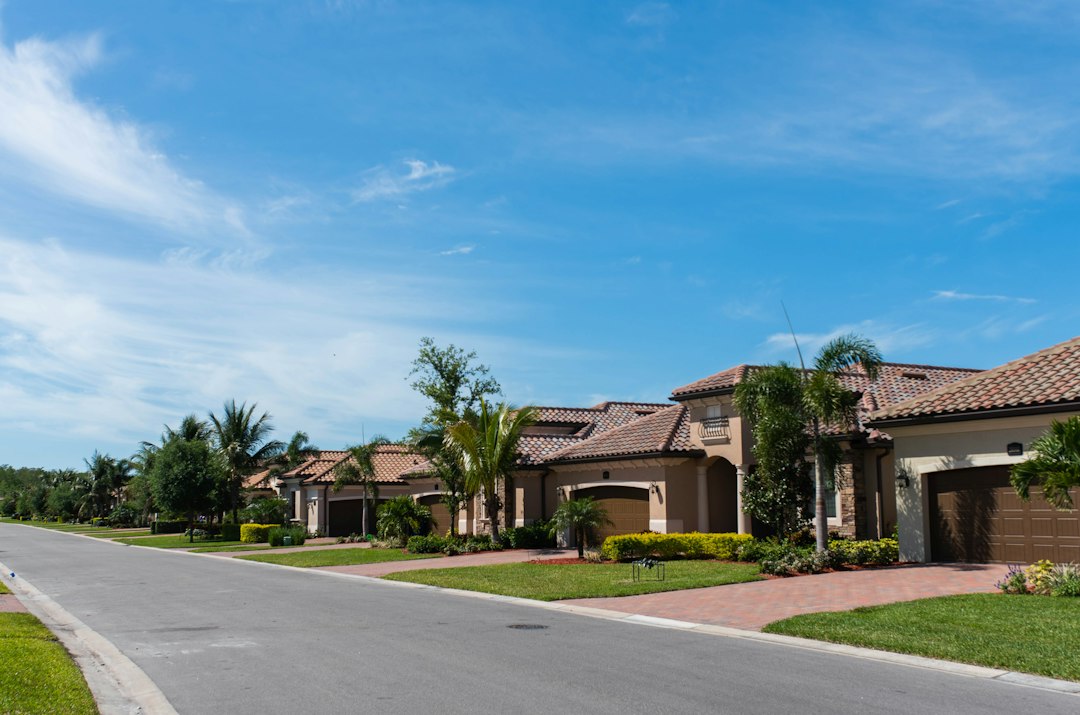
Thousand Oaks is one of a small number of California cities that regulates rent on mobile home spaces directly, through its own Municipal Code rather than leaving space rent entirely to the park owner and the open market.
If you own a mobile home in one of the city’s parks in the Conejo Valley and you’re thinking about selling, the Mobile Home Rent Stabilization Ordinance in Title 5, Chapter 25 of the Thousand Oaks Municipal Code changes how a buyer will evaluate your coach, what the next owner can expect to pay in space rent, and what happens to that rent the moment your sale closes.
Here’s what the ordinance actually says, how the current 100% CPI rent-adjustment formula replaced an older agreement that expired in 2021, and why a prospective buyer’s first question is almost always about the space rent rather than the price of the coach itself.
What the Ordinance Covers
Thousand Oaks first adopted its mobile home rent stabilization rules under Ordinance 1254-NS, effective January 23, 1996.
The city amended the ordinance under Ordinance 1559-NS, effective September 6, 2011, and again under Ordinance 1686-NS, effective August 19, 2021, to update definitions, vacancy rules, and decontrol and recontrol provisions and to align the chapter with newer state law.
The ordinance applies to space rent charged to tenants in mobile home parks within city limits — it regulates what a park owner can charge for the pad itself, not the value of the coach sitting on it, which is bought and sold on the open market between owners like any other personal or real property depending on how title is held.
This is a meaningfully different system from the statewide Mobilehome Residency Law in California Civil Code Section 798 and following, which governs the landlord-tenant relationship inside a mobile home park — notice requirements, park rules, and grounds for terminating a tenancy — in every California city and county whether or not that city has adopted its own rent ordinance.
Thousand Oaks layers its own space-rent caps on top of that statewide framework using the same municipal police power that lets a number of California cities and counties adopt local mobile home rent stabilization ordinances.
The statewide default, in a city with no local mobile home rent ordinance, is that a park owner can raise space rent by whatever amount the lease terms and the market allow. Thousand Oaks is not that default.
How the 100% CPI Rent Adjustment Actually Works
For a decade, Thousand Oaks mobile home space rents operated under a negotiated agreement reached in 2011 between the city, park owners, and tenants that set out how much space rent could increase over a ten-year period.
That special supplemental agreement was set to expire on August 18, 2021, and the city’s August 19, 2021 ordinance amendment took effect the very next day to put a new mechanism in place.
Under the current rule, the city calculates the allowed annual rent increase by multiplying 100% of the change in the Consumer Price Index by the tenant’s base rent — meaning the increase tracks inflation directly rather than running at a fixed percentage set years in advance, and rent moves up every year rather than holding flat for a stretch and then jumping.
For a seller, the practical effect is that whatever space rent is currently on the books for your pad is unlikely to be the number a buyer sees a year from now — it will have moved with CPI since your last increase, and a buyer evaluating the coach is pricing in that trajectory, not just today’s number.
The specific CPI percentage used changes every year depending on inflation data from the index period the ordinance specifies, so a figure that was accurate when a neighbor sold two years ago is not a reliable stand-in for what applies to your sale today; the current year’s adjustment should be confirmed directly with the city’s Mobile Home Rent Stabilization program before you quote a number to a buyer.
Vacancy Decontrol and Recontrol: What Happens to Rent When You Sell
This is the section of the ordinance that matters most directly to a sale. Thousand Oaks’ vacancy decontrol and recontrol provisions set different rent outcomes depending on exactly how the coach changes hands.
If an existing coach is simply re-rented to a new tenant with no change in the coach itself, the ordinance allows what’s generally described as a Type A adjustment — the maximum adjusted rent can increase, but by a capped amount tied to the re-rental rather than resetting to market.
If instead a new tenant brings in a replacement coach, or an existing tenant who has lived in the space less than a year swaps in a new coach, the ordinance allows a Type B adjustment, under which the rent can be reset to a different amount tied to that new-coach scenario rather than staying capped the way an ordinary re-rental is.
There’s an important carve-out that protects long-term residents: an existing tenant who has lived in the park at least one year and simply changes coaches, without a change in who’s renting the space, gets no rent increase at all for that coach swap under the ordinance’s own language.
And when the new occupant of a space is an immediate family member of the existing tenant — a parent, child, sibling, or similar relation — no rent increase applies to that transfer either, unless the person is otherwise exempt under the ordinance’s applicability section.
Any rent increase triggered by these provisions still requires the notice period California’s Civil Code sets for rent increases generally, so a park owner can’t spring a vacancy-related jump on a buyer without the standard advance written notice.
What this means in practice for a seller: if you’re selling your coach to someone who will keep it in place and simply take over your existing tenancy, the rent situation your buyer inherits is far more favorable than if you’re selling to someone who plans to bring in a different coach or if the park owner treats the transaction as creating a new tenancy.
Which category your sale falls into is not always obvious from the transaction documents alone, and it’s worth getting the park management’s position in writing before you and a buyer settle on a price, since the rent your buyer will actually pay going forward is arguably as important to them as the price of the coach itself.
Recordkeeping Landlords Have to Maintain — and Disclose
The ordinance also requires park owners to keep records for each space showing the maximum base rent, the maximum adjusted rent, and the current rent being charged, and to produce those records to the city on request.
If a park owner is charging more than the maximum adjusted rent for a space, or is imposing some additional fee or surcharge, the ordinance requires written disclosure of the factual justification for that charge to current or prospective tenants.
For a seller, this is useful leverage: you’re entitled to ask the park for a written statement of the maximum base rent, the maximum adjusted rent, and the current rent on your specific space before you market the coach, so you and your buyer are negotiating from the same verified numbers rather than guessing.
The ordinance separately bars a park owner from getting around the rent cap by quietly reducing the housing services tied to a space — cutting back maintenance, utilities, or amenities instead of simply raising the posted rent.
Why AB 1482 Doesn’t Apply Here
Sellers who’ve researched California’s statewide Tenant Protection Act, AB 1482, sometimes assume it layers additional rent-increase caps on top of the local mobile home ordinance. It generally doesn’t.
Mobile home park tenancies are governed by the separate Mobilehome Residency Law in the Civil Code rather than by the ordinary residential rent and just-cause provisions AB 1482 added, so a Thousand Oaks mobile home space isn’t typically evaluated under the statewide 5%-plus-CPI cap that applies to most other rental housing.
The number that actually controls your space rent is the one set locally under Chapter 25’s own CPI formula, which is a separate and in most years a different number than the AB 1482 statewide cap would produce.
If you’re also selling or renting out a conventional single-family or multi-unit rental in Thousand Oaks rather than a mobile home, that property is a different analysis entirely, and our page on selling a tenant-occupied house in Thousand Oaks covers the AB 1482 just-cause rules that do apply to that kind of rental.
How This Affects What Your Coach Is Worth
Mobile home resale value in a rent-controlled park behaves differently than resale value for a conventional house, because the buyer is purchasing two separate things at once: the coach itself and the right to occupy a space at a particular rent.
A space with a low maximum adjusted rent relative to current market rates in the park, inherited through the vacancy-decontrol rules described above, can make an older or more modest coach considerably more attractive to a buyer than its physical condition alone would suggest.
Conversely, a coach attached to a space where a Type B reset applies — meaning the incoming resident effectively faces a market-reset rent — can be harder to move at the price an owner might otherwise expect, because the buyer is pricing in a materially higher carrying cost than the seller has been paying.
This is also why park approval matters so much in a mobile home sale in ways it doesn’t in a typical real estate transaction.
Most Thousand Oaks parks require prospective buyers to be approved as new tenants before a sale can close, through a park-specific application and approval process separate from the rent ordinance itself.
A buyer who can’t get approved, for credit, income, or other park-specific criteria, can’t complete the purchase regardless of what price you’ve agreed to, which is a failure point conventional home sales don’t have to navigate.
A Worked Example
Say a Thousand Oaks resident has owned a coach in the same space for eleven years, with a current space rent of $780 a month after a series of annual CPI-based increases.
A neighboring space in the same park, where the prior tenant moved out and the park owner treated the transaction as bringing in a new coach under the Type B provision, now rents for $1,150 a month to its new occupant.
A buyer evaluating both coaches for purchase is going to factor roughly $370 a month, or close to $4,450 a year, into how much they’re willing to pay for each coach — all else equal, the lower-rent space supports a meaningfully higher purchase price for the coach itself, because the buyer’s all-in monthly cost is lower for years to come.
Sellers who don’t understand this dynamic sometimes price a coach purely on its condition and age, leaving money on the table if their space carries a favorable rent history, or get a disappointing offer if they haven’t recognized that their space is about to reset.
Frequently Confused Questions
Does the rent ordinance cap the price I can charge for the coach itself? No. The ordinance regulates space rent charged by the park owner, not the sale price negotiated between a seller and buyer for the coach.
Can the park owner refuse to approve my buyer? Parks generally can apply standard tenant-screening criteria to a prospective buyer under the Mobilehome Residency Law, though they can’t apply criteria that amount to unlawful discrimination. The specific approval standards vary by park and should be confirmed with park management directly.
Is the CPI percentage the same every year? No. It’s tied to the actual change in the Consumer Price Index for the measurement period the ordinance specifies, so it moves with inflation and will differ from year to year.
When a Cash Sale Makes More Sense Than Listing the Coach Yourself
Selling a mobile home through a conventional listing can work well when the coach is in good condition, the space rent is favorable, and you have time to wait out the park’s buyer-approval process alongside a normal marketing period.
A cash sale tends to make more sense when the coach needs repairs you don’t want to fund before selling, when you’re not sure whether your space falls under a favorable decontrol category and don’t want that uncertainty to drag out a sale, when you’ve inherited a coach from a family member and live out of the area, or when you need certainty on timing rather than hoping the right buyer clears park approval on the first try.
If your coach is in solid shape, your space rent history is favorable, and you’re not in a hurry, getting a second opinion from someone familiar with mobile home resales in your specific park is still worth doing before you commit to any one path.
Selling a tenant-occupied conventional rental in Thousand Oaks involves a different set of rules than selling a mobile home — our overview of selling a house with tenants in California walks through leases, deposits, and just-cause protections for ordinary rental housing statewide, and our piece on no-fault eviction rules in California explains the broader statewide framework those rent ordinances sit inside.
What to Confirm Before You List or Sell
- Request written confirmation from the park of your space’s maximum base rent, maximum adjusted rent, and current rent
- Ask the park directly whether a sale of your coach will be treated as a standard re-rental or as triggering a new-coach rent reset
- Confirm the current year’s CPI-based rent-adjustment percentage with the city’s Mobile Home Rent Stabilization program rather than relying on a prior year’s figure
- Ask about the park’s specific buyer-approval process and timeline so you can set realistic expectations with a prospective buyer
Thousand Oaks’ mobile home rent rules add a layer most sellers in the city’s conventional housing market never have to think about, but they’re entirely manageable once you know what the park owes you in writing and how your specific space is classified.
If you’d rather skip the park-approval timeline and the rent-reclassification uncertainty altogether and get a straightforward cash offer instead, Cash Home Buyers CA can walk through your numbers with you — we buy directly or bring in a vetted cash buyer, and when you sell to us, we pay the standard closing costs, including the county and city transfer taxes, escrow and title. You can read more about who we are on our Google Business Profile.