
Berkeley’s 1.5% to 2.5% Transfer Tax, and What Changes When Measure W Takes Effect in 2027
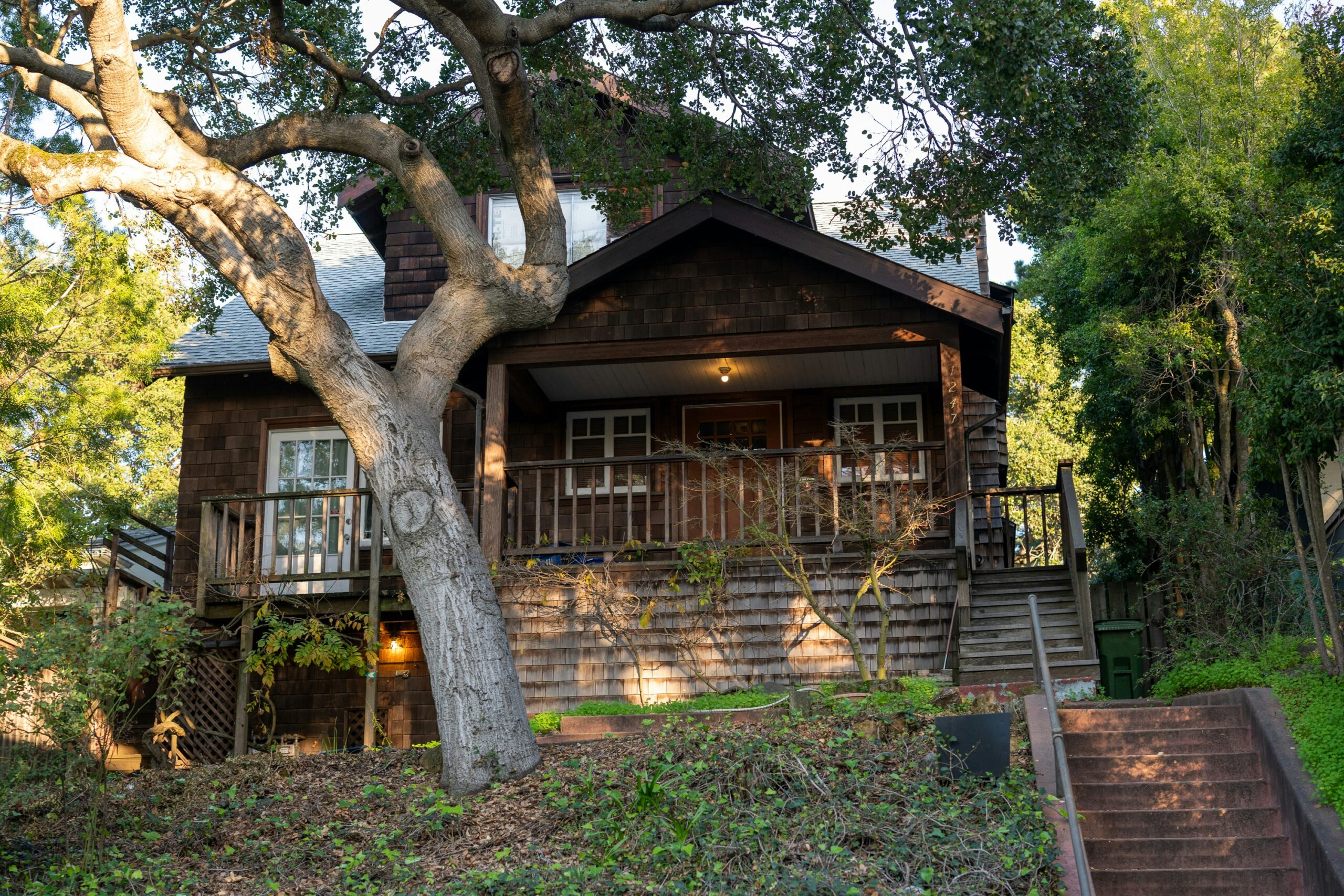
Berkeley charges its own real property transfer tax on top of Alameda County’s, and the rate depends on price: 1.5% of the full sale price for transfers up to $1.7 million, and 2.5% for anything above that.
On a typical Berkeley bungalow selling around $1.5 million, that’s $22,500 in city tax alone before the county’s portion is added — a cost that surprises sellers who priced their closing costs around agent commissions and escrow fees without separately budgeting for the city’s own transfer tax.
And the rate is changing — voters approved Measure W in November 2024, and starting January 1, 2027, Berkeley moves to a different bracket structure entirely, with rates that climb further at higher price points and adjust annually going forward.
If you’re planning a sale that could close on either side of that date, the math changes depending on which calendar year your deed actually records, and that single fact — not the sale price negotiation itself — can be the biggest lever on your net proceeds.
The Current Rate: 1.5% and 2.5%
Unlike the per-$1,000 rates some other California cities use, Berkeley expresses its transfer tax as a straight percentage of the full transfer value:
- Sale price up to $1.7 million: 1.5% of the full price
- Sale price over $1.7 million: 2.5% of the full price
- $1,200,000 sale: city tax $18,000 (1.5%)
- $1,700,000 sale (the threshold): city tax $25,500 (1.5%)
- $1,750,000 sale — just $50,000 over the threshold: city tax $43,750 (2.5%) — about $18,250 more than the $1.7 million sale, for a $50,000 higher price
- $2,000,000 sale: city tax $50,000 (2.5%)
Like several other California cities’ transfer taxes, Berkeley applies its rate to the entire sale price once a threshold is crossed, not just the amount above the threshold.
The city’s own published examples make this explicit: a sale at exactly $1.7 million owes $25,500 in city tax (1.5% of $1.7 million), while a sale at $2 million owes $50,000 (2.5% of $2 million) — not 2.5% applied only to the $300,000 above the threshold.
That full-value method is the single most important thing to understand before pricing a Berkeley home anywhere near the $1.7 million line, because a small increase in sale price right at that boundary can mean a disproportionately large jump in tax owed.
Worked Examples at Today’s Rates
That third example is the one worth sitting with.
Negotiating a sale price down by even a small amount, from $1,750,000 to $1,700,000 or below, saves far more in transfer tax than the $50,000 price difference might suggest, because it drops the entire transaction back into the lower bracket rather than just removing tax on the margin.
Sellers and their agents pricing near this line should run both scenarios before setting a list price or countering an offer.
How It Stacks With Alameda County’s Transfer Tax
Berkeley’s city tax is charged in addition to the transfer tax Alameda County collects on every transfer in the county, Berkeley included.
California’s standard county documentary transfer tax rate, set under Revenue and Taxation Code Section 11911, is $0.55 per $500 of value — $1.10 per $1,000 — and that statewide-standard rate applies in Alameda County absent a different charter provision.
On a $1.7 million sale, that adds roughly $1,870 in county tax on top of the $25,500 city tax, for a combined total around $27,370. The county portion is modest compared to Berkeley’s own rate, but it’s still a real cost that belongs in the same closing-cost conversation.
Why the Full-Value Method Catches Sellers Off Guard
Most people’s intuition about tax brackets comes from income tax, where only the income above each threshold gets taxed at the higher rate — your entire income isn’t suddenly taxed at the top marginal rate just because you crossed into a new bracket.
Berkeley’s transfer tax, like most California city transfer taxes, doesn’t work that way. The entire sale price gets taxed at whichever single rate applies to the total, which is why the jump at $1.7 million is so much larger than a marginal system would produce.
This matters practically during negotiation: a buyer offering $1,705,000 instead of $1,695,000 isn’t offering $10,000 more in any way that benefits the seller — once the city tax recalculates at the higher rate, the seller nets meaningfully less from the higher offer than from the lower one, a counterintuitive result that a seller unaware of the full-value method could easily miss while comparing two offers on paper.
Exemptions That Can Apply
Transfers that don’t represent an actual change in beneficial ownership are generally exempt from California’s documentary transfer tax framework under Revenue and Taxation Code Section 11911 and related provisions, and Berkeley’s own city tax is structured on the same underlying concept.
Common exempt categories include certain transfers into or out of a revocable living trust where the same person retains beneficial ownership, transfers between spouses as part of a divorce settlement, and transfers that simply confirm or correct title without conveying a new ownership interest.
These exemptions require specific documentation at the time the deed is recorded — a title company or the Alameda County Recorder’s office can confirm whether a specific transfer qualifies, and that confirmation should happen before closing, not be assumed and discovered wrong afterward when the city or county comes back asking for the tax.
What Measure W Changes Starting January 1, 2027
Berkeley voters approved Measure W in November 2024, and it takes effect January 1, 2027.
Rather than the current two-tier 1.5%/2.5% structure, Measure W sets a more granular bracket system: 2.5% for transfers at $1.6 million or higher, 3% at $1.9 million or higher, and 3.5% at $3.0 million or higher, with each threshold adjusted annually going forward rather than fixed as a flat dollar figure indefinitely.
In practical terms, that lowers the entry point into the 2.5% bracket compared to today’s $1.7 million threshold, while adding two new, higher brackets above it for more expensive properties.
A seller closing in December 2026 versus January 2027 on an otherwise identical $1.8 million sale would see meaningfully different tax treatment under the two systems, which makes the closing date itself a variable worth discussing with a tax professional for any sale that might land near that transition.
Because Measure W’s thresholds adjust annually once in effect, the exact dollar amounts that will apply in 2027 and beyond should be confirmed with the City of Berkeley closer to any actual closing date rather than assumed from the figures approved in 2024 — annual adjustment provisions like this typically track an inflation index, which means the numbers move every year without a new ballot measure being required.
For a seller timing a sale specifically to land on one side of the transition, keep in mind that the controlling date is generally when the deed records, not when the purchase agreement is signed or even when escrow originally opened.
A deal negotiated and put under contract in October 2026 that doesn’t actually close and record until February 2027 would fall under the new Measure W brackets, not the rates in effect when the parties shook hands.
Anyone trying to lock in the current, simpler 1.5%/2.5% structure needs to plan backward from an actual recording date with enough buffer for a normal escrow period, not just from a signing date.
Worked Example Under the 2027 Brackets
Using Measure W’s approved structure, a $1,800,000 sale recording on or after January 1, 2027 would fall into the 2.5% bracket (at or above $1.6 million), owing $45,000 in city tax — the same $45,000 it would owe recording today, since $1.8 million already sits in the current system’s 2.5% bracket above $1.7 million as well.
That specific price point happens to land in the same bracket under both systems, which is exactly why a seller can’t assume Measure W simply raises everyone’s tax by the same amount — the real impact depends entirely on where a given sale price falls relative to each system’s own thresholds.
Where the two systems diverge sharply is in the $1.6 million to $1.7 million range, a band that’s taxed at the lower rate today but moves into a higher bracket under Measure W: a $1,650,000 sale pays 1.5% ($24,750) under today’s rules, but would move into the new 2.5% bracket under Measure W ($41,250) — nearly $16,500 more in city tax for an identical sale price, purely because of which year it closes in.
That gap is exactly why anyone selling in that specific price range with a closing date anywhere near the transition should model both scenarios rather than assuming the rate they researched last year still applies.
The Seismic and Home-Hardening Rebate
Berkeley offers a partial offset that many sellers don’t realize exists: residential or mixed-use buildings with at least two units may qualify for a rebate of up to one-third of the base 1.5% transfer tax by completing qualifying seismic retrofit or wildfire home-hardening upgrades.
This isn’t a blanket discount — it requires documented, qualifying work completed and verified through the city’s process — but for an owner of a multi-unit building who has already done seismic retrofit work, or who is planning to sell and has time to complete some before closing, it’s worth investigating before assuming the full tax applies.
The rebate program is specific about what qualifies and the documentation it requires, so check directly with the city rather than assuming any retrofit work automatically counts.
Who Pays It in Berkeley
As with most California cities, the transfer tax isn’t assigned to buyer or seller by statute — it’s a matter of local custom reflected in the standard purchase agreement, and in the Bay Area that custom typically has the seller pay both the city and county portions in a conventional listed sale.
Like any contract term, it can be negotiated between the parties, and a buyer and seller are free to split it or shift it entirely in their purchase agreement if they agree to do so.
Given how much the Berkeley rate can run compared to many other cities, this is a line item worth discussing explicitly with your agent or attorney rather than assuming it’s fixed.
The tax is collected the same way regardless of who ultimately bears it economically: the title or escrow company calculates the combined city and county amount, includes it on the closing statement, and the Alameda County Recorder collects the total when the deed is submitted for recording.
If a sale price changes during negotiation — common after an inspection turns up unexpected repairs — the tax recalculates against whatever price actually gets recorded, which is one more reason to keep an eye on which bracket a renegotiated price lands in rather than assuming the original number still applies.
How Berkeley Compares to Its Bay Area Neighbors
Berkeley is one of several Bay Area cities that layers its own transfer tax rate on top of the county’s, and each city set its own structure independently.
Oakland, just across the Berkeley border in the same county, runs its own tiered schedule under its own ordinance — see Oakland’s real property transfer tax breakdown for how that city’s rates compare.
San Francisco runs a multi-bracket system of its own as well, detailed in San Francisco’s tiered transfer tax schedule.
None of these cities’ rates transfer from one to another — owning property in more than one requires checking each city’s current ordinance separately rather than assuming the math is similar just because the cities are neighbors.
Transfer tax isn’t the only rule unique to Berkeley that a seller needs to account for. The city’s Building Emissions Saving Ordinance adds its own separate, non-tax requirement at time of sale for most residential buildings — see Berkeley’s time-of-sale energy rule for what that involves, since it applies independently of, and in addition to, everything described here about the transfer tax itself.
When a Cash Sale Still Makes Sense in Berkeley
The transfer tax applies the same way regardless of who buys the house or how they pay for it — it’s calculated on the recorded sale price, not on the buyer’s financing.
Where a cash sale tends to matter most in Berkeley is when a property also carries the BESO time-of-sale energy compliance requirement described above, since that process has its own deadlines and costs that can complicate a conventional listing timeline, or when the property needs repairs that would be hard to finance through a traditional buyer’s mortgage underwriting.
If a Berkeley property is in good condition, has no BESO compliance issues, and would likely draw competitive offers given how tight Berkeley’s housing market typically is, a traditional listing may still net more after all the taxes and costs are subtracted.
A cash sale makes the most sense when speed and certainty matter more than testing the top of that market, or when the property’s condition or compliance status would complicate a conventional sale regardless of the transfer tax itself.
We also can’t walk you through our internal formula for arriving at an offer, but we can tell you plainly, before you decide anything, exactly what the city and county transfer tax will subtract from your specific sale price so you’re comparing real net numbers rather than headline ones.
Whichever side of the Measure W transition your sale falls on, the transfer tax is one of several city-specific costs a Berkeley seller needs an accurate number for before setting an asking price.
Cash Home Buyers CA can give you a no-obligation cash offer and walk through exactly what the current rate, or the post-2027 rate if your timeline lands there, will actually cost at your price point.
When you sell to us, we pay the standard closing costs, including the county and city transfer taxes, escrow and title. See how we work with Berkeley sellers specifically, or see our listing on our Google Business Profile.
Call (424) 435-2326 and we’ll run the numbers for your specific sale price before you commit to anything.