
San Francisco’s Tiered Transfer Tax: What a Seller Actually Pays at Each Price Level
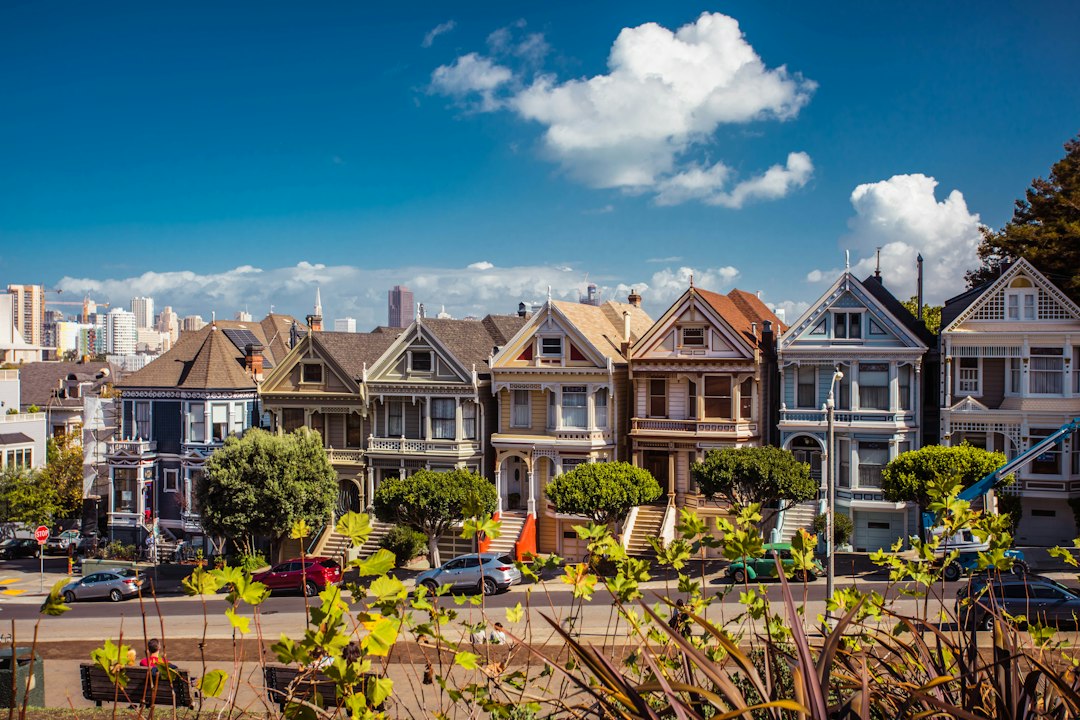
San Francisco doesn’t charge a flat transfer tax the way most California cities do.
It charges six different rates depending on how much a property sells for, and the gap between the lowest and highest tier is enormous — a seller at the top end pays twelve times the percentage rate of a seller at the bottom.
Here is the full schedule the city actually uses, how escrow applies it, and why it has nothing to do with the separate 3R disclosure report San Francisco also requires before closing.
The Rate Schedule, Tier by Tier
San Francisco’s official rate schedule, published by the City and County of San Francisco, charges a flat dollar amount per $500 of the sale price (or fair market value for an entity transfer), not a single percentage. The current tiers are:
- More than $100 up to $250,000: $2.50 per $500 — about 0.5%
- More than $250,000 up to $999,999: $3.40 per $500 — about 0.68%
- $1,000,000 up to $4,999,999: $3.75 per $500 — 0.75%
- $5,000,000 up to $9,999,999: $11.25 per $500 — 2.25%
- $10,000,000 up to $24,999,999: $27.50 per $500 — 5.5%
- $25,000,000 or more: $30.00 per $500 — 6%
Unlike a federal income tax bracket, San Francisco applies the rate for the tier the full sale price falls into to the entire amount, not just the portion above the tier’s floor. A $6,000,000 sale is taxed at 2.25% on the full $6,000,000, not at 0.75% on the first $5,000,000 and 2.25% on the remainder.
That single feature of the schedule is responsible for more seller confusion than anything else about this tax, because most people assume marginal-bracket math applies here the way it does on their income tax return. It doesn’t.
Why This Is a Different Requirement From the 3R Report
We’ve separately covered the 3R Report San Francisco requires before you can sell a home, and it’s worth being clear that the transfer tax and the 3R Report are two unrelated city requirements that happen to both apply to the same sale.
The 3R Report is a disclosure document — a Report of Residential Building Record pulled from the Department of Building Inspection’s records, confirming permitted square footage, unit count, and permit history. The transfer tax is a tax paid to the city at closing.
You need both to close a typical residential sale in San Francisco, but missing one doesn’t affect the other, and a title company handles them through entirely separate steps.
Who Pays It and How Escrow Collects It
As with every California documentary transfer tax, state law doesn’t assign this cost to buyer or seller — that’s a matter of the purchase contract and local custom.
San Francisco’s near-universal local custom has the seller pay the transfer tax, and the standard purchase agreement templates used throughout the city reflect that.
Escrow collects the tax at closing and remits it before the deed can be recorded with the Assessor-Recorder’s office; a deed won’t record without either payment or a documented exemption declared on its face.
That’s the standard listed-sale picture. When you sell to us, we pay the standard closing costs, including the city and county transfer taxes, escrow and title. You don’t need to negotiate who covers it because our offer already accounts for it.
A Worked Example at Three Price Points
A $900,000 condo sale falls in the 0.68% tier, for a transfer tax of $6,120. A $1,850,000 single-family home sale falls in the 0.75% tier, for a transfer tax of $13,875 — more than double the dollar amount of the condo despite only roughly doubling the price, because it crossed into a higher rate tier.
A $6,500,000 sale falls in the 2.25% tier, for a transfer tax of $146,250 — and because the rate applies to the whole price rather than just the amount above $5,000,000, that single figure is often the largest line item on the entire closing statement after the mortgage payoff itself.
Push the example further to see how sharply the top tiers bite: an $11,000,000 sale lands in the 5.5% tier, for a transfer tax of $605,000, and a $26,000,000 sale lands in the top 6% tier, for a transfer tax of $1,560,000.
These numbers mostly describe commercial and ultra-high-end residential transactions, but they illustrate why San Francisco’s schedule gets so much attention from real estate attorneys and why sellers near a tier boundary sometimes structure a sale’s closing timing or price allocation carefully, with professional advice, to understand exactly which tier applies.
How Escrow Actually Processes the Payment
The tax isn’t a separate check a seller writes outside of closing.
The Assessor-Recorder’s office requires either proof of payment or a documented exemption recital on the face of the deed before it will accept the deed for recording, so escrow calculates the tax based on the tier your sale price falls into, collects it as part of the closing disbursements, and remits it directly as part of recording the transfer.
Your preliminary and final closing or settlement statements should show this as its own line item labeled as the San Francisco transfer tax or documentary transfer tax, separate from title insurance, escrow fees, and any prorated property tax.
If your statement bundles several city and county fees into one lump figure, ask your escrow officer to break it out — the tiered structure means a transcription error at the wrong tier can be a meaningful dollar amount.
The tax is calculated on the stated consideration for a standard arm’s-length sale, or on fair market value for certain entity and partial-interest transfers where no conventional purchase price exists. If your transaction includes assumed debt that isn’t paid off at closing, or a side agreement affecting the stated price, confirm with your title company how that affects the taxable consideration before you rely on a back-of-envelope estimate.
Comparing the Tiered Structure to a Flat-Rate City
Most California cities, including Los Angeles, charge one flat combined rate regardless of price — Los Angeles sellers pay a combined city-and-county rate of $5.60 per $1,000 (0.56%) on every sale before any separate mansion-tax threshold applies, whether the home sells for $500,000 or $4,000,000.
San Francisco charges nowhere near that on a typical sale under $250,000 (0.5%, slightly lower than LA’s combined rate) but overtakes it quickly: by the $1,000,000-to-$4,999,999 tier San Francisco’s 0.75% already exceeds Los Angeles’s 0.56%, and by the $10,000,000-plus tiers San Francisco’s 5.5% to 6% is roughly ten times Los Angeles’s base rate.
The practical lesson for anyone comparing a San Francisco listing to a similarly priced property elsewhere in California is that the transfer tax alone can swing the net proceeds by tens of thousands of dollars on a high-value sale, in a way flat-rate cities simply don’t produce.
Frequently Confused Questions
Does refinancing a mortgage trigger this tax? No. The tax applies to a change in ownership evidenced by a recorded deed, not to recording a new deed of trust securing a loan. A straight refinance with no change in title doesn’t trigger it.
Does a 1031 exchange avoid it? No. A 1031 exchange defers federal and state capital gains tax under the Internal Revenue Code; it has no effect on a city documentary transfer tax, which is owed on the recorded deed regardless of what the seller does with the proceeds afterward.
Can the city question the declared sale price? Yes. The city can request documentation supporting the stated consideration, and understating a sale price to land in a lower tier can expose a seller to penalties and interest well beyond the tax that should have been paid at the correct tier.
Does new construction get a different rate? The tier schedule applies based on sale price regardless of whether the structure is new or decades old. Certain narrow exemptions exist for below-market-rate affordable housing transactions under separate city programs, but a standard market-rate sale of new construction pays the same tier-based rate as an older home at the same price.
Why the Top Tiers Exist
San Francisco voters added the steepest tiers through later ballot measures stacked on top of an older, flatter transfer tax structure, specifically targeting high-value commercial and residential transfers to fund city services. The result is a schedule that looks nothing like the flat-rate tax most California cities use.
A seller who sold a San Francisco property a decade ago, or who is comparing notes with a friend who sold one in a different city, should not assume the old or the neighboring rate still applies — San Francisco’s multi-tier structure is unusual even by California standards, where documentary transfer taxes typically run as a single flat rate per $1,000 regardless of price.
Legal-Entity and Partial-Interest Transfers
San Francisco’s tax applies not only to a straightforward deeded sale but also to certain transfers of a controlling interest in a legal entity that owns real property, valued at the property’s fair market value rather than the price of the entity interest itself.
This matters mainly for commercial property and multi-unit buildings held in an LLC or partnership rather than for a typical single-family home sale, but if your property is held in any kind of entity rather than your own name, this is worth raising with a real estate attorney or your title company before you assume a simpler residential rate applies.
Exemptions Worth Knowing
California Revenue and Taxation Code Section 11927 exempts a deed dividing community or quasi-community property between spouses as part of a dissolution, legal separation, or nullity judgment, or a written marital settlement agreement made in contemplation of one — provided the deed itself carries a signed written recital stating it qualifies.
San Francisco also exempts transfers into a revocable trust with no change in beneficial ownership, deeds that simply confirm or correct existing title, and deeds securing a debt rather than conveying ownership.
None of these cover an ordinary sale to an unrelated buyer, which is the situation most homeowners selling a house are actually in.
A seller should also not assume that a gift deed or an intra-family transfer automatically qualifies for an exemption just because no money changes hands.
The exemptions above are narrow and specific, and a transfer that doesn’t fit one of them squarely — even one between relatives — can still owe the full tax based on the property’s fair market value rather than any nominal price stated on the deed.
Confirm any claimed exemption with your title company before recording, since an improperly claimed exemption can be challenged later and result in the tax, plus penalties, being assessed retroactively.
If your situation involves an inherited property, it’s worth understanding how the stepped-up basis rules affect your capital gains exposure separately from this transfer tax, since the two are easy to conflate but calculated on completely different bases.
How This Compares to Other Bay Area Cities
San Francisco is a consolidated city and county, so there’s no separate county-layer transfer tax the way there is in Los Angeles or Oakland.
A seller in Oakland, by contrast, pays Alameda County’s base rate plus Oakland’s own separate tiered city tax — we’ve covered the tiered rate Oakland sellers actually pay — and Oakland’s top tier tops out well below San Francisco’s 6%.
Richmond, also in the East Bay, runs its own different schedule under Measure H.
None of these Bay Area cities use the same tiers, the same dollar thresholds, or the same percentages, so a seller moving between Bay Area cities should not assume the transfer tax math transfers along with them.
Where the Money Goes
Unlike a special assessment tied to a single purpose, San Francisco’s transfer tax revenue flows into the city’s general fund, where it helps cover core city services alongside other local tax revenue.
The highest tiers were added through later ballot measures aimed specifically at large commercial and high-value residential transfers, with campaign materials at the time citing housing and public-service funding as the rationale, but the resulting revenue isn’t earmarked the way some other city taxes are.
For a seller, the destination of the money doesn’t change the mechanics of what’s owed — it’s simply useful context for understanding why the schedule looks the way it does, with such a large jump between the mid tiers and the tiers above $5,000,000.
When a Cash Sale Is the Wrong Choice
This tax schedule doesn’t change the underlying decision of how to sell.
If your San Francisco property is in solid condition in a desirable neighborhood and you have time to prepare it properly, listing with an agent will often net more even after the transfer tax, agent commissions, and the cost of repairs or staging.
A cash sale makes more sense when the property needs real work you don’t want to fund, when a legal deadline — probate, a foreclosure timeline, a divorce settlement, or a dispute among heirs — is forcing a faster close than a traditional listing allows, or when you’d rather avoid showings, inspection negotiations, and the risk of a buyer’s financing falling through.
The transfer tax applies either way and shouldn’t be the deciding factor, but it belongs in your net-proceeds comparison before you commit to a path.
What to Confirm Before You Set a Price
- Identify which of the six rate tiers your expected sale price falls into — remember the rate applies to the full price, not just the amount above the tier floor
- If your property is held in an LLC, partnership, or other entity, confirm with a real estate attorney whether the entity-transfer rules change how the tax is calculated
- Don’t confuse this tax with the separate 3R Report — budget time and a fee for both
- Ask your escrow officer for a full, itemized preliminary settlement statement well before your closing date, not just a verbal estimate
San Francisco’s transfer tax schedule is one of the steepest in California at the high end, and it’s worth running the exact math against your own expected sale price — including which tier you land in and whether it’s close to a boundary — before you set an asking price or compare offers.
If you’d rather skip the uncertainty, Cash Home Buyers CA can give you a no-obligation cash offer and walk through what you’d actually net after the transfer tax.
You can also see how we buy houses throughout San Francisco, or find our Google Business Profile to see more about Cash Home Buyers CA directly.