
Madera County Recorder and Deed Transfer Guide for Home Sellers
- Inherited, tenants, liens, damage: we buy it
- Zero fees, zero commissions, zero closing costs
- No obligation: turn the offer down and owe us nothing
Selling a Madera County House? Get a Cash Offer and a Clean Deed Transfer
Tell us about the house and get a written cash offer. We work with escrow so the deed records cleanly.
Last updated November 13, 2026. Reviewed by the Cash Home Buyers CA team. Fees, rules and dates come from the Madera County Recorder; sources are listed at the end.
When you sell a house in Madera County, the deed that moves ownership to the buyer is recorded by the Madera County Recorder, and the documentary transfer tax is collected at that moment. The Recorder checks that a document meets recording requirements, collects the fees and taxes, and records it.
Escrow normally handles all of this, but the county has specific rules that can delay a closing if they are missed, especially on a deed you prepared yourself or on an inherited property.
Madera County Recorder at a glance
| Recording hours | 8:00 a.m. to 4:00 p.m., Monday through Friday, except holidays |
| Recorder’s office phone | (559) 675-7724 |
| Recording fee | $14.00 for the first page and $3.00 for each added page, plus $14.00 for each added title |
| Transfer tax | $0.55 per $500 of value, or $1.10 per $1,000 |
| Housing fee (SB 2) | $75.00 per document up to $225.00, unless an exemption applies |
| Missing ownership report | $20.00 if a Preliminary Change of Ownership Report is not submitted with a deed |
| Copies of recorded documents | $3.00 first page, $1.00 each added page, $2.00 to certify |
| Parcel number | Required on every deed, from your tax bill or the Assessor at (559) 675-7710 |
How much is the transfer tax in Madera County?
The Recorder lists documentary transfer tax at $0.55 for each $500 of value, which is the same as $1.10 per $1,000. It is based on the sales price, fair market value or consideration shown on the Preliminary Change of Ownership Report.
A tax declaration has to be completed on every conveyance document, including leases that run longer than 35 years, and it must state the tax amount, whether the property is in a city or the county, and how the tax was computed.
The county gives a worked example. For a sales price of $416,130, the value is rounded to $416,500 and the tax is 416.5 times $1.10, or $458.15. On a $500,000 sale the same math gives about $550. Who pays the tax is set by the purchase contract, not by the county.
The Recorder also publishes a list of valid exemptions, such as gifts and certain transfers into a trust, that can be cited on a document, but staff cannot advise you on whether one applies.
What is the SB 2 housing fee?
California’s Building Homes and Jobs Act adds a $75.00 fee to many recorded documents, capped at $225.00 per transaction on a single parcel.
The county says the fee does not apply to a document recorded in connection with a transaction that is subject to documentary transfer tax, or to a transfer of a residential dwelling to an owner-occupier.
In practice, a normal sale deed is usually exempt, but the exemption has to be cited on documents from private parties. The county will accept a cover page that cites the exemption.
If you are recording something else, such as a release or an affidavit, check whether the fee applies before you submit it.
What does the Madera County Recorder require on a deed?
The county lists these requirements for every document:
- The property must be located in Madera County, and the document must be one the law allows to be recorded.
- Signatures must be original, unless the document is a certified copy from the official custodian.
- The first page must name the party requesting recording and give a return address in the upper left corner.
- The document must be properly acknowledged using California’s all-purpose acknowledgment, and the notary seal must be legible.
- The Assessor’s Parcel Number is required on all conveyance documents, under Madera County Code 3.12.130. It has nine digits.
- A completed Preliminary Change of Ownership Report must accompany a document that changes ownership.
- Pages must be 8.5 by 11 inches. Any other size adds $3.00 per page for the whole document, and no page can exceed 8.5 by 14 inches.
- The first page needs a blank space at least 2 inches down from the top, with the left 3.5 inches used for the return address and the rest left for the Recorder’s stamp. Side and bottom margins should be at least half an inch.
- Documents must be in English. Any portion in another language needs a certified translation attached, with a signed and notarized declaration.
How do you pay recording fees in Madera County?
All fees and taxes are due when the document is submitted. The county accepts cash with no $100 bills, a personal check where the party is listed on the document, a cashier’s check, a money order, or a debit or credit card from Mastercard, Visa, American Express or Discover.
A $2.50 service fee is added to every debit transaction and to credit transactions of $83.75 or less. Credit transactions above $83.75 carry a 3 percent fee. The Recorder keeps overpayments of up to $10, so calculate the fees carefully. A recording fee calculator is on the county’s website.
How to sell a house in Madera County when the title needs work
A sale closes only when the deed history is clean. If the owner has died, title may still be in their name, and the person selling needs to show authority, such as a court order or a trustee’s certification, before the deed can be recorded.
If a deed was signed years ago and never recorded, it has to be recorded before the property can be sold.
A cash buyer can often close on a house with a messy title faster than a buyer who needs a lender, because there is no loan underwriting to wait on.
- Pull the recorded documents. Order copies of the current deed and any liens. Copies cost $3.00 for the first page, and certified copies add $2.00.
- Find the parcel number. It is on your property tax bill, or you can call the Assessor.
- Decide who pays the transfer tax. Put it in the contract.
- Let escrow record. The deed, the tax declaration and the ownership report go in together, so nothing is rejected at the counter.
See how we buy houses in Madera County, or read our Madera County property tax guide, our Madera County probate guide and the California transfer tax report.
Have a Madera County house with a title problem? Call (424) 435-2326 or request a cash offer. There is no cost and no obligation.
Madera County Recorder FAQ
How much is the transfer tax in Madera County?
It is $0.55 per $500 of value, or $1.10 per $1,000, collected when the deed is recorded.
What are the Madera County Recorder’s hours?
Documents are accepted from 8:00 a.m. to 4:00 p.m., Monday through Friday, except holidays.
Does Madera County require a parcel number on a deed?
Yes. The county requires the nine-digit Assessor’s Parcel Number on every conveyance document.
What happens if I record a deed without a change of ownership report?
The county charges a flat $20.00 penalty when a document that changes ownership is recorded without a Preliminary Change of Ownership Report.
Sources
- Madera County Recorder: Recording Requirements
- Madera County Recorder: Recording and Vital Records Fees
This guide is general information, not legal advice. Fees and rules can change; confirm them with the Madera County Recorder.
From the Blog
Latest guides for California home sellers
-
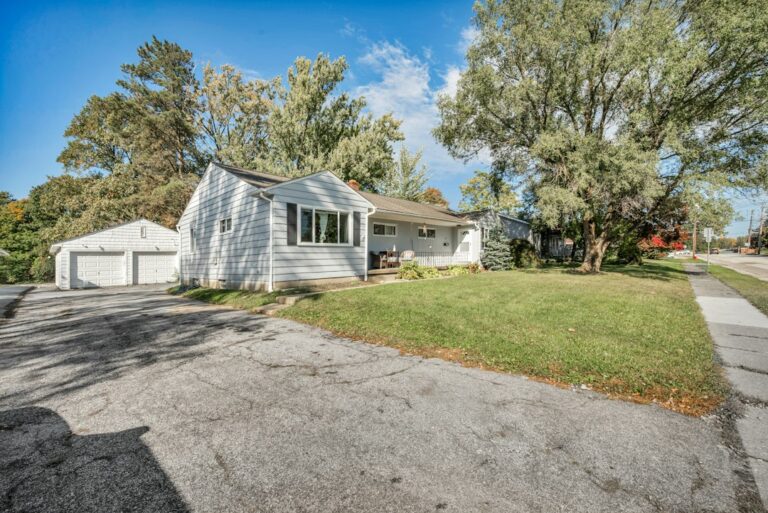
California’s Judicial Foreclosure Redemption Right: The One-Year Window Most Owners Never Hear About
California's rarer judicial foreclosure process comes with a statutory right to redeem the property for up to a year after the sale…
Read the guide → -
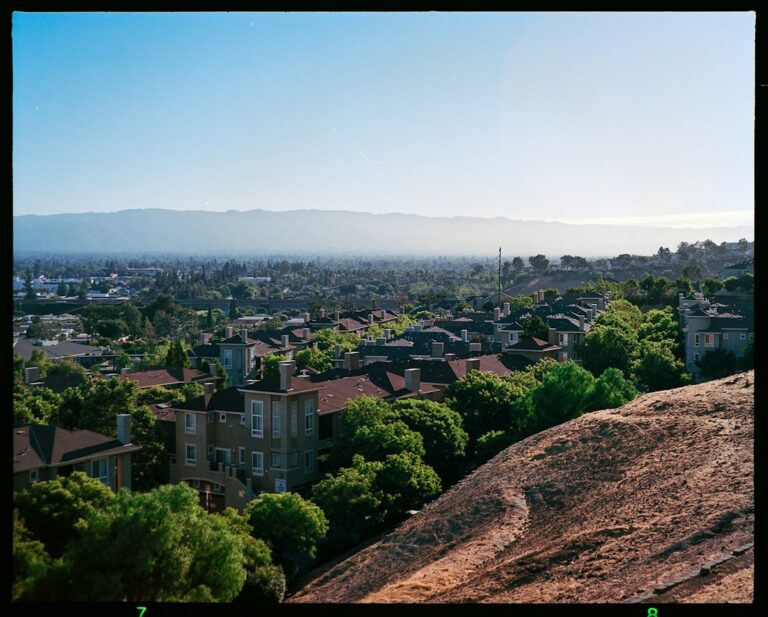
Santa Clara County’s Tax-Defaulted Property Auction: How to Claim the Excess Proceeds
When a Santa Clara County home isn't redeemed within the state's deadline, the county can sell it at public auction — and…
Read the guide → -
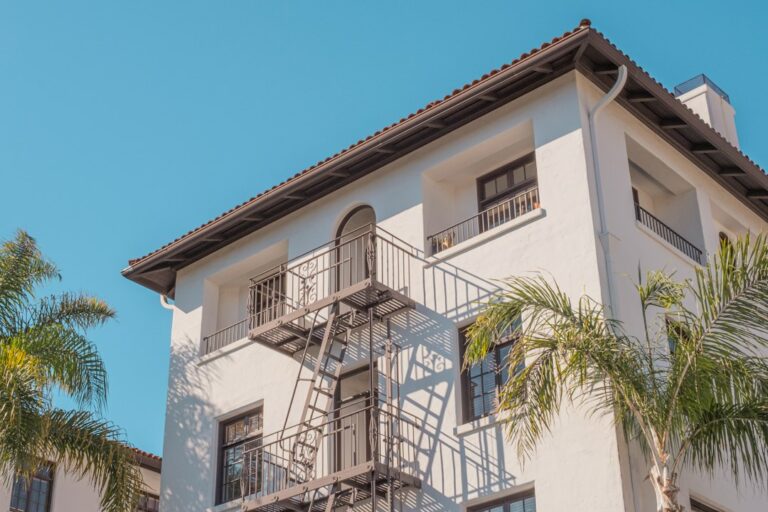
Pomona’s Rent Stabilization Ordinance Just Became Permanent: What Landlords Must Do Before Selling
Pomona's Ordinance No. 4359 became permanent on January 1, 2026, replacing the city's prior urgency ordinances and capping most rent increases at…
Read the guide → -
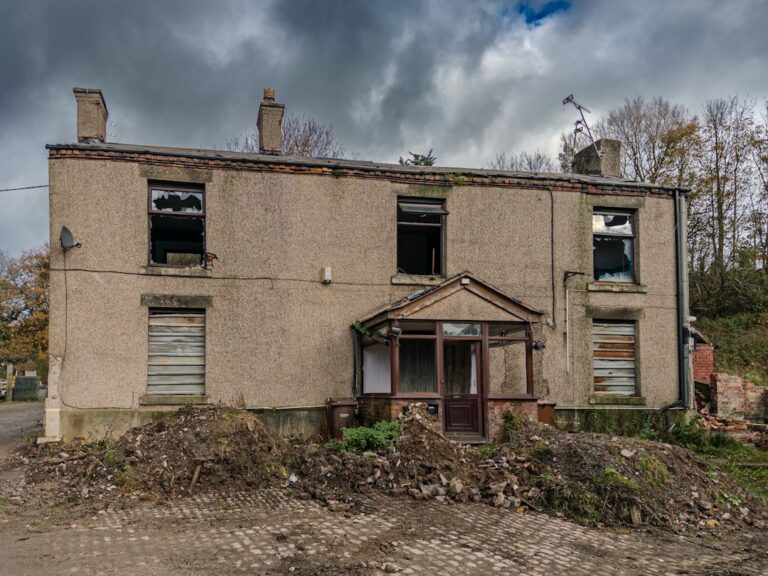
Compton’s Substandard Building Ordinance, Explained
Compton can order a dangerous or substandard house secured, repaired, or demolished under Municipal Code Chapter 14, and if the owner misses…
Read the guide → -
Chico’s RECO Inspection: What Sellers of Older Homes Must Fix Before Closing
Chico requires sellers of homes built before July 1, 1991 to pass a RECO energy and water retrofit inspection — or transfer…
Read the guide → -

Emeryville’s Just Cause Eviction Ordinance: Relocation Pay Under Municipal Code 5-40
Emeryville had its own just-cause eviction and relocation-assistance ordinance years before California’s statewide AB 1482 existed, and the local rule is still…
Read the guide → -
Malibu’s Six-Year Rebuild Deadline After the Palisades Fire: Municipal Code 17.60.020(C)
Malibu homeowners rebuilding after the January 2025 Palisades Fire have a hard deadline most residents outside the city have never heard of:…
Read the guide → -
California’s Security Deposit Cap: How AB 12 Limits What Landlords Can Collect
AB 12 caps most California security deposits at one month's rent, with a narrow exception for small landlords — plus new 2025…
Read the guide → -
California Civil Code §4525: The 11 HOA Documents You Must Hand a Buyer Before Closing
California Civil Code §4525 requires sellers inside an HOA to hand buyers 11 specific documents before closing — a list that just…
Read the guide →