
El Cerrito Documentary Transfer Tax: Rate, Exemptions and What Sellers Pay
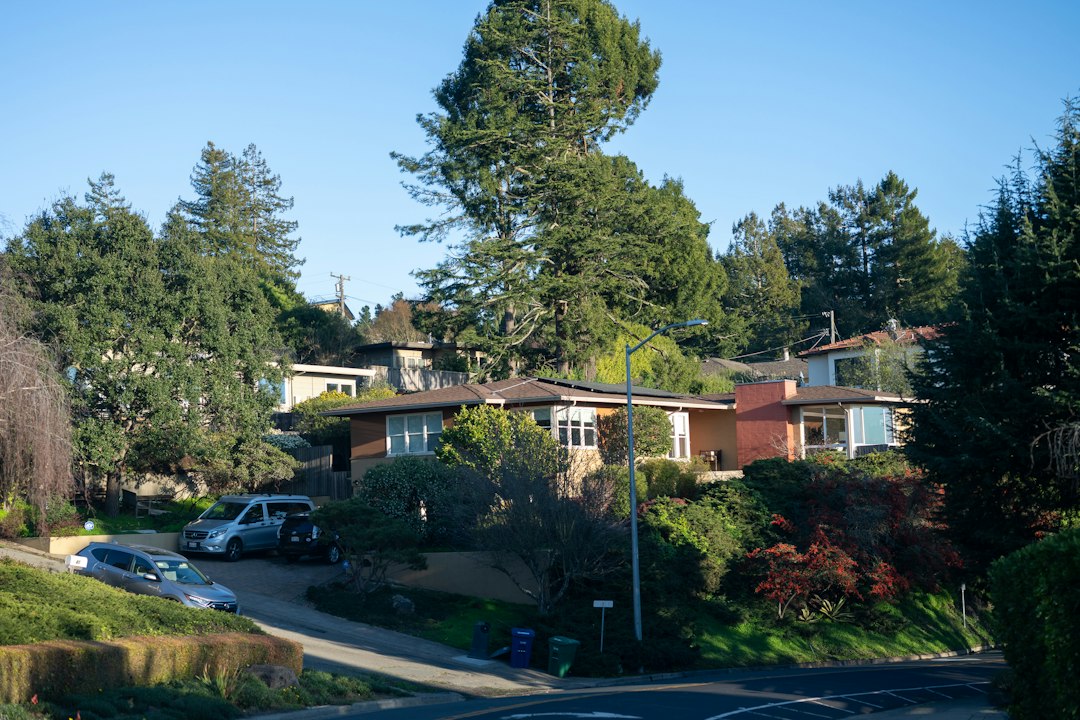
El Cerrito is one of a small number of California cities that layers its own documentary transfer tax on top of the Contra Costa County tax, and the city’s rate is high enough relative to nearby cities that it regularly surprises sellers who assume transfer tax is a flat, countywide cost.
If you’re selling a house in El Cerrito, knowing how the city’s tax is calculated, who’s responsible for it by local custom, and which exemptions might apply can change what you expect to walk away with at closing.
El Cerrito’s Transfer Tax Rate
Under El Cerrito Municipal Code Chapter 4.64, the city imposes a documentary transfer tax of $12.00 per $1,000 of consideration (or fractional portion of $1,000) on real property sales within city limits. This rate was established by Ordinance No. 2018-03, approved by voters as Measure V, and became effective November 6, 2018.
It applies in addition to — not instead of — the standard Contra Costa County documentary transfer tax of $1.10 per $1,000, which applies countywide under California’s base transfer tax statute.
Combined, a sale in El Cerrito is subject to $13.10 per $1,000 of consideration between the city and county taxes — a meaningfully higher combined rate than a sale in most other Contra Costa County cities, which typically see only the $1.10 countywide rate with no additional city-level tax layered on top.
How the Tax Is Calculated
The tax applies to the full value of consideration paid for the property, rounded up to the next $1,000 increment, with a minimum threshold of $100 in consideration before the tax applies at all. For a typical home sale, here’s roughly what the city’s portion alone looks like at a few price points:
- $600,000 sale: $7,200 in city transfer tax
- $800,000 sale: $9,600 in city transfer tax
- $1,000,000 sale: $12,000 in city transfer tax
Add the county’s $1.10 per $1,000 on top of each of those figures, and the combined transfer tax bill at a $1,000,000 sale price comes to roughly $13,100 total between city and county — a substantial closing cost that catches sellers off guard when they’ve budgeted based on a more typical California city’s combined rate of just over $1 per $1,000.
Who Pays: Local Custom, Not Law
California law doesn’t dictate which party — buyer or seller — pays a documentary transfer tax; it only establishes that the tax is owed on the transaction and must be paid before the deed is recorded.
In most of Northern California, including El Cerrito and the broader Bay Area, local custom places this cost on the seller, and it’s typically built into the net proceeds calculation a seller sees at closing.
In practice, this means a seller going through a standard listed sale in El Cerrito should expect this tax to come out of their proceeds, not to be a cost the buyer separately covers, though the specific allocation is technically negotiable between the parties and can be written into the purchase contract either way.
This is worth confirming directly in the purchase agreement during a traditional sale rather than assuming local custom will automatically apply, since nothing in the municipal code or state law requires it to be allocated that way.
Exemptions From El Cerrito’s Transfer Tax
Chapter 4.64 lists a specific set of transfers that are exempt from the city’s transfer tax, generally mirroring the exemptions available under the county and state transfer tax framework. The most commonly applicable exemptions include:
- Transfers where no consideration changes hands, such as a gift between family members
- Transfers to or from government agencies
- Transfers securing a debt, such as recording a deed of trust, rather than an actual change in beneficial ownership
- Transfers between spouses or in connection with a dissolution of marriage, where the transfer doesn’t involve additional outside consideration
- Certain transfers into or out of a revocable trust where beneficial ownership doesn’t change
- Transfers in connection with a reorganization of a legal entity that doesn’t change the proportional ownership interest
An exemption generally has to be claimed on the preliminary change of ownership report or transfer tax affidavit filed with the deed at recording — it isn’t applied automatically just because the underlying transfer happens to qualify. Escrow and title companies handling the transaction typically flag an exemption and prepare the necessary documentation when one applies, but it’s worth confirming directly rather than assuming it will be caught.
The Seismic and Energy Retrofit Rebate Program
One feature of El Cerrito’s transfer tax that’s genuinely distinct from most California cities is a rebate program tied to seismic safety and energy efficiency improvements.
Under the ordinance, a portion of the transfer tax paid on a sale can be rebated — up to one-third of the tax paid — when the proceeds are used for qualifying seismic retrofit work (such as foundation bolting and cripple wall bracing) or energy efficiency upgrades to the property within a specified period after the sale.
This program is specific to El Cerrito and isn’t something sellers or buyers in most other Bay Area cities need to think about.
For a buyer planning seismic retrofit work on an older El Cerrito home shortly after purchase — common in a city with a large stock of older single-family homes — it’s worth looking into whether the work could qualify for a partial rebate of the tax just paid, since the amount involved at El Cerrito’s rate can be substantial enough to make pursuing it worthwhile.
Penalties for Late Payment
Documentary transfer tax is typically paid at the time of recording, so most sales never encounter a delinquency situation — the deed simply isn’t recorded until the tax is paid.
But where a payment dispute or correction arises after the fact, El Cerrito’s code provides for penalties on unpaid transfer tax: a 10% penalty if payment is late, increasing to 15% if the deficiency extends past 90 days, plus interest accruing at 1% per month on the unpaid amount.
These penalty provisions mirror the structure used by other California cities with their own transfer tax ordinances, and in practice they come into play mainly in disputed valuation cases rather than routine sales.
Why El Cerrito’s Rate Is So Much Higher: Measure V
Before November 2018, El Cerrito’s city transfer tax sat at a much lower rate, closer to what’s typical for a California city with its own local transfer tax.
Measure V, placed on the ballot by the city council and approved by voters, raised the rate specifically to generate additional general fund revenue, with city officials at the time citing infrastructure needs, public safety staffing, and other general fund pressures as the rationale.
Because it was structured as a general tax rather than a special tax earmarked for a specific purpose, it only required a simple majority to pass, and the revenue flows into the city’s general fund rather than being restricted to a particular use.
For sellers, the practical upshot of this history is that El Cerrito’s rate isn’t a legacy oddity dating back decades — it’s a relatively recent, voter-approved increase, and transfer tax revenue has become a meaningful and recurring piece of the city’s general fund budget since 2018.
That context doesn’t change what a seller owes, but it explains why El Cerrito’s rate diverges so sharply from the countywide norm nearby.
Estimating Your Net Proceeds With Transfer Tax Included
Because El Cerrito’s combined transfer tax rate is unusually high for the region, it’s worth running the numbers explicitly rather than estimating based on what a sale in a neighboring city would cost. For a seller listing a $900,000 El Cerrito home traditionally, a rough closing cost breakdown might look like this:
- Combined city and county transfer tax ($13.10 per $1,000): approximately $11,790
- Real estate agent commission (typically negotiated, often in the range of 4–6% combined for both sides): $36,000–$54,000
- Escrow and title fees: typically $2,000–$4,000, split by local custom between buyer and seller
- Any negotiated repairs or credits arising from inspection
Transfer tax alone, in this example, runs higher than many sellers expect going in, and it’s a fixed percentage regardless of how the sale is structured — it applies the same way whether the buyer is financing with a mortgage or paying cash, and whether the sale takes 10 days or 100.
When the Tax Is Actually Paid
The transfer tax is collected at the time the deed is recorded with the Contra Costa County Recorder’s Office, typically handled directly by the escrow or title company as part of closing.
The county collects both the county’s own $1.10 per $1,000 and, for a property within El Cerrito city limits, remits the city’s $12 per $1,000 portion to the city separately, under an administrative arrangement between the city and county.
From a seller’s perspective, this all happens automatically as part of closing — there’s no separate filing or payment a seller has to make directly to the city, beyond ensuring the correct consideration amount is reported accurately on the transfer tax affidavit that accompanies the deed.
Accuracy on that affidavit matters. The consideration amount reported should reflect the actual purchase price (or fair market value for a non-arm’s-length transfer), and understating it to reduce the tax owed is a form of tax evasion that can trigger penalties, interest, and in serious cases, referral for prosecution, in addition to the underpaid tax itself being collected retroactively.
How El Cerrito Compares to Nearby Cities
El Cerrito sits within Contra Costa County, bordering Richmond and Albany, and its $12 per $1,000 city rate is considerably higher than most of its immediate neighbors.
Richmond has its own separate transfer tax structure under Measure H, while many other Contra Costa County cities impose no additional city-level transfer tax at all, leaving sellers there subject only to the county’s $1.10 per $1,000.
A seller comparing a potential sale price net of costs between El Cerrito and a neighboring city without its own city transfer tax should factor in a meaningfully larger transfer tax bite in El Cerrito specifically.
El Cerrito isn’t alone among smaller Bay Area cities in charging $12 per $1,000 — Alameda charges the same rate on its own sales, suggesting city councils in the region have converged on a similar figure when seeking voter approval for a local transfer tax increase in recent years.
Albany, directly bordering El Cerrito to the south, does not currently impose its own separate city transfer tax, which means an otherwise comparable home just across the city line can carry a meaningfully different closing cost purely because of which side of that boundary it sits on.
What Counts as “Consideration” for Tax Purposes
For a standard cash sale, consideration is simply the purchase price. It gets more complicated for a sale involving assumed debt — for instance, a buyer purchasing a property subject to an existing loan rather than paying entirely in new funds.
In that scenario, California transfer tax law (and El Cerrito’s ordinance, which follows the same framework) generally excludes the amount of any existing lien or encumbrance that remains on the property and isn’t being paid off as part of the sale, taxing only the value of the equity actually being transferred.
This distinction mainly comes up in seller-financed transactions, transfers subject to an existing loan being assumed by the buyer, or certain family or entity transfers rather than a conventional purchase-money sale with full payoff of existing debt.
For most sellers working with a conventional buyer who is either paying cash or obtaining new financing that pays off any existing loan at closing, this distinction doesn’t apply — the full purchase price is the consideration, and the full combined $13.10 per $1,000 rate applies to that amount.
Transfer Tax on a Short Sale or Distressed Property
Transfer tax applies the same way to a distressed sale as it does to any other arm’s-length transaction — the tax is based on the actual consideration paid, not on the property’s assessed value or its outstanding loan balance.
A seller going through a short sale, where the sale price is less than what’s owed on the mortgage, still owes transfer tax calculated on the actual negotiated sale price, which is sometimes a relief compared to what a seller assumes, since the tax is based on the (often reduced) sale price rather than the larger original loan amount.
Coordinating with the lender approving the short sale on how closing costs, including transfer tax, will be covered out of limited proceeds is worth doing early in that process rather than assuming it will simply work itself out at closing.
When Listing Traditionally Still Makes Sense
A higher transfer tax doesn’t change the fundamental tradeoff between a traditional listed sale and a direct cash sale — it’s simply one more line item in the closing cost calculation.
El Cerrito’s housing market has historically been strong, with steady demand from Bay Area buyers priced out of higher-cost neighboring cities, so if your home is in good condition and you’re not under time pressure, listing with an agent will typically still net more after all costs — transfer tax included — than a direct cash sale.
The transfer tax applies either way; it’s not avoided by selling fast, and it’s not increased by selling slow.
Where the calculation shifts is when a seller needs certainty and speed more than maximum price — an estate settling quickly, a relocation on a deadline, or a property that would need significant work before it could compete on the open market. In those cases, the transfer tax is simply a fixed cost to plan around rather than a factor that changes which path makes more sense.
How We Can Help in El Cerrito
We buy houses throughout Contra Costa County, including El Cerrito, and we factor the city’s combined transfer tax rate into every offer we make so there are no surprises at closing. We buy directly or bring a vetted cash buyer, which means no waiting on a buyer’s mortgage approval, no repairs required before closing, and a clear, upfront number for what you’ll walk away with.
When you sell to us, we pay the standard closing costs, including the county and city transfer taxes, escrow and title, so El Cerrito’s higher-than-typical combined transfer tax rate doesn’t come out of your proceeds.
If you’d like to see what that looks like for your specific property, call us at (424) 435-2326, or check out our Google Business profile to see how we’ve worked with other Contra Costa County homeowners.