
Why Culver City’s As-Is Disclosure Rules Aren’t Los Angeles’s
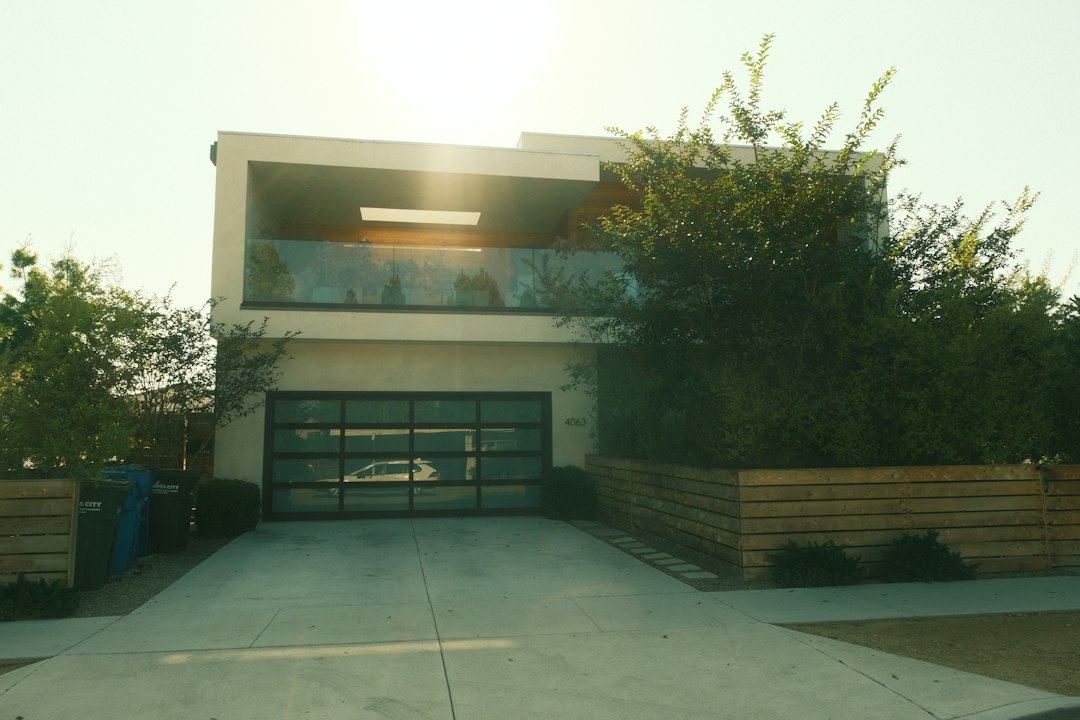
Selling a house “as-is” in Culver City does not excuse a seller from California’s disclosure laws, and treating it that way is one of the most expensive mistakes a seller or agent can make.
The second complication is more local: Culver City runs its own permit and code-enforcement system, separate from both the City of Los Angeles and Los Angeles County, so anyone pulling records for a Culver City address from the wrong jurisdiction will come back with an incomplete — and legally risky — picture.
Highland Park adds its own overlay-zone wrinkle to that same disclosure picture — see how the Highland Park-Garvanza HPOZ affects disclosure.
Culver City Is Its Own City, Not an LA Neighborhood
It is easy to assume Culver City is simply a Westside Los Angeles neighborhood near Mar Vista, Palms, and Baldwin Hills. It is surrounded on most sides by the City of Los Angeles and borders unincorporated Ladera Heights, and its streets blend into the surrounding fabric without an obvious seam.
But Culver City has been its own incorporated municipality since September 20, 1917, and since 1947 it has operated as a charter city — meaning it governs itself under its own city charter rather than relying solely on the general laws that apply to ordinary California cities.
Culver City started out at just 1.2 square miles. Over the following century it grew to roughly 5 square miles through 42 separate annexations, absorbing adjacent parcels piece by piece rather than through one clean boundary expansion.
That history is exactly why the city’s current footprint is so irregular, and why its edges weave in and out of Los Angeles in a way that is genuinely confusing on a map. As of the 2020 Census, about 40,779 people live within that boundary.
Charter status matters in its own right.
A general-law city is bound to the structure and powers the state legislature spells out for every city of its kind; a charter city has adopted its own foundational governing document, approved by its own voters, that gives it broader home-rule authority over municipal affairs — things like how it structures its departments, how it handles local elections, and how it organizes services such as policing and building regulation.
Culver City has used that authority to keep its municipal functions fully independent rather than contracting them out to the county or to its much larger neighbor.
The independence is not just historical trivia.
Culver City maintains its own Culver City Police Department rather than contracting with the LAPD, and its own Building & Development division handles permitting, planning, and code enforcement within city limits — entirely separate from the Los Angeles Department of Building and Safety and from LA County’s building department.
For a real estate transaction, that distinction has direct consequences, which we’ll get to after covering what state law actually requires of a seller.
The Transfer Disclosure Statement Doesn’t Care That You Said “As-Is”
California Civil Code §1102 and the sections that follow it require most sellers of residential real property to complete and deliver a Real Estate Transfer Disclosure Statement, commonly called the TDS.
The form asks the seller to disclose known material facts about the condition of the property — structural issues, past water intrusion, roof problems, prior insurance claims, additions or alterations, and more — based on what the seller actually knows, not on what a professional inspection would later uncover.
“As-is” is a statement about who pays for repairs. It tells the buyer the seller will not be fixing anything before closing and the property is being sold in its current physical condition.
It is not a legal exemption from disclosure, and it does not relieve the seller of the duty to fill out and deliver the TDS truthfully.
A seller who lists a Culver City home as-is and then skips or fudges the disclosure form has not simplified the sale — they’ve created a liability that can surface well after closing, in the form of a rescission demand or a lawsuit for failure to disclose.
Timing matters as much as content.
Once a buyer receives the TDS, they generally have the right to terminate the transaction within three days if the disclosure is delivered in person, or five days if it’s delivered by mail, so a seller who hands over the form late in escrow can end up reopening negotiations or losing the deal outright rather than saving time.
Delivering it early, and delivering it accurately, is what actually keeps an as-is transaction moving on schedule.
Civil Code §1102.1 lays out the actual TDS exemptions, and they are narrower than most sellers assume.
Exempt transfers include those made pursuant to a court order — probate sales and eminent domain transfers among them — transfers by a trustee under a deed of trust, such as a trustee’s deed following a foreclosure, and transfers between co-owners.
None of those exemptions turn on whether the sale is marketed as as-is. An ordinary owner-occupant selling their own Culver City house as-is, outside of probate or foreclosure, still has to deliver a TDS.
If there’s a code-related wrinkle in the property’s history, it helps to understand how selling a house with code violations works under California law before deciding how to describe the property’s condition on the form.
The Natural Hazard Disclosure Rides Along No Matter What “As-Is” Says
Separate from the TDS, Civil Code §1103 requires sellers to provide a Natural Hazard Disclosure (NHD) Statement identifying whether the property sits within a designated flood zone, a very high fire hazard severity zone, an earthquake fault zone, a seismic hazard zone, or a wildland fire area.
This requirement is triggered by the property’s location, not by the terms of sale, so an as-is listing carries the exact same NHD obligation as any other sale.
In practice, most sellers hire a natural hazard disclosure company to pull the zone data and generate the report rather than researching it themselves, and that’s a reasonable approach as long as the report is actually obtained and delivered before the buyer removes contingencies.
For a closer look at how the NHD statement is prepared and what it covers, see our breakdown of the California Natural Hazard Disclosure Statement.
Culver City’s location on relatively flat Westside terrain means some of these zones won’t apply to a given parcel, but that has to be confirmed through the actual hazard maps for the specific address — it is not something a seller can assume away.
Lead Paint and Other Disclosures for Culver City’s Older Housing Stock
A fair amount of housing near Culver City’s studio district and older residential pockets predates 1978, and federal law requires sellers of any home built before that year to disclose known lead-based paint hazards and provide buyers with the EPA’s lead-paint pamphlet along with a specific disclosure form.
This obligation comes from federal statute, not state law, so it applies on top of everything California requires, and it is just as unaffected by as-is language as the TDS and NHD are.
Older homes also tend to carry a longer paper trail of past work — additions, converted garages, re-roofs, electrical upgrades — some of it permitted properly and some of it not.
California law doesn’t require a seller to have fixed unpermitted work before selling, but it does require disclosing what the seller actually knows about it.
That’s a separate issue from the TDS form’s general questions, and it’s worth understanding on its own terms: our guide on selling a house with unpermitted work in California walks through how that disclosure obligation plays out and what it does and doesn’t expose a seller to.
Why a Culver City Permit Pull Has to Start With Culver City
This is where Culver City’s charter-city status and its annexation-driven boundary stop being historical color and start mattering to a real transaction. Permit history, code-enforcement records, and certificates of occupancy for a Culver City address are held by the city’s own Building & Development division.
They are not in the Los Angeles Department of Building and Safety’s database, and they are not in LA County’s records either, because Culver City is neither.
The mistake is easy to make precisely because Culver City looks and feels like part of Los Angeles.
An agent, a title examiner, or even a seller who grew up thinking of the area as “near Sony” or “by the Culver Studios lot” — the old MGM lot that anchors the neighborhood as a landmark — may reflexively search LA City’s permit portal, come up with nothing, and conclude the property has no permit history at all.
That conclusion is wrong; it just means the search was pointed at the wrong city.
Because Culver City’s boundary is the product of 42 separate annexations rather than one tidy survey line, addresses that feel like they should be LA sometimes aren’t, and the reverse happens too — a property can sit inside what looks like Culver City on casual inspection but actually falls just across the line into LA or unincorporated territory.
For a seller, this means an accurate disclosure about past permit activity or known code issues requires actually contacting Culver City’s Building & Development division — not assuming that a clean LA City report means a clean history.
For a buyer’s agent or title company, it means verifying jurisdiction first, before pulling records, rather than defaulting to whichever city’s portal is most familiar.
Getting this wrong doesn’t just create an awkward moment at closing; it can mean a disclosure that was made in good faith turns out to be incomplete, because it was based on the wrong city’s files.
Anyone dealing with a property that has a flagged violation, whether found through the right database or the wrong one, should read through how code violations affect a California sale before deciding how to proceed.
What “As-Is” Protects You From, and What It Doesn’t
Selling as-is genuinely does something useful for a seller: it signals, contractually, that the buyer is taking the property in its current physical condition and that the seller isn’t agreeing to make repairs as a condition of closing. That shifts negotiating leverage and sets expectations before anyone has stepped inside for an inspection.
What it does not do is protect a seller who knew about a problem and didn’t say so. California law distinguishes sharply between “I’m not going to fix this” and “I’m not going to tell you about this.” The first is what as-is means.
The second is concealment, and no amount of as-is language in a purchase agreement overrides a seller’s duty to disclose known material facts, or shields a seller from liability for fraud.
A buyer who later discovers a known defect that was never disclosed can pursue remedies regardless of how the listing was worded, because the as-is terms govern repair obligations, not honesty obligations.
The practical rule is straightforward even if it’s sometimes inconvenient: disclose what you know, then let the as-is terms do the work of saying you won’t be fixing it.
When an As-Is Cash Sale Is Actually the Wrong Call
It’s worth saying plainly: an as-is cash sale is not automatically the best option, and treating it as the default move for every seller does a disservice to people who would come out ahead on the open market.
Culver City is a small, desirable, inventory-constrained city, anchored by major employers like Sony Pictures Entertainment, Apple, Amazon Studios, and the Westfield Culver City mall, and homes there — especially ones that are well-maintained or only need cosmetic work — can attract real competition from traditional buyers willing to pay close to or above asking price.
A fast, as-is cash sale trades upside for certainty: a known closing date, no financing contingency, no repair negotiations, no staging and showings.
That trade makes sense for a seller facing a tight timeline, a property that needs more work than they can finance or manage, an out-of-area inheritance, or a situation where speed and certainty matter more than maximizing price.
It makes less sense for a seller who has time, a home in solid condition, and a market where comparable Culver City properties are selling quickly to retail buyers — in that situation, listing conventionally with full, accurate disclosure may leave meaningfully more money on the table if it’s skipped in favor of a quick cash exit.
The honest way to decide is to run the numbers side by side rather than guess.
Get a specific cash offer in writing, then get a realistic opinion of what the home would fetch on the open market in its current condition, net of estimated repair credits, agent commissions, staging, holding costs, and the weeks or months the listing is likely to sit.
Sometimes that comparison still favors the cash sale, particularly when a property needs extensive work, has a complicated title or ownership situation, or the seller genuinely cannot carry the holding costs of a longer process.
Other times the gap is wide enough that a few more weeks on the market, even with every defect disclosed, is clearly worth it. Running that comparison before signing anything is the difference between choosing a cash sale and defaulting into one.
It also matters who you’re comparing against. A cash offer from an experienced local buyer who already understands Culver City’s separate permitting and disclosure landscape is a very different proposition from a generic national “we buy houses” lead-gen operation that will requote the price after a cursory walkthrough.
If a cash sale is the right call, the quality and firmness of that offer should get as much scrutiny as the decision to pursue it at all.
Our overview of disclosure requirements for selling as-is in California is a useful next read either way, since the disclosure obligations are identical regardless of which path a seller chooses.
First Steps Before You List or Accept an Offer
- Confirm your property is within Culver City’s boundary rather than LA City or LA County, since that determines which Building & Development office actually holds the permit and code-enforcement records
- Contact Culver City’s Building & Development division directly to pull permit history and check for any open code-enforcement cases tied to the address
- Complete the Civil Code §1102 Transfer Disclosure Statement honestly, based on what you actually know, regardless of whether you’re selling as-is
- Order a Natural Hazard Disclosure Statement under Civil Code §1103 to confirm flood, fire, and seismic zone status for the specific parcel
- If the home was built before 1978, prepare the federal lead-based paint disclosure and pamphlet
- Compare a specific as-is cash offer against a realistic net-proceeds estimate from a traditional listing before committing to either path
If the property is a rental rather than your own home, these disclosure duties run alongside a separate compliance layer — see the July 31 registration deadline Culver City landlords can’t miss before selling a rental.
If speed and certainty matter more than maximizing price in your situation, Cash Home Buyers CA can provide a no-obligation cash offer on your timeline. For details specific to this market, see our dedicated page on selling a house as-is in Culver City.
Want to see what other California sellers say about working with us? Find Cash Home Buyers CA on Google for reviews, or call us at (424) 435-2326.