
The California Homestead Exemption in Bankruptcy: What a Chapter 7 Trustee Can Actually Take
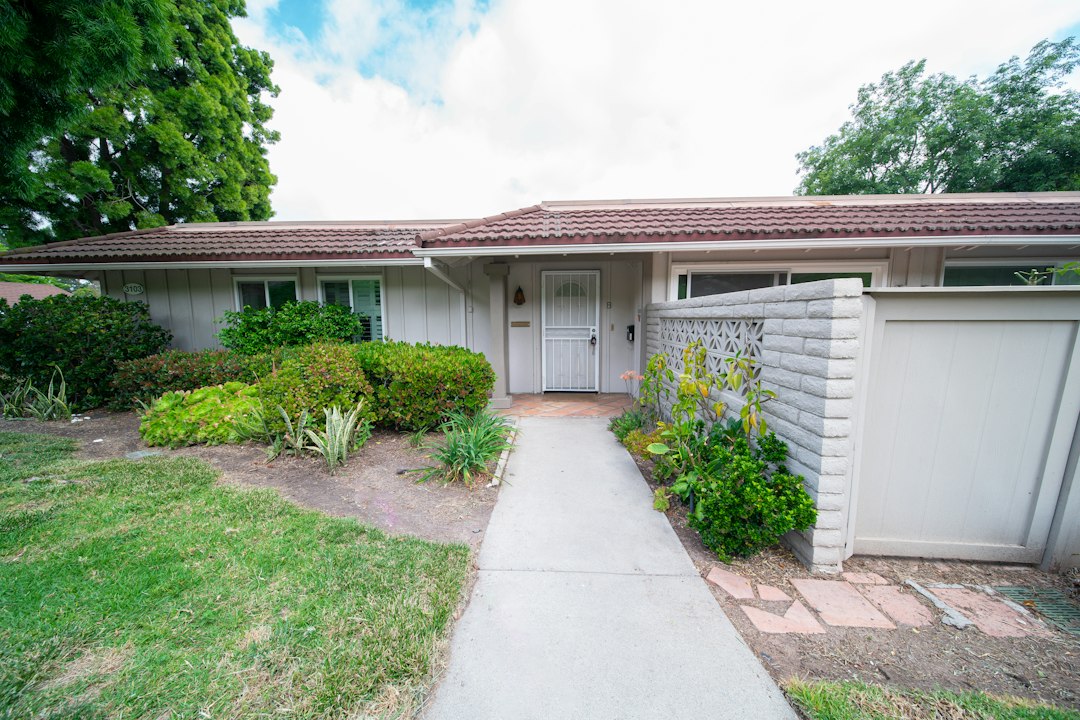
Filing Chapter 7 or Chapter 13 does not automatically mean losing the house. What decides that is a single number: the amount of equity California’s homestead exemption lets you keep out of the hands of the bankruptcy trustee.
Get the exemption amount and the filing choices right, and a trustee usually walks away from a house with ordinary equity. Get them wrong, and you can hand over equity you didn’t have to.
Two Exemption Systems, and You Only Get One
California is one of a handful of states that lets a debtor choose between two separate sets of exemptions when filing bankruptcy, and the choice is made once, for the whole case.
Code of Civil Procedure Section 703.140(a) sets the rule: pick System 1 (the “704” exemptions, built for judgment-debtor protection generally) or System 2 (the “703” exemptions, modeled on the old federal bankruptcy exemptions), and you cannot mix pieces of both.
A debtor who owns a house with real equity almost always wants System 1, because its homestead exemption dwarfs System 2’s.
System 2, under Section 703.140(b)(1), currently exempts a comparatively small amount of home equity — in the low five figures — plus an unused portion of that same exemption can be applied to other property if there’s no house to protect. It exists mainly for renters and debtors with little or no home equity. If you own real property with meaningful equity, System 2’s homestead almost never covers it.
What System 1 Actually Protects in 2026
Under Code of Civil Procedure Sections 704.710 through 704.730, System 1’s homestead exemption is not a flat number — it floats with housing costs in the county where the property sits.
The statute protects the greater of two figures: a fixed statutory floor, or the countywide median sale price for a single-family home in the prior calendar year, capped at a statutory ceiling. Both the floor and the ceiling adjust every January 1 for inflation under the California Consumer Price Index.
For 2026, that floor is $370,550 and the ceiling is $731,300. In a county where median home prices are high — much of coastal Los Angeles, Orange, and San Diego Counties qualify — the protected amount can land anywhere between those two numbers, pegged to the prior year’s countywide median.
In a lower-cost county, the exemption usually sits at the floor.
Either way, this is a different, far larger exemption than the old flat $75,000 / $100,000 / $175,000 schedule that applied before a 2021 law change replaced it — plenty of outdated articles online still quote those retired figures, so don’t rely on anything that doesn’t cite the current statute.
To qualify at all, the property must be your principal residence — you or your spouse must have lived there on the date any judgment lien attached, and continuously afterward until the court rules on the homestead. A second home, a rental, or a property you moved out of before filing does not get this protection.
The Federal Wrinkle: You Can’t Always Use the Full Amount
State exemption law doesn’t operate in a vacuum once you’re in federal bankruptcy court. Two provisions of the federal Bankruptcy Code can cut a debtor’s homestead protection down regardless of how generous California’s number is.
Under 11 U.S.C. § 522(p), a debtor who acquired the homestead property within roughly three and a half years (1,215 days) before filing can be capped to a federal dollar limit on the equity attributable to that recent purchase, no matter what the state exemption would otherwise allow — this is aimed squarely at people who buy an expensive house in a generous-exemption state shortly before filing to shield money from creditors.
Under 11 U.S.C. § 522(o), the cap applies even earlier if the debtor converted non-exempt assets into home equity (paying down a mortgage with cash, for instance) with the intent to hinder, delay, or defraud a creditor, regardless of how long they’ve owned the home.
Both caps carry exceptions for a homestead acquired with proceeds from selling a prior California homestead.
Because the dollar figure in these federal caps is itself adjusted periodically and the intent-based exceptions are fact-specific, anyone close to either trigger should get bankruptcy counsel to run the numbers before filing rather than assume the full state exemption applies.
Automatic Homestead vs. a Recorded Declaration
California actually has two distinct homestead protections, and bankruptcy filers sometimes confuse them.
The exemption described above, under Sections 704.710 through 704.730, is the “automatic” homestead — it applies by operation of law to your principal residence with no recording required, and it’s the one claimed on Schedule C of a bankruptcy petition.
A separate set of statutes, Sections 704.910 through 704.995, lets a homeowner record a “declared homestead” with the county recorder.
A declared homestead matters most outside bankruptcy — it protects proceeds from a voluntary sale against existing judgment liens in a way the automatic homestead alone does not always reach, and it requires the paperwork to be on file before the sale, not after.
Inside a bankruptcy case, you generally don’t need a recorded declaration to claim the Section 704.730 exemption amount, but if you’re also worried about a judgment creditor forcing a sale before you file, or about protecting sale proceeds in a transaction that closes outside the bankruptcy timeline, a recorded declaration is the belt-and-suspenders move worth asking your attorney about separately.
What Counts as Equity, and Why the Math Surprises People
“Equity” sounds simple — current value minus what’s owed — but the number that actually matters to a trustee or a Chapter 13 plan is narrower than most homeowners assume going in.
Start with a realistic current fair market value, not the Zestimate-style figure or the county assessor’s Proposition 13 assessed value, which is almost always lower than market value and legally irrelevant here.
Subtract every lien that would have to be paid off in a sale: the first mortgage, any second mortgage or HELOC balance, recorded judgment liens, a Franchise Tax Board or IRS tax lien if one is recorded against the property, and any unpaid property taxes.
Then subtract a reasonable estimate of the cost of selling — real estate commissions, escrow and title fees, and the county and city transfer taxes typically run somewhere around 8% of the sale price in a conventional listed sale.
What’s left after all of that is the equity the exemption has to cover.
Homeowners who skip the selling-cost deduction, or who use an optimistic value instead of what the house would actually fetch after repairs and marketing time, routinely overestimate how much equity is at risk — or underestimate it, if they assumed a stale, lower value from years ago.
Either mistake changes the filing strategy. This is also where a trustee’s math and a homeowner’s math most often diverge: the trustee has every incentive to use the highest defensible value and the lowest defensible selling-cost estimate, because that’s what makes a sale worth pursuing.
Avoiding a Judgment Lien That Eats Into the Exemption
A recorded judgment lien against the house doesn’t just sit there as a debt to pay off at closing — if it impairs the amount of equity the homestead exemption is supposed to protect, federal bankruptcy law gives the debtor an affirmative tool to deal with it.
Under 11 U.S.C. § 522(f), a debtor can file a motion to avoid a judicial lien (and certain non-purchase-money security interests in household goods, though that’s a separate issue) to the extent the lien impairs an exemption the debtor is entitled to claim.
The impairment calculation under Section 522(f)(2) adds up the lien, all other liens on the property, and the exemption amount, and compares that total to the property’s value — if the total exceeds the value, the judicial lien is avoided to the extent of the excess.
Debtors who have a judgment lien recorded against the house and never file this motion sometimes leave real equity exposed that the law would have protected for free.
This is a formal motion filed in the bankruptcy case, not something that happens automatically just because the exemption was claimed on Schedule C.
How This Plays Out in Chapter 7
In a Chapter 7 case, the trustee’s job is to find assets to sell for creditors. The house is only a target if there’s equity beyond what the homestead exemption, the mortgage balance, and the cost of sale together absorb.
Claim the exemption on Schedule C of the bankruptcy petition — this is not automatic, and a trustee or creditor can object within 30 days after the meeting of creditors under Federal Rule of Bankruptcy Procedure 4003(b) if they think the claimed amount is wrong.
The meeting of creditors — commonly called the 341 meeting after the Bankruptcy Code section that requires it — is scheduled roughly 21 to 50 days after the petition is filed.
The trustee asks the debtor questions under oath about assets, including the house: what it’s worth, what’s owed on it, and what the debtor believes the equity to be.
If the trustee’s own math shows equity beyond the exemption, the mortgage, and roughly 8% in estimated costs of sale, the house becomes an asset the trustee can administer — meaning sell, with the debtor’s exempt portion paid out first and the rest going to creditors.
If the math shows equity comfortably inside the exemption, the trustee typically abandons any interest in the property and the case proceeds without it being touched.
Debtors sometimes get the equity calculation wrong by using a listing estimate or an old tax-assessed value instead of current fair market value net of a realistic selling cost. A recent, defensible value matters, because the trustee’s incentive runs the other way — a thin equity cushion the debtor assumed was safe can look sellable once the trustee’s broker prices it more aggressively than the debtor expected.
How This Plays Out in Chapter 13
Chapter 13 doesn’t involve a trustee selling assets the way Chapter 7 does, but the homestead exemption still matters directly to the plan payment.
Under the “best interests of creditors” test in 11 U.S.C. § 1325(a)(4), unsecured creditors in a Chapter 13 plan must receive at least as much as they would have in a hypothetical Chapter 7 liquidation.
If a debtor has home equity beyond the exemption, that non-exempt equity sets a floor for what unsecured creditors must be paid through the plan — effectively, the debtor is paying to keep an asset a Chapter 7 trustee would have sold.
A homestead exemption large enough to cover all the equity means that floor is zero on account of the house, which is often the whole reason a homeowner with meaningful equity and a steady income chooses Chapter 13 over Chapter 7 in the first place.
Married Couples and Jointly Filed Cases
Only one homestead exemption applies per household, regardless of how many spouses or co-owners live there — California law does not double the exemption amount just because a married couple files a joint Chapter 7 or Chapter 13 case together.
What it does allow is for either or both spouses to claim the exemption against the same residence, and for the exemption to protect the equity whether title is held by one spouse alone or by both as community property.
Where this matters in practice is a case with one working spouse and significant separate debt belonging to the other — the homestead exemption generally still protects the shared residence’s equity up to the statutory amount regardless of whose name carries the debt, though the details depend on how title is held and whether the debt is separate or community.
This is a fact-specific question for an attorney, not a rule to apply from a blog post, but it’s worth raising early rather than assuming a single filer’s numbers apply the same way to a married household.
Proceeds From a Sale Stay Protected — For a Limited Time
If the house is sold — whether voluntarily during the case or by the trustee — the exempt portion of the proceeds doesn’t lose its protection the moment the sale closes.
California law carries the homestead exemption forward to the sale proceeds, but only for six months, and only if the money is kept identifiable and not commingled into ordinary spending. The intent behind the six-month window is to give someone time to reinvest in a new home.
Debtors who let exempt proceeds sit in a checking account and get spent down on living expenses can find the protection evaporates well before the six months runs out, simply because the money is no longer traceable as sale proceeds.
When Keeping the House Isn’t the Right Move
The exemption math sometimes points the other way.
If the equity is well beyond what System 1 protects, a Chapter 7 trustee has every incentive to sell, and a Chapter 13 plan that has to fund that non-exempt equity on top of past-due payments can turn into a payment the household genuinely cannot sustain for three to five years.
Dragging out a sale under those conditions usually costs more in trustee’s fees, interest, and uncertainty than it saves.
A homeowner with equity above the exemption who is also behind on the mortgage is often better served pricing a sale before filing, or selling during the case with trustee or court approval, than trying to outlast a liquidation the numbers don’t support.
This is also not a decision to make from a public records search of “comparable” bankruptcy outcomes — every county’s median home price, every debtor’s acquisition date, and every creditor’s claim is different, and a bankruptcy attorney needs the actual numbers to advise on it.
For how the homestead exemption works outside of bankruptcy — against ordinary judgment creditors and voluntary sales — see our general guide to the California homestead exemption. If you’re specifically weighing Chapter 7 against Chapter 13 with a house in the mix, we’ve separately covered what Chapter 7 means for selling a California house and how a Chapter 13 plan treats one in more detail.
Before You File
- Get a realistic, current value for the house — not a tax-assessed value or an old listing estimate
- Confirm the countywide median home price your exemption will be based on, and whether you’re near either federal cap trigger
- Have a bankruptcy attorney run the System 1 vs. System 2 comparison against your full asset picture, not just the house
- If equity is close to or beyond the exemption limit, get a second opinion on timing before the petition is filed
None of this is legal advice, and a bankruptcy attorney needs your actual numbers before you file. If the math points toward selling rather than fighting to keep the house inside bankruptcy, Cash Home Buyers CA can put a no-obligation cash offer in front of you quickly enough to work inside a filing or plan deadline, and coordinate directly with your attorney or trustee on timing.
You can also find Cash Home Buyers CA on our Google Business Profile.