
LA Rent Caps in 2026: Should Small Landlords Hold or Sell?
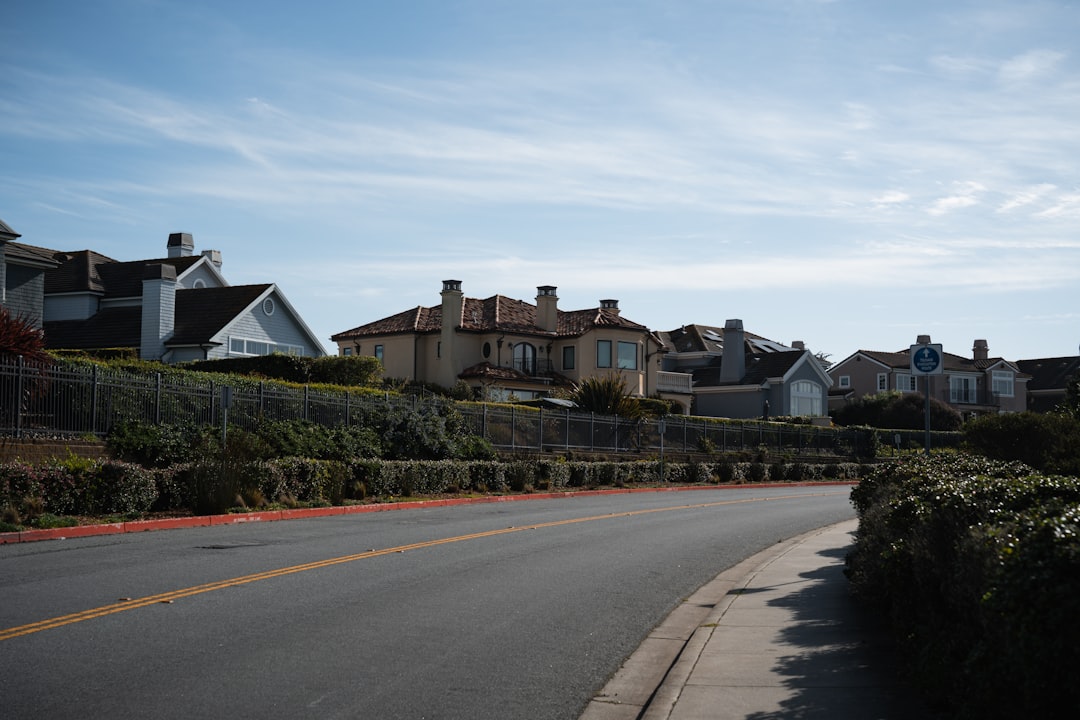
If you own a duplex, a fourplex, or a small apartment building in Los Angeles, you have probably noticed that capped rent increases and uncapped expenses do not move at the same speed. That does not automatically mean you should sell.
It means you should run the numbers with the real 2026 rules instead of a gut feeling. Here is where the caps stand right now, what changed this year, and a simple way to decide whether to hold or sell.
If your rental is a single-family house rather than a multifamily building, a city’s own tenant-protection ordinance may not even apply to you the way the caps above do — here’s how that exemption works in Glendale.
In Ventura County, the same single-family exemption trips up a lot of long-term landlords — see why the AB 1482 single-family exemption so often fails in Oxnard.
Where the rent caps stand in 2026
Which cap applies depends on the unit, not the owner. Check any City of LA address on ZIMAS (zimas.lacity.org) under the Housing tab.
| Rule | Covers | Allowed increase now |
|---|---|---|
| City of LA RSO | Most rental units in buildings built on or before October 1, 1978 | 3% for July 1, 2025 to June 30, 2026, and 3% for July 1, 2026 to June 30, 2027 |
| AB 1482 (state law) | Many non-RSO units more than 15 years old | 5% plus regional CPI, max 10%. For Los Angeles: 8% from August 1, 2025 to July 31, 2026, and 8.7% from August 1, 2026 to July 31, 2027 |
| Exempt | Newer buildings; single-family homes and condos owned by individuals with the required lease notice | No state cap, but City of LA eviction protections may still apply |
What changed for the RSO in 2026
A city ordinance that took effect February 2, 2026 rewrote the RSO formula. The annual increase is now 90% of the local CPI average for the 12 months ending September 30, with a floor of 1% and a ceiling of 4%. Under the old rules the floor was 3% and the ceiling 8%. The same ordinance:
- Ended the additional percentage owners could add when they pay for tenants’ gas or electricity. RSO rent increase notices served on or after February 2, 2026 cannot include it.
- Ended the 10% rent increase for an additional dependent added to a tenancy. A 10% increase is still allowed for an additional tenant who is not a dependent.
LAHD has confirmed the RSO increase stays at 3% through June 30, 2027. Future years will follow the new formula, so a 4% year is now the most an RSO owner can expect, and a low-inflation year could mean 1% or 2%.
How AB 1482 works
For covered non-RSO units, rent can rise by up to 5% plus the April-to-April change in the regional CPI, never more than 10% in a 12-month period, measured from the lowest rent charged in the prior 12 months. Increases can be split into no more than two steps a year.
Separately, in the City of LA, the Just Cause Ordinance protects most non-RSO tenants once their first lease ends or six months pass, whichever comes first.
Under any of these rules, you need 30 days’ written notice for an increase of 10% or less and 90 days for more than 10%.
A worked cash-flow example
Here is a hypothetical RSO fourplex the owner has held for many years, with an older loan still in place. The numbers are illustrative, not market data. Plug in your own.
| Line item | Annual amount |
|---|---|
| Rent: 4 units averaging $1,700 a month | $81,600 |
| Property tax (based on an older Prop 13 assessment) | -$9,000 |
| Insurance | -$7,200 |
| Repairs and maintenance | -$8,000 |
| Owner-paid water, trash, common electric | -$5,400 |
| Vacancy and credit loss (2%) | -$1,632 |
| Capital reserves (roof, plumbing, paint) | -$4,000 |
| RSO and SCEP fees, net of allowed pass-through | -$215 |
| Net operating income | $46,153 |
| Loan payments | -$15,600 |
| Cash flow before income tax | $30,553 |
Next year at 3%
If every unit gets the full 3%, rent rises $2,448. Now assume insurance goes up 15% ($1,080), repairs 5% ($400), utilities 6% ($324), and property tax 2% ($180). Expenses rise $1,984. Net improvement: about $464 for the year. One unexpected sewer line repair erases it. That is the squeeze most small LA owners feel.
Compare to a sale
Suppose a buyer values the building at a 5.5% cap rate on that $46,153 of net income. That is roughly $839,000. Subtract around 6% for selling costs and transfer taxes (about $50,000) and a $300,000 loan payoff, and you are left with about $489,000 before income taxes.
Now compare. Holding gives about $30,500 a year of cash flow on roughly $539,000 of equity, a 5.7% return before your time, plus loan paydown and whatever the property appreciates. Selling turns that equity into cash, minus capital gains tax and depreciation recapture, which can be large on a long-held building. The real question is what that after-tax cash could earn elsewhere, with how much less work and risk.
The same building under AB 1482 instead of the RSO could raise rents up to 8.7% this cycle, about $7,100 on $81,600, which changes the picture a lot. That is why the first step is always confirming which rule applies.
A hold-or-sell decision framework
Answer these honestly:
| Question | Leans hold | Leans sell |
|---|---|---|
| Is the property cash-flow positive after realistic reserves? | Yes, with room to spare | Barely, or negative |
| Are big capital items coming (roof, sewer, retrofit, electrical)? | No, recently done | Yes, within 2 to 3 years |
| How far below market are rents? | Close to market | Far below, with long-term tenants |
| Do you have a low fixed-rate loan? | Yes, and it would be costly to replace | No loan, or a loan that adjusts soon |
| How big is the tax bill on a sale? | Large, and you have no plan to defer it | Manageable, or you will use a 1031 |
| How much time does management take? | Little, or you enjoy it | Too much, and paid management would wipe out the margin |
| What do you need the equity for in 5 years? | Nothing specific | Retirement, family, or another investment |
If most answers fall in one column, that is your direction. If they are split, it may make sense to hold while you fix the weakest point, such as refinancing, recovering a capital improvement through LAHD’s pass-through program, or negotiating a lawful voluntary move-out on one unit. Our guide to tenant buyout costs in Los Angeles covers that last option.
If you decide to sell
Know the costs that are specific to LA. Most small buildings sell well below the Measure ULA threshold, but if yours is above $5.4 million (as of July 1, 2026), the city adds a 4% transfer tax on the full price, rising to 5.5% at $10.9 million. Our guide to selling an RSO apartment building walks through that and what buyers underwrite.
If you want to stay invested in real estate, a 1031 exchange can defer the capital gains. And if you are weighing ending tenancies before a sale, read about what a no-fault eviction requires first.
A sale is not a legal reason to evict, and no-fault routes carry relocation payments and LAHD filings. Landlords outside the City of LA, such as in Long Beach, face their own version of this — see what Long Beach’s own tenant relocation ordinance requires before a no-fault termination.
A CPA can run the after-tax numbers on both paths, and a landlord-tenant attorney can confirm what your leases and the rules allow. Those two conversations usually settle the question.
Common questions
Can I bank RSO increases I skipped in past years?
No. The RSO annual increase is not cumulative or retroactive. If you skip a year, that increase is gone.
Is the RSO increase for 2026-27 lower under the new formula?
It stays at 3% for July 1, 2026 through June 30, 2027. The new 1% to 4% formula will drive increases after that.
Do I still get an extra 1% when I pay utilities?
Not anymore. For RSO rent increase notices served on or after February 2, 2026, the annual increase cannot include any additional percentage for utilities.
Get a real number to compare
A hold-or-sell decision is easier with an actual offer in hand. We either buy directly or bring a vetted cash buyer, and we buy LA rentals as-is with tenants in place, so nobody has to move for you to find out what the property is worth. See our sell rental property in Los Angeles page, call (424) 435-2326, or request a no-obligation offer online.
Want to see what other California sellers say about working with us? Find Cash Home Buyers CA on Google for reviews, or call us at (424) 435-2326.