
LA’s New Amnesty Program Lets You Legalize an Unpermitted ADU Before You Sell
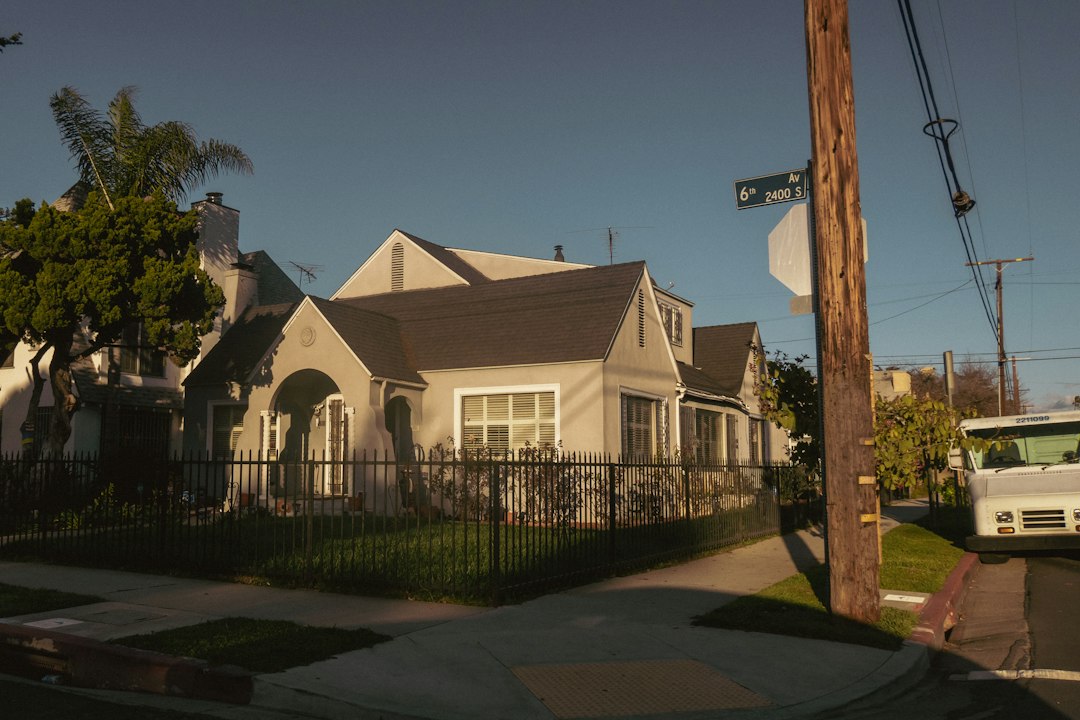
If your Los Angeles property has an unpermitted granny flat, converted garage, or back-house built before January 1, 2020, the city now has a streamlined path to legalize it instead of forcing a full teardown or a stalled sale — but the program only applies to units that meet a specific set of safety conditions, and plenty of common Los Angeles setups don’t qualify.
The program is LADBS Information Bulletin P/BC 2026-161, which implements state law AB 2533 (codified at Government Code section 66311.7).
It lets a homeowner permit an existing, previously unpermitted accessory dwelling unit or junior ADU through a streamlined review rather than the standard plan-check process that assumes the structure doesn’t exist yet.
For a seller, the difference between an unpermitted unit and a legalized one is often the difference between a buyer walking away after inspection and a buyer closing on schedule.
Why This Matters More in Los Angeles Than Almost Anywhere Else
Los Angeles has one of the largest inventories of unpermitted dwelling units in the state — a legacy of decades of informal garage conversions, back-house additions, and basement apartments built without permits, many of them now occupied as long-term rentals.
Those units routinely surface during a sale, either because a buyer’s inspector flags obviously non-permitted construction, because the title report or a prior disclosure mentions it, or because the listing itself advertises “income potential” from a unit the city has no record of.
Before AB 2533, legalizing one of these units after the fact typically meant a full plan-check submission treating the work as brand new construction — exposing load-bearing assumptions, electrical panels, and plumbing runs that were never inspected to current code, often at a cost that made legalization impractical for an older, modest unit.
State lawmakers passed AB 2533 specifically because that older process was discouraging exactly the outcome cities wanted: more legal housing units, added to the existing stock without demolishing anything.
Rather than treating a 1960s garage conversion as if it were a brand-new structure being built today — with all the modern code requirements that implies — the streamlined bulletin lets LADBS evaluate the unit against a narrower, more realistic safety checklist built for existing construction.
That distinction, between “built to today’s code from scratch” and “verified safe as it already stands,” is the whole reason this program exists and the whole reason it doesn’t apply to every type of unpermitted structure in the city.
Who Actually Qualifies
The bulletin’s eligibility rules are specific, and a unit has to clear all of them to use the streamlined path rather than the standard process:
- The unit must have been built before January 1, 2020, and meet the state’s definition of an ADU or JADU
- The lot must be zoned for residential use
- The building must not have a basement
- The building must not exceed one story
- The site slope where the unit sits must not be steeper than a 5:1 ratio (20%)
- The site must not sit in an Alquist-Priolo earthquake fault zone, a landslide hazard zone, or a liquefaction zone
- The unit must not be attached to an apartment building or a commercial building
- The building must use light-frame construction — not masonry, steel, or other non-conforming materials
- The unit must maintain at least 3 feet of separation from another building on the same site if sprinklered, or 5 feet if not
A second-story addition built over a garage, a unit on a steep hillside lot, or a converted basement apartment — all common in parts of Los Angeles — fall outside this particular streamlined bulletin, even though they might still have other paths to legalization under the city’s standard process, which the bulletin itself points sellers toward under a separate publication, Bulletin P/BC 2026-150, for projects that don’t fit this narrower scope.
What the Process Actually Involves
A homeowner can start with an optional, confidential third-party inspection: a California-licensed contractor evaluates the unit against a standardized checklist (Form AB2533-01). That inspection doesn’t go to LADBS and doesn’t replace the department’s own inspection later — it exists so an owner can find out privately whether a unit is likely to pass before committing time and money to the formal application.
The formal application is submitted online through the city’s ePlanLA portal, or in person by appointment, as a “B” permit application that explicitly references AB 2533 in the work description.
The homeowner has to provide proof the unit was actually built before January 1, 2020 — tax records, aerial imagery, or utility hookup dates are typical evidence — along with a standard-notes form (AB2533-03), any certificate of occupancy or permit history for the main house, and a site plan (Form AB2533-02) showing dimensions, setbacks, easements, pools or spas, driveways, and the unit’s exact footprint.
Once those documents are in, city staff runs a plan check that verifies the paperwork, confirms sprinkler status and zoning, and generates the clearances the project needs — potentially including the Department of Water and Power if the structure sits in or within 10 feet of a utility easement, the Bureau of Engineering for sewer availability and address assignment (required for every ADU and JADU regardless of program), and the Fire Department for hydrant access, depending on the site.
After the permit issues and the unit passes inspection against the same standardized checklist, LADBS issues a certificate of occupancy, and the unit officially exists on the city’s records for the first time.
The Fee Break That Makes This Worth Doing
Beyond the streamlined paperwork, the financial incentive is real.
Units going through this program are exempt from several fees that would otherwise apply to a newly permitted unit: impact fees, connection fees, and capacity charges, including the city’s Residential Development Fee and Dwelling Unit Construction Tax, along with Park Fees and the Affordable Housing Linkage Fee.
On an older, modest ADU, those exemptions alone can be worth more than the plan-check and permit fees combined.
The one notable carve-out: Los Angeles Unified School District fees still apply to any ADU over 500 square feet, and utility infrastructure improvements needed to meet health and safety standards can still be charged where state law separately authorizes it.
What Happens if the Unit Doesn’t Qualify
The bulletin doesn’t walk through a formal appeal process for a unit that fails one of the eligibility conditions — a basement unit, for instance, or one on a steep slope.
Those projects fall back to the standard legalization process under the city’s broader unpermitted-structure guidance, which is a longer, more document-intensive path that treats the existing construction more skeptically and generally costs more in both fees and professional time.
A seller who assumes a back-unit automatically qualifies for the streamlined path because it’s “basically an ADU” should confirm the specific site conditions — slope, hazard zone status, story count, separation distance — before counting on this program rather than the slower one.
A Worked Example
Picture a single-story 1948 bungalow in Van Nuys with a detached garage converted into a one-bedroom unit sometime in the 1970s, never permitted, flat lot, light-frame wood construction, no basement, and roughly 6 feet of separation from the main house.
That unit clears every condition in the bulletin: built well before 2020, single story, flat lot (well under the 20% slope threshold), no fault or liquefaction zone issue typical of most of the San Fernando Valley floor, detached from any apartment or commercial structure, standard wood framing, and separation beyond the 3- or 5-foot minimum either way.
The owner orders the optional private inspection, gets a general green light, then files the “B” application through ePlanLA citing AB 2533, submits the standard-notes form and a site plan, and pays the plan-check fee.
Because the project is exempt from the Residential Development Fee, the Dwelling Unit Construction Tax, and Park and Affordable Housing Linkage Fees, the owner’s main out-of-pocket costs are the plan-check and permit fees themselves, plus whatever the LADWP, sewer, and fire clearances require — plus any physical corrections the inspection turns up, which for a 1970s garage conversion often means updating electrical to current safety standards even though the structure itself stays as built.
Now picture the same bungalow, but the converted unit sits in the hills above Sylmar on a lot with a 25% slope. That one condition — slope over the 20% threshold — takes the unit out of this streamlined bulletin entirely, regardless of how sound the construction otherwise is, and the owner has to pursue the standard legalization process instead, which typically means a longer timeline and the fees this bulletin would have exempted.
How This Differs From California’s Broader ADU Law
AB 2533 and this LADBS bulletin are narrower than the statewide ADU framework most people have heard about, which traces back to SB 13 and a series of follow-on bills loosening setback, parking, and size rules for newly built ADUs going forward.
Those laws make it easier to build a new, permitted ADU from scratch. AB 2533 solves a different problem: what to do about a unit that was already built, often decades ago, without ever going through that process at all.
The two sets of rules can interact — a unit legalized under this bulletin still has to meet the basic safety requirements that apply to any occupied dwelling — but a seller researching “ADU law” online is likely to find mostly new-construction guidance that doesn’t address the amnesty question directly, which is part of why this specific bulletin is worth knowing about by name.
Financing and Appraisal Consequences
An unpermitted unit creates real friction for a buyer trying to finance the purchase.
Most conventional appraisers either exclude an unpermitted unit’s square footage and income from the appraisal entirely, or flag it as a condition that has to be resolved before the loan can close, and some lenders decline to count rental income from a unit that doesn’t appear in city records at all.
That friction tends to narrow the buyer pool to cash buyers and investors comfortable with the risk, which usually shows up as a lower accepted price than an equivalent, fully legal property would draw.
A seller who completes the AB 2533 process before listing typically opens the sale up to conventional buyers who can finance the purchase with the ADU’s value and income counted normally, which is often the single biggest reason legalizing before listing pencils out even after accounting for the time and fees involved.
Disclosure Still Comes First
None of this changes a seller’s basic disclosure obligation under California’s Transfer Disclosure Statement requirements. An unpermitted unit, whether or not it’s eligible for this program, generally has to be disclosed to a buyer regardless of whether the seller intends to legalize it before closing.
A seller who legalizes the unit before listing can usually market it honestly as a legal, income-producing ADU, which tends to support a higher price than an “as seen, income potential only” disclosure that puts the risk and the paperwork on the buyer after closing.
Timing Against a Sale
The streamlined process is faster than the standard one, but it still isn’t instant — plan check, clearances from multiple city departments, and a final inspection all take real calendar time, and the bulletin itself states no fixed deadline for completion.
A seller on a tight timeline has to weigh whether to delay listing until the certificate of occupancy is in hand, or list now with full disclosure of the unit’s unpermitted status and let a motivated buyer either take on the legalization themselves or negotiate a price reduction that reflects the cost and uncertainty of doing it after closing.
The clearances tend to be the long pole in the schedule rather than the paperwork itself.
A property near an active utility easement, or one that needs the Bureau of Engineering to confirm sewer capacity before assigning the unit its own address, can wait on a department’s queue for weeks beyond what the plan-check review alone would take.
Asking LADBS or a permit expediter for a realistic current timeline — rather than the bulletin’s general description of the steps — is the only way to actually plan a listing date around it, and building in a buffer beyond whatever estimate a contractor first gives is usually the safer assumption for anyone trying to coordinate a permit timeline with an escrow closing date, especially when more than one department clearance is needed at once.
When Selling As-Is Beats Waiting on a Permit
For some sellers, running the AB 2533 process before listing is clearly worth it — the fee exemptions are generous, the paperwork is more forgiving than the standard process, and a legalized unit markets and appraises better than an unpermitted one.
For others, particularly a seller who needs to close quickly, doesn’t want to manage a multi-department city process, or has a unit that likely fails one of the eligibility conditions, waiting on a permit before selling just adds months to the timeline for an uncertain outcome.
In that situation, selling as-is with full disclosure to a buyer who already factors unpermitted work into their offer is often the faster, more predictable path, even though it typically means a lower headline price than a fully legalized property would command.
First Steps for an LA Seller With an Unpermitted Unit
- Pull any permit history for the property through LADBS’s online records to see what the city already has on file
- Check the unit against every eligibility condition in the bulletin — built before 2020, no basement, single story, slope under 20%, no hazard zone, not attached to an apartment or commercial building, light-frame construction, proper separation distance
- Consider the optional confidential third-party inspection before committing to a formal application
- Get a straight answer from a contractor or permit expediter on realistic timeline and cost before deciding whether to legalize before listing or disclose and sell as-is
If the unpermitted unit, the timeline, or the disclosure requirements make a traditional listing feel like more trouble than it’s worth, Cash Home Buyers CA buys Los Angeles houses as-is, unpermitted additions included, and can make a no-obligation cash offer without requiring the legalization process to be finished first.
Learn more on our homepage, see how an as-is sale works for an LA seller specifically on our sell house as-is in Los Angeles, or see our Google listing to find Cash Home Buyers CA.