
SB 9 Urban Lot Split in California: What Sellers Should Know
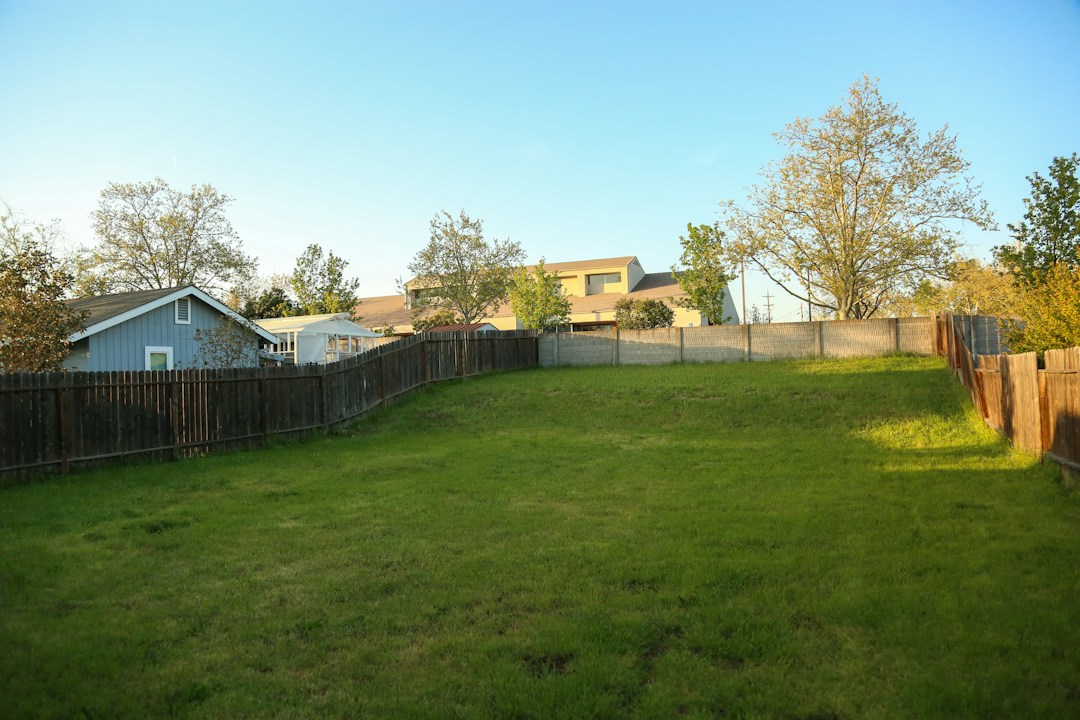
If you own a single-family lot in California that’s larger than your neighbors’, state law may let you split it into two lots — and put up to four homes on what used to be one — without ever going before a planning commission.
That’s the practical effect of Senate Bill 9, the 2021 law that forced every city and county in the state to approve qualifying lot splits and small housing developments as a matter of right, rather than as a discretionary decision a city council could deny on a whim.
For sellers sitting on an oversized parcel, understanding what SB 9 actually allows — and where it doesn’t apply — can change whether the smartest move is to sell the lot as-is or split it first.
What SB 9 Actually Does
SB 9 added two sections to the Government Code: Section 65852.21, which requires ministerial approval of a housing development with up to two primary residential units on a single-family lot, and Section 66411.7, which requires ministerial approval of a parcel map splitting one single-family lot into two. “Ministerial” is the operative word — it means a staff planner checks the application against objective, written standards and approves it if it qualifies, with no hearing, no discretionary judgment, and no California Environmental Quality Act review, because CEQA by its own terms doesn’t apply to ministerial government actions.
A city can still deny an SB 9 application, but only on a narrow basis: a written finding, based on a preponderance of the evidence, that the project would cause a specific, quantifiable, unavoidable impact to public health, safety, or the physical environment, with no feasible way to mitigate it. In practice, that’s a high bar few cities have successfully cleared.
Combined, the two provisions let an eligible lot be split into two parcels, with up to two residential units allowed on each resulting parcel — meaning up to four homes total where state law previously guaranteed only one. The law doesn’t require a city to allow all four; it sets a floor a city cannot build regulations below, not a ceiling on what a more permissive local ordinance might allow.
Which Lots Actually Qualify
Eligibility is narrower than the headline “lot splits are now legal statewide” suggests. The parcel has to sit in a zone whose primary purpose is single-family residential use — a multifamily, commercial, mixed-use, or agricultural zone doesn’t qualify even if a single-family home happens to sit on it today.
Under Section 66411.7, each resulting parcel from the split has to be at least 1,200 square feet, and neither resulting parcel can be smaller than 40 percent of the original lot’s area, which in practice means most splits land somewhere close to an even 50/50 division rather than one large parcel and one sliver.
A parcel also cannot be split a second time under this statute — once an owner has used Section 66411.7 on a lot, that same lot is done, which closes off a strategy of repeatedly re-splitting to multiply parcels over several years.
A city is also not required to approve a split where an adjacent lot was already split by the same owner, or by someone acting in concert with that owner, which closes a similar loophole between neighboring parcels.
A parcel is disqualified outright if it sits on farmland, in a wetland, in a high fire-hazard severity zone, in a flood plain, in a conservation area or wildlife habitat, or under a conservation easement — the same environmental-constraint categories California already uses for the separate SB 35 streamlined-approval law.
It’s also disqualified if the property is in a historic district, listed on the State Historic Resources Inventory, or designated as a local landmark.
And the anti-displacement provisions block a split on any lot where doing so would require demolishing or altering deed-restricted affordable housing, rent-controlled housing, or housing that’s had a tenant living in it at any point in the three years before the application — which matters a great deal for an owner of a rental property who assumes a vacant unit automatically clears that bar.
The Owner-Occupancy Affidavit Most Owners Don’t Expect
Unlike the two-unit development provision in Section 65852.21, which carries no residency requirement at all, an applicant pursuing a lot split under Section 66411.7 has to sign an affidavit stating they intend to occupy one of the housing units on one of the resulting parcels as their principal residence for at least three years from the date the lot split is approved.
Qualified community land trusts and certain nonprofit affordable-housing organizations are exempt from this requirement, but an ordinary individual property owner is not.
Local housing researchers who have tracked SB 9 applications since the law took effect have pointed to this affidavit specifically as a meaningful drag on how many lot splits actually get filed, since it rules out a pure investor play where the owner never intends to live on either resulting parcel.
For a seller, this detail matters directly: if your plan is to split your lot, sell one half, and move on without ever living there, Section 66411.7 as written doesn’t accommodate that unless you qualify for one of the narrow nonprofit exemptions.
Selling the whole, unsplit lot to a buyer who intends to do the split and occupy a unit themselves is a different, and for most sellers more realistic, path to the same underlying value.
There is a meaningful practical gap, too, between the two-unit development provision and the lot-split provision that owners sometimes blur together.
Building a second primary unit on your existing lot under Section 65852.21 carries no owner-occupancy requirement at all — you can build it and rent out both units, or sell the whole improved property, without ever living on-site.
It’s specifically the act of subdividing the lot into two separately owned parcels under Section 66411.7 that triggers the affidavit.
An owner who wants the value of a second unit without the occupancy commitment, in other words, may be better served pursuing the duplex route on the existing single lot rather than the split route, depending on what the local zoning actually allows for lot size and unit placement.
The 60-Day Clock, and What a City Can and Can’t Require
Because review is ministerial, a local agency has to act on a complete SB 9 application quickly.
Local implementation guidance and city planning departments across the state consistently describe this as a 60-day decision window once an application is deemed complete — consistent with the general ministerial-review timelines the Housing Accountability Act and the Permit Streamlining Act impose on housing development applications statewide, both of which the California Department of Housing and Community Development has confirmed apply to SB 9 projects.
Within that review, a city can apply its own objective development, subdivision, and design standards — things like roof pitch, exterior materials, or minimum lot depth — but only so long as doing so doesn’t physically prevent either of two outcomes the statute guarantees: up to two units on the resulting parcel, and each of those units being allowed to be at least 800 square feet.
Any local standard that would block those two outcomes has to be modified or waived for the SB 9 project specifically.
The one standard no city can soften below, nor make stricter than, is the four-foot maximum side and rear setback the statute itself sets — a city may choose a smaller setback requirement, but cannot impose a larger one, and existing single-family zone setbacks that run wider than four feet simply don’t apply to a qualifying SB 9 project.
There are two narrower exceptions where a city keeps more latitude.
It can still require a setback for an entirely new structure that isn’t being rebuilt in the same footprint as something already standing, and it isn’t required to waive a setback for a structure being reconstructed somewhere other than its existing location and dimensions.
Outside those two carve-outs, though, the general rule holds: a local agency that wants to apply a standard beyond what SB 9 allows has to show that standard doesn’t physically preclude the two units or the 800-square-foot minimum, and if it can’t make that showing, the standard has to give way for the SB 9 application specifically, even while continuing to apply to every other kind of project in that same single-family zone.
State Enforcement Has Teeth Now
Assembly Bill 434, signed in 2023, gave HCD direct enforcement authority over Sections 65852.21 and 66411.7 starting January 1, 2024. Since then, HCD has issued technical assistance letters to multiple California cities — including Fort Bragg in February 2025 and Laguna Beach in September 2024 — specifically correcting local ordinances that conflicted with SB 9’s ministerial-approval mandate.
For a seller or buyer dealing with a city that seems to be slow-walking or discretionarily reviewing what should be a staff-level approval, this enforcement history is useful leverage: a jurisdiction that denies or delays a qualifying application outside the statute’s narrow findings-of-denial standard is now operating against an area where the state has shown it will intervene.
That enforcement backdrop also matters for a seller trying to gauge how reliable a given city’s SB 9 process actually is in practice.
A jurisdiction with a published technical assistance letter on file has, by definition, already been caught applying the law too narrowly at least once — which doesn’t necessarily mean its current process is still deficient, but is a reasonable prompt to ask the planning department directly how it’s handling applications today rather than assuming the ordinance on the books reflects current practice.
How This Shows Up for a Seller, Not Just a Developer
Most coverage of SB 9 is aimed at homeowners who want to build on their own lot.
The more common situation for a seller is different: you own a larger-than-typical single-family lot, you’re not interested in becoming a developer or living through years of construction, and you want to know whether the lot’s SB 9 potential should change your asking price or your marketing.
The honest answer is that it depends heavily on local zoning context — a lot that clears every SB 9 eligibility test in a desirable coastal city can be worth substantially more to a buyer who will do the split than the same square footage in a market where small-lot infill product isn’t in demand.
That is a real, and sometimes significant, value driver that a straightforward comparable-sales approach can understate if the appraiser or agent pulling comps isn’t accounting for the lot’s actual subdivision potential separately from its existing single-family use.
It cuts the other way just as often.
A lot that looks big enough on paper but sits in a high fire-hazard severity zone, carries a conservation easement from a prior owner, has had a long-term tenant in the last three years, or already had a sibling parcel split off by the same family years ago, may not qualify at all — and a seller who markets the property as “SB 9 potential” without confirming eligibility first risks promising a buyer something the law won’t actually deliver.
There’s also a disclosure dimension sellers sometimes overlook.
If you’ve already filed, or even informally discussed, an SB 9 application with the city — a pre-application meeting, a feasibility inquiry, correspondence about the owner-occupancy affidavit — that’s the kind of material fact a buyer would reasonably want to know before making an offer, even if you never completed the process.
The same goes for any environmental constraint finding a prior survey turned up, such as a flood zone determination or a wildfire-severity designation, since that same finding is exactly what would disqualify the lot from SB 9 eligibility and is independently the kind of hazard information California’s Natural Hazard Disclosure Statement law already requires a seller to disclose regardless of whether a lot split is ever discussed.
Where a Cash Sale Fits, and Where It Doesn’t
Selling to a cash buyer doesn’t make SB 9 eligibility relevant or irrelevant on its own — the lot either qualifies or it doesn’t, regardless of how the buyer finances the purchase.
What a cash, as-is sale genuinely helps with is avoiding the cost and time of actually pursuing the split yourself before selling.
Filing a lot-split application, satisfying the owner-occupancy affidavit, and carrying a property through construction on one or both resulting parcels is a multi-year undertaking most sellers — particularly those dealing with an inherited property, a relocation, or simply wanting to be done with ownership — have no interest in taking on.
In that situation, selling the unsplit lot as-is to a buyer who is positioned to pursue the split themselves, at a price that reflects the lot’s underlying SB 9 potential, usually makes more sense than trying to capture that value by becoming a developer first.
Where a direct sale is the wrong call is when the SB 9 upside is large and the owner has the time, equity, and appetite to pursue the split personally — in that scenario, doing the ministerial approval work yourself before listing, or even completing construction on a second unit, will typically capture more value than selling the raw lot and letting a buyer capture the upside instead.
What to Check Before Assuming Your Lot Qualifies
- Confirm your parcel sits in a zone whose primary designation is single-family residential, not just a zone that happens to allow a single-family use
- Check whether the lot, or an adjacent lot under the same ownership, has ever been through an SB 9 split before
- Rule out farmland, wetland, high fire-hazard, flood, conservation-easement, and historic-district designations with your local planning department
- Confirm no unit on the property has had a tenant in the past three years, or get clear on how that history affects eligibility before marketing the lot’s split potential
Every statutory reference above comes from California Government Code Sections 65852.21 and 66411.7, as summarized in the California Department of Housing and Community Development’s own SB 9 fact sheet, current as of its most recent update; confirm your specific parcel’s zoning, environmental constraints, and local objective standards directly with your city or county planning department, since implementation details and local ordinances vary even though the underlying state mandate does not.
If an existing structure on the property has unpermitted work, that’s a separate issue from SB 9 eligibility and should be evaluated and disclosed on its own terms.
If you’re sitting on a larger lot and trying to figure out whether its SB 9 potential is worth pursuing yourself or better captured through a straightforward sale, Cash Home Buyers CA can make a no-obligation cash offer that accounts for a property’s actual development potential, not just its existing square footage. You can read more about how we evaluate properties on our Google Business Profile.