
What Is a Nuisance Abatement Lien in California?
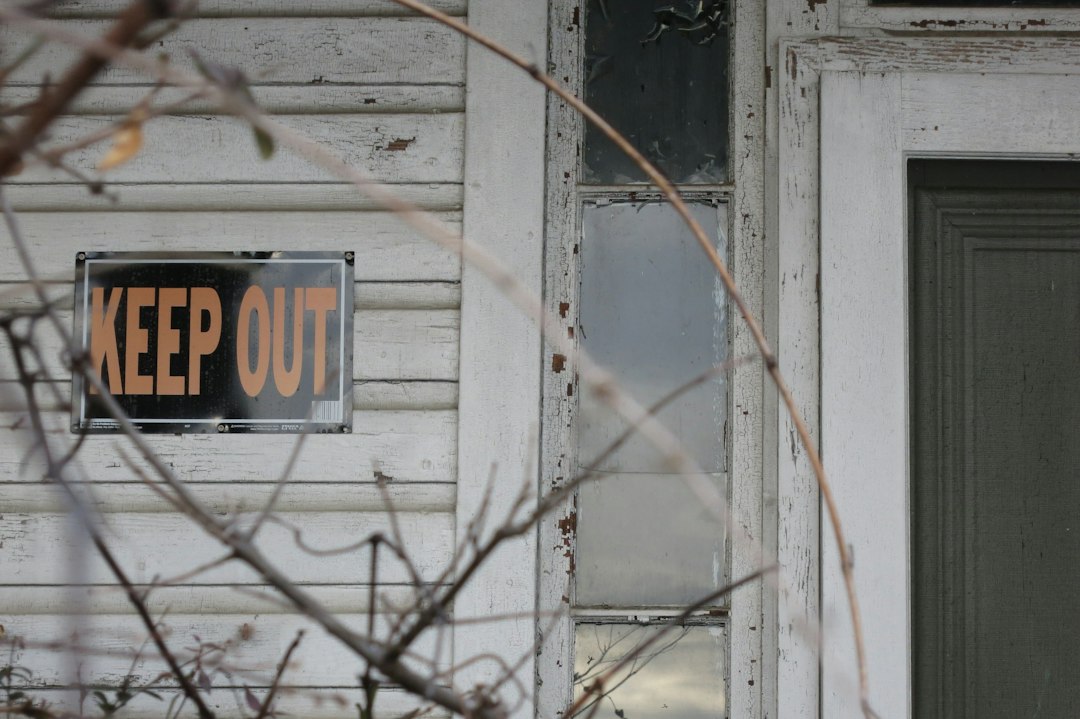
A nuisance abatement lien is a charge a California city or county records against a specific property to recover what it spent cleaning up, boarding up, or tearing down a hazard the owner did not fix.
Once recorded, it attaches to the property itself — not just to the owner personally — and it has to be dealt with before the house can transfer with clear title. Few sellers see one coming, because it usually starts as a code enforcement notice, not a lawsuit.
What Counts as a “Nuisance” Under the Statute
California Government Code Sections 38771 through 38775 give every city’s legislative body authority to declare certain conditions on private property a public nuisance and to order the owner to abate — that is, fix or remove — the condition.
In practice, cities adopt their own municipal code chapters defining what qualifies: a structure that is dangerous, substandard or a fire hazard; accumulated trash, debris or overgrown vegetation; an illegally converted unit; graffiti; or a building that has been boarded up and vacant long enough to attract squatters or trespassers.
The statewide statute sets the outer boundary of what a city may do; the specific list of violations always comes from that city’s own municipal code, which is why the conduct that triggers a notice in one California city can look different from the next.
If the owner does not abate the condition after proper notice, the city has the authority to do the work itself — or hire a contractor to do it — and then bill the owner for the actual cost, plus administrative overhead, inspection fees and sometimes attorney’s fees. It is the unpaid portion of that bill that becomes the lien.
How Unpaid Abatement Costs Turn Into a Recorded Lien
Government Code Section 38773.1 is the specific statute that lets a city’s legislative body adopt an ordinance establishing a lien procedure to collect abatement and related administrative costs.
Before the lien can be recorded, the statute requires the city to serve notice on the owner of record — based on the most recent equalized assessment roll or supplemental roll, whichever is more current — in the same manner as a summons in a civil lawsuit, under Code of Civil Procedure Section 415.10 and the related sections that follow it.
If the owner cannot be found after a diligent search, the city may instead post notice on the property itself for ten days and publish it in a newspaper of general circulation in the county where the property sits.
Only after that notice requirement is satisfied can the city record the lien with the county recorder in the county where the property is located.
The recorded lien has to specify the dollar amount, the agency imposing it, the date of the abatement order, the property’s street address, legal description and assessor’s parcel number, and the owner’s name and address — the same level of specificity as a mechanics lien or a judgment lien, because California gives only a short, defined list of parties the authority to record a lien against a home, and a city acting under this statute is one of them.
The administrative record behind the lien usually starts months earlier than the recording date.
A typical sequence runs: an initial inspection and notice of violation, a compliance deadline of 30 to 60 days, a re-inspection that finds the condition unresolved, a notice and order to abate that is itself appealable to a hearing officer or the city council within a short window (commonly 10 to 15 days), and only after that appeal period closes — or an appeal is heard and denied — does the city move to perform or contract the actual abatement work.
Each of those steps generates its own paper trail, and a seller or title company untangling a lien later usually has to request the entire file, not just the final invoice, because the lien amount is only as good as the underlying order that authorized it.
Why Its Priority Matters More Than Its Size
From the moment it is recorded, Section 38773.1(c) gives a nuisance abatement lien “the force, effect, and priority of a judgment lien.” That single sentence is the reason this lien matters even when the dollar amount is modest.
A judgment lien attaches to real property and generally has to be satisfied before title can transfer cleanly, and a title company will not insure a sale with an outstanding lien of judgment-lien priority sitting on record.
Unlike a mortgage, which the buyer and seller negotiate around every day, a city’s abatement lien is not something escrow can simply waive or work around — it has to be paid off, formally disputed, or otherwise resolved before closing.
Priority is not the same question as whether the lien is senior or junior to a mortgage already on title — that depends on recording order, like any other lien — but a judgment-lien priority does mean the city’s claim is treated more seriously than an ordinary unsecured debt, and it is not subordinated automatically just because a mortgage lender’s deed of trust was recorded years earlier.
A lender whose loan is already secured by the property still generally gets paid first out of sale proceeds under California’s recording-priority rules, but the abatement lien still has to be cleared before escrow can close, which in practice means it comes out of the seller’s proceeds at the closing table alongside payoff of the mortgage, unless the seller has no equity left to cover it.
This is a different mechanism from a code enforcement citation or administrative fine under Government Code Section 53069.4, which creates a debt but does not automatically attach to the property as a recorded lien unless the city separately uses its abatement-lien authority.
A property can carry both: an unpaid fine from a citation and, if the underlying hazard was never fixed and the city stepped in to abate it, a separate recorded lien for the cost of that work.
How the Lien Gets Released or Foreclosed
Once the amount is paid — whether voluntarily by the owner, at the direction of an escrow company handling a sale, or through a negotiated settlement — the statute requires the city to record a notice of discharge containing the same identifying details as the original lien, and the discharge has to be indexed in the grantor-grantee index just like the lien itself was.
That recorded discharge is what a title company needs to see before it will issue clean title on a subsequent sale; an owner’s receipt or a verbal confirmation from a city office is not sufficient.
If the lien is never paid, the statute gives the city the separate option of foreclosing it through an action for a money judgment, the same procedural path used to foreclose most other property liens in California.
In practice, most nuisance abatement liens are resolved by payment at the time of a refinance or sale rather than through foreclosure, because few cities want to manage property through foreclosure when collecting cash is the simpler outcome.
The county recorder is also authorized under the statute to charge the city a fee for processing and recording both the lien and its eventual release, and the city can pass that processing cost on to the property owner as part of what it collects.
The Situations That Usually Lead to One
Several patterns show up repeatedly in the ordinances California cities adopt under this statute: a vacant or fire-damaged structure that was never secured and became an attractive nuisance; an unpermitted conversion or addition cited as substandard housing and never brought up to code; a severely overgrown lot that the city mowed or cleared after the owner ignored repeated notices; and illegal dumping or accumulated debris the city hauled away at its own cost.
Los Angeles, Monterey Park, Calabasas and Bakersfield are among the many California cities whose own municipal codes include a nuisance-abatement-lien chapter built on this state authority, and most mid-size and large California cities have adopted some version of it, even if the specific triggering conditions differ from one city’s code to the next.
An inherited house that sits vacant during probate is a common setup for this kind of lien, since nobody is actively monitoring the property for code violations, overgrowth or break-ins while an estate works through the court process.
A rental property where known code violations were disclosed but never actually repaired is another common path, particularly if the city escalated from a citation to abating the condition itself after the landlord did not respond.
The dollar amounts involved vary widely depending on what the city actually had to do. Boarding up broken windows and doors on a vacant structure might run a few hundred to a couple thousand dollars.
Mowing an overgrown lot or hauling away illegally dumped debris typically lands in the low thousands once the contractor’s invoice, inspection time and administrative fee are added together.
A full demolition of a structurally unsound structure is a different order of magnitude entirely — demolition contracts for a single-family residence can run tens of thousands of dollars, and that full cost, plus the city’s administrative markup, becomes the lien amount.
Because the statute lets the city recover its actual cost rather than a capped fee, there is no fixed ceiling on how large a nuisance abatement lien can get; a torn-down structure on a vacant lot can carry a lien larger than the value of the land underneath it in some rural counties.
How It Surfaces During a Sale
A nuisance abatement lien is recorded against the property in the same county recorder’s index used for deeds, mortgages, judgment liens and HOA liens, so a standard preliminary title report during escrow should catch it.
The practical problem is timing: because many sellers do not know the lien exists until the title company’s search turns it up, it often surfaces only after a buyer is already in contract, which can delay closing while the amount is confirmed with the city and a payoff figure is obtained.
Unlike a mechanics lien, which has strict filing deadlines that can extinguish an unrecorded claim, a nuisance abatement lien does not expire on a fixed statutory clock in the same way — it stays enforceable until paid, discharged, or foreclosed.
Sellers should also check whether the lien amount includes ongoing accruals. Some city ordinances allow interest or additional administrative fees to continue accruing on an unpaid abatement lien, which means a payoff figure obtained months before closing can be stale by the time escrow actually closes. Always request a current payoff demand from the city’s code enforcement or finance division shortly before closing, not at the start of escrow.
Lenders add another wrinkle.
A buyer’s underwriter who sees a judgment-priority lien on the preliminary title report will typically require it be paid off or bonded over before funding, which means it cannot simply be left for the buyer to inherit the way a transferable HOA special assessment sometimes can be.
On a refinance rather than a sale, the same problem shows up differently: a refinance lender will usually require the abatement lien be satisfied out of loan proceeds at closing before it will record its new deed of trust in first position, since no institutional lender wants a judgment-priority claim sitting ahead of, or alongside, its own security interest.
That is why the lien tends to surface and get resolved at exactly the two moments a homeowner is otherwise trying to move money through the property — selling it or refinancing it — rather than during ordinary ownership, when there is no transaction forcing a title search.
When a Direct Sale Helps, and When It Doesn’t
A direct cash sale does not make a nuisance abatement lien disappear — the lien is attached to the property’s title, not to how it is marketed, and it has to be paid or otherwise resolved before any buyer, cash or financed, can take clean title.
What a direct sale can realistically help with is speed and certainty: a buyer experienced with liened properties can often coordinate directly with the city on the payoff figure, structure the purchase so the lien is paid out of proceeds at closing, and move forward on a timeline that does not depend on a traditional lender’s underwriting, which can be far less forgiving of a title defect like this one.
Where a direct sale is the wrong choice is when the lien amount is small relative to the home’s equity and the underlying condition that caused it — overgrown landscaping, a code violation, deferred exterior maintenance — can be cheaply fixed and disclosed.
In that situation, paying off the lien, making the repair, and listing conventionally will usually net the seller more than a direct offer, because the home can command a normal market price once the title defect and the underlying condition are both cleared.
A direct sale earns its place when the lien is one of several problems stacked on the property — deferred maintenance throughout, a complicated estate, or a seller who cannot front the cash to pay the lien and make repairs before listing — not as a way to avoid dealing with the lien itself.
What to Do If You Find One
- Pull a current preliminary title report or do a lien search at the county recorder rather than relying on an old report
- Contact the city’s code enforcement division directly for the underlying abatement order and an itemized, current payoff amount
- Ask in writing whether interest or fees are still accruing, and get a payoff figure with an expiration date
- Confirm the city will record a formal notice of discharge once paid — do not rely on a receipt alone
Every statutory citation above comes from Government Code Sections 38771 through 38775 and Code of Civil Procedure Section 415.10 as currently published; confirm the specific abatement ordinance and any local fee schedule with the city that recorded the lien, since the enabling statute sets the outer limits but each city’s own municipal code fills in the details.
If a nuisance abatement lien, deferred repairs, or an inherited property sitting vacant are making a traditional sale harder than it should be, Cash Home Buyers CA can make a no-obligation cash offer and work directly with the city to confirm and resolve a lien payoff as part of closing. You can see more about how we work on our Google Business Profile.