
Our Panorama City Cash Offer Process
- Foreclosure, inherited, tenants, damage — we buy it
- Zero fees, zero commissions, zero closing costs
- No obligation — turn the offer down and owe us nothing


Comps to Closing, Step by Step
From your first call to funds in your account, here is exactly how a direct cash sale works on a Panorama City house, duplex or small building.
The process at a glance
Selling directly to us follows a straightforward sequence: you tell us about the property, we review it and run comparable sales, we send a written offer, you decide whether to accept, escrow opens and the required city paperwork is ordered, you sign, and the deed records with proceeds wired to you.
Most of the steps you would handle in a retail sale — staging, showings, buyer financing, appraisal contingencies — simply do not exist in this process.
Step one: tell us about the property
We start with basic information: the address, the type of property (single-family house, duplex, or small apartment building are all common in Panorama City), its condition, whether it’s owner-occupied, vacant, tenant-occupied, or part of an estate, and your timeline. This takes a phone call or a short form; there is no walkthrough required to get started.
Step two: property review and comparable sales
We look at the property itself, either through information you provide, photos, or a brief in-person visit, alongside recent comparable sales in Panorama City.
Movoto’s July 2026 data put the neighborhood’s median sale price at $589,900 across 96 recorded sales that month, and we weigh where your specific property falls relative to that based on size, condition, lot, and whether it is a single-family house from the original 1948 Kaiser tract or a small multifamily building.
Step three: written offer
We typically send a written cash offer within 24 to 48 hours of reviewing the property. The offer states the purchase price and the basic terms, and you can take the time you need to review it. Requesting an offer never obligates you to accept it.
Step four: escrow opens and the 9A report is ordered
If you accept, we open escrow with an established, independent title and escrow company.
We immediately request the city’s 9A report — the Department of Building and Safety’s Report of Residential Property Records, which includes seismic gas shutoff valve, low-flow fixture and smoke/carbon monoxide detector certifications — since it typically sets the pace for a Los Angeles closing.
For a Rent Stabilization Ordinance building, we also collect tenant estoppel certificates and confirm the property’s rent registration status with the city during this step. For a probate estate, we confirm whether the sale needs court confirmation or can proceed under independent administration.
Step five: signing
Once title is clear and the required reports and certifications are in hand, you sign the closing documents. This can happen in person, through a mobile notary, or in some cases electronically, depending on the title company and your location.
Step six: recording and funding
The deed is recorded with the Los Angeles County Registrar-Recorder/County Clerk in Norwalk, and proceeds are wired to you the day recording is confirmed. A house with clear title typically records in two to three weeks once the 9A report clears; a Rent Stabilization Ordinance building or a probate estate usually takes three to six weeks given the added documentation, though you choose the target date at the start.
What is different for an occupied rental
If the property is a tenant-occupied house, duplex, or small apartment building — common in a neighborhood where nearly two-thirds of housing is rented — we add a step during escrow to collect estoppel certificates from tenants confirming rent and lease terms, verify the property’s rent registration status with the city’s Housing Department where the Rent Stabilization Ordinance applies, and arrange for security deposits to be assigned to us at closing.
This runs in parallel with the title and 9A report work rather than adding a separate sequential step.
What is different for a probate or trust sale
For an estate, we confirm early whether the personal representative has independent authority to sell under the Independent Administration of Estates Act, which avoids the need for court confirmation, or whether the sale would need a confirmation hearing at the Stanley Mosk Courthouse, which adds time and is something we talk through with the estate’s attorney before making any commitment.
A trust sale, handled by the successor trustee, generally moves at the same pace as a standard sale since it does not involve probate court at all.
Who is involved in the transaction besides you and us
An established, independent title and escrow company handles the closing, verifies that funds are in place, and confirms clear title before recording — the same role it would play in any real estate sale.
Depending on your situation, a probate attorney, a tenant’s representative for estoppel purposes, or your divorce attorney if the property is part of a settlement may also be involved at specific points, but none of these add complexity to your side of the process beyond providing the documentation each step requires.
What happens after recording
Once the deed records with the county, the sale is final and proceeds are wired the same day, typically directly to the account you designate in escrow instructions. You will receive closing statements documenting the sale price, any payoffs, prorated property taxes, and the net amount disbursed to you, which is useful both for your own records and for tax purposes the following year.
What a Panorama City sale costs at the county and city level
Panorama City sits inside the City of Los Angeles, so a sale carries both the county documentary transfer tax of $1.10 per $1,000 and the City of Los Angeles transfer tax of $4.50 per $1,000, a combined $5.60 per $1,000.
On a $589,900 sale that works out to roughly $3,300, and it appears as a line on the escrow statement from day one so nothing is a surprise.
The City’s higher-tier Measure ULA tax only applies to much more expensive sales, so an ordinary Panorama City house or duplex falls well below it. What does not apply when you sell to us is an agent commission.
Older stock, older paperwork
The original Kaiser-era houses here are small, post-war homes, and many have been added onto over seven decades. Converted garages, back-yard units and enclosed patios are common, and not all of them have permits on file with the Department of Building and Safety.
We would rather learn that during step two than discover it mid-escrow, so tell us about any additions on the first call. An unpermitted room does not stop an offer.
It changes how we value the square footage and which questions we ask the title and escrow team to run down.
Changes around Van Nuys Boulevard
Van Nuys Boulevard and the Panorama Mall site have been the focus of redevelopment plans for several years, and owners nearby often ask whether that changes what their property is worth. We do not guess at that.
Our comparable-sales review looks at what houses on your street and the surrounding blocks have actually sold for, and we explain which sales we used and why.
If you believe a nearby project makes your lot more valuable, tell us what you know, and we will factor in anything we can verify.
If you rent out part of the property
Many Panorama City owners live in the front house and rent a unit behind it, or own a four-unit building as a long-term investment. Send us the current rent roll and any lease copies when you have them. The earlier we see who pays what and when each lease ends, the earlier we can tell you how the tenants affect the offer and the closing timeline.
How this process compares to a traditional listing
A retail listing adds steps before our step one even begins: preparing the home, professional photography, a listing period that ran a median of 52 days in Panorama City as of July 2026, negotiating with a buyer, and then a 30- to 45-day financed escrow with its own appraisal and loan-underwriting contingencies.
Our process removes the preparation and listing period entirely and replaces buyer financing contingencies with our own funds, which is the main reason the same closing steps that take two to three months in a retail sale can be compressed into two to three weeks with us.
Ready to start step one
If you own a house, duplex, or small apartment building in Panorama City and want to see this process start, reach out with the property address and a bit about its condition and your timeline. We will schedule the property review and typically have a written offer back to you within 24 to 48 hours.
Frequently Asked Questions
How long does the whole process take from start to finish?
As fast as two to three weeks for a house with clear title, from first contact to funded closing. RSO buildings and probate estates usually take three to six weeks.
What is the 9A report and why does it matter?
It is the Department of Building and Safety’s Report of Residential Property Records, required before closing in Los Angeles, covering seismic gas shutoff, low-flow fixture and detector certifications. We order it as soon as escrow opens since it typically sets the closing pace.
Do I need to be present for every step?
No. Beyond the initial information you give us and signing at the end, we handle the review, offer, and escrow coordination without requiring your ongoing involvement.
What happens if the property is in probate?
We confirm early whether the estate has independent authority to sell without court confirmation, which affects the closing timeline, and work with the personal representative through escrow.
Can the process move faster than two to three weeks?
Sometimes, depending on how quickly the title report and 9A report come back, but two to three weeks is a realistic target for a straightforward house with clear title.
Panorama City is part of the City of Los Angeles. For the citywide picture, see our guide to how our Los Angeles cash offer process works.
Seller Guides
Helpful guides for homeowners in Panorama City
Plain-English answers to the questions sellers ask us most.
 Rentals & tenants
Emeryville’s Just Cause Eviction Ordinance: Relocation Pay Under Municipal Code 5-40
Emeryville's Municipal Code 5-40 requires just cause from day one and relocation pay scaled by landlord size, stricter than statewide AB 1482.
Read the guide → Selling for cash
Malibu’s Six-Year Rebuild Deadline After the Palisades Fire: Municipal Code 17.60.020(C)
Malibu gives fire-rebuild applicants six years to file and eight to permit under Code 17.60.020(C), with capped extensions and FEMA rules.
Read the guide → Selling for cash
California’s Security Deposit Cap: How AB 12 Limits What Landlords Can Collect
AB 12 caps most California security deposits at one month of rent, with a narrow two-month exception for small landlords and new 2025 photo rules.
Read the guide → Selling as-is
California Civil Code §4525: The 11 HOA Documents You Must Hand a Buyer Before Closing
California Civil Code 4525 requires HOA sellers to hand buyers 11 documents before closing, including the new balcony inspection report requirement.
Read the guide → Selling for cash
California’s Balcony Inspection Law: What SB 721 and SB 326 Require Before You Sell
SB 721 and SB 326 require California balcony and deck inspections on rentals and condos, with deadlines already passed. What sellers should check.
Read the guide → Selling for cash
California’s AB 1482 Rent Cap: How the 5% Plus CPI Formula Actually Works
AB 1482's rent cap runs on a 5% plus regional CPI formula, capped at 10%, that resets every August 1. Here's how…
Read the guide →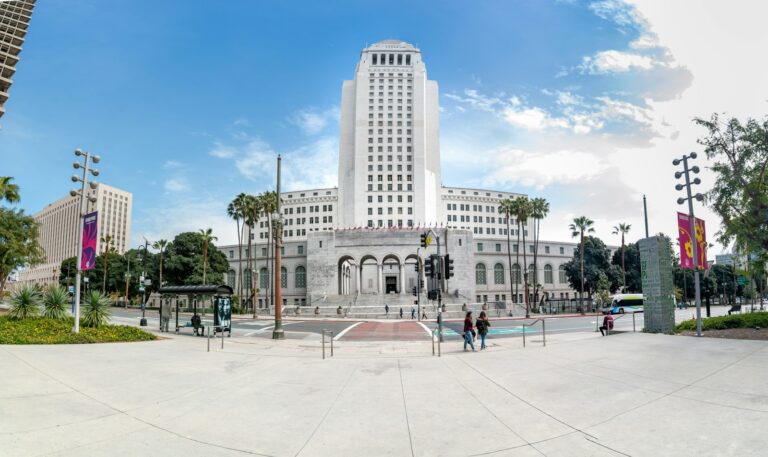 Selling for cash
How to Research Permit History on a Los Angeles Home With LADBS’s PRISM System
LADBS's PRISM system lets you check a home's LA permit history before listing. Here's how the lookup works, what statuses mean, and why lenders care.
Read the guide → Rentals & tenants
California’s Just Cause Eviction Notice: What Civil Code 1946.2 Requires
Civil Code 1946.2 requires a stated reason to end most tenancies after 12 months, and one month's rent in relocation pay within 15 calendar days.
Read the guide → Selling for cash
Pico Rivera Mobilehome Rent Cap: What the Ordinance Limits
Pico Rivera caps mobilehome space rent increases at 3% or 75% of CPI, whichever is less — and the cap follows the…
Read the guide →