
Roseville Code Enforcement Guide for Homeowners and Sellers
- Code violations, citations, liens: we buy it as-is
- Zero fees, zero commissions, zero closing costs
- No obligation: turn the offer down and owe us nothing
Got a Code Notice on Your Roseville House? Sell As-Is for Cash
A violation does not have to stop a sale. Tell us about the house and get a written cash offer.
Last updated November 13, 2026. Reviewed by the Cash Home Buyers CA team. Information comes from City of Roseville Code Enforcement and Development Services pages; sources are listed at the end.
Roseville’s Code Enforcement Division enforces the city’s municipal, zoning and building codes on public and private property, and in most cases an investigation starts because someone filed a complaint. If you own a Roseville house with a violation, a notice or a nuisance complaint, this guide explains how the process works, what the penalties look like, and how a pending case affects a sale.
Roseville code enforcement at a glance
| Who enforces | Code Enforcement Division, City of Roseville Development Services |
| Complaint line | (916) 774-5501 |
| Complaint email | CodeComplaint@roseville.ca.gov |
| Other number | (916) 774-5332 (Building Division and Code Enforcement) |
| How people report | Online forms by topic, the city’s myRSVL request tool, or by phone |
| What it covers | Municipal, zoning and building codes; public nuisances; vacant and substandard buildings |
| Private nuisances | The city says it does not monitor private nuisances |
What does Roseville code enforcement cover?
The division works to run what the city calls a fair and unbiased enforcement program, improve the general appearance of the city, and encourage voluntary compliance. Its published complaint categories include abandoned vehicles, air pollution, animal control, graffiti, noise and other non-emergencies, standing water, water waste and public nuisance violations.
Some of those go to other departments: animal control and noise go through the police department, water waste goes to Environmental Utilities, and standing water goes to the mosquito district.
For homeowners, the ones that matter most are public nuisance conditions, work done without a permit, unsafe or substandard structures, vehicles parked on landscaping, and neglected vacant buildings. The city defines a public nuisance as a condition visible from the public right-of-way that constitutes visual blight, reduces the aesthetic appearance of the neighborhood, is offensive to the senses, or is detrimental to nearby property values.
Common Roseville violations homeowners run into
- Parking on landscaping. The City Council has adopted an ordinance that prohibits parking on residential landscaping, including front and street-side lawn areas. Only part of the front and street-side setback may be paved for parking, up to 50% of the required setback area.
- Abandoned vehicles. Vehicles, trailers and RVs may not be stored on the public street for more than 72 hours without moving.
- Vacant and boarded buildings. Under Chapter 16.34 of the municipal code the city can penalize owners of long-term boarded and vacant buildings that are not under repair or actively offered for sale, lease or rent. The city’s brochure says a boarded building should be repaired and rehabilitated for occupancy within 120 days.
- Substandard buildings. Chapter 16.35 gives the city a method to abate buildings that endanger the life, health, property or safety of occupants or the public. Such buildings may be required to be repaired, vacated or demolished.
- Fences and setbacks. Most back and side yard fences may not exceed 7 feet, and fences in front yard setbacks may not exceed 3 feet.
- Work without permits. Building without a permit is a building code issue the division can pursue. See our Roseville building permits guide.
- Right-of-way obstructions. Construction or an encroachment in the public street right-of-way needs an encroachment permit under Chapter 13.28.
How the Roseville code enforcement process works
- A complaint or observation. Most cases begin when a neighbor or city staff member reports a condition. Anyone can report through the online forms, myRSVL or by phone.
- Investigation. Staff review the complaint and look at the property from the public right-of-way where possible.
- Notice and time to comply. The city’s program is built around giving owners an opportunity to comply voluntarily before penalties apply.
- Enforcement tools. If the problem continues, the city can use an administrative citation or an administrative compliance order.
- Abatement. For serious nuisances or unsafe buildings the city can abate the condition and charge the costs.
What are the penalties?
Roseville’s code compliance brochure describes two main remedies. An administrative citation addresses minor, one-time violations, with fines that increase with each offense and range from $50 to $500. An administrative compliance order addresses ongoing violations that are relatively permanent in nature.
It lets the city assess administrative penalties and the costs incurred by Code Enforcement staff, with fines ranging from $25 to $500 per day, up to a maximum of $50,000. Because fines can accrue daily, an ignored order can become expensive quickly.
The abandoned vehicle process is a good example of how timelines work. Staff first mark the vehicle and return at least three days later. If it has not moved, a citation may be posted and mailed to the registered owner, who has 10 days to move it before it may be towed and stored.
How code violations affect selling a house in Roseville
An open violation does not prevent you from selling, but it travels with the property. A buyer’s lender or title company may find an open case, and unpaid penalties or abatement costs can become a lien that must be settled at closing.
California sellers must also disclose known problems; see our guide to California seller disclosures. On a traditional listing the usual choices are to correct the violation first, negotiate a credit, or accept a lower price.
How to sell a Roseville house with a code violation
- Get the facts. Read the notice, note the deadline and ask the division what it needs to close the case.
- Document your progress. Photos, receipts and written confirmations from the city help if you start corrections.
- Price the fix. Compare the cost and timeline of correcting the problem with selling as-is.
- Choose your path. Fix and list, list with a credit, or sell as-is to a cash buyer who takes on the violation and any fines due at closing.
- Disclose honestly. A cash sale does not change disclosure duties, but it removes inspection and financing delays.
We buy Roseville houses in any condition. Read how selling a house as-is in Roseville works, or see our Roseville cash-offer process. If the violation involves a backyard unit, see our Roseville zoning and ADU guide, and for unpermitted work generally read our statewide guide to selling as-is with unpermitted work.
Tips if you receive a notice
- Respond before the deadline, even if you cannot finish the work. Contact the division and ask for an extension in writing.
- Keep every notice, photo and receipt in one folder.
- If the notice is wrong, say so and provide evidence rather than ignoring it.
- Ask the division what the final inspection or sign-off will look like so you know when the case is closed.
Dealing with a Roseville code case and thinking about selling? Call (424) 435-2326 or request a cash offer. There is no cost and no obligation.
Roseville code enforcement FAQ
How do I report a code violation in Roseville?
Use the city’s online complaint forms or myRSVL, call (916) 774-5501, or email CodeComplaint@roseville.ca.gov. Emergencies and in-progress hazards should go to the relevant department directly.
How much are Roseville code enforcement fines?
The city’s brochure lists administrative citations from $50 to $500, increasing with each offense, and administrative compliance orders from $25 to $500 per day with a maximum of $50,000.
Does the city act on private nuisances?
No. The city says it enforces public nuisances and does not monitor private nuisances.
Can I sell a Roseville house with an open code case?
Yes. An open case does not legally stop a sale, though unpaid penalties can become a lien. A cash buyer can purchase the house as-is and handle the case after closing.
Sources
- City of Roseville: Code Enforcement
- City of Roseville: Code Compliance Brochure (PDF)
- City of Roseville: Development Services FAQs
This guide is general information, not legal advice. Penalties and procedures change; confirm requirements with the City of Roseville.
From the Blog
Latest guides for California home sellers
-

California’s Judicial Foreclosure Redemption Right: The One-Year Window Most Owners Never Hear About
California's rarer judicial foreclosure process comes with a statutory right to redeem the property for up to a year after the sale…
Read the guide → -
Santa Clara County’s Tax-Defaulted Property Auction: How to Claim the Excess Proceeds
When a Santa Clara County home isn't redeemed within the state's deadline, the county can sell it at public auction — and…
Read the guide → -
Pomona’s Rent Stabilization Ordinance Just Became Permanent: What Landlords Must Do Before Selling
Pomona's Ordinance No. 4359 became permanent on January 1, 2026, replacing the city's prior urgency ordinances and capping most rent increases at…
Read the guide → -
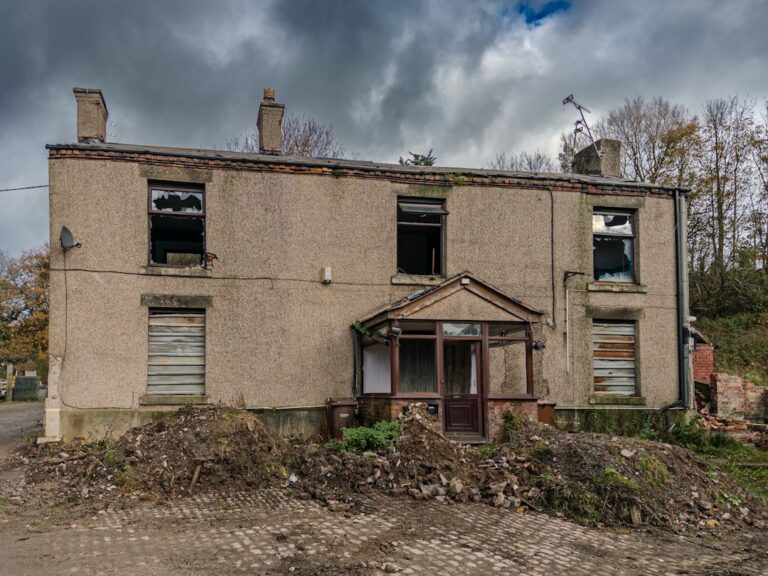
Compton’s Substandard Building Ordinance, Explained
Compton can order a dangerous or substandard house secured, repaired, or demolished under Municipal Code Chapter 14, and if the owner misses…
Read the guide → -

Chico’s RECO Inspection: What Sellers of Older Homes Must Fix Before Closing
Chico requires sellers of homes built before July 1, 1991 to pass a RECO energy and water retrofit inspection — or transfer…
Read the guide → -

Emeryville’s Just Cause Eviction Ordinance: Relocation Pay Under Municipal Code 5-40
Emeryville had its own just-cause eviction and relocation-assistance ordinance years before California’s statewide AB 1482 existed, and the local rule is still…
Read the guide → -

Malibu’s Six-Year Rebuild Deadline After the Palisades Fire: Municipal Code 17.60.020(C)
Malibu homeowners rebuilding after the January 2025 Palisades Fire have a hard deadline most residents outside the city have never heard of:…
Read the guide → -

California’s Security Deposit Cap: How AB 12 Limits What Landlords Can Collect
AB 12 caps most California security deposits at one month's rent, with a narrow exception for small landlords — plus new 2025…
Read the guide → -

California Civil Code §4525: The 11 HOA Documents You Must Hand a Buyer Before Closing
California Civil Code §4525 requires sellers inside an HOA to hand buyers 11 specific documents before closing — a list that just…
Read the guide →