
California’s Balcony Inspection Law: What SB 721 and SB 326 Require Before You Sell
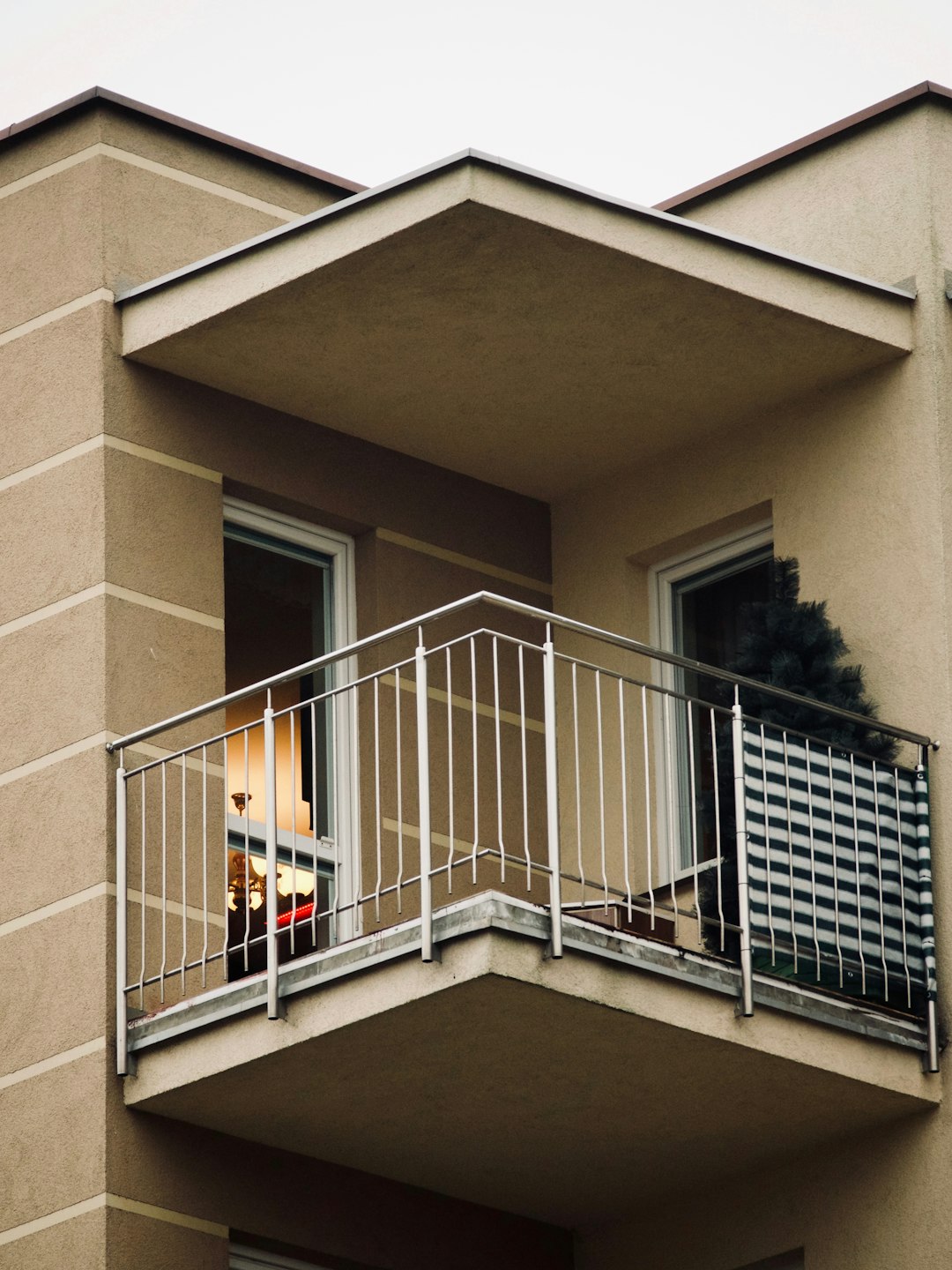
SB 721 and SB 326 require licensed inspectors to check balconies, decks, stairways and other wood- or steel-framed exterior elevated elements on most California apartment buildings and condominium projects with three or more units, and both laws now have inspection deadlines that have already passed.
If you own or are selling a multifamily rental or a condo in a building that has never had this inspection done, that is not a future problem to plan around — it is an open compliance gap a buyer’s attorney or lender can find during escrow.
Two Different Laws, Aimed at the Same Failure
Both statutes trace back to a 2015 balcony collapse in Berkeley that killed six people and injured seven more, caused by dry rot inside a waterproofed balcony structure that nobody could see from the outside. The Legislature responded with two separate bills because California splits residential ownership into two different regulatory worlds: rental housing and common interest developments.
SB 721, codified at Health and Safety Code Section 17973, covers rental apartment buildings with three or more multifamily dwelling units. SB 326, codified at Civil Code Section 5551, covers condominiums, co-ops and other common interest developments with three or more units that share exterior elevated elements.
A small apartment building you rent out and a condo building with the same unit count are covered by two different code sections, with two different inspection cycles and two different enforcement paths, even though the underlying inspection requirement is nearly identical.
What Actually Has to Be Inspected
Both laws use the same definition of an exterior elevated element: a structure that is weather-exposed, extends beyond the exterior walls of the building, is elevated more than six feet above the ground, and is designed primarily for human occupancy or use.
In practice that covers elevated wood or metal decks, balconies, porches, stairways, walkways, guardrails, handrails and fire escapes, as long as the load-bearing components are wood or wood-based, or made of a material requiring waterproofing to protect wood underneath.
A concrete balcony with no wood framing underneath generally does not trigger the requirement, which is why the law is sometimes shorthanded as the “wood balcony” law even though it covers more than balconies.
An inspector has to check a statistically significant random sample of exterior elevated elements, not necessarily every single one, and confirm the elements are in generally safe condition, free of deterioration, decay, fungus or corrosion that could compromise the structure, and free of evidence of active water intrusion into the load-bearing components.
For a rental property, the inspection must be performed by a licensed structural engineer or architect, or a certified building inspector; for a condominium project, the statute limits it specifically to a licensed structural engineer or architect.
The Deadlines, and the One That Already Moved Once
SB 326’s condo deadline has not changed since the bill passed: common interest developments with exterior elevated elements serving three or more dwelling units had to complete their first inspection by January 1, 2025, and must re-inspect every nine years after that.
SB 721’s rental deadline has moved once already. The original statute set the first inspection deadline for most covered rental buildings at January 1, 2025, with a six-year cycle after that.
AB 2579, signed in 2024, pushed that first deadline back to January 1, 2026, and added a transition rule: a building did not need a new inspection until that 2026 date if it had already been inspected within three years before January 1, 2019. Both dates are now behind us.
A rental building that has never had this inspection performed is not approaching a deadline — it missed one.
These dates come from the statutory text and are confirmed on multiple California city building-department pages that administer local enforcement; always confirm the current compliance status of a specific building with that building’s inspection file or the local building department before relying on it in a transaction, since a jurisdiction can layer its own local filing or reporting rules on top of the state deadline.
What Happens When an Inspection Finds a Problem
If an inspector finds that an exterior elevated element poses an immediate threat to occupant safety, the law does not leave that to the owner’s discretion.
The inspector must report it to the local code enforcement agency within 15 days, and the owner or association must take preventive measures right away, which can mean physically blocking access to the balcony or deck until repairs are made and a follow-up inspection clears it.
For non-emergency findings, an owner generally has 120 days from submitting the inspection report to apply for a repair permit, and 120 days from permit approval to finish the corrective work, followed by a second inspection to confirm the repair.
None of this is optional once a problem is identified, and none of it is fast. A seller who discovers a failed inspection mid-escrow is looking at a permitting and repair timeline measured in months, not days, layered on top of whatever timeline the sale itself was already running on.
Why This Becomes a Disclosure Problem, Not Just a Maintenance One
A completed, clean inspection report is the kind of document a buyer’s attorney, lender or insurance underwriter will ask for by name on any multifamily property built before the statute’s effective dates, because the absence of one raises an obvious question: has this building’s exterior structure ever actually been checked.
A missing report does not necessarily mean a building is unsafe, but it does mean nobody can currently prove that it is, and a buyer financing the purchase with a commercial or multifamily loan is unlikely to close without it being resolved first.
For a condo seller specifically, this compliance requirement does not stay buried in HOA board minutes.
California’s HOA transfer-disclosure law, Civil Code § 4525, separately requires the association to hand a prospective buyer a copy of the most recent SB 326 inspection report as one of the specific documents a seller must provide before closing.
If the HOA never completed the inspection, there is no report to hand over, and that gap becomes visible to the buyer at exactly the point in the transaction a seller most wants a clean file.
A seller juggling an HOA that also has unresolved liens or special assessments on the property should check how California’s HOA lien and foreclosure rules interact with that same closing timeline, since both issues tend to surface in the same document request from a buyer.
What This Does Not Require
SB 721 and SB 326 do not apply to detached single-family homes, duplexes, or buildings with two or fewer units, regardless of whether those properties have a wood deck or elevated balcony.
They also generally do not reach concrete balconies or decks with no wood-framed structural components, since the statute is specifically aimed at the hidden wood-rot failure mode behind the 2015 collapse that prompted it.
A seller of a single-family house with a wood deck is not ignoring a legal requirement by skipping this inspection — the requirement was never written to reach that property type.
Where sellers get this wrong most often is assuming the three-or-more-unit threshold means three or more buildings on a lot, when it actually means three or more dwelling or sleeping units sharing the exterior elevated element, which can apply to a single triplex building just as easily as a large apartment complex.
What to Check Before Listing a Covered Building
- Confirm the building’s unit count and ownership structure — rental apartment building (SB 721, Health and Safety Code § 17973) or condominium/HOA (SB 326, Civil Code § 5551) — since the two laws have different inspectors, cycles and enforcement paths.
- Request the most recent inspection report directly from the property manager, HOA, or prior owner’s files rather than assuming one exists.
- If no inspection has ever been performed, treat it as overdue rather than upcoming, and get a licensed inspector scheduled before going to market, not after an offer comes in.
- If an inspection flagged repairs, confirm whether the permit and corrective work were actually completed and closed out, not just started.
- For a condo, confirm the HOA has the report ready to include in the Civil Code § 4525 disclosure package a buyer is entitled to receive.
When a Cash Sale Does Not Make This Go Away
It is worth being direct about something a seller might hope a fast sale solves: selling to a direct buyer instead of listing on the open market does not exempt a building from SB 721 or SB 326, and it does not make an overdue inspection disappear.
The requirement attaches to the building and the owner of record, not to how the sale is marketed.
A serious investor buyer will still want to know whether the inspection has been done, because the liability for an unsafe exterior elevated element does not vanish at closing — it transfers with the deed.
Where a direct sale genuinely helps is timing.
An owner who does not want to spend months managing a licensed inspection, a possible permit process, and contractor repairs before listing can sell the property as-is to a buyer who is prepared to take on that compliance work themselves, rather than stall a retail listing while the inspection and any corrective work get sorted out.
That trade-off — a lower price in exchange for not personally managing a code-compliance process — is a legitimate reason to consider a direct sale, as long as the seller understands that is the actual trade being made, not an escape from the law itself.
A Separate, Related Requirement for Unpermitted Work
Owners of older multifamily buildings in Los Angeles should also check whether any deck or balcony being inspected under SB 721 was ever built or altered without a permit, since that is a separate problem the balcony inspection itself will not fix.
LADBS’s PRISM system lets an owner pull a property’s full permit history before an SB 721 inspector or a buyer’s contractor finds an unpermitted addition the hard way, and catching that gap before listing is far cheaper than catching it during a buyer’s due diligence period.
The same logic applies statewide to any seller unsure whether code violations exist on a property beyond the balcony itself. California law does not require a seller to fix every code violation before selling, but it does require disclosing known ones, and an SB 721 or SB 326 inspection report that flags a problem becomes exactly the kind of known, material fact Civil Code § 1102.1 requires a seller to disclose rather than bury.
How This Reaches Insurance and Financing, Not Just Code Enforcement
Building-safety compliance has become a question underwriters ask directly, not just something code enforcement checks after a complaint.
A multifamily property insurer renewing or quoting a policy increasingly asks whether a SB 721 or SB 326 inspection has been completed, because an unresolved exterior-structure safety issue is exactly the kind of latent defect a carrier does not want to insure blind.
A lender underwriting a commercial or multifamily loan on a building old enough to be covered will frequently require evidence of the inspection, and sometimes proof that any flagged repairs were closed out, before funding.
A seller who has not thought about this compliance requirement in years can find that the inspection report that was never produced blocks a buyer’s financing long before anyone gets to a disclosure conversation, simply because the loan cannot close without it.
This is part of why a missing inspection tends to surface at the worst possible moment in a transaction.
A retail buyer’s agent may not think to ask about it on a smaller triplex or fourplex, but the buyer’s lender almost certainly will once the loan file reaches underwriting, and by then the seller has already accepted an offer, opened escrow, and started counting down toward a closing date that an unexpected multi-month inspection-and-repair process can blow past entirely.
The Inspection Cycle Does Not Reset When the Property Changes Hands
Selling a covered building does not restart either statute’s clock. The six-year cycle under SB 721 and the nine-year cycle under SB 326 run from the date of the building’s own prior inspection, not from the date a new owner takes title.
A buyer who closes on a rental triplex two years into its six-year cycle inherits an obligation that comes due in four years, whether or not that buyer was ever told the clock was already running.
This is one more reason the inspection report itself — with its date and findings — matters more to a careful buyer than a seller’s verbal assurance that “it’s been checked.” Without the actual report in hand, a buyer has no way to know where in the cycle the building actually sits.
Why Sellers Keep Getting Caught by This
Most owners of small multifamily buildings and most individual condo sellers do not personally track statewide building-safety legislation, and the entity actually responsible for scheduling the inspection — a property manager for a rental, or an HOA board for a condo — is not always the same party who ends up selling the property or disclosing its condition.
An owner who self-manages a fourplex and has never hired a property management company is in some ways more exposed than an owner who has one, simply because there is no professional staff whose job it is to track statewide compliance deadlines on the owner’s behalf.
An owner who bought a triplex five years ago and has never personally touched the deck maintenance may have no idea whether the required inspection ever happened, because the task fell to a management company that has since changed, merged, or quietly let it slide.
The gap between “someone was supposed to handle this” and “someone actually did” is where most sellers get surprised mid-escrow, and it is also exactly the kind of gap a buyer’s attorney is trained to look for in any building old enough to be covered.
Every code section, deadline and inspection requirement above comes from Health and Safety Code § 17973 (SB 721), Civil Code § 5551 (SB 326), and AB 2579’s amendment extending the SB 721 rental deadline; confirm current compliance status for a specific building with a licensed inspector or the local building department, since local jurisdictions can add their own filing requirements on top of the state deadline.
If an overdue SB 721 or SB 326 inspection, or repairs an inspection already flagged, are standing between you and a listing you don’t want to manage, Cash Home Buyers CA can put together a no-obligation cash offer on the building as it stands today.
When you sell to us, we pay the standard closing costs, including the county and city transfer taxes, escrow and title. You can also find Cash Home Buyers CA on our Google Business Profile.