
Sell a House As-Is in Sacramento: No Repairs, Cash Offer
- Foreclosure, inherited, tenants, damage — we buy it
- Zero fees, zero commissions, zero closing costs
- No obligation — turn the offer down and owe us nothing


Skip the Repairs, Not the Disclosures
As-is changes what a seller has to fix. It does not change what a seller has to disclose under California law.
If you want to sell house as is Sacramento style, meaning no repairs, no contractors and no fix-up list from a buyer’s inspector, you have more options than most people think.
This page explains what an as-is sale really changes, the condition problems we see most in Sacramento’s housing stock, how repair costs turn into an as-is price, which California disclosures you still owe, and how permits and code cases fit in.
For an overview of everything we buy across the city, see our we buy houses Sacramento page.
Sell House As Is Sacramento: What It Really Means
An as-is sale means the buyer agrees to take the property in its current physical condition. You are not promising to fix anything before closing, you are not giving repair credits after an inspection, and you are not on the hook to bring old work up to current code. That is the part that saves time, money and stress.
What as-is does not do is change your duty to be honest about the house. California still requires most sellers to disclose known defects, and a buyer can still inspect. The difference with a cash buyer is that the inspection is not a setup for renegotiation. We look at the house before we make our offer, price what we see, and put the number in writing.
An as-is sale tends to make the most sense when one or more of these is true:
- The house needs work you cannot or do not want to pay for up front, such as a roof, foundation, sewer line or electrical panel.
- The repairs would take months to schedule and finish, and you need to move sooner.
- The house would struggle to pass a lender’s appraisal or minimum property standards.
- You inherited the house, live out of the area and do not want to manage contractors from a distance.
- The house has tenants, a hoarding situation, water damage, or unpermitted work that complicates a traditional listing.
Owners who decide to sell house as-is Sacramento wide are not all in the same spot. Some are landlords with a worn-out rental, some are heirs with a house nobody has updated in decades, and some simply want to move without spending the next three months managing a remodel.
The goal of this page is to help you figure out whether as-is is the right call for your house, and what to expect if it is.
Can You Sell a House As Is in Sacramento? Yes, in Any Condition
The most common question we hear is simple: can you sell a house as is if it really needs a lot of work? You can. There is no legal requirement in California to repair a house before you sell it. The real limits come from buyers and their lenders, not from the law.
A financed buyer’s lender wants the property to serve as safe collateral. FHA and VA loans, in particular, have minimum property standards, and an appraiser who notes a failing roof, exposed wiring, missing heat or a broken foundation can stop the loan until the problem is fixed.
Conventional lenders can be stricter or looser depending on the issue, but the effect is the same: a house in rough shape shrinks the pool of buyers who can actually close.
A cash buyer removes that barrier. There is no appraisal condition and no lender checklist, so we can buy houses with failed systems, missing kitchens, smoke damage, foundation movement or a yard full of debris. We buy directly or bring a vetted cash buyer, and either way you get one written offer and one closing date.
Sacramento’s Housing Stock and the Problems We See Most
Sacramento is not one kind of house. The condition issues depend a lot on when and where a home was built.
- Pre-war central neighborhoods. Oak Park is often described as Sacramento’s first suburb, and Land Park’s development started in the 1920s, with most of its houses built in the 1930s. Curtis Park and East Sacramento also have many older homes. Original wiring, small electrical panels, galvanized supply pipes, clay sewer laterals and raised foundations with aging piers are common findings.
- Post-war tracts. Ranch houses built in the decades after World War II, found across much of South and North Sacramento, often need new roofs, updated HVAC, window replacement and cast-iron drain repairs, and many have garage conversions or room additions done decades ago.
- Newer subdivisions. Homes in North Natomas and other master-planned areas usually have newer systems, but they can carry HOA rules, Mello-Roos assessments and, in the Natomas Basin, flood insurance requirements that affect resale.
Across all of these, a few problems come up again and again:
- Roofs. Long, hot summers are tough on roofing, and a roof at the end of its life is one of the biggest single items in any repair estimate.
- Sewer laterals and tree roots. Sacramento’s large street trees are part of its charm, but roots often find their way into older clay and cast-iron lines.
- Foundations. Settling, cracked perimeter foundations and moisture in crawlspaces are frequent in older raised-foundation homes.
- Electrical. Original wiring, ungrounded outlets and outdated panels usually mean a panel replacement and partial rewire before a retail buyer is comfortable.
- Termites and dry rot. Wood-destroying pest reports regularly flag eaves, decks, window frames and subfloors.
- HVAC. A house without working air conditioning is a hard sell in a Sacramento summer.
- Unpermitted work. Garage conversions, enclosed patios, added bathrooms and backyard units built without permits.
None of these stop an as-is cash sale. They simply go into the math.
Repair Costs vs. As-Is Pricing
An as-is offer is built from the same pieces any investor uses: what the house would sell for after repairs, minus the cost of those repairs, the time and money to hold and resell the house, and a margin for risk. The repair estimate is the part that varies most from house to house, which is why two Sacramento houses on the same street can get very different as-is offers.
Here is a simple way to think about it. Suppose, purely as an example, a house would sell for $500,000 fully updated and needs $70,000 of work.
If you fixed it yourself, you would pay for the repairs up front, carry the house while the work is done, deal with permits and inspections, and then pay to list and sell it. If you sell as-is, the buyer takes on all of that, and the price reflects it.
The question is not whether an as-is offer is lower than the after-repair value. It always is. The question is whether the gap is bigger or smaller than what the repairs, the time and the risk would cost you.
For a house that only needs paint and carpet, fixing it up before listing often makes sense. For a house that needs a roof, a sewer line and a panel upgrade, or one with unknowns behind the walls, the math frequently favors selling as-is. We are glad to walk you through our repair estimate line by line so you can compare.
When does fixing first make more sense? Usually when the work is small, cheap and visible: fresh paint, new carpet, a deep clean, yard cleanup or a few fixture swaps. Those touches can change how a house shows without opening walls or pulling permits.
Large, hidden or permit-heavy items, such as foundation repair, sewer replacement, rewiring or legalizing an addition, are the ones that tend to cost more than they return once time and risk are counted.
Selling a House As Is on the Open Market vs. to a Cash Buyer
You can list a house with an agent and label it as-is. Selling a house as is that way can work, especially for a home that only needs cosmetic updates, but it is worth knowing what usually happens next:
- Buyers still schedule inspections, and the findings often turn into requests for credits or a lower price, even on an as-is listing.
- Financed buyers’ lenders may require certain health and safety items to be repaired before funding, which puts the repair question right back on you.
- An appraisal that comes in low because of condition can force another round of price talks or end the deal.
- You still pay commissions, keep the house show-ready and carry it until a buyer’s loan closes.
Selling directly to a cash buyer avoids most of that. There is no lender setting conditions, no appraisal, and the price is set before the contract is signed. The trade-off is that a cash offer prices in the repairs and the buyer’s risk.
If your house is close to move-in ready and you have time, a listing may net you more. If it is not, a direct sale is often the cleaner path.
Selling a House As Is by Owner vs. to a Cash Buyer in Sacramento
Selling as-is by owner saves the listing commission, but the paperwork stays with you. You still owe the buyer the Transfer Disclosure Statement, a Natural Hazard Disclosure report, the Seller Property Questionnaire and, for homes built before 1978, the lead-based paint disclosure. You also handle the buyer’s inspection requests, open escrow yourself and wait out the buyer’s loan.
Transfer taxes are part of the math too. Sacramento County charges $1.10 per $1,000 of price, and inside the City of Sacramento there’s an extra $2.75 per $1,000, which sellers customarily pay. On a $450,000 house in the city, that’s about $1,733 combined. When you sell your house as is for cash to us, we pay those standard closing costs, and you skip the showings and the loan approval.
Need it gone quickly? A by-owner sale still waits on the buyer’s loan, usually 30 to 45 days in escrow, while a cash sale can close in 7 to 14 days. Our guide on how to sell my house fast Sacramento lays out a day-by-day timeline.
Disclosures Still Required When Selling Your Home As Is
Selling your home as is changes what you fix, not what you tell. In most Sacramento sales, these disclosures still apply:
- Transfer Disclosure Statement (TDS). Under Civil Code section 1102, most sellers of one-to-four unit residential property must disclose known defects and conditions. Some transfers are exempt, including certain court-supervised probate sales and certain transfers by trustees.
- Natural Hazard Disclosure (NHD). A report on whether the property sits in a flood zone, fire hazard severity zone, earthquake fault zone or seismic hazard zone. Because Sacramento sits where the Sacramento and American Rivers meet and relies on levees, the flood section matters here. The Natomas Basin carries a FEMA A99 designation, which the City of Sacramento describes as an interim high-risk flood zone, and owners there with a federally backed mortgage still need flood insurance.
- Lead-based paint disclosure for homes built before 1978.
- Smoke detector, carbon monoxide detector and water heater bracing statements, which California requires on residential sales.
- Known permit problems and special assessments. If you know a garage conversion was never permitted, or the tax bill shows a Mello-Roos assessment, say so.
Disclosure covers what you actually know. You are not required to hire an inspector or open walls to find problems. If you are unsure about something, such as the age of the roof or whether an addition was permitted, simply note that you do not know. Honest disclosure protects you after the sale far more than any as-is clause does.
Permits, Code Cases and Unpermitted Work in Sacramento
Unpermitted work is one of the most common reasons owners decide to sell as-is. Legalizing an old garage conversion or addition can mean drawings, plan review, opening walls for inspection and bringing work up to current code, which can take months.
Where your house sits matters. A Sacramento mailing address does not always mean the house is inside city limits. Inside the City of Sacramento, permits and code enforcement run through the city. In unincorporated areas such as Arden-Arcade, Carmichael or Rosemont, they run through Sacramento County. The property tax bill or county parcel information shows which applies.
We buy houses with open code cases, unpermitted additions and garage conversions in place. You do not need to pull permits or close out a case first. We factor the work into our price and handle it after closing. You still disclose what you know about it, and the title company will tell us about any recorded code liens so they can be dealt with in escrow.
How to Sell Your House As Is: Step by Step
If you are wondering how to sell your house as is without getting pulled into repairs halfway through, the process with us looks like this:
- Tell us about the house. The address, what you know about its condition, and whether anyone is living there.
- Short walkthrough. Usually 20 to 30 minutes. No cleaning or staging needed, and a relative, tenant or property manager can let us in.
- Written as-is offer. Within 24 to 48 hours of seeing the property, with the price, closing date and terms in writing.
- Sign and open escrow. A neutral title and escrow company handles the money and the paperwork.
- Complete disclosures. You fill out the TDS and related forms based on what you know.
- Close on your date. As little as 7 to 14 days with clear title, or later if you need time to move. Take what you want and leave the rest.
Our cash offer for my house Sacramento guide covers each step in more detail, and if timing is your main concern, our sell my house fast Sacramento page compares timelines.
What an As Is Home Sale Costs You, and What It Doesn't
In an as is home sale to us, the costs that usually eat into a seller's net either disappear or move to our side of the table:
| Cost | Fix up and list | Sell as-is to us |
|---|---|---|
| Repairs before listing | Paid by you up front | $0 |
| Inspection credits | Often negotiated | $0 |
| Agent commission | Set by your listing agreement | $0 |
| County and city transfer taxes | Allocated in the purchase contract | $0, we pay them |
| Escrow and title fees | Allocated in the purchase contract | $0, we pay them |
| Cleanout of belongings | Your time and expense | $0, leave what you do not want |
When you sell to us, we pay the standard closing costs, including the county and city transfer taxes, escrow and title. Inside city limits, Sacramento County's $1.10 per $1,000 and the city's $2.75 per $1,000 are both covered. What you do give up is the difference between our as-is price and what a fully repaired house might bring, which is why it is worth comparing both paths.
Condition problems often come bundled with other situations. If the house came to you through an estate, see how to sell inherited house Sacramento heirs can follow, and if it is a rental, our page on how to sell house with tenants Sacramento landlords can use explains the tenant rules.
Selling a Water-Damaged House in Sacramento
Water damage is one of the most common reasons owners decide to sell as-is here. Slab leaks under older ranch homes, burst supply lines, roof leaks after winter storms and flooding in low-lying areas can leave warped floors, stained ceilings and mold.
In older neighborhoods like Land Park, Curtis Park and Oak Park, aging cast-iron drain lines are often behind it. Many financed buyers walk away once an inspector finds active moisture.
We buy water-damaged Sacramento houses in their current condition, with or without repairs started. You still disclose known leaks, past claims and any mold you know about. If an insurance claim is open, it can usually be settled separately from the sale. Behind on payments as well?
Our page on how to sell a house in foreclosure in Sacramento covers the timeline, and selling during bankruptcy explains when the court must approve a sale.
Vacant and Cluttered Houses in Sacramento
Some houses are not just dated; they are hard to show at all.
A house that sits empty for months in Del Paso Heights, Oak Park or Meadowview can pick up break-ins, stripped copper, overgrown yards and neighbor complaints, and the owner often learns about it from a letter rather than a visit.
If you live out of the area, a code complaint on an empty house can arrive before you know anything is wrong.
The City of Sacramento runs a public Code Case Search on its website, so you can look up your own address and see whether a case has been opened.
A house packed with belongings is a different problem: it can take weeks to empty before anyone can even see the floors, and a hoarded property rarely gets through a standard listing.
These are exactly the houses an as-is cash sale is built for. We can walk a house in this condition, price it, and close without you clearing it out or managing a rebuild.
If there is an open insurance claim, the claim and the sale can usually be handled separately with your carrier. If the utilities are off, we can usually still see enough to make an offer.
And if there are items you want to keep, take them, and leave the rest for us to handle after closing.
As-Is Sales by Sacramento Neighborhood
Where the house sits shapes what an as-is sale looks like, so here is how it tends to play out in different parts of the city.
- Oak Park, Land Park, Curtis Park and East Sacramento. Older houses with character and real demand, but also the original plumbing, wiring and foundations that make a full remodel expensive. Owners here often weigh a renovation against selling as-is because the finished value is high and so is the cost of getting there.
- South Sacramento, including Meadowview, and the Pocket. Mostly post-war and later tract homes, where roofs, HVAC and drain lines are the usual repair items and a garage conversion is a common surprise.
- North Sacramento and Del Paso Heights. A mix of small older houses and rentals, where deferred maintenance and vacancy are more common than a single big defect.
- Natomas. Newer construction with fewer system problems, so the as-is conversation is usually about flood-zone disclosure, HOA rules and assessments rather than repairs.
- Arden-Arcade and Carmichael. Many addresses with a Sacramento mailing address sit in unincorporated county territory, so permits and code cases go through Sacramento County, not the city.
Whichever part of town the house is in, we price the actual condition instead of assuming a neighborhood average, and the offer comes in writing before you commit to anything.
Frequently Asked Questions
What does it mean to sell a house as is in Sacramento?
It means you sell the house in its current condition and won't make repairs or give credits for them. It doesn't remove your duty to disclose known defects, and a buyer can still inspect before closing.
Do I need an inspection to sell a house as is in Sacramento?
No. You are not required to inspect before you sell a house as is. We do a short walkthrough to price the condition, and you disclose what you already know.
Do I still have to fill out disclosures if I sell as-is?
Yes, in most cases. The Transfer Disclosure Statement and Natural Hazard Disclosure still apply, with limited exemptions such as certain probate and trustee transfers.
Will you buy a house with foundation or roof problems?
Yes. Major repair needs are priced into the offer rather than treated as a reason to walk away.
Can I sell with unpermitted additions or an open code case?
Yes. We buy with unpermitted work and code cases in place and handle them after closing. Disclose what you know, and any recorded code liens are handled through escrow.
Does an as-is sale mean a lower price?
Compared with a fully repaired house, yes, because the buyer is paying for the repairs and taking on the risk. Compared with what you would net after paying for repairs, holding costs and commissions yourself, the gap is often smaller than people expect.
What if my house is in the Natomas flood zone?
That does not stop a cash sale, because there is no lender requiring flood insurance at purchase. The flood zone still goes on the Natural Hazard Disclosure, and it affects resale value, so it is part of the price.
Ready to skip the repairs? Fill out the form at the top of this page or call or text (424) 435-2326 for a written as-is cash offer on your Sacramento house.
Seller Guides
Helpful guides for homeowners in Sacramento
Plain-English answers to the questions sellers ask us most.
 Selling for cash
Stanislaus County’s Tax-Defaulted Property Auction and the Excess Proceeds Claim Deadline
Stanislaus County auctions tax-defaulted homes online each May, and former owners get only one year under Civil Code 4675 to claim excess sale proceeds.
Read the guide → Selling as-is
California Civil Code §4525: The 11 HOA Documents You Must Hand a Buyer Before Closing
California Civil Code 4525 requires HOA sellers to hand buyers 11 documents before closing, including the new balcony inspection report requirement.
Read the guide → Selling for cash
Sacramento’s City Transfer Tax: What Stacks on Top of the County Rate
Selling inside Sacramento city limits costs more in transfer tax than just outside them. Here's the city's $2.75 per $1,000 rate stacked on the county tax.
Read the guide → Selling as-is
When California Law Exempts a Home Sale From the Transfer Disclosure Statement
California law exempts probate, trustee's sale and fiduciary transfers from the Transfer Disclosure Statement. Here is which sales actually qualify.
Read the guide → Inherited homes & probate
Sacramento County Probate Court: Filing Fee, Local Forms and the Probate Notes System
Sacramento County probate charges a $355 filing fee, but local forms and the probate notes system decide how fast an inherited house can actually sell.
Read the guide →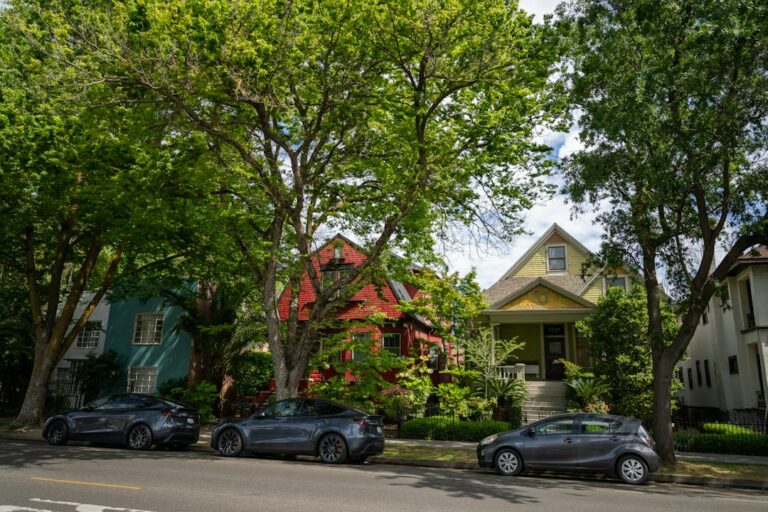 Selling for cash
Sacramento County’s Supplemental Tax Bill Explained
Selling or buying in Sacramento County triggers a separate supplemental property tax bill. Here is the formula, the timing rules, and a worked example.
Read the guide → Selling for cash
Sacramento County Tax-Defaulted Auction: The Five-Year Clock and Excess Proceeds
Sacramento County can auction a home after 5 years of unpaid taxes. Former owners have 1 year to claim excess proceeds under RTC 4675.
Read the guide → Rentals & tenants
What Is Sacramento’s Tenant Protection Program?
Sacramento's Tenant Protection Program caps rent increases and requires just cause after 12 months, separate from the statewide AB 1482 rules.
Read the guide → Relocating
 From Woodland, CA? What Taxes, Timing, and Cache Creek Flood Risk Mean for Your Sale
Relocating from Woodland, CA? See how the moving tax deduction, job-related gains exclusion, and Cache Creek flood risk affect your home sale.
Read the guide →