
Sell a House During Divorce in Orange County: One Clean, Neutral Sale
- Foreclosure, inherited, tenants, damage — we buy it
- Zero fees, zero commissions, zero closing costs
- No obligation — turn the offer down and owe us nothing


One Less Thing to Fight Over
California’s community property rules shape how the house gets divided. A clean, neutral sale is often the simplest way through it.
When couples need to sell house during divorce Orange County cases, the house is usually the biggest thing they own together and the hardest to divide.
Neither spouse wants to be pushed out, neither wants to keep paying a mortgage alone, and every month of delay costs both of you money.
This page explains how a home sale fits into a California divorce: how community property rules decide who owns what, when in the case you can sell, who has to sign, how a buyout compares with a sale, how escrow splits the money, and what the Orange County family law court has to do with any of it.
Cash Home Buyers CA buys houses from divorcing couples across the county, before, during, and after the case.
Sell House During Divorce Orange County: The Big Picture
Most divorcing owners end up choosing one of three paths for the house: sell it and divide the money, have one spouse buy out the other, or keep owning it together for a while (often until a child finishes school).
Selling is the most common, because it turns one shared, hard-to-split asset into cash that escrow can divide to the dollar. It also ends the joint mortgage, the joint property tax bill, and the joint liability if something goes wrong with the house.
The trade-off is that a traditional listing asks two people who may not be speaking to agree on an agent, a list price, repairs, showings, counteroffers, and inspection credits, often over several months. Every one of those decisions is a chance for conflict.
A direct sale with one written offer and a fixed closing date takes most of those decisions off the table. Either path can work; what matters is choosing the one both of you can actually finish.
California Community Property Basics
California is a community property state. In general, property and debts acquired by either spouse during the marriage belong to both spouses equally, no matter whose name is on the title or the loan. A home bought during the marriage is usually community property, and in a divorce the community estate is generally divided equally.
Separate property is different. A home one spouse owned before the marriage, or received by gift or inheritance, generally stays that spouse’s separate property. It gets more complicated when the two kinds of money mix:
- Community payments on a separate-property house. If mortgage principal on a premarital home was paid down with earnings during the marriage, the community may have an interest in part of the equity.
- Separate money into a community home. If one spouse used premarital savings or an inheritance for the down payment or improvements, California law (Family Code section 2640) generally lets that spouse be reimbursed for the traceable contribution before the rest is divided.
- Title doesn’t settle it. A house in one spouse’s name can still be community property, and a house in both names can carry separate-property claims. The character of the property is decided by when and how it was acquired and paid for.
These questions decide how the sale proceeds are split, not whether the house can be sold. That is why many Orange County couples sell first and let escrow hold the disputed part of the money until the rest is resolved.
Timing the Sale With Your Divorce Case
There are three common windows for a sale, and each has its own rules.
Before anyone files
Some couples sell before filing, so each spouse can fund a separate place to live and there is less to argue about later. If both of you are on title and both agree, the sale works like any other sale. It helps to put in writing how the proceeds will be held or split, since the divorce itself hasn’t started yet.
While the case is open
Once a divorce petition is filed and served, the standard family law summons includes automatic temporary restraining orders.
Among other things, they bar either spouse from transferring, selling, or borrowing against community or separate property without the other spouse’s written consent or a court order, outside the usual course of life.
In practice, that means a sale during the case needs both spouses to agree in writing, usually through a signed stipulation, or an order from the judge.
California also has a minimum waiting period of six months from service of the petition before a divorce can become final, so many couples choose to sell during that window rather than carry the house for half a year.
After judgment
If the judgment already says the house will be sold, it usually spells out how proceeds are divided and who handles the listing or sale. Escrow follows the judgment. If one spouse was awarded the house and later decides to sell, that spouse sells on their own.
The Orange County Family Law Court
Orange County Superior Court handles family law cases at the Lamoreaux Justice Center, 341 The City Drive South in Orange. The family law division is on the seventh floor, and a Family Law Facilitator helps people without lawyers in Room 101 on the first floor.
Family Court Services, which handles custody and visitation mediation, is in the same building. If you need a judge to approve a sale, resolve a disagreement about the price, or order the house sold, that request goes to your assigned family law department.
Who Has to Sign the Sale
Title companies want clean paperwork, so the rule of thumb is simple: everyone on title signs, and anyone with a possible community interest is dealt with before closing.
- Both spouses on title. Both sign the purchase agreement, escrow instructions, and the grant deed, even if only one lives in the house.
- Only one spouse on title. Because the other spouse may still have a community interest, the title company will usually ask that spouse to sign the deed or record an interspousal transfer deed or quitclaim first.
- One spouse refuses. The other spouse can ask the family law judge to order the sale. If a court-ordered sale is still blocked, the judge can appoint someone, called an elisor, to sign documents in place of the spouse who won’t.
- A spouse lives elsewhere. Escrow sends documents to each spouse separately, and each can sign with a mobile notary where they are. Neither of you has to be in the same room.
Buyout vs. Sale
A buyout lets one spouse keep the home by paying the other spouse their share of the equity. It sounds simple, but at Orange County prices it often isn’t.
The spouse keeping the house usually has to refinance the mortgage into their own name, both to pay the other spouse and to take the departing spouse off the loan. That means qualifying alone, on one income, for a loan that two incomes used to carry.
Couples also have to agree on the value. Some use an appraisal, some use a broker’s opinion, and some ask for a written cash offer to set a floor.
A transfer between spouses as part of a divorce is generally excluded from property tax reassessment, and a deed between spouses under a divorce judgment is generally exempt from the documentary transfer tax, so a buyout itself doesn’t trigger those costs.
If the numbers don’t work, selling and splitting the proceeds is often the cleaner outcome.
How Escrow Splits the Proceeds
Escrow is the neutral middle in a divorce sale. Neither spouse holds the money, and the escrow officer only does what the written instructions say. At closing, escrow:
- Pays off the mortgage, any home equity line, and any liens recorded against the house.
- Pays any unpaid property taxes and HOA balances.
- Splits what remains according to the joint escrow instructions, the stipulation, or the court order.
If the two of you haven’t agreed on the exact split yet, you can instruct escrow to pay each spouse an agreed amount and hold the disputed balance, or send it to an account that requires both signatures or a court order to release.
That way the sale doesn’t have to wait for every financial issue in the divorce to be settled. Credits for things like mortgage payments one spouse made after separation can be worked out in the settlement and reflected in the final split.
When you sell to us, we pay the standard closing costs, including the county transfer tax, escrow and title, so neither spouse has to argue over who covers them. In a listed sale, by local custom the seller usually pays Orange County’s documentary transfer tax of $1.10 per $1,000 of value, along with the commissions and any repair credits.
Taxes on the Sale
Under federal tax rules, a homeowner can generally exclude up to $250,000 of gain on the sale of a primary residence, or up to $500,000 for a married couple filing jointly, if the ownership and use tests are met.
For divorcing couples, the timing of the sale and whether you file jointly in the year of sale can affect how much of the gain each spouse can exclude. Escrow will also have each seller complete California Form 593 for withholding, which can apply to California residents too.
Orange County homes bought many years ago can carry large gains, so it is worth having your tax preparer run the numbers before you choose a closing date.
When One Spouse Has Already Moved Out
It is very common for one spouse to stay in the house while the other rents elsewhere. That creates its own tension: who pays the mortgage, who pays for the broken water heater, and whether the spouse in the house will cooperate with showings. A few things help:
- Agree on who pays what until closing. Put mortgage, taxes, insurance, utilities, and HOA dues in writing, even if it is temporary.
- Agree on access. With a direct sale, there is one walkthrough instead of weeks of showings, which is much easier to schedule around a spouse who is still living there.
- Set a move-out date. The closing date can be chosen to give the spouse in the house time to find a new place, and a short stay after closing can sometimes be arranged in writing.
- Keep the house insured. If the home is left empty, call the insurance carrier about vacancy rules.
Repairs, Condition, and Avoiding Another Fight
Preparing a house for a traditional listing means spending money before the sale: paint, flooring, landscaping, and fixing whatever a buyer’s inspector will find. In a divorce, that raises more questions: whose money pays for it, who picks the contractor, and who gets credit for the work.
Selling the house in its current condition avoids that whole discussion. Our page on how to sell house as-is Orange County covers what an as-is sale changes and which disclosures you still owe.
If payments have fallen behind during the separation, read about how to sell house in foreclosure Orange County before the deadlines get close.
Liens, Second Loans, and Debts Tied to the House
Before you count on a number, find out everything recorded against the house. A preliminary title report, which escrow orders as soon as it opens, lists the first mortgage, any home equity line, tax liens, mechanic’s liens, and judgments.
Divorces sometimes surface debts one spouse didn’t know about, such as a credit line drawn down during the separation or a judgment against one spouse that attached to the property.
All of those are paid from the sale price at closing, before either spouse receives anything, and your settlement can decide whose share bears which debt.
Request a current payoff from each lender early, because the payoff amount includes interest through the closing date and is usually higher than the balance on your last statement.
Listing or a Direct Sale: Choosing as a Couple
A traditional listing can bring a higher price for an updated home in a strong neighborhood, and Orange County homes were going under contract in a median of about 43 days in August 2026, according to Redfin.
If both of you cooperate, can afford to keep paying the mortgage, and agree on an agent and a price, listing may be the right call.
A direct sale tends to make more sense when you can’t agree on repairs, when one spouse is living in the house and showings would be a constant source of friction, when payments are slipping, or when a settlement conference or trial date is coming and you need a firm number.
Many couples simply get both: an agent’s pricing opinion and a written cash offer, then compare what each of you would actually walk away with.
What a Divorce Sale to Us Looks Like
- One of you, or your attorneys, calls. We can talk to both spouses together or separately, and we send the same information to both.
- A single walkthrough. Scheduled when it works for whoever lives in the house.
- A written offer to both spouses. Price, closing date, and terms in writing, so nobody is relying on what the other person heard.
- Both sign, or the court orders the sale. Escrow opens with a neutral title and escrow company once the signatures or the order are in place.
- Escrow follows the split. Payoffs first, then each spouse’s share, or a held balance if the split isn’t final.
- Close on the agreed date. Commonly 7 to 14 days after signing, or later if the case calls for it.
For a closer look at each step, from the purchase agreement to recording, see how to get a cash offer for my house Orange County. If a hearing date or a lease is setting your deadline, our guide to sell my house fast Orange County lays out a realistic timeline.
Frequently Asked Questions
Do both spouses have to agree to sell?
If both are on title, both must sign. Once a case is filed, the automatic restraining orders also require written consent from the other spouse or a court order before selling. If one spouse refuses, the other can ask the family law judge to order the sale.
Can we sell before the divorce is final?
Yes. Many couples sell while the case is open, using a signed stipulation. Proceeds can be split at closing or partly held in escrow until the settlement is done.
Where are Orange County divorce cases heard?
Family law matters are handled at the Lamoreaux Justice Center, 341 The City Drive South, Orange. The Family Law Facilitator’s office is in Room 101.
How does escrow divide the money?
Escrow pays the mortgage, liens, and any unpaid taxes or HOA dues first, then follows written instructions signed by both spouses or a court order to pay out the rest. A disputed amount can be held until it’s resolved.
Is a buyout better than selling?
It can be, if the spouse keeping the house can refinance alone and you agree on the value. If qualifying for the new loan isn’t realistic, a sale is usually simpler and ends the shared mortgage.
What if the house needs repairs we can’t agree on?
Sell it as it is. We buy in any condition, so neither spouse has to fund or manage repairs, and there are no inspection credits to negotiate.
What if one of us lives out of the area now?
That spouse signs with a mobile notary wherever they live, and escrow wires their share once the deed records.
Who pays the closing costs?
When you sell to us, we pay the standard closing costs, including the county transfer tax, escrow and title. Your mortgage and any liens are paid off from the sale price.
Whether you need to sell house during divorce Orange County proceedings this month or after a hearing, call or text (424) 435-2326 or fill out the form above for a free, no-obligation cash offer from Cash Home Buyers CA.
Selling somewhere specific in Orange County? See our pages for cash home buyers Orange County, cash home buyers in Irvine, CA, cash home buyers in Cypress, CA and we buy houses in Huntington Beach.
Seller Guides
Helpful guides for homeowners in Orange County
Plain-English answers to the questions sellers ask us most.
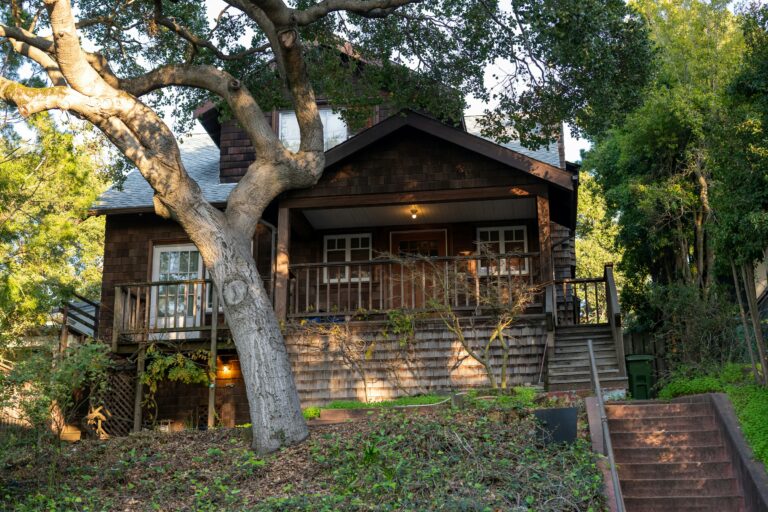 Selling for cash
Berkeley’s 1.5% to 2.5% Transfer Tax, and What Changes When Measure W Takes Effect in 2027
Berkeley charges its own 1.5% to 2.5% transfer tax on top of Alameda County's -- and the rate structure is about to…
Read the guide → Selling for cash
Orange County Tax-Defaulted Property Auction: How to Claim Excess Proceeds
If an Orange County tax-defaulted property sells for more than owed, the leftover funds can be claimed within one year of the deed recording.
Read the guide → Selling for cash
Why an Orange County Home Sale Triggers a Supplemental Tax Bill Months Later
Orange County bills new owners separately after a sale, with a 60-day appeal window. See how proration works and what sellers should check before closing.
Read the guide → Inherited homes & probate
Partition Actions Between Heirs: How California Law Forces a House Sale
California heirs can force a house sale through a partition action under CCP 872-874, with court referees, confirmation hearings, and buyout rights.
Read the guide → Divorce
Dividing a House in a Tustin Divorce
Dividing a Tustin house in divorce? See how Family Code 2550/2640, Prop 19's tax rule, and Mello-Roos/HOA costs affect the real buyout number.
Read the guide → Divorce
Is a House Buyout in a California Divorce Taxable?
A divorce house buyout isn't taxed upfront in California, but carryover basis can create a real tax bill later. Here's how the math actually works.
Read the guide → Inherited homes & probate
Inherited Property in Orange County: Title, Probate and Prop 19
How title was held, when Orange County probate applies, the Prop 19 filing deadline and co-heir disputes: what heirs should sort out before any sale.
Read the guide → Divorce
Who Gets the House in a Divorce in California?
California community property rules, Family Code 2640 reimbursement and the automatic restraining orders that stop a sale. Buyout, sell, or deferred sale.
Read the guide → Inherited homes & probate
Orange County Probate Court: Where Your Case Is Heard and What Selling Costs
Orange County hears probate at the Costa Mesa Justice Complex, not Lamoreaux or Santa Ana. Filing fees, probate referee, probate notes and selling the house.
Read the guide →