
Tulare County’s GovEase Tax Sale: The One-Year Clock to Claim Excess Proceeds
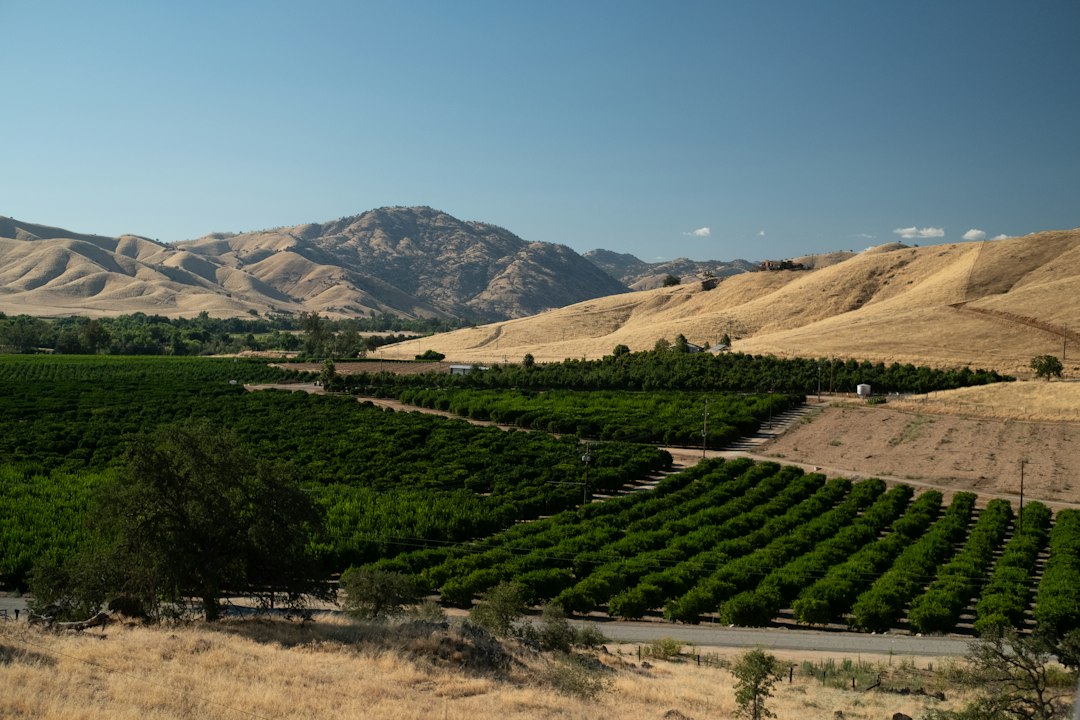
Tulare County runs its tax-defaulted property auction entirely online through GovEase, under authority the Board of Supervisors renews each year by resolution — and the detail that surprises most former owners isn’t the sale itself, it’s that California law gives them a full year afterward to claim whatever the county collected above what was actually owed, a right most people never learn exists until the deadline is nearly gone.
Five Years of Default Before a Parcel Reaches Auction
Tulare County’s own tax-auction notice cites the statute directly: California Revenue and Taxation Code, Part 6, Division 1, Chapter 7, § 3691, which makes a parcel eligible for sale once it has carried unpaid property taxes for five years (three years for most nonresidential commercial property).
Each year’s specific sale is authorized by its own Board of Supervisors resolution — a past notice cited Resolution No. 2024-1085 — which means the current year’s authorizing resolution and sale date should always be confirmed directly with the Tulare County Tax Collector rather than assumed from a prior year’s notice.
The five-year clock runs from the original default, not the most recent missed installment, which is why Tulare County parcels that actually reach auction are rarely tied to one skipped payment.
Inherited homes in the Central Valley where no one in the family took over the property tax bill, and vacant parcels nobody was actively managing, make up a disproportionate share of what shows up on the sale list each cycle.
GovEase, Not Bid4Assets: Where Tulare County’s Auction Actually Happens
Tulare County holds its “Internet Auction of Tax Defaulted Property” through GovEase.com, the same platform Kern and Tulare’s neighboring counties favor, rather than Bid4Assets. The county’s Tax Collector’s office handles questions about the sale at (559) 636-5270, and general property-tax questions go to the Treasurer-Tax Collector’s main line at (559) 636-5250; both offices are located at 221 South Mooney Blvd., Room 104-E, Visalia, CA 93291.
Confirming the current year’s auction date is worth doing directly with the office rather than relying on an old notice — sale dates are set annually, moved around the calendar in past years, and the Board resolution authorizing a given year’s sale is adopted separately each time rather than carried over automatically.
Once a parcel actually sells, California’s standard documentary transfer tax applies on top of the winning bid — $0.55 per $500 of the price, or any fraction of $500, once the price exceeds $100, the same rate Alameda County and every other California county charge on a tax-sale purchase.
Redemption: The Right That Disappears the Moment Bidding Opens
Until a parcel is actually sold, the assessee or any party with a recorded interest generally keeps the right to redeem it — paying the full amount of defaulted taxes, penalties, interest, and costs to stop the sale entirely.
That right ends once the auction opens and the parcel sells; there’s no grace period once bidding begins.
Confirming the specific redemption amount for a parcel, and the exact cutoff date before a scheduled sale, is something only the Tulare County Tax Collector’s office can provide, since the figure grows every month a default remains unpaid.
What a Tulare County Tax Deed Does to Existing Liens
Under Revenue and Taxation Code § 3712, the tax deed conveys the property to the winning bidder largely free of encumbrances recorded before the sale — mortgages, deeds of trust, judgment liens, and mechanic’s liens are generally wiped out.
That’s exactly why those lienholders move to the front of the line for any excess proceeds instead of pursuing the property itself: the sale extinguishes their security interest in the house, so state law redirects their claim to whatever money is left over.
A narrow category of interests survives the sale regardless — unpaid special assessments, recorded easements, and federal IRS tax liens, which a California tax sale doesn’t discharge even when the IRS had notice of it.
Any legal challenge to the validity of a Tulare County tax sale has its own separate one-year deadline, running from the date the tax deed was recorded.
Claiming the Surplus: The Statewide One-Year Rule
When a Tulare County tax sale generates more than the county is owed, that surplus becomes excess proceeds under Revenue and Taxation Code § 4675 — the same statute that governs the identical process everywhere else in California, including Santa Clara County’s tax-defaulted auction.
Priority runs to lienholders of record whose liens were recorded before the tax deed, paid in order of priority, and only after they’re satisfied does any remaining balance go to whoever held recorded title to the property immediately before the deed was recorded.
The filing deadline is one year from the date the tax collector’s deed to the purchaser is recorded.
Tulare County’s public auction notice doesn’t post a dedicated excess-proceeds claim form online the way some larger counties do, which makes the Tax Collector’s office — at (559) 636-5270 or by email at collections@tularecounty.ca.gov — the right first call to request the current claim packet for a specific parcel rather than assuming a form found elsewhere online will be accepted.
The $150 Floor That Shrinks More Claims Than You’d Expect
California’s excess-proceeds statute carries a practical floor: if the surplus left after the county’s accounting doesn’t clear roughly $150, the law doesn’t require it to be distributed to a claimant, and it’s absorbed into the county’s general fund instead.
The same threshold governs Stanislaus County’s tax-sale surplus, since it’s set by state statute rather than anything Tulare County decides on its own.
A parcel that clears its minimum bid by only a modest margin can still generate little or nothing for a claimant once delinquent taxes, penalties, interest, and sale costs are all subtracted first — which is worth confirming with the Tax Collector before assembling a full claim packet.
A recorded lien against the parcel — an old judgment, an unpaid HOA assessment, a second mortgage that was never formally released — is paid ahead of a former owner’s claim under § 4675, regardless of whether the former owner remembered it existed. Pulling a current title report before filing a claim, rather than after a smaller-than-expected payout, is the only way to know in advance exactly where you stand in that order.
Assigning Your Claim to Someone Else
State law allows a party of interest to assign their right to claim excess proceeds, but the assignment has to be a dated, written document that explicitly states the right is being transferred, confirms both parties were informed of the value of that right, and states that the party of interest was separately advised they could file the claim themselves instead.
That last disclosure exists specifically because former owners are sometimes approached by investors offering to buy the claim for a fraction of its value, before the owner realizes filing it directly — for free, with no application fee anywhere in § 4675 — was available to them the whole time.
Confirming your own standing as a party of interest with the Tulare County Tax Collector, and gathering the required documentation yourself, is worth doing before accepting any outside offer to buy the claim at a discount.
Why Checking Your Own Default Status Beats Guessing
Owners often miscalculate how close a parcel actually is to the five-year sale threshold, usually by counting from the most recent unpaid bill rather than the year the original default began.
Because each additional year of nonpayment stacks onto that same default instead of starting a new clock, the real deadline is almost always closer than a quick estimate suggests.
The more reliable approach is calling the Tulare County Tax Collector directly with the parcel number and requesting the official default year and a current written redemption figure — a number that also serves as the baseline for comparing a direct sale against simply letting the default run, since a sale typically has the back-tax balance deducted at closing rather than requiring it to be paid off separately first.
Why the Payout Is Rarely What the Minimum Bid Suggests
A common and costly assumption is that excess proceeds equal the winning bid minus whatever the former owner remembers owing in back taxes.
In reality, the county’s accounting runs through every cost category first: the delinquent taxes themselves, every penalty and interest charge that accrued while the parcel sat in default, the direct costs of running the sale, and the auction platform’s own fees.
Only what remains after all of that is subtracted counts as excess.
A parcel that draws competitive bidding at a GovEase auction can still net little or nothing for a claimant once that full accounting runs — which is precisely why a former owner shouldn’t treat the gap between what they “owed” and the final sale price as money that’s automatically on its way to them.
Why the Central Valley’s Lower Values Change the Math
Tulare County’s home values run considerably lower than the statewide average, which cuts a specific way at a tax-defaulted auction: the gap between a modest back-tax balance and the home’s market value is often narrower here than in higher-cost coastal counties, which means the $150 excess-proceeds floor described above is more likely to actually matter in a Tulare County sale than it would in a county where even a thin margin above the minimum bid clears that threshold easily.
A parcel that sells only slightly above its minimum bid in Tulare County stands a real chance of generating a surplus too small to distribute at all once the county’s full accounting runs.
That makes the comparison lopsided for an owner deciding whether to wait for an auction or sell directly: a direct sale captures the full value of the home’s equity at a negotiated price, while a tax sale caps what the former owner could ever recover at whatever modest surplus clears the county’s costs and the $150 floor — and only after a one-year wait and the Board approval process described above.
For a Central Valley home with real equity above the back-tax balance, that gap between the two outcomes is usually measured in tens of thousands of dollars, not a rounding difference worth waiting years to find out about — and it’s a gap the owner only controls while they still hold title to the property.
If the Property Came to You Through Inheritance
Inherited property is one of the most common roads to a Tulare County tax default — an estate can take months or years to settle, nobody in the family is necessarily covering the tax bill in the meantime, and the five-year clock under § 3691 runs regardless of where probate stands.
Our Tulare County probate and inherited-home guide covers what has to happen on the probate side before a sale can close, and working through that process while title is still clear almost always recovers more of the home’s actual value than waiting years to see what an excess-proceeds claim looks like after the county has already sold it.
Mistakes That Cost Tulare County Claimants Their Money
The most common way a legitimate claim is lost is simply missing the one-year filing deadline — often because the sale notice went to the address of the property that was just auctioned, which the former owner may no longer be checking.
A close second is assuming a recorded lien against the property doesn’t affect the payout because it’s old or the former owner forgot about it; under § 4675 it’s paid ahead of the former owner’s claim regardless.
A third, more avoidable mistake is waiting until the one-year deadline is nearly up to first contact the Tax Collector’s office, rather than confirming the parcel’s sale results and whether a surplus even exists as soon as the sale closes — since the review itself can’t begin until the full year has passed, there’s little upside to delaying that first call, and an early call gives you time to track down a missing document or a required signature before the clock actually runs out.
Selling Before the Five-Year Clock Runs Out
Everything described above only applies to a property the owner hasn’t sold yet.
An owner behind on Tulare County property taxes but still holding clear title has a materially better path than waiting to see what’s left over after a tax sale: selling directly captures the home’s actual equity now, rather than risking it being reduced to a contested claim filed a year or more later against a property the owner no longer controls, competing against whatever liens were recorded in the meantime, and subject to the $150 floor described above even if the claim is eventually approved.
Selling also stops penalties and interest from compounding immediately rather than letting them run toward the five-year cutoff.
A direct cash sale is typically faster specifically because there’s no lender underwriting, appraisal contingency, or financing timeline standing in the way — many close in a matter of weeks rather than the 30 to 60 days a financed buyer usually needs, which matters most when back taxes and penalties on a Tulare County property are actively accruing with every month that passes before the next scheduled auction.
When a Traditional Sale Is Still the Better Call
A fast, direct sale makes the most sense when the delinquency has grown large enough that a conventional 30-to-60-day closing timeline risks running past the point where it becomes unmanageable, or when the property needs repairs the owner can’t afford to make before a conventional listing.
It’s a weaker fit for an owner who has enough equity and time to catch up on the back taxes — often through a payment plan arranged directly with the Tulare County Tax Collector — and simply ride out a normal sale process, since an on-market listing in a stable Central Valley market will typically net more once commission and closing costs are weighed against the time saved, provided the owner is confident the default won’t deepen further while that sale plays out.
If you’re behind on Tulare County property taxes and want a real number to compare against waiting out a traditional sale or an excess-proceeds claim down the road, you can reach us by calling (424) 435-2326, through our Google Business Profile page, or by checking our Tulare County property tax guide or visiting cashhomebuyersca.com — we’ll walk through exactly where your parcel’s timeline stands before you decide anything.