Sell a Tenant-Occupied House in Koreatown
- Foreclosure, inherited, tenants, damage — we buy it
- Zero fees, zero commissions, zero closing costs
- No obligation — turn the offer down and owe us nothing


No Notices, No Vacancy, No Relocation Checks
We buy Koreatown rentals with tenants living in them, and we honor the tenancy exactly as it stands.
No Koreatown situation page matters more than this one, because renting is not the exception here, it is the norm. As of the 2008 estimate cited by Wikipedia, roughly 93 percent of households in Koreatown rent rather than own, on a neighborhood measured at more than 42,000 people per square mile in the 2000 census, among the highest densities anywhere in Los Angeles County. That density was built by decades of apartment construction, and it means a very high share of Koreatown’s housing stock predates 1978, which puts it squarely under the city’s Rent Stabilization Ordinance, more so than in almost any other neighborhood we buy in. Cash Home Buyers CA purchases occupied houses, condos and apartment buildings throughout Koreatown without disturbing a single tenancy.
Why Koreatown Has an Unusually Deep RSO Footprint
Koreatown’s housing stock was largely built out before the city’s October 1, 1978 cutoff for Rent Stabilization Ordinance coverage: Art Deco apartment buildings with terra cotta facades from the 1920s and 1930s, and a dense layer of courtyard and dingbat apartment buildings added through the 1950s, 1960s and 1970s as the area urbanized around the Wilshire and Olympic corridors. Because so little of that stock has been replaced, the share of Koreatown rental units that fall under the RSO is meaningfully higher than the citywide average, and higher than in most of the other Los Angeles neighborhoods we buy in. Newer buildings constructed after 1978, including condo and apartment towers that have gone up near the Wilshire/Vermont, Wilshire/Normandie and Wilshire/Western Metro D Line stations, generally fall instead under the statewide Tenant Protection Act, AB 1482, which caps annual rent increases and requires just cause for eviction but carries different relocation rules than the city’s own ordinance.
What the RSO and AB 1482 Mean for a Sale
- The sale itself changes nothing for tenants. A change of ownership is not a lease termination. Whoever buys the property, including us, takes it subject to the existing leases and rent-registration status.
- No-fault evictions require relocation payments. Under the RSO, ending a tenancy for owner move-in or another no-fault reason triggers substantial relocation fees, which scale with the tenant’s income and length of tenancy, and the process itself can take months. Selling with the tenancy intact avoids that cost and delay entirely.
- Rent registration must be current. RSO buildings are required to be registered annually with the Los Angeles Housing Department; we confirm registration status during escrow rather than requiring you to sort it out beforehand.
- Financed buyers underwrite rent rolls conservatively. A lender evaluating a below-market RSO building often values it near its current rent roll rather than its market rent potential, which is a large part of why occupied Koreatown buildings sell slower to retail buyers and faster to cash buyers who value them on the same basis we do.
How We Buy an Occupied Koreatown Property
We ask for the rent roll, current leases and RSO or AB 1482 registration status early, and we build our offer around the actual rents and tenancy terms rather than a hypothetical vacant value. At closing, the buyer assumes the existing leases, takes over the security deposits through escrow, and registers as the new owner with the city. Your tenants receive nothing more disruptive than a notice of new ownership and updated payment instructions. There is no notice to vacate, no relocation payment to fund, and no vacancy period for you to carry.
Koreatown Sale Data
Redfin’s figures for the three months ending July 2026 put the median sale price for the Wilshire Center-Koreatown area at $709,758, on 37 sales, with a median of 81 days on market, up from a slower year earlier. Occupied RSO buildings are a meaningful part of why that median time sits where it does: they take longer to sell to a financed buyer than a vacant condo does, and they are exactly the segment where our kind of offer is most useful.
Can You Sell a House With Tenants in Koreatown?
Yes, and in Koreatown it is the most common way rental property changes hands. If you want to sell a house with tenants in Koreatown, you do not need vacant units, notices to quit or relocation checks. Whether the property is a rented condo, a duplex on a side street, or a 1960s courtyard building with long-term RSO tenants, it can sell with every lease in place. The tenancies simply transfer to the buyer at closing.
Which Rules Cover Your Koreatown Rental
Koreatown is inside the City of Los Angeles, so the city’s rules apply. Buildings with a certificate of occupancy on or before October 1, 1978 are generally under the Rent Stabilization Ordinance, which limits annual increases, requires annual registration with the Los Angeles Housing Department, and requires just cause and often relocation assistance for no-fault terminations. Most newer units fall under the state Tenant Protection Act (AB 1482), and the city’s Just Cause Ordinance extends just-cause protections to many units the RSO does not cover. Single-family homes and condos can have their own exemptions. Coverage depends on the specific building, so confirm with LAHD or a landlord-tenant attorney.
Selling a Rental Property With Tenants vs. Vacating First
| Factor | Cash sale with tenants in place | Vacate, then list |
|---|---|---|
| Timeline | Written offer in 24 to 48 hours; occupied buildings usually close in 3 to 6 weeks | Legal notice periods, possible relocation payments, turnover, then a listing |
| Relocation payments | None needed | Often required under the RSO for no-fault terminations |
| Showings | One noticed walkthrough | Repeated showings with notice to each tenant |
| Commissions | None to you | Agent commissions often total around 5 to 6% combined |
| Rent income | Continues through closing | Stops as units are vacated |
| Certainty of closing | No appraisal or loan approval | Lenders underwrite RSO rent rolls conservatively |
Koreatown Market Snapshot for Landlords
Redfin’s August 2026 update for the Wilshire Center-Koreatown neighborhood shows a median sale price of about $740,000 for the three months ending in August, down about 8% from a year earlier, on 32 sales. The median time on market was 77 days, compared with 83 a year before, roughly 32% of listings took a price cut, and homes sold for about 97.6% of list price on average. Occupied multi-unit buildings make up a slower part of that market because fewer financed buyers pursue them. A buyer who values the building on its current rent roll removes that obstacle.
Documents That Help Price a Tenant-Occupied Building
- The rent roll: unit numbers, current rents, move-in dates and security deposits
- Copies of leases, plus notes on any month-to-month or informal arrangements
- RSO registration status and any LAHD notices or open cases
- Any buyout agreements, pending notices or tenant disputes
- Recent utility bills if the owner pays any utilities
If you do not have all of this, escrow can gather much of it, and LAHD records can confirm registration. Tenants need proper written notice, generally at least 24 hours, before anyone enters a unit for the walkthrough.
Rental Property Types We Buy in Koreatown
We buy occupied condos in older and newer buildings, duplexes and fourplexes, courtyard and dingbat buildings up to about a dozen units, and houses with a rented back unit or converted garage. Below-market rents, deferred maintenance and a vacant unit or two among occupied ones are all factored into one written offer.
Tenant Buyouts and Why Selling Occupied Is Often Simpler
Some landlords consider offering tenants cash to move before a sale. In the City of Los Angeles, buyout agreements with RSO tenants have specific disclosure and filing requirements, and tenants are free to decline. The process can take months and cost more than the value it adds. Selling with the tenants in place avoids that negotiation entirely and lets the buyer decide how to manage the building after closing, within the same rules that apply to you.
If you have already served a notice or started a buyout conversation, mention it on the first call so the offer reflects where things stand.
Our 3-Step Process for Tenant-Occupied Property
- Call or text 424-493-4424. Share the address, unit count and approximate rents; a full rent roll can come later.
- Walkthrough and written cash offer. After one noticed walkthrough, we send a written cash offer, usually within 24 to 48 hours.
- Close on your date. A Los Angeles County escrow company closes on your date, and leases, deposits and registration transfer to the buyer.
If the building came through an estate, see selling an inherited property in Koreatown. The full closing sequence is on the Koreatown cash offer process page. To discuss your rental, call or text 424-493-4424.
Frequently Asked Questions
Can I sell a house with tenants in Koreatown without paying relocation fees?
Yes. Relocation assistance under the RSO is tied to ending a tenancy, not to selling the property. When you sell with tenants in place, the tenancy continues and no relocation payment is triggered by the sale.
What happens to security deposits when a Koreatown rental sells?
Deposits transfer to the new owner, usually as a credit through escrow, and the new owner becomes responsible for returning them under California law when each tenancy ends.
Do I need to be current on RSO registration to sell?
It helps, and any gap is usually resolved during escrow by paying the registration fees owed. Tell us early if registration has lapsed so it can be built into the timeline.
Do I have to tell my tenants I’m selling?
California law does not require advance notice of a sale itself, only reasonable notice before showings, which we generally do not need since we do not require open houses or multiple walkthroughs.
Will my tenants’ rent go up after you buy the building?
The buyer takes the property subject to existing leases and the applicable rent caps under the RSO or AB 1482, so registered rents carry forward under the same rules that applied before the sale.
What if one unit is vacant and the rest are occupied?
That is common and does not complicate the sale. We factor the vacant unit’s market rent and the occupied units’ current rents into one offer for the whole property.
Is my building even covered by the RSO?
Generally, if the certificate of occupancy predates October 1, 1978, it is. We confirm the exact status through the Los Angeles Housing Department’s records during escrow.
To sell an occupied house, condo or apartment building in Koreatown without disturbing a single tenant, call or text 424-493-4424. For the same situation elsewhere in the city, see our page on selling a house with tenants in Los Angeles.
Selling a house in Koreatown: what to know
A few local details that shape timing and net proceeds when you sell in Koreatown.
County & probate court
Koreatown is a City of Los Angeles neighborhood in Los Angeles County. Probate and trust matters for Koreatown properties are heard by the Superior Court for Los Angeles County, and deeds are recorded with the Los Angeles County Recorder.
Transfer tax
Los Angeles County charges a documentary transfer tax of $1.10 per $1,000 of the sale price. The City of Los Angeles adds $4.50 per $1,000, and Measure ULA adds 4% on sales above roughly $5 million (5.5% above roughly $10 million). When you sell to us, we pay the standard closing costs.
Tenant & rent rules
Rental homes in Koreatown can fall under the Los Angeles Rent Stabilization Ordinance (RSO), which limits rent increases and requires just cause for most evictions, in addition to the statewide Tenant Protection Act (AB 1482). We buy tenant-occupied homes and take over the leases at closing.
Nearby cities we buy in
Seller Guides
Helpful guides for homeowners in Koreatown
Plain-English answers to the questions sellers ask us most.
 Rentals & tenants
Tenant-Occupied Property Rules in Mayflower Village, CA: Why the County, Not a City, Sets Them
Mayflower Village has an Arcadia address but is unincorporated LA County, so tenant sales follow the county ordinance, not either city's rules.
Read the guide →- Rentals & tenants
Tenant-Occupied Property Rules in Vernon, CA: What Makes This Market Different
Vernon has almost no housing stock, but its rare leased homes still follow California's statewide landlord-tenant law in full. Here's what applies.
Read the guide → - Rentals & tenants
What Happens When a Tenant Dies in a California Rental?
A tenant's death does not end the lease automatically in California. Here's what happens to rent, the deposit, and belongings before you can sell.
Read the guide → - Rentals & tenants
Selling an RSO Apartment Building in Los Angeles: Owner’s Guide
How rent roll, Measure ULA transfer tax, and buyer pool affect the sale of an RSO-covered LA apartment building.
Read the guide → - Rentals & tenants
Tenant Buyout Costs in Los Angeles: What to Expect in 2026
LA tenant buyouts run $15,000-$40,000 per household. Timelines, legal requirements, and whether the math works.
Read the guide → - Rentals & tenants
LA Rent Caps in 2026: Should Small Landlords Hold or Sell?
If you own a few rental units in Los Angeles, the last several years have probably felt like a slow squeeze. Rent…
Read the guide → - Rentals & tenants
Selling a Tenant-Occupied Property in Los Angeles: What Owners Need to Know
RSO rules, buyout costs, and Measure ULA transfer tax when selling a tenant-occupied property in Los Angeles.
Read the guide → - Rentals & tenants
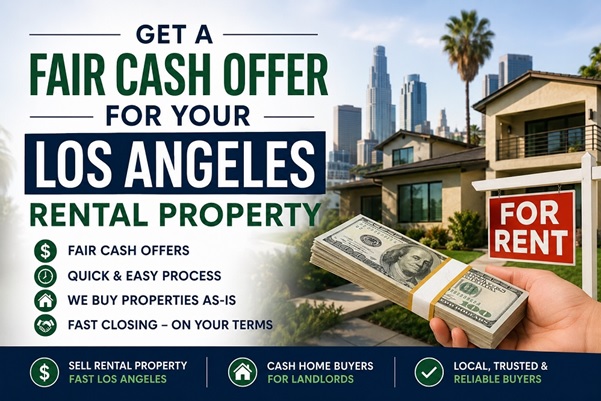
Get a Fair Cash Offer for Your Los Angeles Rental Property
Get a fair cash offer for your Los Angeles rental property. Sell quickly, avoid repairs and fees, and enjoy a simple, hassle-free process.
Read the guide → - Rentals & tenants
Rent-to-Own Homes: Understanding How Rent-to-Own Works for Sellers in Los Angeles
Rent-to-own homes offer sellers in Los Angeles a flexible selling option. Explore how it works, benefits, risks, and key considerations.
Read the guide →