Sell Your House As-Is in Valley Village
- Foreclosure, inherited, tenants, damage — we buy it
- Zero fees, zero commissions, zero closing costs
- No obligation — turn the offer down and owe us nothing


No Repairs, No Appraisal Risk
Original wiring, an unpermitted addition, or a condo an HOA has flagged — we buy Valley Village property in its current condition.
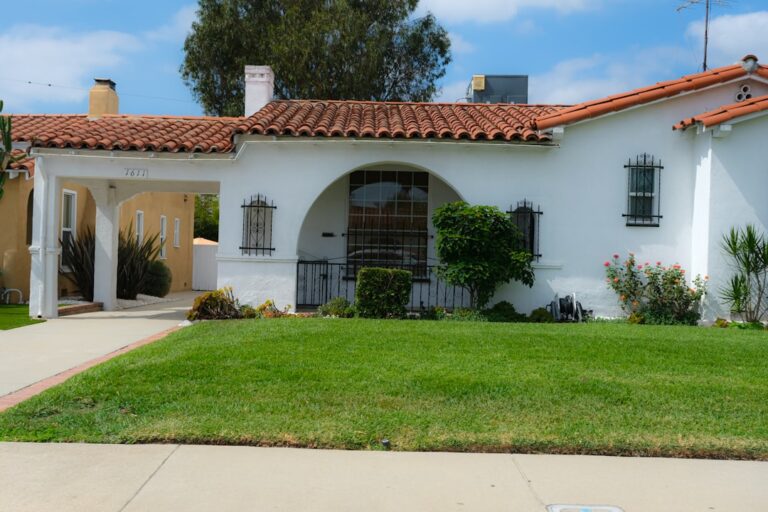
Most of Valley Village’s single-family stock is the same 1,700-square-foot Spanish- or ranch-style bungalow the studios built for their employees in the 1930s, and a lot of those houses still have their original wiring, original plumbing, or additions nobody ever pulled a permit for. Selling as-is means none of that has to be fixed before Cash Home Buyers CA makes an offer. The same is true for the neighborhood’s older apartment buildings and condos, where deferred maintenance is just as common and just as much of an obstacle for a financed buyer.
What “As-Is” Actually Means
An as-is sale means the buyer accepts the property in its current physical condition, with no repair requests and no credits negotiated after inspection. It doesn’t remove California’s disclosure requirements — a seller still has to disclose known material defects on the standard Transfer Disclosure Statement — it just means the buyer isn’t going to ask you to fix the roof or replace the knob-and-tube wiring before closing. We buy the property exactly as it sits: with the foundation cracks, the aluminum wiring, the additions from decades ago that were never permitted, all of it.
Why Older Valley Village Houses Struggle With Financed Buyers
- Conventional and FHA appraisal standards. Lenders require the property to meet minimum condition standards. Exposed wiring, missing handrails, or a non-permitted room addition can make an appraiser flag the loan for repairs before funding.
- The 9A report. Before any Los Angeles sale can close, the seller must supply the Department of Building and Safety’s Report of Residential Property Records and certify a seismic gas shutoff valve, water-conserving plumbing fixtures, and working smoke and carbon monoxide detectors. On an older, never-updated Valley Village bungalow, correcting those items can take real time and money before a financed buyer’s loan can even move forward.
- Unpermitted square footage. A garage converted to a bedroom or a den added without permits decades ago won’t appraise for the space it occupies, and can complicate title and insurance too.
- Older apartment buildings. Valley Village’s dingbat-style buildings from the 1950s and 1960s often carry deferred maintenance that a commercial lender’s inspection will flag before approving a purchase loan.
- Insurance availability. An older roof, outdated electrical panel, or a house with no updated fire-safety features can also make it harder or more expensive for a buyer to bind a homeowner’s policy in time to close, which is a separate obstacle from the loan itself.
What We Actually Look At
We walk the property once and build our offer around its condition, using recent comparable sales in Valley Village adjusted for what a buyer would realistically have to spend to bring the house up to a lendable, retail-ready standard. That includes rewiring, replumbing, foundation work, permitting an addition after the fact, or simply modernizing a kitchen and bathrooms that haven’t been touched since the house was built. None of that comes out of your pocket first — it’s already reflected in the number we send you. We put that offer in writing, usually within 24 to 48 hours of seeing the property, and it stays firm through closing absent something we genuinely didn’t know about when we made it.
As-Is Doesn’t Mean We Skip the Required Reports
We still order the 9A report and a preliminary title report during escrow, and for a multi-family property we pull the Rent Stabilization Ordinance registration status, because Los Angeles requires those regardless of how the property is being sold. The difference is that we don’t make funding conditional on the property passing an appraisal-driven repair list the way a bank does. Deeds record at the Los Angeles County Registrar-Recorder/County Clerk in Norwalk, and a clear-title house or condo can typically close in two to three weeks; a building with tenants or an unresolved permit history sometimes runs three to six weeks. We keep you posted on where the title report and the 9A report stand rather than letting either sit unresolved until the week you expect to close.
What “Bad Condition” Covers, in Practice
“As-is” on a Valley Village property has meant everything from a house that simply hasn’t been updated since the 1970s to a property with fire or water damage, a hoarding situation left behind by a previous occupant, code violations recorded with the city, or a partially demolished remodel that stalled halfway through. None of those categories rule a property out. We’ve made offers on original 1930s bungalows with foundation settling, on dingbat apartment buildings with units the fire department had cited, and on houses where a prior owner started a permit and never finished it. The condition changes the number, not whether we’ll buy. If a property has open permits, an expired permit that needs to be finaled, or a lien recorded against it, we work through those during escrow rather than asking you to resolve them before we’ll make an offer.
Doing the Math on What Repairs Would Actually Cost
A rough rewire of a 1,700-square-foot house can run into five figures once walls are opened and permits are pulled, and a full repipe adds more on top of that. Bringing an unpermitted addition into compliance can mean a structural engineer’s report, a plan check with the Department of Building and Safety, and inspection fees before it’s even legal to include in the square footage a lender counts. Add the standard 5 to 6 percent agent commission and the combined Los Angeles city and county transfer tax of $5.60 per $1,000 of sale price, and the gap between a repaired retail sale and an as-is cash sale is often smaller than it looks on paper once every cost is counted rather than just the sale price itself.
Common Valley Village As-Is Situations
We see this most on inherited houses that sat as long-term rentals and were never modernized, occupied apartment buildings with below-market rents and postponed maintenance, and condos in HOAs that have flagged a special assessment for deferred building repairs. A house heading toward foreclosure often falls into disrepair for the same reason — there hasn’t been money or attention available to keep it up. Selling as-is skips the appraisal risk in every one of those cases. The same appraisal and 9A rules apply to as-is sales across the rest of Los Angeles too, not just here — see our guide to selling as-is across the rest of Los Angeles for the citywide version.
The Trade-Off Worth Understanding
A house that could pass a lender’s inspection with minor work will usually net more from a financed retail buyer, even after a 5 to 6 percent commission. Where an as-is cash sale competes is on the properties where the repair list, the permitting history, or the building’s condition would otherwise force a listing to sit, get renegotiated after inspection, or lose a buyer entirely when their loan falls through over the property’s condition. If you’re not sure which side of that line your Valley Village property falls on, we’ll say so directly after looking at it — a well-maintained, updated house on a quiet interior street will usually do better listed, and we tell sellers that rather than making an offer we know is below what a retail buyer would pay.
Frequently Asked Questions
Do I still have to fill out a disclosure form if I’m selling as-is?
Yes. As-is changes what the buyer can ask you to fix, not California’s requirement that you disclose known material defects.
Will you buy a house with an unpermitted addition?
Yes. Unpermitted additions are common in Valley Village’s older housing stock, and we account for the permitting risk in the offer rather than asking you to resolve it first.
What about a condo with an HOA special assessment?
We can still buy it. A pending assessment or deferred building maintenance is one of the more common reasons a lender declines to approve a condo purchase.
Do you still need the 9A report on an as-is sale?
Yes. The Report of Residential Property Records is required on every Los Angeles sale regardless of condition, and we order it during escrow.
What if there’s fire, water, or hoarding damage?
We still make an offer. We price the specific damage into the number rather than asking you to clean or repair the property before we’ll look at it.
Is an as-is cash offer always lower than listing?
Usually somewhat lower than a fully-repaired retail sale, but it removes the repair costs, the commission, and the risk of a financed buyer’s loan falling through over the property’s condition.
If your Valley Village property needs work you don’t want to take on, call or text 424-493-4424 for a written cash offer within 24 to 48 hours, with no obligation.
Selling a house in Valley Village: what to know
A few local details that shape timing and net proceeds when you sell in Valley Village.
County & probate court
Valley Village is a City of Los Angeles neighborhood in Los Angeles County. Probate and trust matters for Valley Village properties are heard by the Superior Court for Los Angeles County, and deeds are recorded with the Los Angeles County Recorder.
Transfer tax
Los Angeles County charges a documentary transfer tax of $1.10 per $1,000 of the sale price. The City of Los Angeles adds $4.50 per $1,000, and Measure ULA adds 4% on sales above roughly $5 million (5.5% above roughly $10 million). When you sell to us, we pay the standard closing costs.
Tenant & rent rules
Rental homes in Valley Village can fall under the Los Angeles Rent Stabilization Ordinance (RSO), which limits rent increases and requires just cause for most evictions, in addition to the statewide Tenant Protection Act (AB 1482). We buy tenant-occupied homes and take over the leases at closing.
Nearby cities we buy in
Seller Guides
Helpful guides for homeowners in Valley Village
Plain-English answers to the questions sellers ask us most.
 Selling as-is
As-Is Disclosure Rules for a Tropico, CA Home
Selling a house as-is near Tropico in Glendale? See California's TDS disclosure rules and why Tropico hasn't been its own separate city since 1918.
Read the guide →- Selling as-is
As-Is Home Sale Disclosure Rules in North El Monte, CA
North El Monte isn't the City of El Monte. As-is disclosure duties are the same statewide, but its permit records run through LA County, not a city hall.
Read the guide → - Selling as-is
As-Is Doesn’t Skip Disclosure in Valley Glen — And the City Adds One More Step
Valley Glen sellers must meet California's as-is disclosure laws plus one extra City of LA requirement that many nearby unincorporated areas never face.
Read the guide → - Selling as-is
As-Is Disclosure Rules for Westlake Village, CA Home Sellers
Selling as-is in Westlake Village still requires California's TDS and NHD disclosures, plus HOA rules this small LA County lake city adds on top.
Read the guide → - Selling as-is
Selling a House With Code Violations in California
You can sell a California house with code violations without fixing them first, but disclosure is required and unpaid abatement costs can be a lien.
Read the guide → - Selling as-is
California’s Natural Hazard Disclosure Statement: What Sellers Must Provide
California sellers must disclose six hazard zones on a Natural Hazard Disclosure Statement. As-is and cash sales are not exempt from this requirement.
Read the guide → - Selling as-is
Selling a House on the California FAIR Plan: What Changes at Escrow
A bare California FAIR Plan policy often won't satisfy a buyer's mortgage lender. Here's what changes at escrow and how a DIC policy fills the gap.
Read the guide → - Selling as-is
Adverse Possession in California: Why These Claims Are So Rare
California adverse possession requires 5 years of possession plus paying the property taxes the whole time. Here's why that requirement kills most claims.
Read the guide → - Selling as-is
Selling a House As-Is in Los Angeles: What the City Still Requires
As-is sales in LA still require the city's Residential Property Report and point-of-sale compliance items. Here's what as-is does and doesn't waive.
Read the guide →