
Costa-Hawkins: Why Most CA Rentals Skip Rent Control
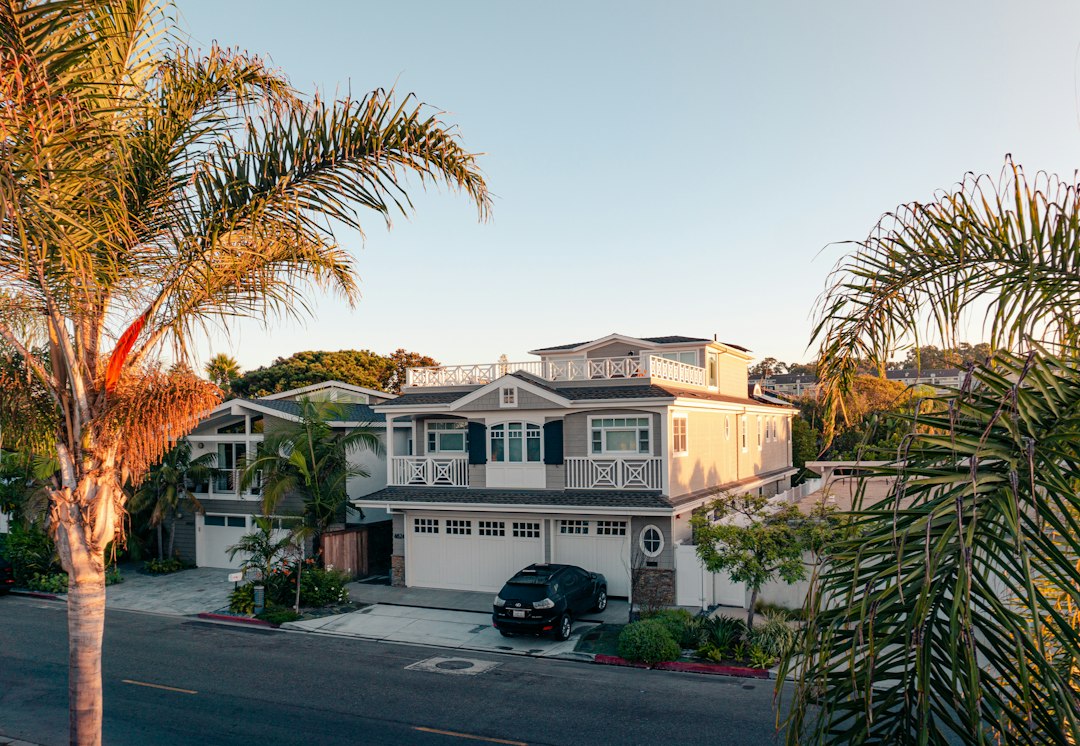
If you own a single-family rental home or a condo in a California city with local rent control — Santa Monica, San Francisco, Los Angeles, Berkeley, or dozens of others — you may not be subject to that city’s rent increase limits at all, even though the ordinance technically covers rental housing citywide.
The reason is a 1995 state law called the Costa-Hawkins Rental Housing Act, which carves most single-family homes and condominiums out of local rent caps statewide.
It’s one of the most consequential and most misunderstood pieces of California housing law, and whether it applies to your property changes what you can legally charge, and what a buyer is actually purchasing when they take over your rental.
Getting this analysis wrong in either direction — assuming an exemption that doesn’t actually apply, or leaving money on the table by not claiming one that does — is a mistake that tends to surface at exactly the wrong moment: during escrow, when a buyer’s attorney starts asking for documentation.
What Costa-Hawkins Actually Does
Costa-Hawkins is a state law, codified in Civil Code Sections 1954.50 through 1954.53, that sets limits on how far local rent control ordinances can reach. Before it passed, some California cities applied rent caps to essentially all residential rental housing, including single-family homes and newly built apartments.
Costa-Hawkins pulled several categories of housing out of local rent-increase limitations statewide, regardless of what any individual city’s own ordinance says — a city cannot vote to bring these categories back under its rent cap, because state law preempts it from doing so.
The law is named for its legislative authors, state senators Jim Costa and Phil Hawkins, and it passed in 1995 against a backdrop of growing landlord opposition to the patchwork of city-by-city rent control ordinances that had spread across the state since the late 1970s.
It does not create rent control anywhere, and it does not require any city to adopt rent control — it only limits how far a city’s own ordinance, if one exists, can reach.
Cities without any local rent control ordinance at all (which is most of California, including most cities this site covers) aren’t directly affected by Costa-Hawkins in everyday practice, because there’s no local cap for it to exempt anyone from in the first place.
The law matters almost entirely in the roughly dozen or so California cities — San Francisco, Los Angeles, Santa Monica, Berkeley, Oakland, West Hollywood, San Jose, and a handful of others — that maintain their own rent stabilization ordinances.
The Single-Family Home and Condo Exemption
The most commonly used exemption covers single-family homes and condominiums, but only under specific conditions that vary somewhat by how each city’s local ordinance was already structured before the state law took effect on January 1, 1999.
San Francisco’s Rent Board, for example, explains its own local application of the exemption this way: a single-family home or condo is generally exempt from that city’s rent increase limits — though not from its just-cause eviction rules — only if the tenancy began on or after January 1, 1996.
A tenancy that started before that date, even one that has continued with different tenants moving in and out of the same unit over the years, can remain fully covered by the local ordinance despite the property type otherwise qualifying for the exemption.
That nuance matters because it means the exemption isn’t simply a property-type test — it’s a property-type-plus-tenancy-history test, and the relevant date can differ from city to city depending on when each local ordinance was adopted and how it was written to incorporate the state exemption.
An owner relying on the single-family-home exemption needs to check the specific rule as the local rent board applies it, not just assume the state law alone settles the question for every city.
Why “Exempt From Rent Control” Doesn’t Mean “Unregulated”
This is the single most common misunderstanding owners have about Costa-Hawkins: being exempt from a city’s rent increase cap is not the same as being exempt from that city’s just-cause eviction protections, and it is not the same as being exempt from California’s statewide tenant protections either.
San Francisco’s own guidance is explicit that a unit exempt from its rent limits under Costa-Hawkins still has to comply with the city’s just-cause eviction rules.
Separately, California’s statewide Tenant Protection Act (AB 1482) can apply its own rent cap and just-cause requirement to a property regardless of whether local rent control reaches it, unless the property separately qualifies for one of AB 1482’s own distinct exemptions — which, for a single-family home, generally requires specific exemption language actually included in the lease.
A property can be exempt from local rent control under Costa-Hawkins and still be capped under state law through AB 1482; the two statutes ask different questions and an owner has to check both.
Why Condo Units Can Lose the Exemption
Condominiums carry an extra wrinkle that single-family homes don’t.
In some cities, a condo unit that hasn’t yet been sold by the original subdividing owner — meaning it’s still being rented out as an investment rather than having been sold to an individual owner-occupant or outside investor — can lose the exemption and remain subject to local rent control until it’s actually sold.
San Francisco’s rule sets the relevant base rent for such units as of a fixed date tied to when that carve-out took effect.
A developer or investor holding a block of unsold, rented condo units in a rent-controlled city should not assume the condo exemption applies automatically just because the units are legally condominiums — the “has it actually been sold yet” question can determine whether rent control still applies to each individual unit.
This also interacts with condo conversions specifically.
A building converted from apartments to condos under the Section 66427.1 notice process doesn’t automatically shed its rent-control history the moment the final map records — the individual units typically only gain the condo exemption as each one is actually sold to a buyer who isn’t the original subdividing owner.
A converted building where several units remain unsold and still rented out by the original developer can therefore have some units fully exempt (the ones already sold) and others still fully covered by the local ordinance (the unsold, still-rented ones) at the same time, which is a detail easy to miss when reviewing a converted building’s rent roll as a single uniform dataset.
Other Costa-Hawkins Exemptions Worth Knowing
Beyond single-family homes and condos, Costa-Hawkins also exempts housing first issued a certificate of occupancy after a fixed date — typically framed in each local ordinance as new construction built after the city’s rent control law originally took effect, which keeps newly built housing stock from being captured by caps that predate it.
It does not, however, exempt mobile home parks from local rent control the way it exempts single-family homes; mobile home rent control operates under its own separate legal framework, which is why cities like Thousand Oaks can maintain mobile home park rent control even in a state where most single-family housing is Costa-Hawkins-exempt.
There’s also a vacancy decontrol provision at the core of Costa-Hawkins that applies more broadly than the property-type exemptions: once a covered rental unit becomes vacant through a lawful termination of tenancy, the owner can reset the rent to market rate for the next tenant, after which that new tenancy’s rent is capped going forward under the local ordinance again (subject to AB 1482 statewide limits in between tenancies in some cases).
Costa-Hawkins’ core restrictions, including vacancy decontrol and the property-type exemptions, are precisely what Proposition 33 asked California voters to remove in November 2024, which would have let individual cities apply rent control to single-family homes, condos, and newer construction without the statewide limits described in this article.
Voters rejected Proposition 33 — the third such rent-control ballot measure to fail in six years, after Propositions 10 (2018) and 21 (2020) — so Costa-Hawkins’ exemptions remain fully in force, though the repeated ballot attempts suggest this is likely to stay a live political issue owners and buyers evaluating long-term regulatory risk should keep in mind.
Advocates behind Proposition 33 have said publicly they intend to keep bringing similar measures back to voters in future cycles, which means the exemptions this article describes are current law today but not necessarily guaranteed to stay unchanged indefinitely.
Vacancy Decontrol in Practice
Here’s how vacancy decontrol plays out on a specific unit.
Say a rent-controlled apartment (not exempt under the single-family or condo rule) has been occupied by the same tenant for eight years, with annual increases capped by the local ordinance the entire time, and the legal rent has crept up to $1,900 a month even though comparable units nearby now rent for $2,800.
When that long-term tenant finally moves out voluntarily or is lawfully evicted for cause, Costa-Hawkins lets the owner reset the rent to market rate — potentially the full $2,800 — for the next tenant who signs a lease.
From that point forward, the new tenant’s rent is capped by the local ordinance again for as long as they stay, which is exactly why a unit’s current legal rent so often has little to do with what a comparable unit down the street actually charges: it’s a function of how recently the unit last turned over, not of the unit’s condition or location.
This mechanic is also why landlords in rent-controlled cities have a real financial incentive to see long-term tenants turn over, and why so many of the local just-cause and anti-harassment protections layered on top of Costa-Hawkins — which Costa-Hawkins does not touch — exist specifically to prevent owners from trying to engineer a vacancy just to reset the rent.
A seller or buyer evaluating a rent-controlled building should treat the current rent roll as a reflection of tenancy length, not of the unit’s market value, and should expect real upside if turnover is likely, but should not assume that upside is quick or guaranteed given the just-cause limits still in place.
What a Buyer’s Due Diligence Actually Looks Like
In practice, a sophisticated buyer evaluating a rent-controlled-city rental will ask for the rent board’s registration or certificate history for the unit if one exists (several rent-controlled cities require units to be individually registered, separate from any county-level program like the one covering unincorporated Los Angeles County), copies of every lease and renewal for the current tenancy, and any notices of rent increase sent over the tenancy’s life.
They’ll cross-reference the tenancy start date against the specific exemption cutoff the local rent board applies, and they’ll often want a written statement from the seller confirming no rent increase has ever exceeded what the applicable cap allowed.
Sellers who can produce this packet quickly tend to keep buyers’ financing and inspection timelines on track; sellers who can’t often watch escrow periods stretch while the buyer’s side reconstructs the history independently through the local rent board’s own records request process.
What This Means When You’re Selling
For a seller, the practical question is less “does Costa-Hawkins apply” and more “can I actually document that it applies to this specific unit.” A buyer’s attorney evaluating a single-family rental in a rent-controlled city will typically want to see the tenancy start date for the current tenant, confirmation of the property type, and — if there’s any ambiguity — the local rent board’s own written guidance on how the exemption is applied in that city.
A seller who can hand over clean documentation showing the exemption clearly applies — the original lease, any addenda, and a clear chronology of when the current tenant moved in — tends to get a cleaner, faster close than one who can only say “I’ve always assumed it’s exempt,” because the buyer’s own future rent-setting flexibility depends on getting this analysis right, not just inheriting the seller’s assumption.
The reverse situation is just as important to catch: an owner who has been charging market-rate rent increases on a property they assumed was Costa-Hawkins exempt, when in fact the tenancy predates the city’s cutoff date or the unit doesn’t actually qualify, has potential liability for rent overcharges that a buyer will not want to inherit without it being disclosed and addressed before closing.
This kind of latent compliance problem is exactly the sort of thing that surfaces during a tenant’s own research — often triggered by a change in ownership — and can turn a straightforward sale into a dispute that delays or reduces the final sale price.
A seller who discovers this kind of overcharge issue before listing has far more room to resolve it on their own terms — crediting the tenant directly, for instance — than one who first learns about it from a buyer’s attorney mid-escrow.
When Selling As-Is Avoids the Analysis Entirely
Sorting out exactly which exemption applies, confirming the relevant tenancy start date against a specific city’s cutoff, and checking the property separately against AB 1482 is a real research project, and sellers who inherited a rental property or simply never tracked this history closely sometimes don’t have clean records to work from.
Rather than reconstructing years of tenancy and rent-increase history before listing, some owners find it faster to sell the property as-is to a buyer who will do that compliance work themselves as part of taking over the rental, particularly when the property also carries other complications — an AB 1482 exemption question or a single-family exemption that needs documentation that was never properly assembled by a previous owner.
Questions to Answer Before Listing a Rent-Controlled-City Rental
- Is the property a single-family home or condo, and does the current tenancy’s start date clear the local ordinance’s own Costa-Hawkins cutoff date?
- If it’s a condo, has it actually been sold by the original subdividing owner, or is it still held as an unsold investment unit?
- Does the property separately qualify for an AB 1482 statewide exemption, and does the lease contain the specific notice language that exemption requires?
- Is there any history of rent increases that might not match whichever exemption status the property is assumed to have?
Costa-Hawkins exemption questions are detailed and the paperwork matters. If you’d rather skip reconstructing years of tenancy history and sell your rental property as-is, Cash Home Buyers CA can make a no-obligation cash offer and handle the compliance review as part of the purchase.
Find Cash Home Buyers CA on our Google Business Profile listing.