
California Civil Code 1101.4: The Water-Conserving Plumbing Fixture Law Before You Sell
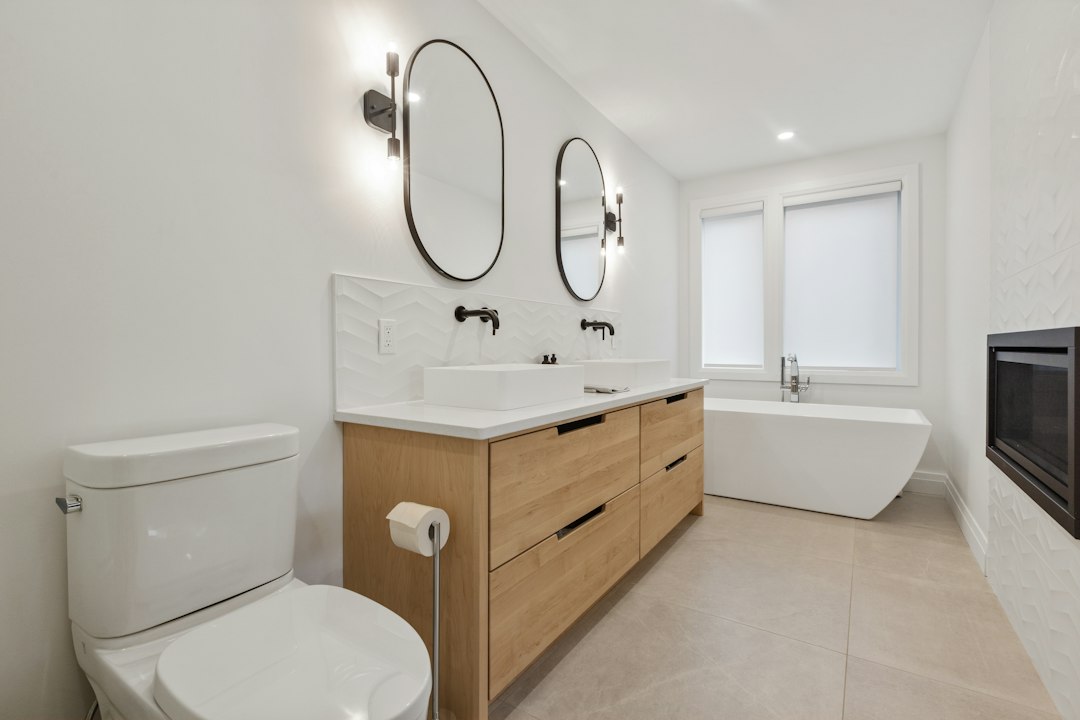
California Civil Code §1101.4 requires every single-family home in the state that was built on or before January 1, 1994 to have its water-wasting toilets, showerheads, and faucets swapped for water-conserving fixtures — and that retrofit has been mandatory statewide since January 1, 2017, whether or not the house ever changes hands.
If you’re getting ready to sell an older property, there’s a real chance the fixtures inside it are already out of compliance with a law that’s been on the books for more than a decade.
This isn’t a new fee or a form nobody has heard of. It’s a substantive plumbing retrofit requirement, written into the Civil Code since 2009, that catches a lot of sellers of pre-1994 homes off guard.
Here’s exactly what the statute requires, which fixtures count as noncompliant, what you’re legally required to tell a buyer, who’s on the hook for the cost, and when fixing it yourself before you list actually makes sense — and when it doesn’t.
Where This Law Comes From, and What It’s Actually For
Civil Code §1101.4 sits inside Article 1.4 of the Civil Code, titled “Installation of Water Use Efficiency Improvements” (Civil Code §§1101.1–1101.9). The Legislature added the article in 2009, effective January 1, 2010.
In its own findings, written into §1101.1, the Legislature said the point was straightforward: water supply reliability is essential to California’s future, and it is the Legislature’s intent “to require that residential and commercial real property built and available for use or occupancy on or before January 1, 1994, be equipped with water-conserving plumbing fixtures.” 1994 is the cutoff because that’s roughly when plumbing codes began mandating low-flow fixtures in new construction; anything built before it was very likely built with the thirstier hardware the law now targets.
Unlike a lot of point-of-sale requirements that only apply when a house changes hands, §1101.4 doesn’t wait for a sale. It’s a standing legal obligation that attaches to the property itself, and it has two separate triggers for single-family homes — one tied to permits, and one tied to a hard calendar date.
Which Fixtures Count as “Noncompliant”
Civil Code §1101.3 defines “noncompliant plumbing fixture” with specific flow numbers, not vague language. A fixture is noncompliant if it is:
- Any toilet manufactured to use more than 1.6 gallons of water per flush
- Any urinal manufactured to use more than 1 gallon of water per flush
- Any showerhead manufactured with a flow capacity of more than 2.5 gallons per minute
- Any interior faucet that emits more than 2.2 gallons per minute
The statute defines a “water-conserving plumbing fixture” as simply any fixture that meets “current building standards applicable to a newly constructed real property of the same type.” In practice, that means today’s standard low-flow toilets, showerheads, and faucets — the kind sold in every big-box hardware store — satisfy the law.
There’s no special certification or product list to shop from; you just need fixtures that fall under the thresholds above.
Notice what’s not on the list: there’s no mention of dishwashers, clothes washers, irrigation systems, or exterior spigots. The statute is narrowly focused on toilets, urinals, showerheads, and interior faucets — the fixtures that account for most of a home’s indoor water use.
Who This Applies To: Single-Family Homes, Specifically
Civil Code §1101.3 defines “single-family residential real property” as any real property improved with a building containing no more than one unit intended for human habitation — a standard detached or attached single-family house.
Multifamily buildings (anything with more than one residential unit) and commercial buildings are covered by a separate statute, Civil Code §1101.5, which runs on its own, later timeline.
That distinction matters, because a lot of what gets written about this law online blends the single-family rules with the multifamily and commercial rules, and the dates are not the same.
If you own and are selling a detached single-family home, a condo that’s legally a single unit, or a small single-family rental, §1101.4 is the section that governs you. If you’re selling a duplex, triplex, or larger residential or mixed-use building, §1101.5 applies instead, and its deadlines run through January 1, 2019 rather than 2017. This article focuses on the single-family rule under §1101.4, since that’s what applies to most as-is home sales.
The Two Triggers That Actually Govern Single-Family Homes
Civil Code §1101.4 lays out the single-family rule in three subdivisions, and it’s worth reading them as written rather than relying on a paraphrase, because the exact mechanism matters:
Subdivision (a) — the permit trigger. “For all building alterations or improvements to single-family residential real property, as a condition for issuance of a certificate of final completion and occupancy or final permit approval by the local building department, the permit applicant shall replace all noncompliant plumbing fixtures with water-conserving plumbing fixtures.” In plain terms: pull a building permit for an alteration or improvement on a pre-1994 single-family home, and the local building department will not sign off on final inspection until every noncompliant fixture in the house has been swapped — not just the fixtures in the room you’re remodeling.
This has applied on an ongoing basis since the law took effect, and it’s the mechanism most sellers actually run into, usually when they’re trying to finish a kitchen or bath remodel, add square footage, or close out a permit before listing.
Subdivision (b) — the statewide deadline. “On or before January 1, 2017, noncompliant plumbing fixtures in any single-family residential real property shall be replaced by the property owner with water-conserving plumbing fixtures.” This is the part sellers most often miss. It isn’t conditioned on pulling a permit, remodeling, or selling.
It’s a flat statewide deadline that applied to every single-family home built on or before January 1, 1994 — sale or no sale, permit or no permit. That date has already passed.
If a pre-1994 house still has its original 3.5-gallon toilets or pre-1994 showerheads, the home has been out of compliance with state law since January 1, 2017.
Subdivision (c) — the disclosure duty. “A seller or transferor of single-family residential real property shall disclose in writing to the prospective purchaser or transferee the requirements of subdivision (b) and whether the real property includes any noncompliant plumbing fixtures.” This is the piece that actually surfaces at the point of sale, and it’s covered in more detail below.
One detail worth being precise about: the January 1, 2014 date that shows up in a lot of general commentary on this topic belongs to the companion statute for multifamily and commercial buildings, Civil Code §1101.5, not the single-family rule.
Under §1101.5(d), multifamily and commercial owners face permit-triggered replacement starting January 1, 2014 — for additions that grow a building’s floor area by more than 10%, alterations with a permitted construction cost over $150,000, or any permitted work in a room containing noncompliant fixtures — with a separate, full-portfolio deadline of January 1, 2019.
Single-family sellers operate under §1101.4, with its own permit trigger under (a) and its own hard deadline of January 1, 2017 under (b). The two statutes run on different clocks, and conflating them is a common source of confusion.
The Written Disclosure a Seller Actually Has to Give
Section 1101.4(c) creates the underlying disclosure duty for single-family sellers, and a related statute, Civil Code §1102.155, spells out how that duty is actually carried out in a residential transaction.
Under §1102.155, a seller of single-family residential real property must disclose in writing that §1101.4 requires California single-family residences to be equipped with water-conserving plumbing fixtures on or after January 1, 2017, and must disclose whether the property includes any noncompliant plumbing fixtures as defined in §1101.3.
The statute also specifies that this disclosure represents the seller’s own statement, not the agent’s, is not part of any contract between buyer and seller, and is not a warranty or a substitute for an inspection. Section 1102.155 became operative on January 1, 2017 — the same date the universal retrofit deadline kicked in.
In practice, this disclosure usually travels alongside the rest of a seller’s required paperwork rather than as a separate form you have to track down on your own — similar in spirit to how a seller handles California’s Natural Hazard Disclosure Statement, another written disclosure triggered automatically by the fact of a sale rather than anything the seller has to go looking for.
The plumbing fixture disclosure is narrower: really two factual questions — do you know the retrofit requirement exists, and do you know (or not know) whether this house still has any of the four noncompliant fixture types.
Answering honestly, including “I don’t know” where that’s true, is what the statute calls for. There’s no requirement to hire an inspector just to check flow rates before you can disclose.
Who Pays, and Why That’s Not a Trick Question
Civil Code §1101.4(b) is explicit that the replacement obligation falls on “the property owner.” The statute sets up no cost-sharing mechanism, tax credit, or state reimbursement fund. (§1101.1(h) does say the Legislature intended for retail water suppliers to be “encouraged” to offer incentives or financing for retrofit costs, and many local water agencies run rebate programs for low-flow fixtures, so it’s worth a quick check with your provider before you buy anything.)
But as a matter of state law, the retrofit is the owner’s responsibility. If you’re selling, that owner is you, not the buyer and not your agent.
The statute’s structure also quietly does sellers a favor: nothing in §1101.4 requires the retrofit to be physically completed before a sale can close. The seller’s obligation at the point of sale is the written disclosure under subdivision (c) — not a certificate proving the work is done.
That’s a meaningfully different standard than a local point-of-sale inspection ordinance that can hold up a closing until a city sign-off is issued. Here, an honest disclosure satisfies the sale-side legal requirement even if the retrofit itself hasn’t happened yet.
What Actually Happens If a Seller Skips This
There’s no statewide plumbing-fixture police force checking every single-family home for compliance, and escrow isn’t required by §1101.4 to verify flow rates before a closing can proceed.
The practical enforcement point is almost always a building permit: if you, or a future owner, ever pull a permit for an addition or a kitchen or bathroom remodel covered under subdivision (a), the local building department won’t issue final approval or a certificate of occupancy until every noncompliant fixture in the house — not just the ones in the remodeled area — has been swapped out.
Several California building departments have published their own bulletins spelling this out, and the retrofit becomes a hard condition of closing out that permit.
The real exposure for a seller isn’t a fine from the state. It’s the disclosure itself.
If you sign a written disclosure that says the property has no noncompliant fixtures and that turns out to be false, you’ve created a factual misrepresentation a buyer can point to later — the same category of problem that comes up when sellers get sloppy about unpermitted work they didn’t disclose.
The safer path, especially on an older house you haven’t fully inventoried, is to say so: disclose what you know, disclose what you don’t, and let the buyer factor the uncertainty into their offer rather than guessing on paper.
The Narrow Exemptions the Law Actually Allows
Civil Code §1101.7 carves out a short list of exemptions from the water-conserving fixture article, and they’re genuinely narrow:
- Registered historical sites
- Real property for which a plumber certifies in writing that, due to the age or configuration of the property or its plumbing, installing water-conserving fixtures is not technically feasible
- A building for which water service is permanently disconnected
Being an older home, being vacant, or being sold as-is are not exemptions. Neither is simply not knowing the law existed. None of these exceptions apply to the ordinary case of an older, occupied single-family house that just hasn’t had its fixtures updated — which describes a large share of pre-1994 inventory across the state.
When Retrofitting Before You List Isn’t Worth It
If your home only needs a toilet and a showerhead swapped, doing it yourself before listing is usually a reasonable, low-cost move — low-flow fixtures are inexpensive, widely available, and a competent handyperson can usually swap a toilet or showerhead in under an hour.
For a house that’s otherwise in good shape and headed for a traditional retail listing, getting ahead of this disclosure with a completed retrofit can remove a line item buyers might otherwise negotiate against.
But that calculation changes fast on a genuinely distressed or heavily deferred-maintenance property, and it’s worth being honest about where self-retrofitting stops making sense:
- If the home’s galvanized or original supply lines are failing, swapping fixtures without addressing the plumbing behind the wall can mean redoing the same work twice once a buyer’s inspector finds the underlying problem.
- If you’re also sitting on unpermitted additions, a condemned structure, or code violations, a plumbing fixture swap is a minor item next to the bigger disclosures and repairs those issues require — spending money and time on fixtures first can mean fixing the smallest problem on the house while the larger ones still sink the sale.
- If the home is vacant, in probate, tied up in a foreclosure timeline, or otherwise on a clock you don’t control, the time spent sourcing a contractor, scheduling the work, and waiting on it to finish can cost more in holding costs, taxes, and insurance than the retrofit itself.
- If you simply don’t have the cash on hand to front material and labor costs for a house you’re trying to exit, borrowing or draining savings to comply with a fixture law — on a house you’re selling anyway — rarely pencils out.
In any of those situations, the honest written disclosure under §1101.4(c) and §1102.155 does the legal job the statute actually requires at the point of sale.
The fixtures themselves don’t have to be replaced before you can sell — you just have to tell the truth about what’s in the house.
For a seller trying to move a distressed property quickly, that’s often the more realistic path than taking on a retrofit project on top of everything else the sale already involves.
Why This Comes Up More on As-Is and Distressed Sales
Noncompliant fixtures tend to cluster in exactly the kind of homes that end up sold as-is: properties owned by the same family for decades, inherited houses nobody has updated, long-term rentals where a landlord deferred cosmetic work, and homes where bigger problems — a bad roof, deferred permits, an outdated panel — have crowded out smaller fixes like swapping a showerhead.
The plumbing fixture law is rarely the deciding factor on a sale by itself, but it belongs on the disclosure side of the ledger rather than something to leave out and hope nobody asks about.
It sits alongside other point-of-sale compliance questions that are easy to overlook on an older property — the kind covered in California’s balcony inspection law under SB 721 and SB 326, even though that statute applies to a different type of structure than most single-family homes.
None of this is a reason to panic about a sale. It’s a reason to know what you’re disclosing and why, so the paperwork reflects reality instead of a guess.
If you’d rather skip the retrofit decision entirely, we can make you a no-obligation cash offer on your California house as it sits — noncompliant fixtures, deferred maintenance, and all — and you can decide from there. Visit Cash Home Buyers CA to get started, or find Cash Home Buyers CA on Google to see more about who we are before you reach out.