
Why “As-Is” Doesn’t Waive Disclosure for a Carlsbad, CA Home Seller
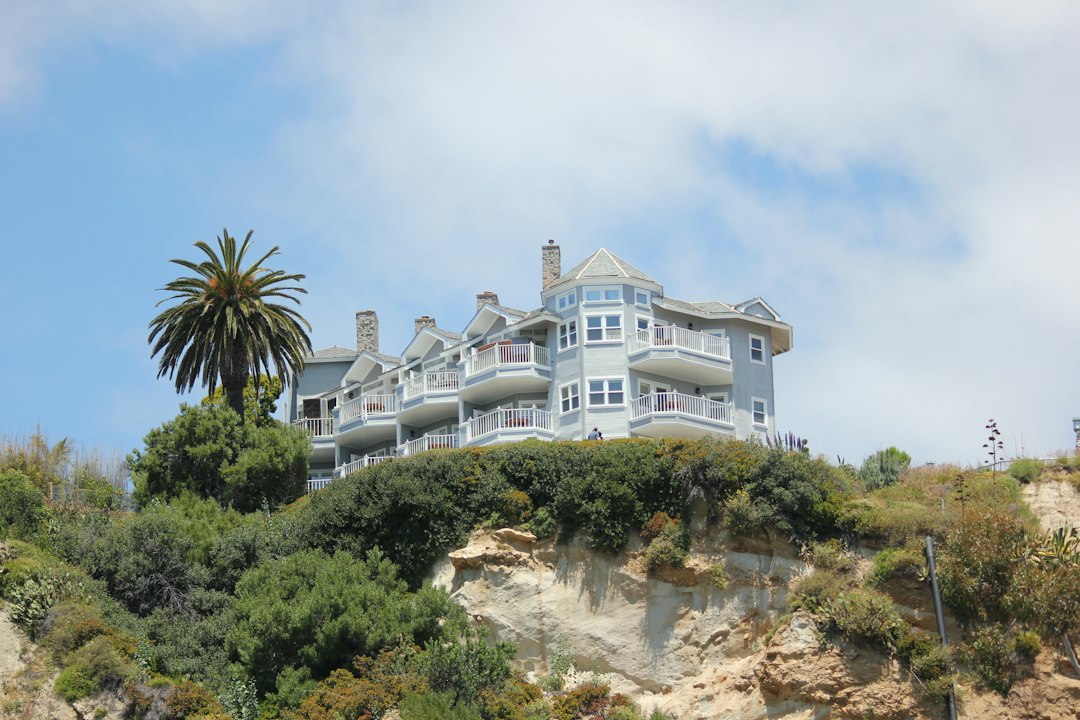
Selling a Carlsbad house “as-is” means a buyer takes the property in its current physical condition — it does not mean you can skip California’s disclosure laws, and in Carlsbad specifically, those disclosures run longer than in most inland cities. Between the statewide Transfer Disclosure Statement, the Natural Hazard Disclosure Statement, a wildfire-zone inspection requirement that now applies to parts of the city, and Mello-Roos notices common in its newer neighborhoods, a Carlsbad seller going the as-is route still has real paperwork ahead. Here’s what actually still applies, and what as-is genuinely does protect you from.
What “As-Is” Legally Means in California
“As-is” is a statement about repairs, not about disclosure. It tells a buyer you won’t be fixing anything before closing and that they’re taking the property in its existing physical condition. It does not waive your separate legal duty to tell the buyer what you already know about the property’s condition and history. California’s main disclosure requirement, the Transfer Disclosure Statement under Civil Code Section 1102, applies to nearly every residential resale in the state — “as-is” language in the listing or the purchase contract has no effect on that requirement.
There is a specific, narrow list of transfers exempt from the TDS under Civil Code Section 1102.2: court-ordered sales including probate and foreclosure, sales by a trustee under a deed of trust after default, REO sales by the lender that took the property back, certain transfers between co-owners or spouses, transfers to government entities, and a handful of other narrow categories. An ordinary homeowner selling their Carlsbad house to a buyer — cash or otherwise — doesn’t fall into any of these. If you’re not selling out of probate, foreclosure, or a similar court-supervised process, assume the TDS applies to you regardless of how the listing is marketed.
The Natural Hazard Disclosure Statement Is a Separate Requirement
Apart from the TDS, California law requires a Natural Hazard Disclosure Statement for residential sales, identifying whether the property sits in a designated flood zone, fire hazard severity zone, earthquake fault zone, seismic hazard zone, or wildland fire area. This isn’t optional and isn’t waived by an as-is sale either — it’s typically prepared by a natural hazard disclosure company using government maps and GIS data, and it protects the seller just as much as it informs the buyer, since an accurate NHD report is a strong defense if a buyer later claims they weren’t told about a hazard that was a matter of public record.
Carlsbad’s Added Wildfire Disclosure Step
This is where Carlsbad diverges from a lot of coastal California cities. CAL FIRE’s March 2025 update to the statewide fire hazard severity zone maps extended moderate, high, and very high fire hazard severity zone designations into parts of Carlsbad — zones that didn’t carry that designation before. If your property falls in a High or Very High Fire Hazard Severity Zone, Civil Code Section 1102.19 requires the seller to document that the home meets the state’s defensible-space and home-hardening requirements before the sale closes. In practice, the City of Carlsbad’s Wildfire Risk Mitigation Program handles the inspection itself: a $180 fee, at least 48 hours’ notice to schedule, and the inspector checks for things like dead vegetation removal, grass cut below four inches, and proper spacing between trees and shrubs near the structure. New construction in these zones also has to meet ignition-resistant building standards under Chapter 7A of the state building code, though that requirement is about construction rather than a resale disclosure.
If you haven’t checked whether your specific parcel falls inside one of these updated zones, do that before you list — it determines whether you need to schedule this inspection at all, and scheduling it late is one of the more common reasons an as-is closing gets pushed back a week or two.
Because the March 2025 map update is recent, a number of long-time Carlsbad homeowners are discovering their property carries this requirement for the first time only when they go to sell — the home hasn’t changed, but the designation has. Checking the current map rather than relying on what you remember from a prior sale or refinance is worth the five minutes it takes.
The Mello-Roos Notice Many Carlsbad Sellers Owe
Carlsbad has grown substantially in planned, master-developed communities since the 1980s, and a meaningful share of that newer housing stock sits inside a Mello-Roos Community Facilities District — a special tax that repays municipal bonds issued to build roads, schools, and other infrastructure for the development, layered on top of your regular property tax bill, and separate from any HOA dues. Annual amounts vary widely, from a few hundred dollars to several thousand depending on the community and the home’s value, and the obligation doesn’t disappear when you sell — it’s tied to the parcel, and the amount can step up each year under a schedule set when the district was formed.
If your property is subject to one of these districts, Civil Code Section 1102.6b requires you to make a good-faith effort to obtain a disclosure notice from the local agency administering the district and pass it to the buyer. A substantially equivalent substitute — your most recent property tax bill showing the itemized special tax, along with the district’s current and maximum annual tax figures and the date the tax expires, if you can get those details — generally satisfies the requirement if the agency’s own notice isn’t readily available. Skipping this because the listing says “as-is” doesn’t make the obligation go away, and a buyer who discovers an undisclosed Mello-Roos tax after closing has real legal grounds for a complaint.
This catches more Carlsbad sellers off guard than almost anything else on this list, because the tax often doesn’t stand out on a property tax bill unless you specifically look for the line item — it’s bundled in with the regular county tax assessment and easy to mistake for part of the base property tax rather than a separate, district-specific obligation. If you bought the home yourself within a planned community built in the last few decades, assume there’s a special tax line until you’ve confirmed otherwise by reading the bill carefully, not by relying on memory of what your lender’s escrow statement said at purchase.
What Carlsbad’s Growth Rules Mean for Recorded Restrictions
Carlsbad incorporated on July 16, 1952 — largely to avoid being annexed by neighboring Oceanside — and has managed its growth since through a quadrant system that divides the city into four planning areas, alongside a long-standing policy goal of keeping roughly 40% of the city as permanent open space. The city has also adopted some of the earliest habitat protection ordinances of their kind in California to safeguard sensitive coastal sage scrub and other native habitat. One practical consequence for sellers: properties near preserve land or habitat conservation areas can carry recorded open-space easements, biological conservation deed restrictions, or specific plan conditions that limit what can be built, cleared, or altered on the lot — restrictions that don’t show up by looking at the house, only by pulling the preliminary title report and specific plan documents for that parcel. An as-is sale doesn’t exempt a seller from disclosing a known recorded restriction like this if it’s something the seller is aware of; buyers typically discover unknown ones during their own title review regardless, which is one more reason a thorough preliminary title report early in the process heads off problems before they become a renegotiation at the closing table.
The upside of all this regulation is part of what makes Carlsbad desirable in the first place. The city averages 263 sunny days a year, earned the nickname “Village by the Sea” for its clifftop bluffs above wide beaches, and has deliberately limited how much of its land gets built out — which is precisely why buyers are willing to pay a premium here even for a home that needs updating. The disclosure burden and the market strength are two sides of the same growth-management policy; one doesn’t exist without the other.
Coastal Zone Property Carries an Extra Permit Layer
A meaningful share of Carlsbad sits within California’s statutorily defined Coastal Zone, where the city’s own planning department and, in some cases, the California Coastal Commission require a Coastal Development Permit (CDP) for new construction, additions, and certain other alterations — on top of the standard city building permit. This is a frequent, genuine source of disclosure problems in coastal San Diego County generally: a prior owner adds a room, a deck, or a second story without securing the required CDP, and the work goes unnoticed for years until a sale triggers a title search or a buyer’s more thorough due diligence. An as-is sale does not erase that exposure. If you know of an addition or alteration on your property that may not have gone through the coastal permit process, disclose it — and consider getting a permit history review from the city’s planning department before you list, since discovering it after close of escrow tends to be a far more expensive problem for everyone involved, you included, since an unresolved permit issue can become grounds for a buyer to come back at you post-closing. We’ve covered how unpermitted work gets handled in a California sale generally if you want the broader mechanics beyond Carlsbad’s coastal-specific layer.
What “As-Is” Does Actually Protect You From
None of this means as-is selling is pointless in Carlsbad — it means it does a specific, narrower job than people assume. An as-is sale protects you from a buyer demanding repairs, credits, or a renegotiated price over the physical condition of the house once they’ve had their inspection and accepted the property as shown. It does not protect you from a disclosure claim if you knew about a problem — a leaking roof, a prior unpermitted addition, a known slope stability issue — and didn’t disclose it. Courts and juries generally don’t look kindly on sellers who used “as-is” language as a reason to stay quiet about something they actually knew. Disclose everything you know, let “as-is” do its real job of taking repair negotiations off the table, and you get the benefit of the faster, simpler sale without the legal exposure of an incomplete disclosure.
Think of it as two separate conversations happening at once. One is about money and repairs — who pays to fix the roof, the plumbing, the aging HVAC system — and “as-is” closes that conversation down early, which is exactly what makes these sales faster. The other is about facts and history — what you know, what you’ve experienced living there, what a past inspection or contractor told you — and that conversation never closes, as-is or not, for as long as you’re the one signing the disclosure form.
When an As-Is Cash Sale Isn’t the Right Move
If your Carlsbad home is in solid condition, isn’t in an updated fire hazard zone, carries no Mello-Roos obligation or recorded habitat restriction, and you have the time to prepare it for the open market, a traditional listing in a city with a $139,326 median household income and a reputation as the “Village by the Sea” will often draw competitive offers and a higher net price than a cash sale — Carlsbad’s coastal desirability does real work for a well-presented listing. A cash, as-is sale earns its place when the property genuinely needs work you don’t want to finance or manage, when the wildfire inspection or vegetation work would take real time and money you’d rather not spend before a conventional closing, when you’re relocating or settling an estate on a deadline, or when the disclosure picture is complicated enough — multiple recorded restrictions, unpermitted work, deferred maintenance — that you’d rather have a buyer who’s already comfortable taking the property exactly as it is.
Questions Carlsbad Sellers Ask Most
Does listing “as-is” mean I don’t need an inspection at all? You aren’t required to get your own pre-listing inspection, but most buyers will get one regardless, and it generally works in a seller’s favor to know what it will find before the buyer does. An as-is sale means you’re not agreeing in advance to fix what it finds — it doesn’t mean the inspection report disappears from the transaction, and anything material it uncovers that you then become aware of still has to be disclosed if the sale is still pending.
If I didn’t personally cause a problem — say, a prior owner’s unpermitted addition — am I still responsible for disclosing it? Yes, if you know about it. Disclosure duties attach to what you currently know about the property’s condition and history, regardless of who caused the issue or when. Not knowing about something you had no reasonable way to discover is a different situation than knowing and staying quiet.
Do I still need to pay for the wildfire inspection if I’m selling as-is to a cash buyer? If your parcel falls within a High or Very High Fire Hazard Severity Zone, the Civil Code 1102.19 documentation requirement applies to the transfer itself, not to how the buyer intends to pay. Some cash buyers experienced with Carlsbad properties will factor an unresolved inspection into their offer and handle it after closing instead — but that’s a negotiated accommodation specific to that buyer, not something you can assume applies by default, so confirm it directly rather than assuming it’s covered.
Steps Before You List an As-Is Carlsbad Home
- Check your parcel against CAL FIRE’s updated fire hazard severity zone map to see whether the wildfire disclosure and inspection requirement applies
- Pull your most recent property tax bill and check for an itemized Mello-Roos or 1915 Act special tax line
- Order a preliminary title report early to surface any recorded open-space, habitat, or specific-plan restrictions tied to the lot
- Complete the Transfer Disclosure Statement honestly and completely, even though the house is being sold as-is
- Get a natural hazard disclosure report prepared by a qualified provider rather than guessing at zone designations yourself
For more on the statewide disclosure rules behind all of this, we’ve covered what “as-is” does and doesn’t cover across California more broadly, and broken down the Natural Hazard Disclosure Statement in detail. If you’d rather hand the repairs, the inspections, and the paperwork to a buyer who already expects all of it, Cash Home Buyers CA can put together a no-obligation cash offer on your Carlsbad property, and you can see how our as-is buying process works in Carlsbad specifically before deciding anything.