
How Community Property Division Plays Out for a Duarte, CA Home
In a California divorce, a house bought during the marriage is community property, and the law requires the court to divide it equally between the spouses unless the two of them have a written agreement saying otherwise.
That rule does not bend for location, but in Duarte, CA, a small San Gabriel Valley city built into the foothills, the decision about what to actually do with the family home tends to carry extra emotional weight that the statute itself never accounts for.
This article walks through the California community property rules that govern a Duarte divorce, the reimbursement and credit rules that can shift the numbers away from a flat 50/50, and the practical choices couples actually face once they know what each side is legally owed.
Duarte in Brief, and Why the Local Picture Matters
Duarte incorporated on August 22, 1957, and the 2020 Census counted 21,727 residents, making it one of the smaller cities in Los Angeles County.
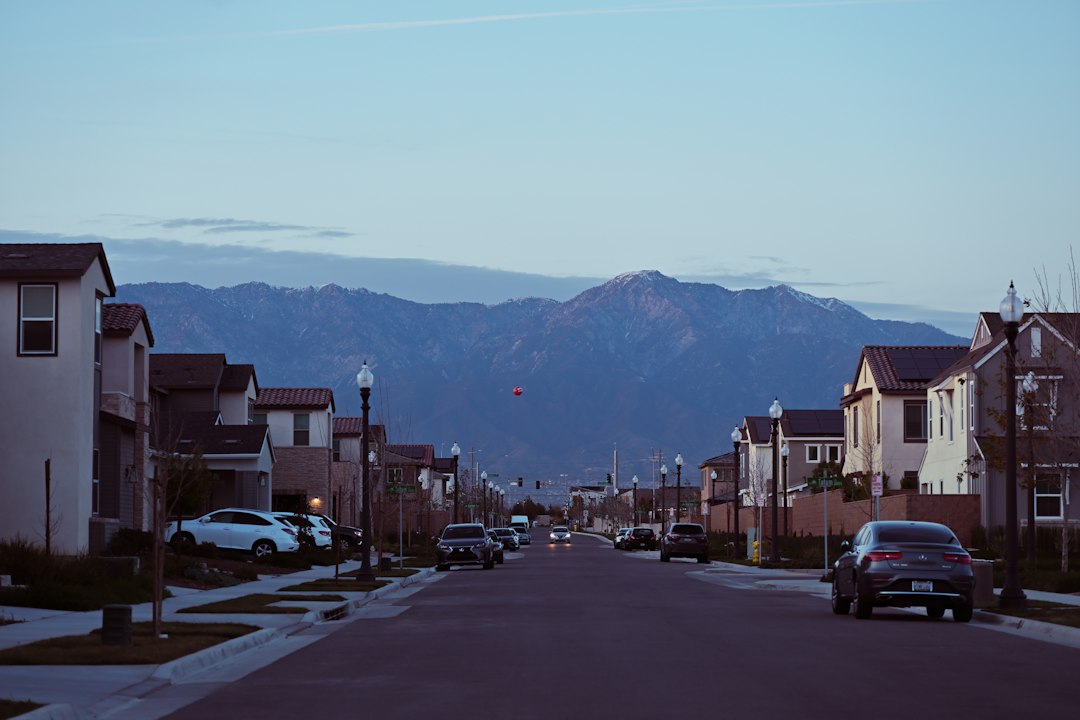
It sits along the base of the San Gabriel Mountains, which form its northern edge, and the San Gabriel River along with nearby quarry operations give the city a somewhat separate, self-contained feel from the areas to its east and south.
It is the kind of place where a lot of people know their neighbors, and where a single home often sits at the center of a family’s routine for a decade or more.
Duarte is also home to City of Hope National Medical Center, one of the country’s major cancer research and treatment institutions.
It traces back to 1913, when the Jewish Consumptive Relief Association opened a tuberculosis sanitarium on 40 acres south of Duarte Road, and it has grown into a defining institution for the city and one of its largest employers.
That matters here because a meaningful number of Duarte households are connected to City of Hope, either through employment or through ongoing specialized treatment, and that connection can make the question of whether to keep or sell the family home feel far more loaded than a simple asset-division worksheet suggests.
A spouse undergoing treatment nearby, or working shifts at the medical center, may have real, practical reasons to stay close to Duarte that have nothing to do with sentiment.
The law does not give extra weight to those reasons when it divides the property, but they absolutely belong in the conversation about what each spouse actually wants to do with their share.
The Starting Point: Community Property Under California Law
California is a community property state, and Family Code Section 760 lays out the basic rule: property either spouse acquires during the marriage, other than by gift or inheritance, belongs to the community.
That means both spouses own it equally, no matter whose name is on the title and no matter whose paycheck covered the mortgage. A home purchased during the marriage with marital earnings is community property even if only one spouse’s name appears on the deed.
Family Code Section 2550 then tells the court what to do with that property at divorce: absent a written agreement between the spouses providing otherwise, the court must divide the community estate equally.
Not “fairly” in some loose, judge’s-discretion sense, and not according to who contributed more to the household in other ways — equally, as close to a 50/50 split of value as the facts allow.
This is a major difference from most other states, which divide marital property under a broader “equitable distribution” standard that lets a judge weigh contributions and need.
In California, the starting assumption is a straight equal split, and the legal questions mostly concern what counts as community property and what, if anything, adjusts the numbers before the split happens.
Separate property is the main carve-out. Anything a spouse owned before the marriage, received as a gift, or inherited individually stays separate property and is not divided at divorce.
The home itself can be a mix: a house one spouse bought before marrying, then lived in with a spouse whose income helped pay the mortgage after the wedding, can end up partly community and partly separate, which is exactly the kind of situation Family Code Section 2640 was written to address.
For a broader look at how California courts sort out who ends up with the house itself, see this detailed guide to who gets the house in a California divorce.
One date matters more than almost any other in this analysis: the date of separation, meaning the point at which the couple began living separate lives with no intent to reconcile. Earnings and debts before that date are community property; earnings after it belong separately to whoever earned them.
That line is what makes the Watts and Epstein calculations below possible in the first place, since both depend on knowing exactly when a spouse’s income stopped being shared and started being their own.
When spouses disagree about the actual separation date — which happens often when one party moved out gradually, or the couple tried living under one roof for a while after deciding to divorce — that disagreement can shift thousands of dollars in either direction before anyone even gets to the house itself.
Reimbursement for Separate Property Put Into the House
Family Code Section 2640 gives a spouse the right to be reimbursed for separate property funds they contributed toward the purchase, down payment, or improvement of the community home, before the remaining equity gets split 50/50.
Say one spouse used $60,000 of savings from before the marriage, or an inheritance from a parent, as the down payment on the Duarte house.
At divorce, that spouse is generally entitled to get that $60,000 back off the top, without interest, and only the remaining equity is divided equally between the spouses.
The catch is proof. The spouse claiming the reimbursement has to trace the funds — bank statements, escrow paperwork, a paper trail connecting the separate-property source to the specific dollars that went into the house.
When separate funds get mixed into a joint account for months or years before the purchase, and ordinary income flows through that same account, tracing can become difficult or impossible, and the reimbursement claim can be lost entirely even though the money really did start out separate.
Anyone who believes they have a Section 2640 claim on a Duarte home should start pulling old account records and escrow documents early, well before mediation or trial, because reconstructing a decade-old paper trail after the fact is much harder than preserving it as you go.
Watts Charges: Living in the House After Separation
Once a couple separates but the divorce isn’t final, it’s common for one spouse to move out while the other stays in the house. California courts address the fairness of that arrangement through what are called Watts charges, named after the 1985 case In re Marriage of Watts.
If one spouse has exclusive use of the community home after separation, the court can order that spouse to reimburse the community for the fair rental value of that use — essentially treating the stay-behind spouse as if they were renting the other spouse’s half of the house during the separation period.
In a place like Duarte, this comes up often when one spouse stays in the home specifically to remain near City of Hope for treatment, or to keep a short commute to a job there, while the other spouse relocates.
The Watts analysis doesn’t ask why the exclusive use happened — it’s a financial accounting question, not a referendum on the reasons.
The amount owed typically gets calculated using comparable rental values in the area and gets offset against other amounts owed between the spouses, like Epstein credits, when the case finally settles or goes to trial.
Epstein Credits: Who Paid the Mortgage After Separation
The flip side of Watts charges is Epstein credits, from the 1979 case In re Marriage of Epstein. If a spouse uses separate post-separation funds — income earned after the date of separation, which is no longer community property — to pay a community debt like the mortgage, property taxes, or insurance on the house, that spouse is generally entitled to reimbursement from the community for those payments.
In practice, Watts and Epstein often get calculated together at the end of a case: one spouse may owe the community rental value for staying in the house, while also being owed credit for the mortgage payments they kept making out of their own post-separation paycheck.
The two figures get netted against each other before the final division.
Couples working through this in nearby cities have faced nearly identical math; see this breakdown of how Watts charges and Epstein credits played out in a Cerritos, CA divorce for a side-by-side example of how the offsetting numbers actually get applied.
Three Practical Paths Once the Legal Shares Are Clear
Once the lawyers, or the spouses themselves, have worked out the community share, any Section 2640 reimbursement, and any Watts or Epstein adjustments, there are really only three ways to handle the house itself.
The first is to sell the house and split the net proceeds according to the shares just calculated. This is often the cleanest option, especially when neither spouse can afford to keep the home alone, because it converts an illiquid, jointly-titled asset into cash that’s easy to divide precisely and move on from.
The second is a buyout: one spouse keeps the house and pays the other their share of the equity, usually by refinancing the mortgage into their own name alone. This is where Duarte’s foothill, wildland-urban-interface location becomes a real financial factor rather than a side note.
Homes set against the San Gabriel Mountains can face tighter homeowners insurance availability and higher premiums than homes in flatter, more central parts of the San Gabriel Valley, and a lender or appraiser factoring in insurance cost can affect both the home’s valuation and whether the spouse who wants to stay can actually qualify to refinance and buy out the other side.
It’s worth getting a real insurance quote before anyone commits to a buyout number, not after.
Buyouts also raise tax questions worth understanding in advance — this guide on whether a divorce house buyout is taxable in California is a useful starting point before either spouse signs off on a number.
The third path is a deferred sale, sometimes called a “Duke’s order” after the case that first authorized it, where the court lets one spouse and the children stay in the house for a set period — commonly until the youngest child finishes the school year or graduates — before the home is sold and the proceeds are finally divided.
This keeps kids in the same school district during a hard transition, but it also means both spouses stay financially tied to the property, and to each other, for longer.
When Selling the House Isn’t Actually the Right Call
It’s worth being honest here: a sale isn’t automatically the best outcome just because it’s the simplest one on paper.
If one spouse can genuinely afford a fair buyout — meaning they can refinance on their own income, cover the insurance cost on a foothill property, and still manage the ongoing payments — and they have a real reason to stay in Duarte, such as a job at or near City of Hope or an established treatment and support network close by, forcing a sale can do more harm than good.
Uprooting someone from proximity to ongoing medical care over a property division dispute rarely serves anyone well, and a buyout that’s fairly calculated and properly financed resolves the legal division just as completely as a sale does.
A sale tends to make the most sense in the opposite situation: when neither spouse can qualify to refinance or afford to buy out the other, when the house carries more complexity (and more insurance risk) than either spouse wants to manage alone, or when both spouses genuinely want a clean, fast break rather than years of further financial entanglement over a shared asset.
The right call depends on actual numbers and actual circumstances, not on which option feels easier to decide today.
None of this has to be decided by a judge.
Most California divorces, including the property division piece, get worked out through negotiation or mediation rather than a contested trial, and the house is usually the single easiest asset to reach agreement on once both spouses have the same appraisal, the same insurance numbers, and the same understanding of any reimbursement or credit claims in front of them.
A mediator or a pair of cooperative attorneys can often get two spouses to a written agreement on the house in a fraction of the time and cost of litigating it, which also means the couple — not a judge working from a generic equitable framework — gets to decide which of the three paths below actually fits their situation.
First Steps for a Duarte Homeowner Facing This Decision
- Gather the paper trail on any separate-property money that went into the house — old bank statements, escrow documents, inheritance records — before memories and files get harder to track down.
- Get a current, honest valuation of the home, and get an actual homeowners insurance quote for it given its foothill location, not an assumption based on an old policy.
- If one spouse has stayed in the house alone since separation, start tracking mortgage, tax, and insurance payments made from separate funds, and note the date the other spouse moved out, to support any Watts or Epstein calculations.
- Talk through, honestly, whether either spouse can qualify for a refinance alone, and what that payment would actually look like month to month.
- If a sale looks like the right path, get a clear, no-pressure read on what a fast sale would net before deciding between that route and a slower traditional listing.
- Put the agreed division — including any reimbursement, Watts, or Epstein figures — in writing, since Family Code Section 2550 only lets the default 50/50 split bend when there’s a written agreement between the spouses.
If selling turns out to be the right path for your Duarte home, we make no-obligation cash offers and can close on a timeline that works around a divorce settlement rather than the other way around. For more on how this specific process tends to unfold locally, see Sell a House During Divorce in Duarte.
Want to see what other California sellers say about working with us? Find Cash Home Buyers CA on Google for reviews, or call us at (424) 435-2326.