
Inherited a House in Temecula? What Probate, HOA Rules, and Prop 19 Mean for Selling It
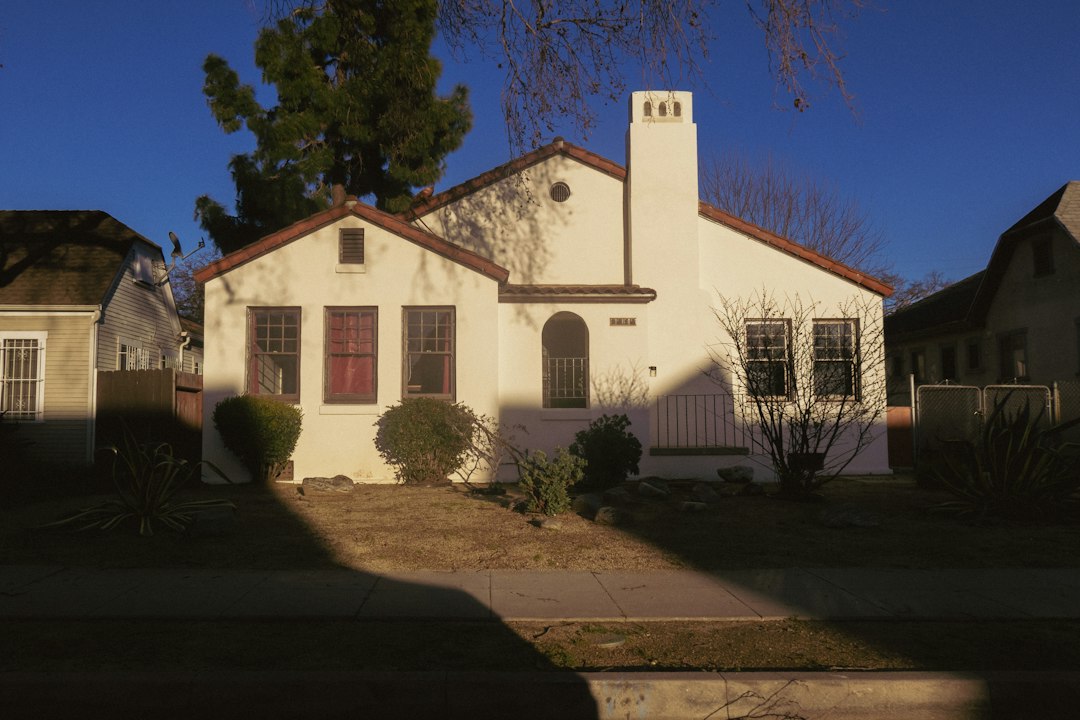
An inherited house in Temecula can often skip full probate under California’s $750,000 small-estate threshold for a primary residence — but if the home sits inside one of Temecula’s many HOA-governed communities, clearing probate is only half the job. Whether you need probate at all depends mostly on how title was held, and the small-estate alternatives that can skip it have their own rules worth checking carefully. Here’s how the newer probate threshold works, and the HOA step that catches a lot of heirs off guard in a city built almost entirely around master-planned subdivisions.
How the House Was Titled Still Decides Everything
Before getting to thresholds and HOA paperwork, it’s worth confirming probate is actually required in the first place. A house held in a properly funded living trust, in joint tenancy, or transferred by a recorded transfer-on-death deed generally passes outside probate regardless of its value. It’s only a house held in the decedent’s name alone — no trust, no surviving joint tenant, no TOD deed — that typically needs some form of court process before it can be sold, and even then, a personal representative with authority under the Independent Administration of Estates Act can often list and sell the property while probate is still open, subject to court confirmation in some cases.
AB 2016’s $750,000 Threshold for a Primary Residence
Assembly Bill 2016, signed September 21, 2024 and effective April 1, 2025, rewrote California’s small-estate procedure specifically for a primary residence. It amended Probate Code Sections 13100, 13101, 13150, 13151, 13152, and 13154, and repealed Section 13158. For a decedent who died after March 31, 2025, a primary residence valued at $750,000 or less can transfer through the simplified petition to determine succession to real property, filed at least 40 days after death in the county where the property sits, without opening a full probate administration and without letters of administration. Any other real property the decedent owned — a second home, a rental, raw land — remains subject to the older, much lower $184,500 limit, so the primary-residence exception only helps with the house someone actually lived in, not an entire estate’s real property holdings.
The petition itself has specific requirements: a certified death certificate and the property’s legal description, an inventory and appraisal showing the gross value used to confirm it’s under the $750,000 ceiling, proof the property was genuinely the decedent’s primary residence, disclosure of any probate proceedings opened elsewhere, and information identifying each heir and devisee. Whoever files it must notify all other heirs and successors within five business days. The “primary residence” test isn’t limited to where the decedent happened to be living at the exact moment of death — California defines it as a fixed, permanent home the person intended to return to whenever they were away, which matters for a Temecula home where an older relative may have spent part of the year elsewhere.
Why This Shows Up So Often in Temecula Specifically
Temecula incorporated on December 1, 1989 and grew explosively through the 1990s, pulling new residents from San Diego, Los Angeles, and Orange County after a 1985 land boom followed completion of Interstate 15 through the valley. The 2020 Census counted 110,003 residents, with a 2025 estimate near 114,865, and housing units climbed from 34,004 in 2010 to 37,170 in 2020 — about 65.4% of them owner-occupied. That growth curve matters for AB 2016 in a very practical way: a large share of Temecula’s housing stock was built from the late 1980s through the 2000s, meaning many of today’s aging original owners bought in during that boom and are now the generation whose estates are starting to move through inheritance. A primary residence purchased in Temecula in the 1990s for a fraction of today’s value, now appreciated well past six figures but still realistically under $750,000 in many of the city’s neighborhoods, is close to the textbook case AB 2016’s threshold was written to help.
The HOA Step Probate Doesn’t Skip
Here’s the part AB 2016 doesn’t touch: Temecula grew largely through master-planned, HOA-governed subdivisions, including Redhawk, which the city annexed in 2005 and which alone pushed Temecula’s population up toward roughly 90,000 at the time. Harveston is another well-known master-planned community with its own homeowners association. If the inherited house sits in one of these communities — and a large share of Temecula’s housing does — selling it means satisfying the HOA’s own transfer requirements in parallel with whatever probate or small-estate process applies.
Under Civil Code Sections 4525 and 4530, an owner (or, after death, the estate’s representative) can request the HOA’s disclosure documents — CC&Rs, bylaws, current assessments, financial statements, and pending litigation among them — and the association must deliver them within 10 days of the request. The association can charge a reasonable fee based on its actual cost to prepare and deliver the documents, but it must provide a written fee estimate first, state that fee separately from any other transaction charges, and cannot bundle unrelated charges into the disclosure package. It also cannot condition or withhold delivery on anything except that authorized fee. Any unpaid HOA assessments on the property become the buyer’s concern at closing, which means getting a current assessment payoff statement from the HOA is just as important as getting the court-side paperwork in order — a seller who only tracks the probate timeline and forgets to request the HOA packet early can find it’s the slower of the two processes once escrow actually opens.
Proposition 19 and the Decision to Sell Rather Than Move In
Clearing probate or the small-estate petition only answers who legally owns the house. A separate question — one that changes the math on whether to sell at all — is what happens to the property’s tax bill. Since Proposition 19 took effect on February 16, 2021, inheriting a parent’s or grandparent’s home no longer automatically keeps the old, lower property-tax base. To transfer the parent’s factored base year value, the heir has to actually move into the home as their own principal residence within one year of the transfer and file a homeowners’ exemption claim on it within that same year. Even then, the break isn’t unlimited: the exclusion covers the old base year value plus up to $1,044,586 in additional value for transfers occurring between February 16, 2025 and February 15, 2027 (that figure adjusts every two years), and anything above that combined amount gets added back onto the taxable value.
For heirs who plan to sell a Temecula house rather than live in it — which describes most of the situations this article is written for — that primary-residence requirement simply isn’t going to be met, and the property gets reassessed to full fair market value as of the date of the transfer. That’s not a penalty specific to selling; it’s just the default outcome Proposition 19 built in for any heir who doesn’t occupy the inherited home. It does mean the assumption that “Mom’s old low tax bill carries over” is usually wrong once the house changes hands to someone who intends to sell it, and it’s worth having the new assessed value estimated early so it doesn’t come as a surprise during escrow. One nuance worth knowing even if it won’t apply to most readers: an heir who does move in and later changes their mind — converting the home to a rental or selling after the fact — doesn’t get reassessed to the market value at that later date. Instead, the county resets the taxable value to what the property was worth back on the date of the original transfer, carried forward with normal annual inflation adjustments, which is a materially different and usually lower number than current market value.
The Federal Tax Side: Why Heirs Rarely Owe Much Capital Gains Tax
Property tax reassessment is one thing; income tax on the eventual sale is a separate, and generally more forgiving, question. Under federal law, an heir’s tax basis in inherited real property isn’t the price the original owner paid decades ago — it’s “stepped up” to the property’s fair market value on the date of the decedent’s death. The IRS states this directly in Publication 551: the basis of inherited property is generally its fair market value on the date of death, regardless of whether an estate tax return was ever filed. Practically, that means if a Temecula home the decedent bought in the 1990s for a modest sum is worth several hundred thousand dollars more today, an heir who sells shortly after inheriting it is typically taxed on the gain between the date-of-death value and the eventual sale price — not on the gain since the original 1990s purchase. In many cases that difference is small enough that capital gains tax on the sale ends up minimal or close to zero.
There’s an added wrinkle worth knowing if the house was owned by a married couple and one spouse died before the other, rather than by a single parent. Because California is a community property state, the IRS’s own basis rules provide that when a community-property asset qualifies, the basis of the surviving spouse’s half gets stepped up too — not just the half that belonged to the spouse who died. That “double step-up,” codified at Internal Revenue Code Section 1014(b)(6), is more generous than the rule in most other states, where only the deceased spouse’s half resets to current value. None of this is a substitute for advice from a CPA or tax attorney who can look at the actual numbers, but it’s a meaningful reason why heirs often owe far less in capital gains tax on an inherited Temecula house than they initially fear.
Two Different Appraisals, Two Different Purposes
It’s easy to conflate the inventory and appraisal that goes into the small-estate petition with the kind of valuation an HOA or a buyer’s lender might want, but they serve different purposes and don’t substitute for each other. The petition’s inventory and appraisal exists to show the court — or, for the simplified procedure, to document for the petition itself — that the gross value of the primary residence falls at or under the $750,000 ceiling, and a probate referee or qualified appraiser typically handles that figure. Separately, an HOA resale disclosure package doesn’t value the home at all; it tells a buyer what the association’s rules, finances, and any pending litigation look like. And separately again, if a retail buyer is financing the purchase, their lender will order its own appraisal tied to the loan, which can come in differently than either of the other two figures. Treating all three as interchangeable is a common and avoidable source of confusion during an inherited-house sale.
What a Realistic Timeline Looks Like
Heirs often ask how long all of this actually takes end to end, and the honest answer is that it’s the sum of several separate clocks running at different speeds. The small-estate petition itself can’t be filed until at least 40 days have passed since the date of death, which is a fixed statutory floor, not a guideline. From there, Riverside County Superior Court’s own processing and hearing-scheduling time adds more, and that varies by court calendar and whether the petition is complete the first time it’s filed — missing documentation or an unclear legal description is the most common reason a petition gets kicked back for correction, adding weeks. Running in parallel rather than in sequence, the HOA document request under Civil Code Section 4525 has its own 10-day statutory delivery window once submitted, so there’s no reason to wait for the court process to finish before sending it — in fact, submitting it the same week the petition is filed is the only way to avoid it becoming the slower of the two tracks.
Once the petition is granted and the HOA packet is in hand, a conventional retail listing in a desirable Temecula subdivision still runs through a normal 30-to-45-day escrow after an offer is accepted, assuming the buyer is financing and the appraisal comes in where expected. Add it up, and a heir who starts the process promptly after the 40-day waiting period, keeps the HOA request and the court petition moving in parallel, and then lists competitively is often looking at something in the range of four to six months from date of death to closed sale — longer if the estate has multiple heirs who need to coordinate, if the title work turns up an issue, or if the home needs repairs identified during a buyer’s inspection. None of those delays are unusual, but they’re worth planning around rather than being surprised by.
When a Cash Sale Is the Wrong Choice
Selling an inherited Temecula house to a cash buyer isn’t automatically the best outcome just because probate paperwork feels overwhelming. If the home is in solid condition inside a desirable Redhawk- or Harveston-type community, and the heirs can tolerate a normal escrow timeline, listing it on the open market after the small-estate petition or probate sale authority is in place will often net meaningfully more than a cash offer, particularly in a city where retail demand for move-in-ready homes in good school zones has stayed strong. A cash sale tends to make more sense in a narrower set of situations: when multiple heirs disagree about repairs or timing and want the fastest clean exit; when the home needs work substantial enough that a financed buyer’s appraisal or an HOA’s own property-condition concerns would stall a retail closing for months; when an out-of-state heir doesn’t want to manage HOA document requests, inspections, and contractor bids remotely; or when back HOA assessments or deferred maintenance have piled up to the point that a quick, as-is sale is simply the cleaner path through probate. None of that describes every inherited house in Temecula, which is exactly why it’s worth pricing out both paths — a retail listing once the paperwork clears, versus a direct sale now — before committing to either one.
First Steps
- Pull the recorded deed to confirm how title was actually held before assuming probate is required
- Get a qualified appraisal of the primary residence to confirm it falls at or under the $750,000 AB 2016 threshold
- If the home is in an HOA community, submit the Civil Code 4525 document request immediately — don’t wait until escrow opens
- Request a current HOA assessment payoff statement separately from the general disclosure packet
- Consult a California probate attorney before relying on any threshold figure you’ve read, including this one
This is general information rather than legal advice, and probate procedure and HOA practices both vary, so confirm specifics with a probate attorney and the property’s own association before setting a sale timeline. If managing both the court paperwork and the HOA packet from a distance sounds like more than you want to take on, Cash Home Buyers CA can make a no-obligation cash offer and work with your attorney on timing. See our Temecula inherited house sale page for how that works locally.