
Cash Home Buyers in Santa Clarita: How to Choose the Right One
- Foreclosure, inherited, tenants, damage — we buy it
- Zero fees, zero commissions, zero closing costs
- No obligation — turn the offer down and owe us nothing


Know Who You’re Selling To
What a legitimate cash buyer actually does, how to vet one, and what makes the Santa Clarita Valley market different from the rest of Los Angeles County.
Plenty of companies advertise themselves as cash home buyers Santa Clarita owners can trust, and from the outside they all look alike: a sign on a corner in Canyon Country, a postcard in a Valencia mailbox, a promise of a fast offer.
They do not all work the same way, and the differences matter once you sign.
This page explains the main types of cash buyers you will meet in Santa Clarita, how to check whether a buyer can actually close, how cash offers are priced, and how a cash sale compares with a listing once local costs are counted.
Cash Home Buyers CA is one of those buyers. We buy directly or bring a vetted cash buyer, and we put every number in writing so you can compare.
Cash Home Buyers Santa Clarita Sellers Will Meet
“Cash buyer” simply means someone who can pay for a house without a mortgage contingency. In practice, Santa Clarita sellers usually hear from four kinds of buyers, and each fits a different kind of property and seller.
- iBuyers. Large companies that make computer-generated offers on houses that fit a narrow profile, usually newer, move-in-ready tract homes within certain price limits. They can be convenient for a 2000s Valencia two-story in good shape, but they typically deduct service fees and repair costs after an inspection, and older or unusual houses often fall outside their models.
- Local investors and home buyers. Smaller companies and individuals who buy houses as-is, renovate or rent them, and close through a local title and escrow company. They are the buyers most likely to take on an original 1970s house in Saugus, a Newhall rental with a long-term tenant, or a Canyon Country house with slope or permit problems.
- Buy-and-hold landlords. Investors who want a rental. They are often interested in tenant-occupied houses and condos and can be a good match when you want the lease to stay in place.
- Private buyers paying cash. Occasionally a retail buyer, such as a downsizing retiree or a family selling another property, pays cash for a house they plan to live in. These buyers are usually found through a listing and want a house in move-in condition.
Knowing which group a buyer belongs to tells you what kind of offer to expect, how much inspection to expect, and how flexible the closing date will be.
Real Estate Cash Buyers vs. iBuyers: Which Fits Your House?
The biggest practical difference between real estate cash buyers who buy as-is and an iBuyer is how they treat condition.
An iBuyer’s first number is usually based on an assumption that the house is in good shape, and the final price is adjusted after an inspection, sometimes by a large amount.
A local buyer who walks the property before making a written offer usually prices the repairs in from the start, so the number is less likely to move.
The second difference is flexibility. An iBuyer generally works within a standard process and timeline.
Local real estate cash buyers can usually close in 7 to 14 days, wait two months if you need time to move, buy with tenants in place, handle a probate or trust sale, or take a house full of belongings.
If your house is a recently built, updated home in a well-run association, it is worth getting an iBuyer quote alongside a local offer. If it needs work, has a tenant, or comes with a complicated title, a local buyer is usually the better fit.
Why Local Cash Home Buyers Matter in Santa Clarita
Santa Clarita looks uniform from the freeway, but the details that change a house’s value are very local, and local cash home buyers are more likely to know them before they make an offer.
- HOAs everywhere. Much of Valencia and many newer neighborhoods in Saugus and Canyon Country sit inside homeowners associations that maintain paseos, pools and slopes. A buyer who knows the local associations knows to order the resale package early and to check for special assessments.
- Special tax districts. The City of Santa Clarita has three community facilities districts: Valencia Town Center CFD No. 2002-1, Vista Canyon CFD No. 2016-1 and the Cooper Street Parking Structure CFD No. 2020-1. Other agencies, including school districts, can levy their own special taxes. A careful buyer reads the property tax bill before pricing, not after.
- Fire hazard zones. The State Fire Marshal’s 2025 maps place about 33,278 acres of the city’s local responsibility area in the Very High Fire Hazard Severity Zone, up from 19,498 acres in 2011. Houses on the canyon edges may face higher insurance costs or non-renewals, which matters to any buyer who will later finance or insure the property.
- Very different housing by neighborhood. Valencia began with the Old Orchard tract in 1967 and grew village by village. Newhall has the oldest houses in the city, some from before the war. Saugus and Canyon Country mix 1960s to 1980s tracts with newer subdivisions such as Skyline Ranch, Vista Canyon and Five Knolls. Comparable sales from the wrong part of the valley produce the wrong price.
A buyer from outside the area can still make a fair offer, but you should expect them to ask about these items. If they do not, that tells you something.
How to Vet House Cash Buyers Before You Sign
House cash buyers range from established companies to people who have never closed a deal. A few simple checks separate the two, and none of them is rude to ask for.
- Proof of funds. Ask for a recent bank statement, a line-of-credit letter or another document showing the buyer can close at the offered price. A buyer who refuses or stalls is not ready to buy.
- A neutral title and escrow company. The sale should close through an independent title and escrow company in Los Angeles County that holds the money, clears title and records the deed. You should never be asked to sign a deed outside of escrow or hand over documents directly to a buyer.
- Earnest money. A serious buyer deposits earnest money into escrow after the contract is signed. Ask how much and when. A token deposit with no deadline gives the buyer little reason to perform.
- A written offer and purchase agreement. Price, closing date, who pays which costs, what happens if the buyer does not close, and any stay after closing should all be in writing before you commit.
- Clear contingencies. Some buyers include a long inspection period that lets them renegotiate later. Ask how many days of contingency the buyer wants and what they plan to inspect.
- No upfront fees. You should never pay an application fee, processing fee or deposit to a buyer. Costs are settled through escrow at closing.
- Who will actually close. Ask whether the company is buying the house itself or bringing another buyer. We buy directly or bring a vetted cash buyer, and we tell you which before you sign.
Taking an hour to make these checks can save weeks of lost time on a buyer who was never able to close.
How a Cash Offer Is Priced in Santa Clarita
Every legitimate cash offer is built from the same pieces, even when buyers describe them differently. Understanding the pieces lets you compare offers that are not presented the same way.
- After-repair value. The buyer estimates what the house would sell for once it is updated, using recent sales of similar houses in the same part of the valley. A single-story 1970s house in Canyon Country and a two-story 2000s house in a Valencia village should not share comparables.
- Repair and update costs. Roof, HVAC, plumbing, electrical panel, kitchen, bathrooms, flooring, paint, pool, slopes and any permit corrections. A buyer who has seen the house can price these more accurately than one working from photos.
- Holding costs. Loan interest, property taxes, insurance, utilities, HOA dues and any special taxes during the months of renovation and resale.
- Resale costs. The commission and closing costs the buyer will pay when they sell the house later.
- Risk and margin. A buyer needs a margin to cover surprises and earn a return. This is the part that varies most between buyers.
As a simple illustration, consider a house that might sell for $900,000 after a full update. If it needs $90,000 of work, $25,000 of holding costs over several months and $50,000 of resale costs, the buyer’s offer will be well below $900,000 before any profit is counted.
The point is not the specific numbers, which vary from house to house, but that you can ask any buyer to show you roughly how they arrived at their offer.
If you want to see this worked through with real paperwork, our page on how to get a cash offer for my house Santa Clarita walks through it step by step.
Cash Home Sale vs. Listing: A Santa Clarita Net Sheet
The fair way to judge a cash home sale is to compare what you would actually take home, not the headline price. The table below uses a $900,000 sale price, close to Movoto’s September 2026 median sold price of about $919,000 for Santa Clarita, and common cost assumptions. Your own figures will differ, especially for repairs and carrying costs.
| Cost item | Listing with an agent (example) | Sell to us |
|---|---|---|
| Agent commission | About $45,000 at 5% (rates vary and are negotiable) | $0 |
| Los Angeles County transfer tax ($1.10 per $1,000) | About $990, customarily paid by the seller in a listed sale | $0 to you |
| City transfer tax | None in Santa Clarita | None |
| Escrow and title fees | Seller’s share, often several thousand dollars | $0 to you |
| Repairs and inspection credits | Often several thousand to tens of thousands | $0 |
| Carrying costs while listed | Mortgage, HOA, insurance and utilities for the 112-day average marketing period plus escrow | Usually 7 to 14 days |
| Risk of a failed escrow | Real, especially with appraisal, loan or insurance problems | Low once escrow opens |
When you sell to us, we pay the standard closing costs, including the county and city transfer taxes, escrow and title. Your loan payoff and any liens are paid from the purchase price through escrow, the same as in any sale. Because Santa Clarita is a separate city from Los Angeles, the City of Los Angeles transfer tax and Measure ULA do not apply here.
A listing will often produce a higher sale price, and for an updated house it may also produce a higher net. For a house that needs work, sits in a fire zone with insurance problems, or has to close by a certain date, the gap usually narrows or disappears. The only way to know is to put both numbers side by side.
Questions to Ask Any Cash Buyer
Before you choose between offers, ask every buyer the same questions and write down the answers. Comparing the answers side by side is often more revealing than comparing the prices.
- What exactly is the price, and can it change? Ask which inspections, if any, the buyer still needs and whether the price can be renegotiated afterward.
- How many days until closing, and who sets the date? A buyer who can close in two weeks should also be able to wait if you need more time.
- How much earnest money will you deposit, and when? Get the amount and the deadline in the contract.
- Which title and escrow company will you use? You can ask to use a company you already know, and a confident buyer will not object.
- What happens to things left in the house? Some buyers charge for cleanouts. Others, including us, let you take what you want and leave the rest.
- Can I stay after closing if I need to? A short stay after closing can make a move far easier. Get the terms in writing.
- Who pays the closing costs? Ask for a written estimate of your net proceeds, not just a purchase price.
Many sellers start by searching for “cash buyers real estate” listings online and end up with three or four offers that look very different. These seven questions turn them into something you can compare line by line.
Selling a Condo or Townhome for Cash in Santa Clarita
Santa Clarita has condo and townhome complexes in all four of its original communities, and they come with their own hurdles for financed buyers. Lenders review the association’s budget, reserves, insurance and any litigation, and some complexes do not meet the standards that FHA or other loan programs require.
A special assessment for roofs, decks or plumbing can also scare off a buyer who needs to qualify for a loan.
A cash buyer does not need the association to pass a lender’s review, which can make a direct sale the simplest route for a unit in a complex with low reserves, pending litigation or a large assessment.
The association still has to provide its resale documents, and any unpaid dues or assessments are settled through escrow. If you own a unit like this, mention it on the first call so we can request the HOA documents right away.
Red Flags When Choosing a Cash Buyer
Most cash buyers in Santa Clarita are legitimate. A few warning signs are still worth knowing:
- An offer that is much higher than every other offer, with a long inspection period that allows the buyer to cut the price later.
- Pressure to sign the same day, or a contract that is not explained before signing.
- Requests to sign a deed, a power of attorney or a lease-option agreement outside of escrow.
- No proof of funds, or proof of funds in a different name with no explanation.
- A request for an upfront fee of any kind.
- A promise to “save” a house from foreclosure that involves transferring title to the buyer while you keep paying the loan.
If any of these come up, slow down. A real buyer will wait for you to check.
When a Cash Sale Is Not the Best Choice
We would rather lose a deal than buy a house from someone who would have done better listing it.
If your house is updated, sits in a stable HOA, has a bound insurance policy and you have four or five months to wait, listing with a good agent will usually bring more money.
A cash sale earns its place when speed, condition, a tenant, an estate or a firm date matters more than squeezing out the last dollar. If speed is the main issue, see our guide for owners who want to sell my house fast Santa Clarita.
If repairs are the main issue, our page on how to sell house as-is Santa Clarita covers condition and disclosure in more detail.
Cash Home Buyers Santa Clarita FAQ
Who are the cash buyers real estate agents bring to Santa Clarita listings?
Usually a mix of investors, landlords and occasional private buyers who pay without a loan. They are found through the open market, so the sale includes a commission and a marketing period. A direct sale to a company like ours skips both, while a listing exposes the house to more potential buyers.
Is it smart to sell homes for cash in Santa Clarita?
It depends on the house and your timeline. Owners who sell homes for cash here usually do it because the house needs work, has a tenant, is part of an estate, or has to close by a set date. For an updated house with no deadline, a listing may net more.
How do I know a cash buyer really has the money?
Ask for proof of funds before you sign and make sure earnest money goes into escrow with a neutral title and escrow company. Funds should move through escrow, never directly between you and the buyer.
Do you buy the house yourselves?
We buy directly or bring a vetted cash buyer. If another buyer will close, we tell you before you sign, and your price, terms and closing date are set in the written agreement.
Do you buy houses with Mello-Roos, HOA dues or special assessments?
Yes. We read the tax bill and HOA documents, factor any special taxes or assessments into the offer, and handle the resale package through escrow.
Will a cash buyer pay less than a retail buyer?
Usually, yes, because the buyer takes on repairs, holding costs and risk. The difference shrinks once you subtract commission, repairs, carrying costs and the chance of a failed escrow from a listing.
Who pays closing costs when I sell to you?
When you sell to us, we pay the standard closing costs, including the county and city transfer taxes, escrow and title. There is no commission on a direct sale.
Do you buy throughout Santa Clarita?
Yes, in Valencia, Saugus, Newhall and Canyon Country and across the city’s ZIP codes, including 91321, 91350, 91351, 91354, 91355, 91387 and 91390. Our we buy houses Santa Clarita page has the full overview.
Talk to a Local Cash Buyer
If you want a written cash number to compare with other offers or with a listing, call or text (424) 435-2326 or use the form at the top of this page. We will walk the house, explain how we priced it, and give you the time you need to decide.
Seller Guides
Helpful guides for homeowners in Santa Clarita
Plain-English answers to the questions sellers ask us most.
 Selling for cash
Menifee’s Mello-Roos Tax Districts: What a Seller Needs to Know Before Listing
Menifee's growth means many homes sit inside a Mello-Roos CFD. Here's what the special tax is, how it appears on the bill, and what sellers must disclose.
Read the guide → Selling for cash
California’s AB 1482 Rent Cap: How the 5% Plus CPI Formula Actually Works
AB 1482's rent cap runs on a 5% plus regional CPI formula, capped at 10%, that resets every August 1. Here's how…
Read the guide → Selling for cash
How to Research Permit History on a Los Angeles Home With LADBS’s PRISM System
LADBS's PRISM system lets you check a home's LA permit history before listing. Here's how the lookup works, what statuses mean, and why lenders care.
Read the guide →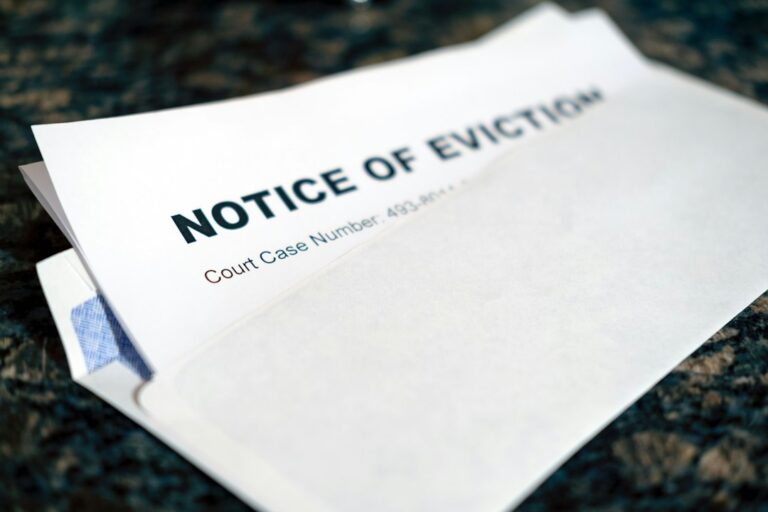 Rentals & tenants
California’s Just Cause Eviction Notice: What Civil Code 1946.2 Requires
Civil Code 1946.2 requires a stated reason to end most tenancies after 12 months, and one month's rent in relocation pay within 15 calendar days.
Read the guide → Selling for cash
Pico Rivera Mobilehome Rent Cap: What the Ordinance Limits
Pico Rivera caps mobilehome space rent increases at 3% or 75% of CPI, whichever is less — and the cap follows the…
Read the guide → Selling for cash
When a Mobile Home Park Closes in California: The Notice and Relocation Rules
California requires an impact report, a relocation plan, and up to 12 months' notice before a mobile home park can close. Here's how the process works.
Read the guide → Selling for cash
San Joaquin County Supplemental Tax Bill Explained
A second tax bill after buying or inheriting a San Joaquin County house isn't a mistake. Here's how the county calculates it, and when it bills you twice.
Read the guide → Foreclosure & liens
Can a Lender Sue You After a California Foreclosure? Anti-Deficiency Rules Explained
In most California foreclosures the lender can't sue for the unpaid balance after sale. Here's when anti-deficiency protection applies, and when it fails.
Read the guide → Selling for cash
The Prop 19 Filing Deadline Most Heirs Miss: BOE-19-P Explained
Inheriting a parent's California home doesn't auto-protect it from reassessment. Here's the BOE-19-P form, the 3-year deadline, and what happens if missed.
Read the guide →