
Selling Your Rancho Park House Because You’re Relocating
- Foreclosure, inherited, tenants, damage — we buy it
- Zero fees, zero commissions, zero closing costs
- No obligation — turn the offer down and owe us nothing


Fast, Fair, and Reliable Offers
Moving for a job or out of state? Pick your closing date, sign remotely, and stop carrying two housing payments.
A relocation sale is really a timing problem.
The start date at the new job, the lease or purchase on the other end, and the escrow on your Rancho Park house rarely line up, and every week they do not costs you a mortgage payment on a house you no longer live in.
A cash sale lets you fix the closing date first and build the rest of the move around it. Cash Home Buyers CA buys houses across Rancho Park as-is, and you can close from anywhere.
You Do Not Have to Be in California to Close
This is the question we get most from people who have already moved. California does not currently allow remote online notarization in the way many other states do.
A certificate of acknowledgment taken in another place is sufficient here if it was taken in accordance with the laws of the place where it was made, so you sign the grant deed in front of a notary in your new state under that state’s law, and if that state permits remote online notarization, that notarized deed is acceptable for recording here.
Non-notarized escrow documents can be e-signed. In practice escrow either overnights the package to you or sends a mobile notary to your new address.
California Withholding, and the Exemption You Probably Qualify For
California withholds 3 1/3 percent of the total sales price on real estate sales unless an exemption applies. Given Rancho Park’s typical price range, that can mean tens of thousands of dollars held back at closing, which matters when you are funding a move.
The rate and exemption list are identical for a California resident and an out-of-state seller; there is no residency-based exemption.
The exemption that usually applies is the principal residence exemption: if you owned and lived in the property as your main home for at least two of the five years ending on the date of sale, you certify that and no withholding occurs.
If you move out and let a Rancho Park house sit before selling, that two-of-five-year clock keeps running against you, which is a good reason to sell sooner rather than later once you know you are relocating.
The Job-Move Capital Gains Rule
You can generally exclude up to $250,000 of gain if single and $500,000 if married filing jointly, provided you owned and used the home as your residence for at least 24 months of the previous five years.
Given how much Rancho Park has appreciated since many of its houses were purchased decades ago, that exclusion can matter more here than in a newer neighborhood.
If you fall short of the full two years because a job move is pulling you away, a partial exclusion is available when you took a new job at least 50 miles farther from the home than your old job, or began a new job at least 50 miles away with no previous work location.
Transfer Tax on a Rancho Park Sale
Because Rancho Park is within the City of Los Angeles, the combined city and county transfer tax runs $5.60 per $1,000 of sale price, and Measure ULA’s added surcharge only applies above roughly $5.4 million as of 2026, far beyond what a typical Rancho Park sale reaches.
That is a transfer tax owed on the sale itself, not a commission tied to using an agent, so it applies the same way whether you sell to us or to a retail buyer.
What you avoid selling to us is the 5 to 6 percent agent commission and any repair credits, which is where most of the actual savings comes from on a relocation timeline where you cannot afford weeks of back-and-forth.
If You Are 55 or Older, Where You Move Matters
Proposition 19 lets homeowners 55 or older, severely and permanently disabled, or victims of wildfire or a Governor-declared disaster transfer their Proposition 13 base year value to a replacement primary residence up to three times, anywhere in California, but not out of state.
For a longtime Rancho Park owner with a low assessed value relative to today’s prices, that is a genuine fork in the road: moving within California preserves decades of Proposition 13 basis, while leaving the state gives it up permanently.
What Rancho Park’s Condition Split Means for a Relocation Sale
Rancho Park’s housing stock splits between fully remodeled 1930s and 1940s bungalows and original-condition ones many buyers plan to rebuild.
If you are relocating and your house is in original condition, listing it retail from another state adds a layer of difficulty on top of an already tight timeline, since you would need to manage repairs, showings and an inspection negotiation remotely.
A direct cash sale removes all of that, and we can close whether you are still living in the house, already gone, or somewhere in between.
Why Relocating Rancho Park Owners Sell for Cash
- You choose the closing date, so it can land after your last day at work or after the movers come, not whenever a buyer’s lender is ready.
- No repairs and no staging, which are difficult to manage from another state on an original-condition bungalow.
- No showings after you have gone, and no empty-house risk or deferred maintenance piling up.
- No financing contingency, so a buyer’s underwriting problem cannot push your move.
Common Reasons Rancho Park Owners Relocate
Rancho Park sits close enough to Century City, Culver City and the Westside job corridor that a lot of the moves we see are entirely ordinary: a new job in another city or state, a company relocation with a hard start date, wanting to avoid carrying two mortgage payments while a new purchase closes elsewhere, or simply not wanting to keep paying insurance and upkeep on a house sitting empty near the golf course while you settle in somewhere new.
None of these require a crisis to justify selling quickly, and a cash sale works the same way regardless of the reason behind the move.
What We Do Between Your Call and Closing
We start by pulling recent comparable sales for your specific stretch of Rancho Park, walk the property once, and put a written offer in front of you within 24 to 48 hours, whether you are still living there or coordinating remotely from your new city.
Once you accept, we open escrow with a licensed Los Angeles County title and escrow company, order the city’s 9A report the same week since it is usually the pacing item on a City of Los Angeles closing, and handle every retrofit certification the report calls for ourselves.
Recording and Getting Your Proceeds
Deeds record with the LA County Registrar-Recorder in Norwalk, and proceeds wire the same day recording is confirmed, wherever your bank account is located. If you have already relocated out of state, escrow can wire funds to an out-of-state account just as easily as a California one, and there is nothing about the sale itself that requires a California mailing address once closing is complete.
Frequently Asked Questions
Can I sell my Rancho Park house after I have already moved?
Yes. We handle a walkthrough locally and escrow gets documents to you wherever you are.
How fast can you close?
Usually two to three weeks once the 9A report is back, and we can go faster or slower. There is no lender, so the date is genuinely yours.
Should I rent my Rancho Park house out instead of selling?
Some people should. Be aware that once it is a rental you are subject to just-cause protections after 12 months and possibly other tenant rules depending on the parcel, and that moving out starts the clock against your two-of-five-year capital gains exclusion.
What if I still have belongings in the house?
Leave what you do not want. We buy as-is and handle cleanout.
Will the 3 1/3 percent be withheld from my proceeds?
Not if you certify the principal residence exemption and meet the two-of-five-year test. Your escrow officer prepares the form.
Do I need to be in Los Angeles for the walkthrough?
No. We can often complete an evaluation with photos and a video walkthrough if you have already relocated, and coordinate any in-person visit around your schedule rather than requiring you to fly back.
For the same rules across the rest of the city, see our page on selling a house when relocating across the rest of Los Angeles. If speed is your main concern, see how to sell a Rancho Park house fast, or how we handle a property you need to sell as-is.
Get a free, no-obligation cash offer from Cash Home Buyers CA today.
Seller Guides
Helpful guides for homeowners in Rancho Park
Plain-English answers to the questions sellers ask us most.
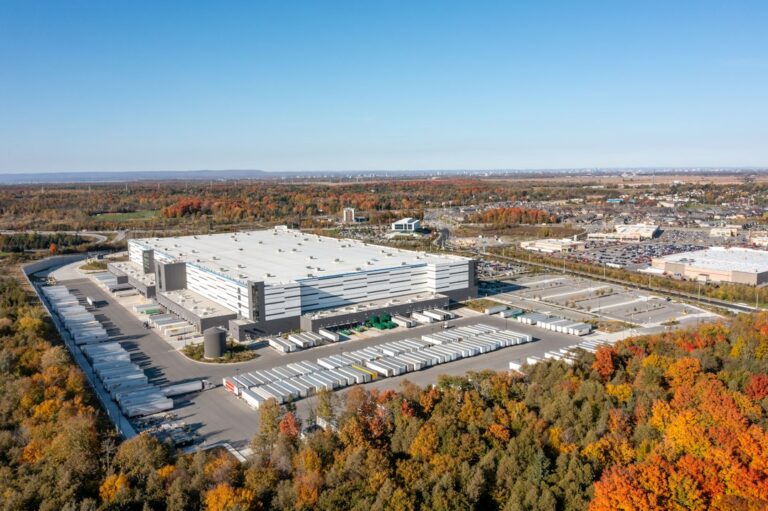 Relocating
Fontana’s Warehouse Boom: What It Means If You’re Relocating
Fontana grew from a wartime steel town into an Inland Empire logistics hub. See what that shift means for home values and selling if you are relocating.
Read the guide → Rentals & tenants
How Much Must Long Beach Landlords Pay Tenants Under the Relocation Ordinance?
Long Beach landlords: see the LBMC 8.99 relocation payments, notice periods, and city filing step required before a no-fault tenant termination.
Read the guide →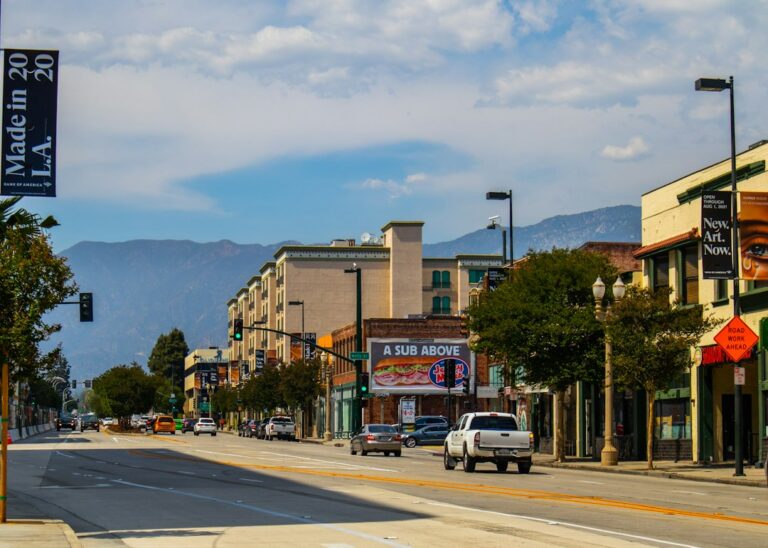 Rentals & tenants
Pasadena Tenant Protection Ordinance: Notice & Pay Rules
Pasadena's tenant protection ordinance sets notice periods, split relocation pay, and rent caps for owners selling a tenant-occupied rental.
Read the guide → Relocating
What Torrance’s Planned-City History Means for a Relocation Sale
Torrance was built in distinct eras, and that history still shapes comps and timelines. See what it means for selling fast on a relocation deadline.
Read the guide → Relocating
Selling a Hawthorne House on a Job-Relocation Timeline
Relocating for a new job near Hawthorne? Here is how to sell your house on a tight timeline without losing the tax exclusion or skipping a disclosure.
Read the guide → Relocating
Selling on a Relocation Deadline in Downey, CA: What Actually Takes the Time
Relocating out of Downey? See what truly drives the timeline: disclosure prep, underwriting, and escrow, plus how to compress it without losing value.
Read the guide → Relocating
What Claremont’s College-Town Market Means When You’re Relocating
Claremont's college-town market and a strict tree-permit ordinance affect how fast a relocation sale moves. Here's what sellers should know first.
Read the guide → Relocating
Relocating From Del Aire, CA: What to Know First
Relocating from Del Aire? This unincorporated LA County community has no city hall, LAX flight-path noise to weigh, and a tax exclusion worth checking.
Read the guide → Relocating
Relocating From Altadena, CA After the Eaton Fire
The Eaton Fire destroyed 9,419 structures in Altadena. Homeowners relocating can carry their old property tax base to a new home anywhere in California.
Read the guide →