How Our San Francisco Cash-Offer Process Works (City)
- Foreclosure, inherited, tenants, damage — we buy it
- Zero fees, zero commissions, zero closing costs
- No obligation — turn the offer down and owe us nothing


From First Call to Recorded Deed
A closer look at how we price, sign, and close a San Francisco sale, and what actually happens to your proceeds along the way.
Our San Francisco overview page walks through the basic four steps of selling to us. This page goes deeper into the San Francisco-specific mechanics behind each one — how we actually price a property, who handles the closing, and what it means for what you walk away with.
Step 1: A Property Evaluation Built on Your Actual Neighborhood
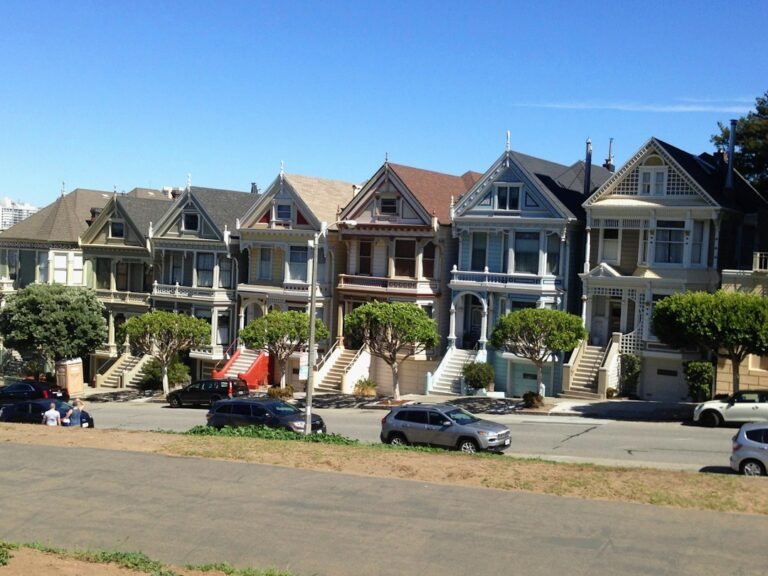
San Francisco doesn’t have one housing market — it has dozens of them, and values can shift meaningfully between neighborhoods like the Sunset, the Richmond, the Mission, Bayview, Bernal Heights, and the Excelsior, sometimes block to block. Rather than applying a citywide formula, we pull recent comparable sales specific to your neighborhood, adjust for the property’s condition, size, lot, and any repair needs, and build the offer from those real, local numbers.
Step 2: A Written Offer and a Licensed Escrow Company
Once we agree on a price, the purchase agreement goes into escrow with a licensed San Francisco title and escrow company — a neutral third party, not us and not you. The title company runs a full title search, clears any liens, judgments, or unpaid taxes against the property, and holds the funds until every condition of the sale is met.
Step 3: Signing — Remote or In-Person
California allows remote online notarization (RON) for real estate closings, so if you’ve relocated out of state or simply prefer not to travel to a title office, you can sign the closing documents remotely with a live online notary. If you’d rather sign in person, that’s available too, either at the title company’s office or with a mobile notary who comes to you.
Step 4: Recording With the San Francisco Assessor-Recorder
Once signing is complete and funds are ready, the deed is recorded with the San Francisco Assessor-Recorder, located at City Hall, 1 Dr. Carlton B. Goodlett Place — the office that makes the transfer official and public. Because San Francisco is a consolidated city and county, this single office (rather than a separate county recorder) handles recording for the entire city. Recording usually happens the same day funds are confirmed, which is the moment the sale is actually complete.
What You Net: Transfer Tax Still Applies, Commission Doesn’t
One cost that doesn’t go away no matter who you sell to is San Francisco’s real property transfer tax. Unlike many California cities that charge a single flat rate, San Francisco uses its own tiered transfer tax structure, where the rate increases at higher sale-price thresholds — reaching roughly 6% on very high-value transactions. The important thing to understand is that this is a transfer tax owed on the sale itself, not a commission tied to using an agent, so it applies the same way whether you sell to us or to a retail buyer. Because the exact dollar thresholds for each tier are adjusted periodically, confirm the current rates that apply to your sale price with your title company. What you do avoid selling to us is the 5-6% agent commission and any repair credits, which is where most of the actual savings comes from.
Frequently Asked Questions
How is my offer actually calculated?
From recent comparable sales in your specific San Francisco neighborhood, adjusted for the property’s condition and any repairs it needs.
Do I have to sign in person?
No. California permits remote online notarization for real estate closings, so signing remotely is an option.
What is San Francisco’s transfer tax rate on my sale?
San Francisco uses a tiered structure where the rate rises with the sale price, up to roughly 6% at the highest tiers. Confirm the exact rate for your specific sale price with your title company, since thresholds are adjusted periodically.
Do I pay any commission if I sell to you?
No. There’s no agent commission on a direct sale, though standard transfer taxes still apply as they would on any sale.
Transfer tax rates and thresholds are set by the City and County of San Francisco and adjusted periodically; confirm current figures with your title company or a tax professional before closing.
Get a free, no-obligation cash offer from Cash Home Buyers CA today.
Selling a house in San Francisco: what to know
A few local details that shape timing and net proceeds when you sell in San Francisco.
County & probate court
San Francisco is in San Francisco County. Probate and trust matters for San Francisco properties are heard by the San Francisco County Superior Court in San Francisco, and deeds are recorded with the San Francisco County Recorder.
Transfer tax
San Francisco County charges a documentary transfer tax of $1.10 per $1,000 of the sale price. San Francisco adds a tiered city transfer tax from 0.5% up to 6% depending on the sale price. When you sell to us, we pay the standard closing costs.
Tenant & rent rules
Rental homes in San Francisco can fall under the San Francisco Rent Ordinance, which limits rent increases and requires just cause for most evictions, in addition to the statewide Tenant Protection Act (AB 1482). We buy tenant-occupied homes and take over the leases at closing.
Nearby cities we buy in
Seller Guides
Helpful guides for homeowners in San Francisco
Plain-English answers to the questions sellers ask us most.
 Selling as-is
Selling a House With Code Violations in California
You can sell a California house with code violations without fixing them first, but disclosure is required and unpaid abatement costs can be a lien.
Read the guide →- Rentals & tenants
What Happens When a Tenant Dies in a California Rental?
A tenant's death does not end the lease automatically in California. Here's what happens to rent, the deposit, and belongings before you can sell.
Read the guide → - Rentals & tenants
No-Fault Eviction in California: What It Means If You’re Trying to Sell
California limits no-fault evictions to four reasons under AB 1482. See the rules, the 2024 changes, and when selling occupied beats evicting first.
Read the guide → - Selling for cash
Capital Gains Tax Exclusion When Selling Your CA Home
Selling your California home? See how the $250K/$500K Section 121 exclusion works, plus the partial exclusion if you sell before two years are up.
Read the guide → - Selling for cash
What Is the Homestead Exemption in California, and What Does It Actually Protect?
CCP 704.730 shields roughly $371,500 to $743,500 of California home equity from creditors. Why the automatic homestead protects nothing on a voluntary sale.
Read the guide → - Selling for cash
We Buy Houses: How These Companies Work and What to Expect
Learn how we buy houses companies work, who sells to them, and how to vet a cash home buyer before you sell.
Read the guide → - Selling for cash
How Cash Home Buyers Calculate Their Offer in California
Cash offers aren't random. Here's the actual formula buyers use to land on a number, and how to tell a fair offer…
Read the guide → - Selling for cash
Sell My House Fast: How Cash Home Sales Actually Work
Want to sell my house fast for cash? Learn how cash home sales work, what to expect, and how to vet a buyer.
Read the guide → - Selling for cash
Cash Home Buyers vs. Realtors: Which Is Faster for Selling Your House?
Compare selling to a cash home buyer vs. listing with a realtor in California - speed, costs, repairs, and certainty.
Read the guide →